
Women have worked towards equality with men for centuries. There is obviously still a ways to go. But it’s difficult for young women of today to imagine what it was like in, say, the 1950s and early 60s. I’m not saying women lived like slaves, but it really was hard for women to compete with men for jobs and pay, for example. And that was only one aspect of life where women were considered less important than men. Even those women who stayed at home and took care of their family were not really supported for their efforts.
I was born in 1953, and graduated from high school in 1972. I obviously saw a lot of serious challenges and social changes including the Civil Right Movement and the Women’s Movement. While I wasn’t marching in rallies or burning my bra, I was right there in spirit with the women who were on the front lines so that I would be fairly treated when I was out in the real world looking for a job.
One of the inequities that women came up against was the fact that their names were given different prefixes depending on their marital status. We were Miss if we were unmarried and Mrs. if we had walked down the aisle and said I do. On the other hand, men were Mr. no matter their marital status. What did this mean in practical terms? It meant that while a Mr. was a Mr. was a Mr., a woman’s title told everyone something that was probably none of their business, at least not when it came to getting selected for a job.
In the early 60s, a woman named Sheila Michaels attempted to popularize the term Ms. for all women. Her fight went on for years, until it started getting some feet in the early 1970s. Gloria Steinem perhaps made the term permanent with her new magazine which she called Ms. Magazine, first published in 1972.
For my part, I remember thinking I would NEVER go by that silly name. Ms. Nor would I be called a womyn which was something else that was proposed and thankfully never caught on.
By the way, while researching this topic, I learned that the term Ms. as a title for women was first proposed in 1901 by another magazine — The Republican of Springfield, MA. Its purpose at that time was to prevent embarrassment for probably mostly men who were unsure of a woman’s marital status and didn’t know how to address her.
Anyway, over the years the term Ms. became commonplace, especially as more and more women didn’t take their husbands’ names upon marriage. In another aside, when I first married in 1977, in order to keep my maiden name after marriage, I would have had to have it legally changed BACK to that name. Times have changed markedly in that regard.
I’m old and pretty set in my ways, but this all came back to me when I saw a recent photo on Facebook. My niece Brooke is an elementary school teacher. She posted a photo that the school took of her and her fellow teachers, with their names. What I noticed is that if the teacher was married, they were referred to as Mrs. If they were not married, they were referred to as Ms.
And this thought occurred to me: Did changing Miss/Mrs. to Ms. ever really make a difference?








 Still, the driving didn’t bother Bill nearly as much as did driving in Great Britain some 15 years earlier. He did pretty well in Britain, all things considered; still, I don’t think he ever quite
  After Mass yesterday, I asked Bill what he wanted to do for breakfast. He was in a hurry because he had to complete some legal work so that he could drop it off at his client’s house early in the afternoon. “How about McDonald’s? he asked. My heart sunk, just a bit. Don’t get me wrong. I’m not a McDonald’s hater, at least for breakfast. I admit to enjoying a Sausage McMuffin with Egg on occasion. But at my last physical, my doctor had suggested I try to cut down on sodium. It seems my blood pressure, while still not horrible, is threatening to jump to much higher levels. In fact, sometimes it sticks it’s tongue out at me and takes a practice jump. Given the fact that Italian sausage factored high in my diet the past few days, I thought I should give my body a break.
 I was 3 years old when the bell of Hollywood — Grace Kelly — married Prince Rainier III of Monaco. Had I been older, I would undoubtedly have been as enamored of that romantic story as I have been of all of the love affairs and marriages of the Windsors in Great Britain. I love me some queens and princesses.
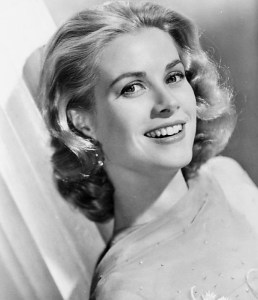 It is a novel, so except for the wedding, not much of it is factual. Still, every time the authors — Hazel Gaynor and Heather Webb — would describe how Grace Kelly was dressed, I would get busy with Google images to see for myself. The book took way longer to read because I spent a considerable amount of time looking at pictures of the oh-so-beautiful Grace.
 Nana's Whimsies