Friday Book Whimsy: Murder of the Century

imgresI don’t think it’s unfair to say that the days when we all eagerly garnered our news from the daily newspaper are over. Bill and I don’t even get a daily newspaper any longer. When our neighbor asks us to retrieve hers while she’s away on vacation, we are always surprised at how flimsy it is and how little news is actually provided. The reality is that by time we look at the newspaper, most of the news is old and boring as compared to what we’ve read on the internet.

But as a journalism major and a former newspaper reporter, I loved to read newspapers. I also love to learn about the history of news gathering throughout the years. One journalism story not to be missed is the history of the tabloid newspaper wars in New York City in the late 1800s and early 1900s.

I think I read somewhere that at its height, there were something like 19 newspapers being published in New York City at one time in the late 1800s. The names Joseph Pulitzer and William Randolph Hearst are familiar to us all. There was a lot of pressure to gain readership, and news gathering back in those days was much different than now, and not necessarily in a good way.

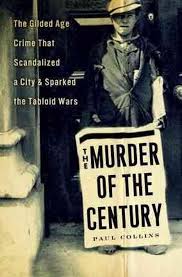
Murder of the Century: The Gilded Age Crime That Scandalized a City & Sparked the Tabloid Wars, by historian author Paul Collins provides a perfect picture of how newspapers “reported” the stories back in those days. Truth and facts were optional. Anything to gain attention and readership was permitted.

Collins’ book is an interesting account of a real murder that took place in 1897 in New York City. The headless torso of a man was found floating in the East River by some young boys, who promptly took it to the police. The police dismissed the body’s importance noting that it was probably tossed into the river by medical college personnel following its use by medical students. Really????? And yuck!!!!!

But the newspapers – primarily Pulitzer’s New York World and Hearst’s New York Journal – sniffing the makings of a great story – glommed onto the murder mystery and began solving it on their own via daily news stories. Accuracy was not necessary. Eventually the police began taking it seriously.

The result was an investigation, trial, sentence, and execution that may or may not have been justified. The head, you see, was never found. As a result, it was never 100 percent certain who the body was. Trivialities.

Collins’ story reads very much like a novel. He paints a vivid picture of what life was like in New York City at the end of the 19th Century. His story captures the role of the daily newspapers perfectly, in much the same way as did the book Eighty Days: Nellie Bly and Elizabeth Bisland’s History Making Race Around the World, by Matthew Goodman.

As a journalist, I cringed when I read the treatment of the murder story by the newspapers. But as a writer, I couldn’t help but think just how much fun it would have been to chase a story like that with really no rules to follow.

I think this book would make for good discussion for a book group if it is looking for a very readable nonfiction book.

Buy the book from Amazon here.

Buy the book from Barnes and Noble here.

Buy the book from Tattered Cover here.


Friday Book Whimsy: Let’s Just Say it Wasn’t Pretty

searchNone of us can’t stop ourselves from getting older, no matter how hard we try, how strenuously we exercise, how much money we spend on cosmetic surgery, what color we make our hair, or how frequently we Botox. Each year that goes by makes us one year older and steals one year from our life.

But, as they say, getting older is better than the alternative.

Diane Keaton’s wonderful account of her perspective on aging really made me stop and think about my obsession with getting older.

Keaton, who’s wonderful Let’s Just Say it Wasn’t Pretty offers us her perspective on aging, is quick to point out that while she has chosen to forgo cosmetic enhancements as she has aged, she absolutely does not judge others on their decision to nip, tuck, or Botox. It’s all about what makes you feel good and how your life can be important no matter your age.

I think Keaton’s writing is wonderful. Her first book, Then Again, is apparently more autobiographical in nature. In Let’s Just Say it Wasn’t Pretty, she talks a bit about her life and some of the people with whom she has worked in her life, but it’s mostly an account of those things she thinks are important in life.

Keaton is extremely self-depracating and very funny. I couldn’t put the admittedly short book down, and read it in just a day or so. It is filled with stories about her personal life; however, the emphasis of the book is on her perspective about what is important in life.

According to Keaton, it isn’t about what you look like. It isn’t about who you know. It isn’t about how much money you earn or what kind of house you live in or how old you look. She believes some of the most “beautiful” people she has either known personally or known about would not meet the traditional definition of “beautiful.”

Obviously, this viewpoint isn’t anything you haven’t heard before. But I think Keaton’s easy writing about her quirky life brings the point directly home. She talks about listening – really listening – to the world around you. She addresses the need to be able to laugh at yourself and not take life too seriously. Her lack of concern about what others thought about her throughout her adult life is exemplary, especially since she had to develop that lack of concern. As a teenager, she shared all the angst we had as adolescents.

Let’s Just Say it Wasn’t Pretty left me committed to looking at life differently and paying attention to everything. I really have tried stopping occasionally throughout the day to just listen to the sounds. I’ve paid attention to people and have tried smiling at strangers. Most of all, I’ve tried – tried – to stop being so hard on myself about the way I look or worrying about my hair color or how many wrinkles I have.

Keaton would say if you choose to enhance your looks, do so for the right reasons.

I highly recommend her second book, and I am looking forward to reading her first book. I always liked Diane Keaton, and like her even more now.

Buy it from Amazon here.

Buy it from Barnes and Noble here.

Buy it from Tattered Cover here.

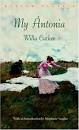
Friday Book Whimsy: My Antonia

With a tip of my hat to my Nebraska trip, I am reprising a previous review of a book — one of my favorite books of all time — written by Nebraska author Willa Cather about Nebraska pioneers.

searchI was born in Nebraska, and lived there until I was 21 years old. It’s always annoyed me to hear Coloradans complain about how ugly the drive on I-80 is through Nebraska. I’ve always thought two things: first, yeah, and I-76 in Colorado is so darn beautiful (picture my eyes rolling); and second, you are driving along an interstate highway which is almost never pretty.

I grew up in a medium-sized town of 10,000 people in the middle of Nebraska farmland. While I didn’t live on a farm, it is hard to not have farming be part of your life if you live in Nebraska, whether you live in Omaha or Wilber, NE. You hear farm reports on TV and radio, there are farm implement stores everywhere, if you drive on a blue highway, you are liable to get stuck behind a tractor, and weather reports are the main topic of conversation (“will it rain,” “will it ever stop raining,” “think it will stay dry long enough to get the corn in?”

Willa Cather’s Nebraska in My Antonia is beautiful. Her lyrical descriptions made me think about the loveliness of rolling fields of corn and wheat, and how pretty the trees are alongside the Platte River, which runs through most of the state.

For example: “July came on with that breathless, brilliant heat which makes the plains of Kansas and Nebraska the best corn country in the world. It seemed as if we could hear the corn growing in the night; under the stars one caught a faint crackling in the dewy, heavy-odoured cornfields where the feathered stalks stood so juicy and green.”

Or, “There were none of the signs of spring for which I used to watch in Virginia, …. There was only spring itself; the throb of it, the light restlessness, the vital essence of it everywhere: in the sky, in the swift clouds, in the pale sunshine, and in the warm, high wind – rising suddenly, sinking suddenly, impulsive and playful like a big puppy that pawed you and then lay down to be petted. If I had been tossed down blindfold on that red prairie, I should have known that it was spring.”

Wow.

Cather’s characters were alive and interesting. How could you help but love Jim, so innocent and naive, and his grandmother and grandfather, so wise and so loving. Wouldn’t you want to be part of the evening gatherings at the Harling’s home, where they sang and played games? All of these folks were honest, down-to-earth Nebraska farmers, maybe not worldly, but good and kind.

And then there was, of course, Antonia. I don’t think there is a character in any other book that I love more than Antonia. I loved her as a child, having to take on so much responsibility because her parents really didn’t or wouldn’t. I loved her as a hard-working farm girl after her father died. I even continued to love her as she spread her wings a bit after coming to work in town. Who wouldn’t have wanted to dance a bit after such a difficult life?

But I think I liked her best in the last book, (the fifth in the “books” that make up this novel) Cuzak’s Boys. She had so clearly found peace in her world, which would probably drive most of us insane. She had molded all of her children into wonderful people. And she loved her simple and kind husband and her difficult but rewarding life. And throughout all of those years, she had loved Jim Burden in a way that wasn’t jealous or resentful. And furthermore, he loved her back. What a fine and beautiful friendship.

A couple of things made me sad. I was sad that it seems that Jim never married. I didn’t really get the impression from Cather that he didn’t marry because he was pining for Antonia. I think he was just so intent on his intellectual life that he didn’t find a life companion. Perhaps he was happy that way, but he so loved being around family that I couldn’t help but feel sad for him.

The other thing that made me sad was when Jim and his grandparents moved to town, and Otto and Jake didn’t go with them. Jim tells us, “Months afterward we got a card from Otto, saying that Jake had been down with mountain fever, but now they were both working in the Yankee Girl Mine, and were doing well. I wrote to them at that address, but my letter was returned to me, ‘Unclaimed.’ After that we never heard from them.”

One other thing: Cather tells us that Mr. Harling was a grain merchant and cattle-buyer. She says, “He controlled a line of grain elevators in the little towns along the railroad to the west of us, and was away from home a great deal.” I’m sure my siblings will agree that she could be talking about the stretch of Highway 30 between Grand Island and Columbus.

I can’t help myself. I give it a 10 out of 10.

Buy My Antonia from Amazon here.

Buy My Antonia  from Barnes and Nobel here.

Buy My Antonia from Tattered Cover here.

Ethereal Reader: Orphan Train

searchI love reading historical fiction because it gives me the opportunity to learn something in a way that I generally find helpful because the information is wrapped into an interesting story with characters with whom I can identify.

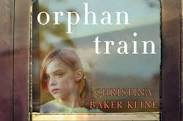
Orphan Train, by Christina Baker Kline, is a fascinating story about a real phenomenon about which I had never heard. Apparently in the 1800s, children – mostly immigrants — from the melting pot of New York City who found themselves orphaned for any number of reasons were shipped by train to the Midwest. Here they were (hopefully) adopted, or at least taken in, by families in need of help or desirous of a child of their own. These so-called orphan trains would make stops, people would examine each of the children and decide whether or not they met their specific needs. Some were looking for farm or house help. Others were wanting to be parents. Once the selections had been made, the train would move to the next town. At the end, apparently whoever was left went back to NYC to become part of the social service system (which was undoubtedly flawed).

As could be expected, very often the children were placed in situations that were less than desirable – abused, overworked, and neglected. Though part of the agreement was that the child would attend school, this likely often didn’t happen. If this novel is to be believed, there was very little oversight once the connection between the adult(s) and the child had been made.

Orphan Train is the story of a 10-year-old Irish girl whose father and siblings were burned in a fire and whose mother was unstable and uninterested in her remaining daughter. The girl, who eventually becomes Vivian, experiences a couple of unsavory family situations before finally landing with a kind couple in a small town in Minnesota.

Her story is juxtaposed with the contemporary story of Molly, an orphan who has similarly been in a variety of unsavory situations throughout her life. Molly eventually meets Vivian as part of a service project she must do to avoid jail time.

The story is told in a back-and-forth manner. Molly’s story contrasts and compares to the flashback stories of Vivian.

The book is a fast read and I found it to be a compelling story. While both Molly and Vivian experienced tremendous heartache and horror stories, they survived and thrived through their own perseverance. I enjoyed seeing them meet up and find comfort in each other.

I loved the ending of the book. It was fun to see Vivian find such joy in her life, including getting to understand and make use of technology.

There were only a couple of things that caused me any degree of consternation.

First, Molly’s and Vivian’s stories are so similar that I had a bit of trouble keeping the back stories straight. I’m not sure there is a lot the author could do about that, because undoubtedly many orphans’ stories are similar.

Second, I simply couldn’t accept that an orphan girl who had been through such rejection as Vivian would give up her child for adoption. Even given the circumstances, I think that she would be unwilling to risk that her child would possibly go through what she did.

Finally, I also found Vivian’s immediate reconnection to Dutchy to be a bit unrealistic. She didn’t mention him but once or twice throughout the book, and so I didn’t get the impression that she had been pining for him. Still, I recognize that when people have been through something like they had together, the connection might always be there.

I think this is a great book for a discussion group, and I will definitely read another by the author.

Here are a couple of things to think about…..

Who did you like better, Molly or Vivian?

Did Vivian’s secret take you by surprise, and did you have a similar reaction to me? Or could you empathize with Vivian’s wishes to not raise the child herself?

Favorite characters? Least favorite characters?

Had you known anything about orphan trains prior to this book?

Buy Orphan Train from Amazon here.

Buy Orphan Train from Barnes and Noble here.

Buy Orphan Train from Tattered Cover here.


Friday Book Whimsy: The Last Kind Words Saloon

searchBefore I buy a book, or even before I go through the trouble of obtaining a library book, I generally go on Amazon to see what kind of reviews the book has received. I don’t necessarily make my decision whether or not to read the book solely based on the reviews. But I find it interesting to read what people liked or didn’t like about a book, and then make my decision accordingly.

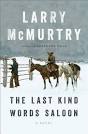
I didn’t do that prior to buying The Last Kind Words Saloon, the newest novel by Larry McMurtry. I didn’t do it for a few reasons. First, I loved the name of the name of the book. Second, the book was about Wyatt Earp and Doc Holliday, and I, for whatever reason, love reading about those two historical schweinhunts. Finally, the author was Larry McMurtry. Can you say Lonesome Dove?

I had the book for a while before I opened it (it was an ebook). I was surprised to see that it only had 197 pages. It was at that point that I decided to take a look and see what others had said about the book on Amazon.

Wow. I have rarely seen a book so heartily disliked as The Last Kind Words Saloon. Out of 195 or so reviews, only 40 gave it four or five stars. Most gave it one or two stars.

Nevertheless, I delved into the book. It was only 197 pages, after all, and it was written by Larry McMurtry.

I’m glad I did.

Don’t get me wrong. I didn’t love the book. For one thing, I’m a fan of meatier stories. I like context and lots of dialogue. This book had neither. The writing is sparse, the dialogue is concise, but, I thought, rather funny. As I read the book, I got a strong sense of what it was like to live in the Old West, and to sit and drink whisky with Wyatt Earp and Doc Holliday.

I find each character to be likeable and despicable at the same time. The relationship between Earp and his wife Jessie was complex and largely unpleasant. Holliday was an alcoholic and dying of TB. But the way McMurtry presented their outlooks on the life around them was funny and interesting.  This really is a tale of life in the Old West through the eyes of Wyatt Earp and Doc Holliday.

The story leads up to the shootout at the OK Corral, but that event is over with in just a couple of pages, and presented from a little bit of a different perspective. This isn’t the book to read if you are looking for a lot of information or context about or surrounding these two famous Old West characters. But it will give you a snapshot at what life was like as that part of our country was being developed.

I can’t heartily recommend the book, but I enjoyed the quick read. If you are looking for a better story about the Earp brothers and Doc Holliday, read Doc: The Novel by Mary Doria Russell. I enjoyed it way more than this book. And if you’re looking for an incredibly good read about the West, read Lonesome Dove, McMurtry’s Pulitzer Prize winning book.

Buy The Last Kind Words Saloon at Amazon here.

Buy The Last Kind Words Saloon at Barnes and Noble here.

Friday Book Whimsy: 100 Best Books

100 booksRecently, the web site Goodreads (a social network site that is sort of a gathering of avid readers who recommend and review books) put forth their list of “100 Books You Should Read in a Lifetime.” The list is included as a link.

Any list like this is fairly subjective. There are, of course, an almost endless number of books and an almost endless number of readers who have differing opinions about what books are important. But I think this is a really comprehensive and fairly well-thought-out list of books that are worthwhile to read.

Out of these particular 100 books (which I think are in no particular order), I, an avid reader, have not even read half. Yikes.

I would argue with the choice of some (while I loved The Girl with the Dragon Tattoo, I’m not sure it would be among the most important 100 of all time), I have never heard of others (Celebrating Silence?), I was disturbed that authorship of The Holy Bible is given to Thomas Nelson), and believe having four – count them – four Harry Potter books included is overkill when you are limited to 100 total books.

Having said this, I enjoyed seeing this list and plan on reading or re-reading some of the books mentioned.

What books would you include that aren’t part of this list? Which of these books would you leave off? What other thoughts do you have about this list?


Friday Book Whimsy: Lidia’s Commonsense Italian Cooking

searchLidia Matticchio Bastianich has authored 11 books. Out of those 11, two are targeted to children. The remainder are cookbooks. Out of those nine cookbooks, I own seven. The two I don’t own are her debut cookbook – La Cucina di Lidia – and one entitled Lidia’s Favorite Recipes. I chose not to buy that one since all of her favorite recipes are featured in one of the other cookbooks that I already own.

Most of her cookbooks are tied to her wonderful PBS cooking show. In fact, that is how I first became acquainted with the woman who – in our family – is simply referred to as “Lidia.” As in Cher or Madonna. I was immediately drawn to her clear love of cooking, the importance she places on her family, and her devotion to displaying her love for her family through cooking and gathering at the table.

I’m sure most, if not all, of the recipes in these cookbooks are available online, but for some reason, I want the cookbook in front of me when I prepare her recipes. It’s the next best thing to having her right there in the kitchen with me. She writes just like she talks, and I find that comforting.

Each of her cookbooks has a specific focus. In a couple of them, she features recipes from different regions of Italy, along with background information about the regions. Two of the cookbooks are focused on Italian-American cooking; in one – Lidia’s Italy in America – she traveled around to the areas of the country where many of the Italian immigrants landed upon moving to the United States, and features recipes specific to those “Little Italys.”

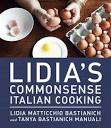
In her most recent cookbook, Lidia’s Commonsense Italian Cooking, Lidia offers the reader practical and easy solutions to cooking situations. Her overriding message is that cookbooks and recipes are black and white, but cooking doesn’t have to be that way. If you don’t have anchovies on hand, or your family would storm from the table should an anchovy touch their food, why, just leave out the anchovies. Commonsense. Make the recipe work for you and your family.

The cookbook offers lots of cooking tips as well. For example, did you know you can freeze the lemons from which you squeezed the juice for one recipe and then use them again should you want to flavor water with lemon by tossing them in? Or have you ever considered making more soup than you need and freezing the soup in single-sized servings so that you can thaw and cook them for a quick-and-easy lunch. Commonsense.

Her writing is just like listening to her talk – clear and friendly and nonjudgemental (except when it comes to what kind of canned tomatoes to use – San Marzano and never crushed because you should crush them by hand; don’t tell her, but I ignore her orders on this matter). The photography by Marcus Nilsson is simply gorgeous. Looking at her pictures makes my mouth water.

As always, there are many recipes I intend to try. Now we’ll just see if I ever get around to it. As I mentioned this week, I tend to always pull out Lidia’s Italian American Kitchen for all of my Italian cooking needs.

Lidia’s Commonsense Italian Cooking is a commonsense cookbook for cooking of all kinds.

Buy Lidia’s Commonsense Italian Cooking from Amazon here.

Buy Lidia’s Commonsense Italian Cooking from Barnes and Noble here.

Ethereal Reader: A Week in Winter

searchHow can you go wrong when you’re writing a book that takes place in a bed and breakfast high on the cliffs of a small Irish village overlooking the sea where you can hear the crashing of the waves from your bedroom window?

Unfortunately, I think Maeve Binchy went wrong with A Week in Winter.

I think her idea was clever. A Week in Winter is a story about seven people or couples who, under varying circumstances, visit a bed and breakfast operated by Stoneybridge native Chicky Ryan the same week one winter. In fact, it is the first week that the B&B is open for business. Each chapter is really more of a vignette – a separate story of these individuals and couples, a snapshot of their lives, background on how they ended up and the B&B and a bit about how each one impacts the others. I think the concept had potential.

Unfortunately, I found the characters to be entirely interchangeable and their stories excruciatingly boring. While their backgrounds were decidedly different, their dialogue was similar and the way their stories were presented to the readers was exactly the same for each character.

I have never read anything else by Maeve Binchy, so I can’t compare A Week in Winter to her other books. That is perhaps unfortunate, because I really didn’t enjoy this book very much. I would like to know if it was just this particular book or if I just don’t like Binchy’s writing.

I tried to look at Binchy’s writing as Irish storytelling. Everyone knows that no one can tell a story like the Irish. Her writing reminded me of someone sitting down and telling me a story. There was very little dialogue, for example. I’m just sorry to say that I didn’t find any of her stories interesting.

For example:

I found Winnie’s willingness to put up with her boyfriend’s wishy-washiness deplorable. And of course she could have gotten out of that vacation with his predictably obnoxious mother. Pleeeeease.

Have there ever been characters who were more self-absorbed and whiny than the Walls? I must admit, however, I did find the story line about their preoccupation and subsequent success with contests to be one of the more interesting of the book. I just didn’t like them.

John/Corry was a caricature as was Miss Nell Howe.

I even was annoyed at the story line surrounding Chicky Ryan. I simply didn’t find it realistic that she could carry out her charade of being a widow for her entire life.

The only character I found at all compelling was Anders. His conflicting feelings about duty and what actually made him happy seemed more realistic than any of the other characters.

And let’s face it, Ladies and Gentlemen, there is no bed and breakfast that could be so deliciously cozy and friendly and, well, perfect the first week that they are opened.

Or the second or third.

But perhaps I am overthinking the book. I really am not opposed to lighthearted literature. I have already professed my love for epic novels, and an occasional novel with romance at its core can be pleasurable.

I just found A Week in Winter to be way too predictable and uninteresting.

I am eager to see what others think.

A Week in Winter was published posthumously. Binchy was 72 when she died following a brief illness shortly before the book was released.

Since this is our book club read, here are some things to think about…..

Have you read any other Maeve Binchy books, and, if so, is the writing style the same? Do you enjoy her books?

Which character did you like the best? Which character did you like the least?

Do you think you could be happy living in Stonybridge, or a similar type town?

You don’t need to answer these questions; I just want to get you all started thinking about this book.

Anyone is welcome to contribute. We will discuss until Sunday night, June 8.


Buy the book from Amazon here.

Buy the book from Barnes and Noble here.


Friday Book Whimsy: A Great Deliverance

Great Deliverance coverI read a lot. In particular, I read a lot of mysteries. And yet, there are so many authors I have never read, and so many books of which I’ve never even heard. That, I believe, is a good thing. I will never run out of things to read. Heaven forbid.

One of the authors I follow on Facebook recently posted something that caught my attention. She said she didn’t think she had ever seen a book made into a movie in which the main characters portrayed in the movie were so drastically different from how she had pictured them from the books, both physically and their personalities, as the Inspector Lynley mysteries, written by Elizabeth George and dramatized by PBS in their Masterpiece Mystery series.

That caught my attention. First of all, I had never heard of Inspector Lynley, and I thought I knew all of the fictional detectives solving murders in British mysteries. Second of all, I absolutely LOVE PBS’s Masterpiece Mysteries and Masterpiece MysteryALL of their detectives – Hercule Poirot, Miss Marple, Detective Chief Superintendent Christopher Foyle, Sherlock Holmes, Inspector Robert Lewis, Constable Endeavor, well, the list goes on and on. But I had never heard of Detective Inspector Tommy Lynley, the 8th Earl of Asherton. Nope, not a clue.

So, the first thing I did was find the Masterpiece Mystery series on Netflix and watch the first one – A Great Deliverance. I was hooked, and immediately watched all of the series that is available on Netflix streaming. Now I’m getting the others from the library.

Let me tell you about Detective Inspector Lynley and his sidekick Detective Sergeant Barbara Havers.

Lynley is upper crust old England, literally an earl, educated at Eaton and Oxford. He is paired with Detective Sergeant Havers who couldn’t possibly be more different. She is the daughter of working class and terribly dysfunctional parents. She was publically educated and is struggling to make it as a woman at New Scotland Yard. It doesn’t help that she has the biggest chip on her shoulder, is terribly unattractive and resentful of almost everybody, making her difficult to get along with. The powers that be, sensing that underneath it all is a smart and talented detective, give her one more chance by pairing her with Lynley, raising her hackles.

In Elizabeth George’s first novel, A Great Deliverance, the two are sent to York to solve the gruesome and violent murder of a man who is found beheaded next to his teenaged daughter. The daughter is in a state of shock, but says, “I did it. I’m not sorry.”

Seems cut and dried. It, of course, isn’t.

The author is an American, but the series, oddly I think, takes place in Great Britain. I’m not sure why. George even writes using British spellings. The feel of the books is entirely contemporary British. One thing I want to mention is that I have never read a book in which there were so many words that I had to look up in the dictionary. I was glad I was reading an ebook version because it was easy to obtain the meaning. It became sort of a game to see how many words I had to look up in a few pages. Having said this, I must tell you that I didn’t find this off putting in the least. I’m not sure why.

A Great Deliverance was an extremely good book, eminently readable and compelling. The odd pairing of Lynley and Havers, and the way George develops their relationship, made for great background to a really, really good mystery. Having already watched the movie, I of course knew the ending. Still, there were tremendous differences between the book and the movie that kept it interesting, including the reasons for the murder itself. I am eager to read the next in what I am thankful is a long series.

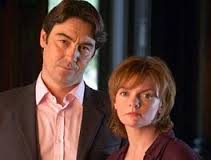
Lynley and HaversAnd do I agree with the writer who talked about the difference between the characters in the books and in the movies? Absolutely. The actress who plays Havers is not nearly as prickly as the character in the book. What’s more, she is actually quite attractive, despite clear attempts to look plain. And she simply doesn’t dislike Lynley as much in the movie as she did in the book. But I will watch the entire series as well as read the books.

What a great find! I heartily recommend both the book (I haven’t read any others so I have to limit it to A Great Deliverance) and the movie. I can’t wait to read the next in the series.


Friday Book Whimsy: The Shell Seekers

searchRosamunde Pilcher had written many other novels before she was talked into digging her teeth into a truly meaty piece of work. According to Pilcher herself, it was her children who encouraged her to think big and supported her along the way as she wrote The Shell Seekers.

The Shell Seekers, is a gorgeous novel, rich in story and splendid characters. The story takes place largely in England – mostly Cornwall and London. The story goes back and forth between contemporary time immediately following the main character — Penelope Keeling — having a mild heart attack and just as England is entering World War II.

Penelope is the daughter of a famous painter and his free-spirited wife. They brought Penelope up to be thoughtful and full of love and to know what is really important in life and not be concerned about what others think. Caught up in pre-war drama, she marries someone who is entirely wrong for her, something Penelope recognizes and regrets almost immediately.

The marriage results in three children. Two of her three children want nothing more than to get ahold of their mother’s money and  their grandfather’s paintings – in particular, one called the Shell Seekers, to sell and take the proceeds. Middle-born Olivia alone accepts her mother for who she is and supports her life decisions.

Through flashbacks, the reader learns that Penelope, though stuck in a boring marriage for many years, for the most part had a rich and full life, filled with friends and exciting experiences. Pilcher does a wonderful job of describing the characters and setting the scenes so that the reader truly feels they are part of the story. In fact, I’m not sure I have ever felt quite so a part of the story. The author’s descriptions of the characters — down to their clothes and facial expressions — leave the reader feeling as though they really know them.

The tension builds as Penelope befriends a young man and a young girl who feel more like family than do her own children. Jealousy abounds and the story plays out in an entirely satisfying way.

I always measure a book, at least in part, by how memorable the characters are and whether or not I would want to spend time with them. Though Penelope lives her life very differently than I would in her shoes, I would love to be invited to one of her glorious parties and participate in some of her wonderful conversations and meals.

It took me a long time to decide to read this book as I had different expectations. I’m very glad I did. It is a long and delicious book, and you think about it long after you have read the final page.

Buy it from Amazon here.

Buy it from Barnes and Noble here.