Friday Book Whimsy: Bittersweet

searchBittersweet, by Miranda Beverly-Whittemore, was a book I stumbled upon via one of those Amazon “Customers Who Bought This Item Also Bought” features while looking for another book. I’m somewhat embarrassed to admit that I often judge a book by its cover, and I was drawn to the cover of this book.

Plain of face and meagre of means, Mabel Dagmar is a scholarship student at a prestigious college in New England, where she shares a room with blue-blooded Genevra Winslow, whose parents are old Vermont money. The two roommates barely get along, but unusual circumstances result in Mabel being invited to spend the summer on the Winslow’s island in a cabin known as Bittersweet. It doesn’t take long before Mabel realizes the Winslows have plenty to hide. That’s okay, because so does Mabel.

I found the story took a long time to develop. In fact, operating under my motto that life is too short to read a bad book, I nearly abandoned Bittersweet. I am so, so glad I didn’t.

While Beverly-Whittemore doles out her story slowly, almost painstakingly at first, once she grabbed me, I couldn’t put the book down. Short chapters led me to frequently think, “I can read just one more chapter.”

Even before the story grabbed me, I was drawn to the author’s use of language and learned-in-grade-school literary techniques like alliteration. For example, Elegant Ev checked in on me more than once; apprehensive Annie sought me out for company; blundering Banning spilled his daughter’s apple juice all over my sandal, making my left foot moist and sticky for the rest of the evening.”

Or this, “I began to see the nonfamilial, simply familiar, connections between them, and understand that to sit upon the rocks and watch the world go by was essential to the definition of being a Winslow.

I’m not wealthy, so I’m not sure the author’s descriptions of the old-moneyed Winslows is accurate, but I always had such a vivid picture in my mind of what it was like to have so much money you don’tknow what to do with it. Rich people names like Murray and Owen and Birch and Tilde and – my favorite – Mhairie, abounded. It was small things like names and clothing descriptions that really gave such a clear snapshot of the Winslows and their wealth.

The Winslow’s secret is despicable, and Mabel’s journey to learn the secret provided for a great mystery. Her own story, which she only hints at throughout the book, isn’t told until nearly the last page of the book. One of Beverly-Whittemore’s literary tricks was to dole out Mabel’s story, little by little, via letters she writes her mother but never sends.

Critics complained that the book wraps up too quickly and too close to the end. Personally, I liked that the author kept me guessing until the end. My only complaint is that there was a lot of “peeping tomfoolery” going on – a lot of sex in general, really – some of which was important to the story, but much of which wasn’t, I felt.

I recommend Bittersweet for those who like a good mystery under somewhat disturbing  — well not really “somewhat” — circumstances. Great book for book club discussion.

Buy Bittersweet from Amazon here.

Buy Bittersweet from Barnes and Noble here.

Buy Bittersweet from Tattered Cover here.

Buy Bittersweet from Changing Hands here.


Ethereal Reader: The Light in the Ruins

searchTuscany, with all of its lush beauty and its rich artistic history, provides a perfect background for Chris Bohjalian’s The Light in the Ruins, which combines historical fiction with a great, if somewhat gritty, murder mystery. As a fan of both, and a great lover of Italy, I was in seventh heaven throughout the novel.

I have read a lot of books, both fiction and nonfiction, about World War II, but I was only marginally aware of the role Italy played during this intense time in history. I, of course, knew that Italy was part of the Axis powers and that Mussolini was a terrible leader, but beyond that, I was pretty clueless. Most books focus on England or France or Germany or Russia.

One of the things I liked best about this novel was it really made me think about how war impacts the people who aren’t directly fighting in the battles. I don’t really know the answer to this question, but did the people of Italy (not the government people, but the Italians who raised cattle in Tuscany or grew grapes in Abruzzo or made cheese in Emilio-Romagna or pressed olives into olive oil in Umbria) believe in the cause, or did they think the German Nazis were simply bullies they couldn’t ignore for fear of their lives?

I think that’s how the Rosatis felt, though I imagine that’s kind of a matter of the reader’s opinion. I believed they did what they felt they needed to do to stay alive.

I am not generally a fan of stories that go back and forth in time, but I found the method worked very well in this story. Perhaps its success was due to the fact that the two storylines weren’t that far apart in time. I thought it was interesting to see the world right after the dreadful war had ended. People were just beginning to get their lives back together, but hadn’t forgotten what it was like. Even people who hadn’t been so directly and horrifically impacted as Seraphina, the detective who finally figures out who is committing the brutal murders of the Rosati family, one-by-one.

And what a wonderful sit-at-the-edge-of-my-seat, must-read-one-more-chapter-before-I-turn-out-the-light mystery, one that left me hearing noises in the night and being convinced my heart was soon to be cut out!

I was interested in the tie-in Bohjalian made to World War II’s impact on art. The topic reminded me of Monuments Men, a book we also read for Ethereal Reader. Vittore Rosati, the architect, was committed to trying to save some of the world’s treasures from the Nazi’s greed.

One of the few things I didn’t particularly like about the book was that we learn much about the ending (though not the murderer or the reason for the murders) early in the story. I’m not giving much away if I tell you that early on, we learn who lives and who dies in the book. I’m not sure I liked knowing that much from the get-go.

I mostly liked the characters, though there were disturbing facts about all of them. In particular, Seraphina’s unique personal habit following the war left me dismayed. I believe my favorite character was Francesca, who, of course, is the first to go. She was strong and such a loving and careful caregiver to her two children.

Bohjalian gives us lots of false clues, and it isn’t until the very end of the story that everything is tied together.

I found this to be a great read, with much fodder for discussion.

Buy The Light in the Ruins from Amazon here.

Buy The Light in the Ruins from Barnes and Noble here.

Buy The Light in the Ruins from Tattered Cover here.

Buy The Light in the Ruins from Changing Hands Bookstore here.


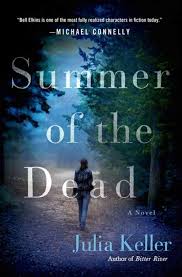
Friday Book Whimsy: Summer of the Dead

imgresI enjoy good books for lots of different reasons. I’m not necessarily a purist. I can enjoy a lighthearted read that I recognize isn’t great literature just because I enjoy the story and like not having to think too much. I am a big fan of really good dialogue, and sometimes even if the story isn’t necessarily terribly compelling, I might enjoy the book because of what’s being said. And I love a good mystery.

Summer of the Dead, by Julia Keller, is the third and latest in a series about prosecutor Bell Elkins who has returned to her roots in a small town in West Virginia. Keller’s books are not lighthearted, but all three of her books have had the same result – I haven’t been able to put them down. Each one is better than the last.

I love the characters, largely because they are not perfect. Bell simply can’t find a way to be happy, it seems. Her daughter currently lives in Washington D.C. with Bell’s ex-husband. She was supposed to come home to Bell for the summer, but went to Europe instead. Bell’s sister Shirley, fresh out of prison, has come to live with Bell until she can get settled. Drama ensues.

Three seemingly unrelated murders take place in the small town of Acker’s Gap, West Virginia, and Keller gives us all sorts of red herrings to distract us. The ending took me completely by surprise. As an avid mystery reader, that rarely happens.

In Summer of the Dead, we meet Lindy Crabtree, the daughter of a coal miner who suffers from dementia and lives in the basement of their tiny ramshackle home. Lindy keeps herself occupied by being an avid reader and taking care of her father.

Mr. Crabtree is a haunting character, apparently based on a real-life story the author came across in her research. Having been a coal miner for most of his life, Mr. Crabtree is only comfortable in dark, tiny spaces, mostly hunched over. Keller’s writing gives the reader a startlingly clear picture of the elderly coal miner.

Which brings me to what I like best about this amazing writer – her descriptions. Without ever having seen the small, fictional West Virginia town of Acker’s Gap, I could find my way around. I know. I know. It’s fiction. Still, you know what I mean.

Not just the town, but the people who live in the town, are clearly painted in my mind.I love Keller’s development of Bell’s sister Shirley. I hope we continue to see her in future books.

Consider this description of the Crabtree home….

The interior of the house was similar to the exterior, like a dirty sock turned inside out despite the fact that both sides are equally filthy. It was ramshackle, compact, and claustrophobically cluttered. An ancient gray haze seemed to hover over the stuff, as if select portions had lain undisturbed for slow-turning centuries, like the spoons and combs and vases of Pompeii. Bell had been in a lot of houses in Raythune County that looked just like this, houses that were gradually sinking back down into the dirt they’d emerged from.

Can’t you just picture that house?

Keller’s books aren’t cheerful. I hope at some point that Bell will find some happiness. But they aren’t depressing either, simply realistic. The books are well-written and very readable, and the mysteries are well-crafted.

I can’t recommend this book enough, as well as her previous two (A Killing in the Hills and Bitter River). Great reading.

Buy Summer of the Dead from Amazon here.

Buy Summer of the Dead from Barnes and Noble here.

Buy Summer of the Dead from Tattered Cover here.


Friday Book Whimsy: Roses

searchIf I was debating the merits of Roses with myself, me and me would be in a fight.

This novel by Leila Meacham has many things that I like in a good read. It takes place over a number of years and over a couple of generations, the location is on a cotton plantation in east Texas (and I do like books that take place in the south), and there is lots of drama and angst. A good, meaty read, one would think.

But the reason I would be in a fight with myself is that on the one hand, there were so many things NOT to like about this book, but on the other hand, I couldn’t put it down. I think that speaks to the quality of the writing.

The story features three families who establish, and basically run, a small town in east Texas. One family is in the timber business; one family is in the textile business; and one family owns a cotton plantation. The families remain loyal to their roots, and get along splendidly.

Problems arise when the patriarch of the cotton plantation family dies and leaves the plantation to his daughter – wholly bypassing his wife and his son. He does this because he recognizes that only his daughter Mary loves the plantation as much as he did and will not sell it off as he knows his wife and son would.

An unforgiveable offense, and one that shapes the novel’s story.

There are a couple of things that annoyed me about the book. One is that Meacham begins the book with the ending. In other words, there is no surprise at all since you know that Mary dies and doesn’t leave the plantation farm to her niece, as everyone expected her to. The idea, I believe, is that the author lays out that fact, and then tells the story to explain why Mary made that choice.

The second problem I had with the book is that I think I was supposed to like the characters more than I did. Book reviewers compare Roses to Gone With the Wind and Mary to Scarlett O’Hara. The difference, I think, is that while Scarlett was annoying at the beginning of the novel, her love of, and commitment to, Tara seems believable, perhaps because of the story’s setting during the Civil War. I couldn’t help it – I found Mary’s commitment to Somerset and willingness to put it before everything else simply silly and short-sighted.

I also couldn’t understand why Mary’s mother and brother were so angry that Somerset hadn’t been left to them. It isn’t like Mary didn’t provide generously.

Finally, throughout the novel, we are told just how much Rachel loved and respected and trusted Mary, her husband Ollie and their dear friend and timber baron Percy. Suddenly, when Somerset isn’t willed to her as expected and she learns a secret about Percy and Mary (a secret that it seems every single other person in Texas knows) she totally turns on them. It never seems realistic to me that Rachel wouldn’t simply go to Percy and ask if it is true.

Having said all of these bad things about the book, I will tell you that I liked it more than I didn’t. As I mentioned, I enjoyed the writing style, and the story kept me reading. It’s a lengthy endeavor, but if you like epic novels, you are liable to enjoy this story.

There is a prequel that was written after the publication of Roses. I will consider reading it as it might help set the stage for some of the actions that transpire in Roses.

I think the book would be a good one for a book club discussion, as indicated by my own conflicting feelings.

Buy Roses from Amazon here.

Buy Roses from Barnes and Noble here.

Buy Roses from Tattered Cover here.

Friday Book Whimsy: Flight of the Sparrow

searchOne day a couple of weeks ago, I got an email from the library telling me that an ebook I had ordered was available to me. I had no recollection of requesting Flight of the Sparrow, by Amy Belding, so I can’t tell you what attracted me to the book.

Perhaps it was the title which I find to be lovely. More likely, upon coming across the title somehow, the plot featuring a Puritan woman captured by Indians and held for many months, well, how could I resist? Captured by Indians!

It wasn’t until I began reading the book that the icing was placed on the cake – the story is based on fact. There really was a Puritan woman named Mary Rowlandson who lived in the 1600s and was captured by Indians and so forth. Historical fiction. Indians. A great title. It had it all.

I’m happy to report that Flight of the Sparrow really did have it all, at least as far as I am concerned.

Mary Rowlandson was the dutiful and faithful wife of a minister who believed that everything that happened was God’s will — predestination. He also maintained the common belief of the time that women are subservient to their husbands in all things and that anyone who didn’t share their identical Christian beliefs were nothing more than heathens.

The novel paints a clear picture of what it was like to live in this severe Puritan culture, just who benefited and who lost. Flight of the Sparrow also paints a graphic picture of the struggles between the Indians and the English settlers who were changing everything about their way of life.

Mary’s husband Joseph is away on business when her household and surrounding community is savagely attacked by Indians. Many are brutally killed (the scene is extremely graphic), and Mary and three of her children are kidnapped. Two of the children are whooshed away to places unknown, and the one who stays with Mary dies soon after.

Mary lives with the Indians for almost a year, and though she undergoes many hardships, she also grows used to the freedom of life as an Indian’s slave. She is finally ransomed back to her husband eight or so months after her capture, as are her two remaining children. The novel presents a really good picture of the difficulty Mary has in trying to fit her experiences in Indian life back into the rigid, yet more familiar, life as a Puritan wife.

Flight of the Sparrow has a bit of a romantic storyline, but one that I found to be fairly realistic. No barechested men or ripped bodices. In fact, much to everyone’s surprise (and apparent disappointment), Mary is not ravaged (or defiled, as the Puritans put it) at all.

The novel presents a pretty honest and fair picture of the treatment of the Indians by White settlers. They Indians aren’t necessarily presented as kind and gentle heroes, but the taking away of their freedom and land is pretty straightforward.

I loved the book’s ending.

Lovers of historical fiction and western stories will enjoy Flight of the Sparrow, and I think it would be a great read for a book club.

Buy Flight of the Sparrow from Amazon here.

Buy Flight of the Sparrow from Barnes and Noble here.

Buy Flight of the Sparrow from Tattered Cover here.


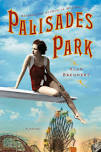
Ethereal Reader: Palisades Park

searchEvery year in August, our family would spend a night or two at the Platte County Fair. We enjoyed the experience very much. Oddly, despite the fact that I have such pleasant memories of going to the fair, I have never really been a big fan of amusement park rides. I’m a big chicken, for one thing.

The amusement park experience seems to be sort of an East Coast thing. Think Coney Island. And until the early 1970s, you could also think Palisades Park in New Jersey, right across the Hudson River from Manhattan.

Alan Brennert’s fun book  Palisades Park is clearly a tribute to this long-gone amusement park. He says in his author’s note that he grew up a mile away from Palisades Amusement Park and has many fond memories. His love for the park and for the era Palisades_Amusement_Park_3before technology took over our kids’ imaginations is obvious.

In fact, it is his clear love for the post-World War II era is what I liked best about the book. That’s because I’m a baby boomer, and my love for that same era simulates his. Times were less stressful and the world seemed a safer place. After all, we had won the war that would end all wars. Hmmmm.

Palisades Park tells the story of the Stopka family who grew up at Palisades Park. Eddie Stopka and his wife Adele run a French fry concession, and their two kids – Toni and Jack – spend their days running freely around the amusement park. The park employees are like their family.

Toni dreams of becoming a high diver, and eventually does so. Jack’s story is a bit sadder.

What I like best about Brennert’s book is that he gives us a history lesson – World War II, the Korean War, the Civil Rights movement – but not in a dull, colorless manner. Instead, we see what is happening in the world through the eyes of the characters. As a result, I not only learn what was happening in the world, but see how it affected working class people.

While some sad things take place in the book, for the most part it is a cheery look at a life that I can’t even imagine. Still, you could take Toni Stopka’s life and superimpose it on mine, and there wouldn’t be a lot of differences (well, except that I don’t dive into little tubs of water from 10 stories up!).

Palisades Park isn’t Brennert’s best book. That honor would go to Moloka’i, his wonderful book about a beautiful Hawaiian island and its infamous history. I didn’t find the writing to be very masterful, and for the most part, the story was fairly predictable. But I don’t think Brennert set out to write the Great American Novel with this effort. I think he simply wanted to write a love letter.

I think he succeeded.

I am interested in other’s thoughts on this book. Favorite characters? Do you like amusement parks? In another life, could you ever see yourself living this way? Would you read another book by Brennert?

Buy Palisades Park from Amazon here.

Buy Palisades Park from Barnes and Noble here.

Buy Palisades Park from Tattered Cover here.

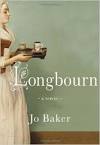
Friday Book Whimsy: Longbourn

“I declare after all there is no enjoyment like reading! How much sooner one tires of any thing than of a book! — When I have a house of my own, I shall be miserable if I have not an excellent library.” ― Jane AustenPride and Prejudice

searchFrom the time I started reading “grown-up” books during my middle school years, I have loved English manor novels, or books similar in writing style and flavor. Jane Eyre, Rebecca, Wuthering Heights, all of the Agatha Christie mysteries, Little Women, and, of course, Pride and Prejudice.

And then along came Downton Abbey, and I became aware of the lives of those who live “below stairs” in these great countryside manors. Oh, the drama. Oh, the intrigue. Oh, the absolute addictiveness of it all. It’s so much fun to see how the other half lives, but also so much fun to witness the lives of those who cater to that other half.

So, it was with great excitement that I dove into Longbourn, a novel by Jo Baker. Longbourn, of course, is the house of the Bennet family in Pride and Prejudice. Longbourn – the novel – looks at the story of the love affair of Elizabeth Bennet and Mr. Darcy, as well as all of the angst and drama that went into getting Elizabeth and all of the Bennet girls married, from the perspective of the people who lived below stairs.

In Pride and Prejudice, the staff is barely mentioned. There are elusive mentions of a maid bringing in tea and some references to the housekeeper, Mrs. Hill. But the staff definitely play absolutely no role in the story of Pride and Prejudice.

Baker, however, presents a fictional staff, albeit small as the Bennets (as you may recall) were not among the wealthiest of their class, and gives them a personality and a storyline. But most fun of all, we are able to look at all of the happenings in the Bennet family through the eyes of the staff.

The story centers around Sarah, one of two young maids who work very hard to care for the Bennet family and all of their things. These maids must get Elizabeth and Jane’s dresses spotlessly clean, they must dress them and prepare their food and serve them their meals.

Says Sarah early in the book: “The young ladies might behave like they were smooth and sealed as alabaster statues underneath their clothes, but then they would drop their soiled shifts on the bedchamber floor, to be whisked away and cleansed, and would thus reveal themselves to be the frail, leaking, forked bodily creatures that they really were.”

In other words, they were human.

Under rather mysterious circumstances, Mr. Bennet hires a new footman named James, who is hard-working and kind and intelligent. He immediately falls in love with Sarah. She eventually loves him in return. The book delves into their relationship and the difficulty they have being in love for a number of wonderfully dramatic reasons.

The book drags down a bit in Volume III as we learn a bit more about James’ life. I wanted to stay in the manor house, thank you very much. Nevertheless, the book was one that I simply couldn’t put down. It was a grand read.

Longbourn is a must-read for lovers of Pride and Prejudice and fans of Downton Abbey. I can’t wait until someone realizes it must be made into a movie!

Buy Longbourn  from Amazon here.

Buy Longbourn  from Barnes and Noble here.

Buy Longbourn  from Tattered Cover here.


Friday Book Whimsy: The Silkworm

searchA number of years ago when the J.K. Rowling/Harry Potter phenomenon was on the rise, I haughtily told a very well-read friend of mine that I was so OVER hearing all about Harry Potter that I simply would NEVER EVER read a Harry Potter book.

I recall that she laughed and told me, “I can understand your frustration about all of the hoopla, but I’m here to tell you that you are really missing out if you don’t read the Harry Potter books.”

Well, that sort of stopped me in my tracks because I respect her opinion a great deal when it comes to book recommendations. Still, I’m somewhat embarrassed to say that I have yet to read a Harry Potter book or see a Harry Potter movie. My grandchildren, however, love them all.

There are simply too many books to read and not enough time.

But a couple of years ago, J.K. Rowling came out with the first book in a new adult mystery series, writing under the nom de plume of Robert Galbraith. I eagerly read The Cuckoo’s Calling and immediately understood why people enjoy Rowling’s books.

Because I enjoyed her first in the series so much, I eagerly awaited the second in the series, which was finally released a couple of months ago. The Silkworm took off where The Cuckoo’s Calling left off.

The novels’ protagonist is Cormoran Strike, a British private investigator. Strike lost the lower part of one of his legs in Afghanistan, and his constant pain and frustration add interesting layers to his personality. In the first novel, Strike hires an assistant, a young woman, Robin, who turned down more lucrative jobs so that she could follow her calling to be a private detective.

I find Galbraith’s detective Strike so interesting because he isn’t the stereotypical main character at all. He’s not particularly attractive. His chronic pain makes him often unpleasant and angry. But he is stubborn and smart and committed to becoming a successful detective. The fact that he is the illegitimate son of a famous rock star (who he has only met twice in his life) makes him marginally interesting to the press, adding a little flavor to the novel’s mix.

The novels are somewhat longer than most mysteries that I read. However, I find Galbreath’s writing to be such that I really can’t put the books down. The words, though many, don’t seem extraneous. Instead, they move the book along, provide context, and make the characters seem real. The stories themselves are interesting. In The Silkworm, Strike is hired by the wife of a semi-famous author who is missing. The author was on the brink of releasing a story with characters not-so-subtly fashioned after real people in his publishing world, and the book could damage the reputations of many. As a result, many suspects.

Though the ending wasn’t particularly startling, the journey towards the ending was a terrific ride. I love a good mystery, and this is definitely that. But even more, it is an example of really good writing and story and character development at its best. You don’t have to like mysteries to enjoy these books. And the good news is that she plans on writing at least seven Cormoran  Strike novels.

Maybe I will find time to read Harry Potter yet.

Buy The Silkworm from Amazon here.

Buy The Silkworm from Barnes and Noble here.

Buy The Silkworm from Tattered Cover here.


Friday Book Whimsy: The Daring Ladies of Lowell

searchPart historical novel, part romance novel, The Daring Ladies of Lowell, by Kate Alcott, grabbed me from the get-go and didn’t let go.

Set in 1832 in Lowell, Massachusetts, Alcott tells the story of a strong and independent young woman who leaves her family’s farm to go to work in a textile mill in this company town. Alice Barrow gives up the support of her family to get away from the farm life which threatened to suffocate her. While the work in the textile mill is hard and dangerous, what it does offer her is intellectual stimulation and a chance to build true friendships with the other women working at the mill.

Alice’s intelligence and practical common sense get her noticed by the Fiske family who own the mill, and in particular, the eldest son Samuel. As working conditions seem to worsen and become more dangerous, Alice becomes a liaison between the workers and the family. An unlikely romance blossoms.

The murder of her best friend Lovey make the romance even more unlikely as fingers of suspicion point towards the Fiske family. Lovey, it seems, was pregnant when she was murdered, and Samuel’s younger brother is the apparent father.

I enjoyed the book very much because I love stories about strong women who play an important role in making real differences in the world. I also love stories about friendships, and these women who not only work together but live together as well are not only friends, but really become family to one another.

The book requires some suspension of belief because the amount of power that the women wielded seems quite unlikely in the early 1800s. Still, changes in early industrial America had to begin somewhere, and the idea that women could play a role in these changes is intriguing.

Alcott’s characterizations were realistic and interesting. Lovey was someone with whom I would like to be friends, though I have to repeat that it is unlikely that a woman in 1832 could be as outspoken as she and not be fired on the spot. Still, that’s why it’s a novel and not a work of nonfiction.

I also liked Alcott’s portrayal of Samuel, who struggled with loving and supporting his family and the importance the mill played in the town and the lives of the women who worked in the mill and doing the right thing. Sometimes those kinds of choices can be difficult in a capitalistic society.

The Daring Ladies of Lowell is definitely a women’s book, but an interesting story at that. Great discussion for a book group.

Buy The Daring Ladies of Lowell from Amazon here.

Buy The Daring Ladies of Lowell from Barnes and Noble here.

Buy The Daring Ladies of Lowell from Tattered Cover here.


Friday Book Whimsy: Yippee io-ki-yay

searchI often think I’m a soul lost in the wrong century. I should have been a pioneer woman.

But then I remember how women of the west in the 19th century had dirt floors and did their business outdoors with the bugs and the snakes and didn’t have IPADs or smart phones and couldn’t watch Masterpiece Mysteries on PBS.

Reality check. I’m in the right century after all.

Nevertheless, I enjoy immensely reading about the days when the Great Plains and the western states were being settled. Give me a good cowboy and Indian book and I will settle down with a cup of coffee and be very happy.

Here are five books that take place in the 1800s and involve cowboys or western settlers that I think are worth reading, in no particular order:

True Grit by Charles Portis was published first in 1968, but was really made famous by the movie of the same name starring John Wayne. I had never read the book, but got interested in it when the second movie, starring Jeff Bridges, was released. Portis’ writing is nothing short of amazing. Simple and poetic. A quick read that I couldn’t put down even though I knew everything that was going to happen next, having already seen both movies. Fourteen-year-old Mattie’s father is killed, and Mattie is out to avenge his death and recover the money the murderer stole. She hires has-been and usually drunk U.S. Marshall Rooster Cogburn to help her find the villain. Seriously worth reading.

One Thousand White Women: The Journals of May Dodd by Jim Fergus is a novel based on historical fact. During the Ulysses S Grant administration, the powers-that-be initiated the Brides for Indians program, whereby a number of women who were incarcerated or in insane asylums were sent to the western states to marry Cheyenne Indians. The idea was that as they procreated, Indians would then be assimilated into White society. Hmm.  I can’t figure out why the Indians were mad at the White people. Anyway, May Dodd was among those who were sent. She had been unjustly placed in an insane asylum by her father and was eager to be released under any circumstances. The book is her journal and our snapshot into some not-so-glorious history.

I stumbled upon These is My Words by Nancy E. Turner at a used book store in Phoenix. Though fiction, the book is based on the true story of the author’s ancestors. Also written as a journal, it tells the tale of a family who settles near Tucson in the 1800s, and the trials and tribulations they faced. It is a story of resolve and commitment wrapped around a sweet love story. It’s the first book in a trilogy.

Sandra Dallas has written many novels that take place during the days of pioneers, but True Sisters is one of her best in my opinion. The novel tells the story of the journey that the Mormons made at the behest of Brigham Young from Iowa City to Salt Lake City to settle. Based on true events, these brave souls made the journey literally carrying everything they owned on handcarts that they pushed across the plains and over the mountains. Some came from as far away as England. It’s not a story of the Mormon faith; it’s a story of friendship and strength.

And of course my list could not be complete without including Lonesome Dove, the Pulitzer Prize-winning novel by Larry McMurtry. The book is actually the third in a trilogy, and you will love the main characters – two Texas rangers who are moving a herd of cattle from Texas to Montana. While it’s a terrific story, you should read it just to become friends with Augustus McCrae and Woodrow Call and all of their cohorts. It’s lengthy, but you don’t really want it to end.

All of the above books happen to take place in the Old West, but they all should be read not for where they take place but because they are such good reading.

Do you have any books you would add to this list?

Adios Pardners.