Friday Book Whimsy: Best Mysteries You’ve Never Read

By now you know I’m a fan of mysteries. It started in my youth with Hercule Poirot, Miss Marple, and of course Nancy Drew.

I like all kinds of mysteries, from cozy teacup mysteries to dark stories about serial murderers. I don’t know what the draw is. I don’t generally even try to figure out who the murderer is. I just enjoy the story.

There are some mysteries that almost everyone has heard of – often because they have been made into movies or television programs, but some just because the author is well-known and well-respected. James Patterson, Stephen King, and Robert B. Parker come to mind. While I’m not a huge fan of either Patterson or King, Parker is (was) one of my favorite authors. His Spencer series ranks among the best in the business. I particularly enjoy the dialogue in all of his stories.

But by virtue of being an avid mystery fan, I have come across some mystery series with which the average reader may not be familiar. Here are five that come to mind, and in no particular order:

The Bell Elkins series by Julia Keller

Bell Elkins is an attorney who grew up in a small community in West Virginia, left to go to college and law school, practiced law in Washington D.C., and returned to West Virginia following her divorce. She has a teenage child who causes her angst. She serves as the town’s prosecutor, and deals with the issues facing many small rural towns – primarily drugs. But she also faces the occasional murder – twice in fact since the series has only two books thus far. I like the characters very much. They are not all-perfect, nor do they solve the murders by simply following clue number one which leads to clue number two, and so forth. She works a lot with the sheriff, who deals with his own personal issues. They stumble along, but thus far have solved both cases. The author’s description of the town and the area is really what draws me most.

The Inspector Gamache series by Louise Penny

My daughter-in-law who grew up and still lives in Vermont told me about this author and this series. She likes it in particular because the mysteries take place in a small town in Quebec, just north of where they live. I’ve only read two in the series of 10 books, so I’m not sure exactly how the characters develop. But I love Inspector Gamache and would read these books for no other reason than to get to know him better. He is ever so smart in the same way that Sherlock Holmes and Hercule Poirot are smart – he doesn’t miss anything, though it appears he has. He is also extraordinarily kind and beloved by those working with him. So far there is an underlying mystery going on that I can’t figure out. Something sinister is happening with one of his staff that will be revealed at some future point I presume. The stories are good mysteries, sort of a nice combination of a cozy and a more hardcore story.

The Clare Fergusson/Russ van Alstyne series by Julia Spencer-Fleming

Clare Fergusson is an Episcopalian priest. She is married to Sheriff Russ van Alstyne, though they aren’t married at the beginning of the series. Clare struggles with her life as a priest, particularly as a woman priest. Her relationship with Sheriff van Alstyne bring her into contact with a lot of murder and mayhem, and she and the good sheriff get into deep water in each book. I like the development of the characters as the series has progress. Much has transpired, believe me. The books take place in upper New York State, and it is always bitter cold. The weather often plays a strong role in the story line.

The Cork O’Connor series by William Kent Krueger

There are 13 books in the series, and to date I have only read three, but I am hooked and have gotten my husband hooked. O’Connor is the former sheriff in a small town in northern Minnesota (what’s with me and these cold-weather locales?). His wife is a defense attorney, and their marriage (at least up to the point at which I’ve read) continues to be a struggle. He is half native American, and the books play a lot into that part of his life, making them lovely and interesting. I love Krueger’s writing very much and am delighted that I have so many more to read.

The Royal Spyness Series by Rhys Bowen

Lady Georgiana is 35th in line to the British throne in this series that takes place in the 1930s. She is on her own, having been asked to leave the home of her brother who is a lord in Scotland, and, though she is royalty, she has absolutely no money. She is constantly trying to find ways to make a living, and has run into some comical situations in doing so. She gets involved in solving mysteries at the behest of Queen Mary, who asks her to discreetly take care of all sorts of matters.  The stories are light-hearted and so much fun.

Enjoy meeting some of my favorite characters, and tell me about some of yours!
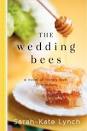
Friday Book Whimsy: The Wedding Bees

searchI remember when Jaws V came out a million years ago. The family that the shark had been bothering throughout Jaws II – IV moved across country to California or Washington or someplace like that to get away from the shark and, yes, you guessed it, the shark followed. Smart fellow with a great sense of direction.

I thought of Jaws V while reading The Wedding Bees: A Novel of Honey, Love, and Manners, by Sarah-Kate Lynch. But often good novels require a suspense of belief in reality. Because, though I thought Jaws V was incredibly stupid, I really liked this book.

Sugar Wallace barely escaped marriage to a violent alcoholic by literally leaving him at the altar of their church in Charleston, SC. She ran to her grandfather’s house, grabbed the bees he had kept for years and left to her when he recently died, and took off, never to return. Well, at least never to return for a number of years.

Each year Sugar moved to a new location. She would place her queen bee (named Elizabeth the Sixth) on a map, and wherever Liz stopped is where Sugar and her bees moved next. This process took her to NYC.

In NYC, Sugar and her bees meet a rag-tag group of people who are all blessed by Sugar’s kindness and healing powers with her honey. She, in turn, meets the man of her dreams.

Lynch’s writing – at least of this particular novel – is almost fairytale-like. All it lacks is a “once upon a time.” But that works very well for this story. After all, Sugar’s life is really managed by Elizabeth the Sixth and her worker bees. They take care of Sugar.

The Wedding Bees is definitely a women’s book. No men need apply. It also is not a good read for anyone looking for a meaty book with a deep, meaningful message, and not a particularly good book for a book club. There isn’t a lot to discuss. The Wedding Bees is quick, sweet, and leaves the reader feeling like they want to be a better person. Maybe even a person who keeps bees. Certainly a person who eats honey.

While predictable, it kept my interest, and in the end, left me feeling good about people, and wishing I could spend time with Sugar and her friends. A great book if you are trying to recover from reading a series of heavy, dark books.

Buy the book from Amazon here.

Buy the book from Barnes and Noble here.


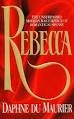
Book Whimsy: Rebecca

Last night I dreamed I went to Manderley again.

searchOne of the most famous opening lines in any novel ever written. It perfectly sets the stage for this haunting novel.

I have been trying to remember when I first read Rebecca, by Daphne Du Maurier, and decided it was likely in late elementary/junior high school. It most certainly is at least part of the reason I am such a fan of gothic mysteries. Rebecca is gothic mystery at its finest, no matter your age. Daphne Du Maurier and Agatha Christie are probably almost entirely responsible for my love of writing – and my love of mysteries.

There is no finer gothic mystery, and that’s the truth, plain and simple.

The way the novel is laid out is so elementary, and yet so creative. I know of no other novel in which the main character is dead on page 1, and never makes a single appearance, even as a ghost. And yet the reader knows more about Rebecca at the end of the book than we even know about the narrator — the nameless second Mrs. de Winter.

Although it might not even be incorrect to say that the main character is Manderley itself. Du Maurier’s gift of description certainly gives us the opportunity to picture it in our minds. Down to the blood red rhododendrons.

Rebecca is not a grisly novel at all. The writing is lovely, if a bit slow-going at times. There are no ghosts or vampires or secret rooms, or even a crazy wife hidden in the attic. But there is Mrs. Danvers, and she is creepy enough to make my skin tingle a bit, if not crawl.

The second Mrs. de Winter (whose name we truly never learn) meets Maxim while visiting Monte Carlo as a companion to an obnoxious American woman. He sweeps her off her feet and they marry and return to his grand mansion, purportedly in the Cornwall area of England (though we are never told for sure). While Maxim de Winter is never introduced to us as a lord, his life and responsibilities remind me very much of Lord Grantham of Downton Abbey fame.

The new Mrs. de Winter is young, painfully shy, and has absolutely no experience as the lady of a grand estate. And here she is, having to compete with the first Mrs. de Winter, who was beautiful, intelligent, gracious, and loved by all. Or was she?

The interactions between the narrator and the odious house manager Mrs. Danvers are painful to read. Mrs. Danvers simply can’t forgive the second Mrs. de Winter for not being the first Mrs. de Winter. That, plus she is slightly crazy.

Du Maurier lays out the novel in a very interesting manner – beginning with the end, as it were. As such, the reader learns in the first few pages that Mr. and Mrs. de Winter survive and that they are not living at Manderley. And the reader also has an inkling that something was not so right at Manderley because of the opening line of the novel.

There are lots of surprises along the way – unless you’ve read the novel before, as I had. Still, even then the book kept me in suspense.

Rebecca is a slow read, but one that is entirely appropriate for a middle-schooler who likes to read and has no need for lots of action. It is a love story, but not as its main element. It is a suspense novel, but there is no violence or action that would keep you awake at night.

I have never read anything else by du Maurier, and am somewhat reluctant to do so since this was far and away her most successful novel. I don’t want to be disappointed.

I highly recommend Rebecca as a great read for a rainy day with a cup of tea at your side.


Friday Book Whimsy: Bent Road

imgresETHEREAL READER ALERT: IT IS TIME TO START READING OUR NEXT NOVEL — A WEEK IN WINTER BY MAEVE BINCHY. DISCUSSION WILL BEGIN FRIDAY, JUNE 6. ANYONE WHO IS INTERESTED CAN JOIN US BY READING THIS BOOK AND PARTICIPATING IN OUR DISCUSSION VIA COMMENTS. THANKS.

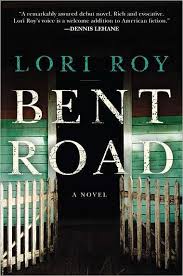
Bent Road

Again, here I am reading and reviewing a novel that takes place in the 1960s. I’m not sure what is drawing me to this time period, but it can’t be accidental that this is the third book that I’ve read in the past four weeks that takes place in the 60s.

Bent Road, a debut novel by Lori Roy, is the haunting story of a family with a dark secret that keeps them from moving forward into joy. Arthur Scott moves his family – wife Celia, teenaged daughter Elaine, almost-teen son Daniel, and young daughter Evie – from their home in Detroit back to his childhood home in Kansas when the racial problems in Detroit begin to escalate in the 60s.

Arthur moved to Detroit shortly after his sister Eve died mysteriously. Eve, who had been a small young woman with blonde hair, had been ready to marry Ray. After she died, Ray married Arthur and Eve’s sister Ruth.

Very little has appears to have changed back at the ranch in the 20 years or so that he has been gone, except that it is clear that Ray is an alcoholic who physically abuses Ruth. Couple that with the disappearance of a young girl who is physically built like Eve and also has very blonde hair, and you have for a creepy story. Especially since Arthur’s youngest daughter looks much like Eve as well.

The novel is dark, but the pacing kept me engaged. I simply wanted to see what happened next. Occasional glimpses of the love the family had for one another prevented this from becoming nothing but a morose and gothic tale.

The story isn’t a typical murder mystery, though the ending caught me completely by surprise. Instead, it’s a story of a family coming to grips with constant change and learning the danger of keeping secrets. Throughout the novel, which takes place over a matter of a few months, we see Daniel grow up and Arthur and Celia learn how to love one another again. We see Ruth become strong and even watch little Evie come into her own.

I’m not entirely sure why the novel had to take place in the 1960s. The only thing I can think of is that there had to be a believable setting in which such physical abuse could take place under everyone’s watching eye without anyone doing anything about it. I’m not saying that doesn’t happen in our contemporary society, but I think it was far more common back in the days before the Women’s Movement.  Plus, they had to have a reason for Arthur and Celia to be willing to uproot themselves and return to this place of which Arthur had no pleasant memories, and civil unrest is as good a reason as any.

There are many despicable characters in this novel, not the least of whom is the evil Father Flannigan. (Seriously, couldn’t they have come up with another priest name? I couldn’t stop picturing him as Spencer Tracy.) Still, much as I hate to admit it, I think back in the 60s, priests were more inclined to think a woman’s place is with her husband, no matter the circumstances. Father Flannigan was particularly unpleasant, however.

And then there was the wicked Uncle Ray. Enough said about him.

Bent Road is pretty dark all the way through, no question about it. The ending, however, is hopeful and entirely perfect, I think.

Great book for a book club discussion and a book I highly recommend if you are in the mood for a serious read.

To buy it from Amazon, click here.

To buy it from Barnes and Noble, click here.

Ethereal Reader Book Club: Monuments Men

You will recall that Nana’s Whimsies hosts an online book club called Ethereal Reader. Following is a review of the book the group read. Anyone is welcome to participate in our discussion via comments. The original book review, posted below, was written by Jennifer Sanchez.

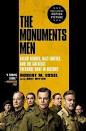
searchI enjoyed The Monuments Men: Allied Heroes, Nazi Thieves, and the Greatest Treasure Hunt in History by Robert M. Edsel very much. Typically when we review and discuss a book, we talk about how we felt about the author’s writing style. But while I read this book – and upon completion – I found I really didn’t have much of a thought about the author’s method of storytelling. Maybe because the genre was nonfiction.

I had never read about this aspect of WWII previously. Beckie and I saw the movie when I was approximately 130 pages into the book. I loved the movie and I think it helped me read the book more quickly than I would have without seeing it.

I was hooked on the story from the beginning . I enjoyed learning about the men that entered the war for this reason. And then of course as the story unraveled it became more and more compelling. I have read many, many novels that take place during WII. It is one of my favorite periods for a book to take place. This book made me feel emotions and have thoughts about this point in history that other stories have not brought forth.

One strong emotion was a feeling of patriotism. The evil, greed and mania that U.S. involvement helped put an end to makes me as proud of my country as I’ve ever felt. I particularly enjoyed learning about the details and territory covered by the Third and Seventh Armies and the pride they felt in the job they were doing. It brought to mind tidbits my mom had told me about one of her brothers who served in Africa. While I am certainly familiar with Generals Patton and Eisenhower, I loved hearing about their leadership, particularly within the story of this novel. Even the tasks that the Core of Engineers assisted in, following the end of the war, and their assistance to the Monument Men’s goals were amazing.

Other thoughts brought forth during this novel:

I have great respect for the men and women (example Rose) that are as passionate about their job and art as they were.

George Stout was remarkable, as the men that worked with him never failed to comment.

This novel brought forth information I had never contemplated. A paragraph on page 234 stands out regarding the amount of things that were stolen by the Nazis.

“Religious relics, altars, Torah scrolls, church bells, stained-glass windows, jewelry, archives, tapestries, …. Even trolley cars from the city of Amsterdam. “

We all are aware of the loss of lives during this war, but the amount of theft was astounding. Harry Ettlinger said, “ My knowledge of the Holocaust started really with the realization that it was not only the taking of lives but the taking of all of their belongings.”

And as the war was ending the Nazi plan to destroy bridges, factories — all things that the surviving German people would have had left from which to rebuild. Walker Hancock was quoted as saying, “The Germans were wonderfully disciplined and correct while they had the upper hand – and went berserk when it was obvious their visit was at an end.”

Walker Hancock wrote of the spring of 1945 when the war was coming to an end. The allies were going into the concentration camps and seeing things first hand. In Germany they would encounter German soldiers missing arms or legs, the civilians looking for direction or assistance. I love his words, “All such an exaggerated picture of the man-made way of life in a God-made world. If it all doesn’t prove the necessity of Heaven, I don’t know what it means.” And when the Jewish chaplain went into Buchenwald to conduct a service for the survivors and he stated they were anguished over the lack of a Torah. Hancock had one to give him and he stated, “The people were weeping, reaching for it, kissing it, overcome with joy at the sight of the symbol of their faith.” I found these such strong testaments to faith.

My last quote from the book: Lincoln Kirstein wrote to his wife at the end of the war when he was so very weary of it all, “I am not interested in lousy old Germany’s lousy old future.”

What are your thoughts? Were you aware of this effort to recover the stolen artwork during the war? Did you learn information you had not known previously?


Friday Book Whimsy: The Bartender’s Tale

searchI’m a sucker for novels that take place in the West or the Midwest – the more rural, the better. I’m also drawn to stories that take place in the 1960s, the era in which I spent my formative years and remember very well.

The Bartender’s Tale, by Ivan Doig, met these two criteria, and more. Surprisingly, I have never read anything else by Doig, who is quite prolific. Because The Bartender’s Tale is my first Doig novel, I can’t comment on whether I think this is one of his better or worse books, or whether it is written in a typical manner. But standing alone, it was a good read.

Having said this, I will tell you that I can’t remember reading a slower book. I seriously felt as though I would read and read and read, and then realize I had only read five pages. Whaaaaat? I’m not sure why, though I admit that Doig uses a lot of words to get his point across. Still, I started paying attention to whether or not a good editor would have been in order, and I decided I would miss anything an editor would have taken out.

It was like jogging in quicksand, but enjoying a great view while I ran.

There is not a lot of plot to describe. Much like the book I reviewed last week, the narrator was an adult looking back on his younger years, in this case, concentrating on the summer of 1960. Rusty has never known his mother, and his father sent him to live with his aunt and her bratty kids in Phoenix from the time he was a baby until his father seemingly inexplicably came to get him at the age of 6. He takes him to live with him in a small town in Montana. Tom Harry owns the Medicine Lodge, an old-fashioned neighborhood bar, and he and Rusty make this their home.

A lot of things happen that summer of 1960, and we are lucky enough to be introduced to some of the funniest and most likeable characters you can imagine. By the end of that summer, Rusty has made a best friend, figured out what he wants to be when he grows up, met a young historian who will change his life, learned a lot about his dad (whom he always was convinced was going to up and leave him again) and grew to trust him completely. He comes to understand the ins and outs of running a good bar and the importance of such an institution to a small town. Unlike last week’s novel, this story isn’t about a life-changing event, but more about how all of life’s events add up to make you who you are.

I measure all dialogue against Kent Haruf’s dialogue in Plainsong. Doig’s dialogue is similar in that he captures the local dialect very well (or at least it seems that he does). And it really is the dialogue, as opposed to the storyline, that drives the novel. But, where Haruf’s dialogue is succinct, Doig’s characters often seem to talk on and on. That might be the difference between being a rancher in eastern Colorado and being a bartender. Still, I loved (and will start using) the phrase “ess of a bee”.  I also will begin immediately using the phrase “don’t put beans up your nose” with my grandchildren to relay to them to stay out of trouble.

For me, the best part about The Bartender’s Tale was the story about the bar itself, and about Tom Harry as the bartender. For example:

“I needed only to stretch my neck a little to peek……..and see and hear everything as my father lived up to his reputation as the best bartender imaginable, his shirt and apron crisp as table linen, his black bow tie, lending an air of dignity, his magical hands producing a drink almost before it was thought of, his head tilted just so to take in whatever topic was being introduced on the other side of the bar.”

The Bartender’s Tale is a slow-moving story about good, kind, honest Westerners with whom I could be friends. Rusty learns a lot during that summer, but mostly he learns the importance of family and friends.


Friday Book Whimsy: Ordinary Grace

search

I have discovered over the course of the past couple of years that I am drawn to coming of age stories. Two of my favorite books of 2013 – Tell the Wolves I’m Home by Carol Rifka Brunt and Swimming in the Moon by Pamela Schoenewaldt are both stories of young people coming face-to-face with adulthood and handling it with courage.

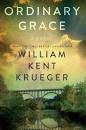
It’s not surprising, then, that I so enjoyed Ordinary Grace, by William Kent Krueger.

I have become familiar recently with Krueger’s writing, but only through his Cork O’Connor mystery series. While there is a murder as part of this book, the whodunit side of the murder dwindles in importance to how people responded and how relationships grew and withered. Ordinary Grace is not a murder mystery.

The story is narrated by Frank Drum, a 13-year-old child of a Methodist minister and his wife, an accomplished musician, who live in a small Minnesota town. He has a younger brother, Jake, and an older sister, Ariel. The format for the narration is Frank’s recollection of the summer when he came face-to-face with death in many forms, looking back at it from four decades later. It was the summer of 1961.

I liked many things about the book.

First, I liked the setting against the 1960s backdrop, when many things were changing for everybody. Having grown up in a smaller community during that time, I could relate to many of the things that took place – the gossip, the freedom the two boys had roaming around the town, the absolute trust in God and in adults. They got haircuts at barber shops. They drank lime phosphates at the drug store. Very typical 60s experiences.

Second, I found the characters in the book to be some of the most memorable I have come across in my reading. I will long remember Frank’s father, Pastor Nathan Drum. He, thankfully, was not the typical literary caricature of the evil Methodist minister. Nathan was kind and gentle, slow to judge, and above all, had total and complete faith in God.

I also won’t forget Gus, the church’s maintenance man, but even more, Nathan’s friend and a person who the boys totally trusted. Throughout the book, a common line was, “What do we do? Talk to Gus.” Gus is a complex character – kind and smart but held back by his drinking. I don’t want to give away too much of the book, but there is a scene in which the boys hear their grieving father, who has had to hold the family together through a period of incredible grief, crying – sobbing out loud – in the church being comforted by Gus. It is one of the most poignant scenes I’ve ever read.

Frank’s little brother Jake, while secondary to Frank as the narrator, is probably the most important character in the book, and perhaps the most memorable. His stutter makes him shy, but in the end, he is the strongest character of all.

Third, I loved the importance that God played in the book.  It seems you have two kinds of people in the world – those who find comfort in their belief that God is always with them and those who are generally just annoyed by the idea of God. No matter what anyone says, I think this is mostly true. Pastor Drum found comfort in his beliefs and in his faith in God, while his wife was angered by his belief in God. Perhaps she was envious of the relief it provided him when all she had was grief.

I always like trying to figure out how the author comes up with the title of their book. Throughout the book, I tried to figure out what Ordinary Grace meant. In the end, it is so very clever and simple, yet with such deep meaning underneath. As a result of what he considers a miracle from God, Jake says, “With Mother home I liked the idea that we’d been saved as a family by the miracle of that ordinary grace.”  You have to read the book to find out what he’s talking about. It made me smile.

The ending of the book is wonderful, and ties everything together. Jake, who purported to be doubtful of the existence of God throughout the book, wraps up the story by saying, “If we put everything in God’s hands, maybe we don’t any of us have to be afraid anymore.”

And the last line, surprisingly spoken by one of the less important characters in the book: The dead are never far from us. They’re in our hearts and on our minds and in the end all that separates us from them is a single breath, one final puff of air.

What a lovely way to look at life after death.

This is not a religious book. But it definitely is a spiritual book. And despite the theme of death throughout the book, it leaves the reader feeling hopeful. I didn’t find it to be a sad book at all.

I loved this book and think it would be a great book club read.

Speaking of book clubs, I want to remind you that discussion of the book we are reading for the Ethereal Reader Book Club — Monuments Men — will begin in two weeks — April 18. Some preliminary conversations indicate it should be a good discussion. Some really liked the book; others really disliked the book. That always results in a good book discussion.

Friday Book Whimsy: Was the Ending the Same?

I often say life is too short to read a bad book. And of course, by “bad book” I mean a book I’m not enjoying. There are simply too many books out there that I want to read to spend any time reading something I don’t like. That philosophy has probably caused me to miss out on a lot of books that get better after the first 100 pages. Oh well.

Having said that, it is probably inconsistent to say that I will, however, reread a book. Using the same logic, it would appear life is too short to spend time on a book when you know how it ends. For some reason, that fact doesn’t trouble me at all.

So here is a list of 5 books that not only WOULD I reread, but frequently HAVE….

manhattanbridge01b1. I was between books one evening recently. I finished what I was reading and didn’t want to get up out of bed to download the ebook that the Mesa Public Library had notified me was available. So I went on my Nook’s library and saw with great delight that I had purchased A Tree Grows in Brooklyn by Betty Smith some time ago, a fact I had totally forgotten. It was like running into an old friend, right there in my own bed!

The book is about the Nolan family who lives in the Williamsburg neighborhood of Brooklyn. At the beginning of the book, Francie Nolan is 11 and the story is told primarily through her eyes. The Nolans are poor and struggling, but survive despite obstacle after obstacle, much like the tree that somehow survives in the desolate empty lot Francie sees from her bedroom window. A metaphor. Get it? I probably first read the book when I was 12 or 13, and loved it so much. I have read it many times since, but there’s nothing like the first time you read a good book, is there?

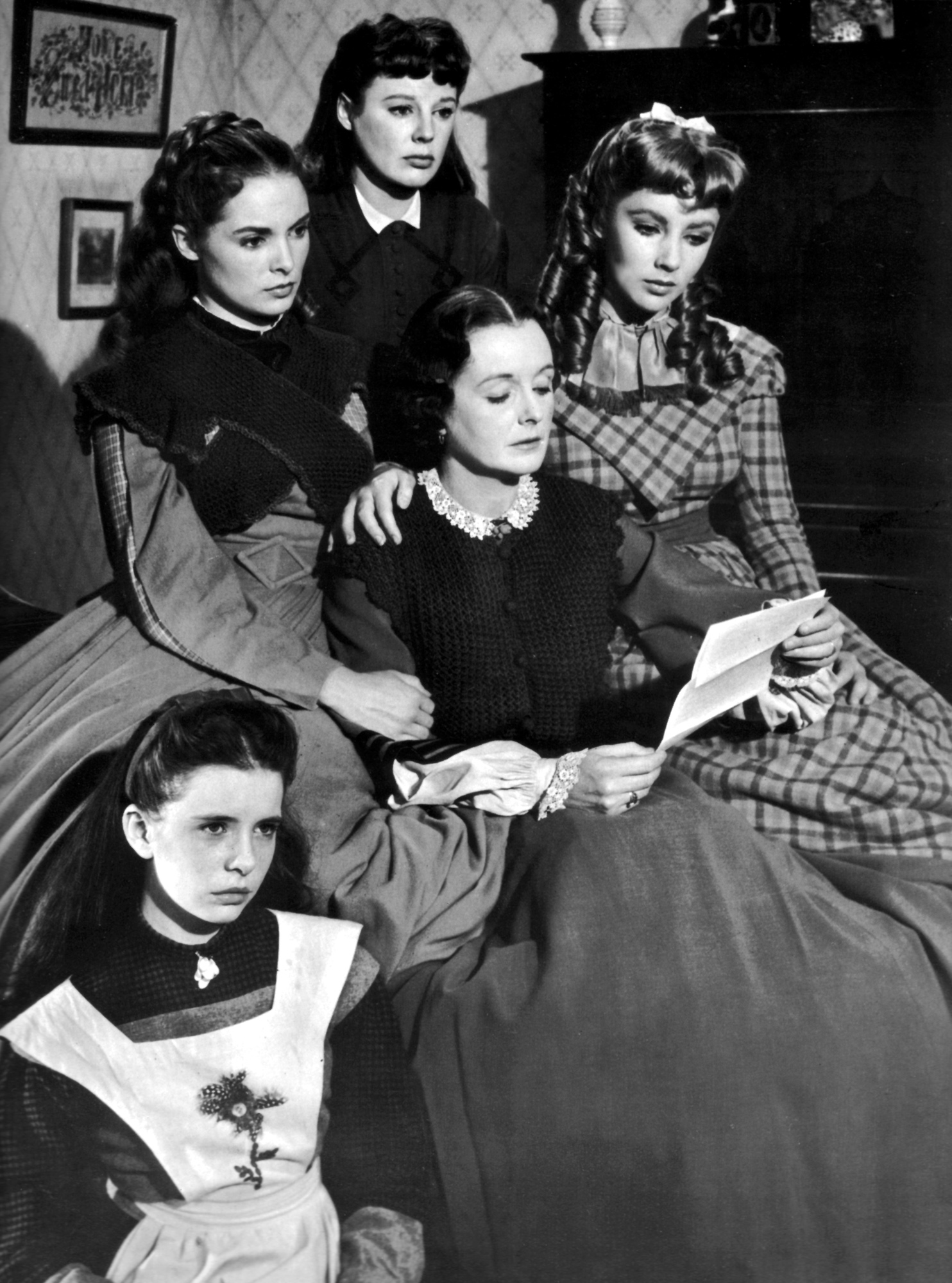
2. I was probably only 8 or 9 when I first read Little Women by Louisa May Alcott. Oh my heavens, did I love that book. I probably read it three or four times just during my adolescence. The first time I read the book, I can’t even begin to tell you how I cried and cried at one particular sad event. I was heartbroken.Annex - Leigh, Janet (Little Women)_01

Little Women is the story of the four March girls, who live quiet lives in New England as their father serves as a chaplain during the Civil War. They are guided lovingly by Marmee – their mother. (I seriously wanted to begin calling my mom Marmee, but knew that wouldn’t fly, even as an 8-year-old.) Each of the girls is very different. I think every girl who reads the book identifies with one of them. I identified with Meg. I wasn’t quite adventurous enough to connect in the same way with Jo. By the way, the story has been made into a movie three times – 1933, 1949, and 1994. The movie made in 1949 is far-and-away the best. The 1994 movie? Susan Sarandon as Marmee? Nooooooooooo!

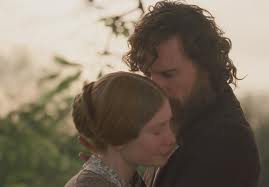
3. One book that I have read, oh, I don’t know, ten or twelve thousand times is Jane Eyre, by Charlotte Bronte. From the get-go, my heart absolutely broke as I read about poor Jane’s childhood, both as the abused ward of her aunt and then as a

Comb your hair for heaven's sake! What are you, blind?

Comb your hair for heaven’s sake! What are you, blind?

student at the Lowood School. The child couldn’t get a break. Even her beloved friend Helen dies – in Jane’s arms no less. She becomes the governess for little Adele, and – yada yada yada – she and Mr. Rochester live happily ever after (despite the fact that he’s scarred from the fire, bitter, and permanently blinded.

I remember thinking that the book was the most romantic story I had ever read. After all, it isn’t like Jane was some gorgeous woman; she was just a Plain – well – Jane. Still, Mr. Rochester loved her from the very beginning. And oh, the back story! Does it get any better than that?

great plains4. I think that My Antonia was required reading when I was in high school, and I loved it immediately. It helped that the story took place in Nebraska (where my high school was located), and in fact, not even too terribly far from my home town. Willa Cather’s writing is glorious, and I frankly love all of her books. But there was something about Antonia herself that makes it my favorite.

Antonia comes with her family from Bohemia to settle in the Nebraska prairie. The Shimerda family had not been farmers in Bohemia, and have a hard time surviving in this new and terribly hard life in Nebraska. She is befriended by Jim Burton, and their friendship is a critical element of the book. I love the descriptions of the Nebraska prairie, and the development of Antonia through the years. She might be my most beloved character of all books I’ve ever read. Might be. Not committing. For a review I did of this book, click here.

5. There is actually a book I read once a year. At Home in Mitford, by Jan Karon, is the story of an Episcopalian priest who lives in the North Carolina village of Mitford. It’s not exactly accurate to say the story is about Father Tim, though he is the main character. mitfordThe story is about the entangled lives of all of the quirky people who make up this town. They are caricatures, no doubt about it. Still, I love them all and I never get tired of them. But mostly I embrace Father Tim’s absolute love of God and trust in him. I love the way he turns to the Lord in all things. I read the book every year to help me learn to pray. By the way, I read the Karon’s Mitford Christmas book Shepherds Abiding every December as well.

There you have it. There are more, but these five were top of mind.  I didn’t include the Bible, because it goes without saying that it is a part of my life.

I am really interested in hearing from you about this topic. Do you reread books? What books have you, or would you, reread? What are the best books you have ever read? Please share via comments!

This post linked to the GRAND Social


Friday Book Whimsy: Wildflower Hill

searchMy name is Kris, and I am……….

……secretly extremely fond of a good romance novel.

Don’t get me wrong. I don’t mean the kind that invariably has the bare-chested man holding the woman with the torn bodice in his arms and nearly ready to ravish her on the cover. And seriously, that statement isn’t just a woman who doth protest too much. Those books just make me uncomfortable. For many reasons. Not the least of which is how that woman will repair that perfectly good dress.

No Friends, I’m talking about the kind of story that is often multigenerational, frequently take place in Great Britain, and many times has stories that flash back and forth between the contemporary main character (always with an interesting career) and her great grandmother (always with some kind of a secret).

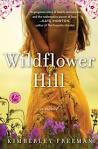
Wildflower Hill by Kimberley Freeman is one of the better that I have recently read.

I read almost entirely on an e-reader these days. It’s easier to read the book at the gym. But one of the things I miss most about reading electronically is the feel of the book in my hands, especially if it’s a lovely, beefy book like Wildflower Hill. There is just something wonderful about holding a good book in your hands and reading it on the patio with a glass of ice tea. Isn’t quite the same with an e-reader.

Wildflower Hill is the story of Emma, a professional ballet dancer who has pretty much devoted her life to her dancing. She has placed her dancing ahead of her boyfriend, her family, and her friends. So when her career is ended by a debilitating injury, she is grief-stricken.

About the same time she learns that she has inherited her grandmother’s long-abandoned sheep ranch in Tasmania (an island off the south coast of Australia). Her grandmother left it to her with the caveat that she could only be told about it once she was done with dancing forever.

Emma makes her way to Tasmania thinking she would just clean up the ranch, pack up her grandmother’s things, and return to live in London. That, of course, isn’t what happens.

The novel moves back and forth between the story of her grandmother, who had many secrets, and Emma, who slowly discovers the secrets at the same time as coming to grips with her whole new life. Sometimes novels with this back-and-forth for format are annoying and difficult to follow. I didn’t find that to be the case for a couple of reasons. First, each of the segments is lengthy, allowing time to really get to know and understand the characters. Second, each of the characters is interesting and I enjoyed watching them develop.

The story is somewhat predictable, but I enjoyed the writing very much. I found Beattie (the grandmother) to be much more interesting than one would expect, and very likeable. I enjoyed seeing how she became a successful businesswoman at a time when it wasn’t common for women to do so. I loved her scandalous life and juicy secret.

I also really liked Emma. Though I haven’t taken a dance lesson in my life, the author made me understand how dancing could have been so important to her and how it could have impacted her life so significantly.

The location of the story enhanced the reading experience for me. I know very little about Australia, virtually nothing about Tasmania, and am equally clueless about raising sheep. I loved learning about these things through the secrets that Emma discovered as she went through her grandma’s things.

The ending was somewhat disconcerting. Some readers have commented it is ripe for a sequel. I rather hope not. I want to imagine just what happens after the door is opened.

Kimberly Freeman is a pen name for author Kim Wilkins, who has written a number of fantasy and horror books. This is her first foray into women’s fiction, and I think she hit a home run.

Friday Book Whimsy: Slow Getting Up

Before I start my book review, I want to say that I am pushing back discussion for the Ethereal Reader book Monument Men for two weeks. Discussion will begin Friday, April 18 instead of Friday, April 4.

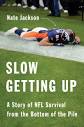
searchI am somewhat hesitant to post a book review of Slow Getting Up: A Story of NFL Survival from the Bottom of the Pile, by Nate Jackson. I am going to tell you how much I enjoyed the book overall, but then I’m going to add a GREAT BIG GIANT CAVEAT when it comes to recommending it.

I’m not even sure how this book came to my attention. It might have been available as a $2.99 Nook book from Barnes and Noble. It wasn’t anything I had ever heard of, but being a football fan in general and a Denver Broncos fan specifically, I became intrigued when I read the synopsis.

Jackson was a Denver Bronco for most of his career, though he started out with the 49ers. He was a Bronco from 2002 until 2008 following an injury and the arrival of Coach Josh McDaniels. He started out as a wide receiver but soon became a tight end at the request of Coach Mike Shanahan. I have to admit to you right off the back that I have no memory of his career with the Broncos. After reading the book, I’m not sure I should be concerned about that fact as he was, for the most part, a back-up player and seemingly injured more than he wasn’t.

I will tell you why I liked the book, and then will give you my caveat.

I love football, and know maybe a bit more about it than many women. Still, I don’t know a lot of the intricacies. I know the rules (for the most part), I understand most penalties (though I don’t always see them), and I know the difference between offense, defense, and special teams. I enjoy watching games — and not just Broncos games but any NFL games.

A number of years ago, following the movie, I read The Blind Side, by Michael Lewis. I LOVED that book (and that book I would recommend with no caveats attached). What I especially liked about that book – in addition to the lovely story about the people who make Michael Oher a part of their family – was learning about the strategies around football. That comes across in the book much more significantly than in the movie. I really enjoyed that book.

Slow Getting Up is about football from a player’s perspective. And I think it’s significant that it isn’t a particularly great player, but someone who makes it into the NFL but has to fight to stay there year after year. The game from Jackson’s viewpoint is much different than it is from mine, or, say Peyton Manning’s.

For one thing, Jackson spends much of his career playing hurt. He makes it perfectly clear that many, if not most, players play hurt much of the time because football is a business, after all. And a violent business. Jackson doesn’t whine about this or present it as unfair. It’s just a reality of the game.

He talks a great deal about how moving from team to team impacts players. No need to make close friends because they may be gone tomorrow – either cut, traded, or injured. Again, Jackson doesn’t wah wah about this, just explains it to his readers.

He doesn’t pull any punches, that’s for sure. It is clear who he liked and respected, both as players and as coaches. No tip-toeing around it – he has great respect for Coach Shanahan but not much for Coach McDaniels, for instance. Jake Plummer was a solid, straight-forward, talented quarterback; Jay Cutler was a whining baby who was too full of himself. These are not my opinions, but Jackson’s.

As a long-time Denver fan, it was fun for me to read his thoughts on Denver fans and their plusses and minuses. I think he nailed it.

The life of a NFL player is beyond belief. Players are held by the public in such high regard, and it’s often undeserved. Women throw themselves at football players. Free drinks, free food, free drugs.

So here is my caveat. Jackson is writing from a player’s perspective. I’m pretty sure he assumes the majority of his readers will be men. His writing is, frankly, raunchy at times to put it mildly. I have no doubt that the stories he tells are accurate; still, they are also startlingly disturbing. As a woman, it made me squirm to read about the way many women are regarded by the men in this book.

So: I learned a lot about football (not the game but the business and the players’ mindsets). I liked Jackson’s writing style – very blog-like and readable. You don’t have to be a Bronco’s fan to enjoy the book. He just happens to have played for the Broncos, but his thoughts would hold true for any team. And I liked that, in the end, what made him keep at it despite injury after injury is that he liked playing football.

But: His writing can be uncomfortably raunchy. (Do men really enjoy porn that much? Don’t answer that.)

Overall, I would recommend the book to my son, but would suggest my mother-in-law not read it.