
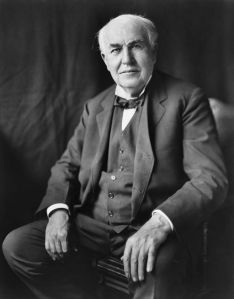
 This has been a week of disappointments. In a single week, I learned that Thomas Edison didn’t actually invent the light bulb and that White Man screwed the indigenous people in ways I never dreamed in the early days of this country. My shock at both of these truths clearly indicates that I wasn’t paying attention in grade school. I blame it on the fact that I needed glasses which, I might add, my parents provided but I was too vain to wear.
Still, I’m pretty darn sure that Miss Gaspers taught me that Thomas Edison invented the light bulb in second grade. I think I might have been wearing a pilgrim’s hat and drawing turkeys by tracing my hand at the same time.
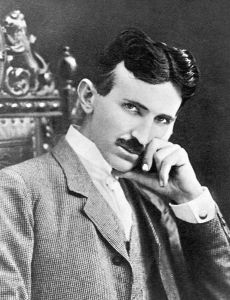
Bill and I went to see The Current War yesterday afternoon. If you haven’t heard of the film (and frankly, I’m pretty sure only a handful of people have), it tells the story about the battle between George Westinghouse and Thomas Edison, and their second-runner-up, Nikola Tesla. (And it’s no wonder Tesla was largely ignored. Look at that man. Have you ever seen a shadier-looking fellow?)…..
Yesterday was actually not the first day that I learned that Edison didn’t necessarily invent the light bulb. Back in 2016, I read (and reviewed) The Last Days of Night , a novel by Graham Moore, which remains one of the best books I’ve ever read. I was hopeful that the movie would be as good as the book. It definitely wasn’t, but Benedict Cumberbatch played Edison, and I would watch anything in which he stars as I think he is a great actor with the bonus of being drool-worthy.
Edison was a genius, but what he really excelled in was buying patents. He purchased the patent for the light bulb, and then went on to make it work. The rest is history.
Towards the end of the movie, he and Westinghouse (who, at least in the movie, were sworn enemies) were in the same room at the Chicago World’s Fair in 1893. They had both bid to provide the electricity for the worldwide event, and Westinghouse won. Westinghouse asks Edison what it felt like to hold the first light bulb that burned for 13 hours. I, of course, can’t quote the lines perfectly, but basically what he answered was that he had no feelings whatsoever because it was like magic. Up until then, none of his light bulbs had lasted more than 10 minutes. As the minutes went by and then the hours, he said it was like something completely unimaginable.
That speech made me think about that age-old question about who has seen the most amazing changes in their lifetime. Though it’s hard to argue that Baby Boomers haven’t seen the world change more than any other generation — can you say TECHNOLOGY? — I always think about the question Bill’s aunt asked him when he was just a boy and was listening to his transistor radio. How is the music getting in that box?
Magic is the only way I could answer that question. Imagine what it must have been like to go from gaslight to electric light. Magic.
As for the way we treated the Indians, that fact is well documented and well known. While we might not have learned much about that in school, it certainly has become clear to us all. But a book I am reading (and which I will review on Friday) called One Thousand White Women reminded me that our forefathers reneged on many a treaty when it became clear that money was to be had.
By the way, the 1893 Chicago World’s Fair was called the World’s Columbian Exposition, and it was held to celebrate the 400th anniversary of Christopher Columbus’ discovery of America. The irony isn’t lost on me. But the Chicago World’s Fair is known in the McLain family for the fact that Bill’s grandmother and grandfather met at the fair, where he was a trolley car operator and she was a passenger. Once again, the rest is history.


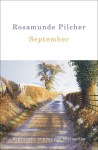 Once in a while, I’m in the mood for a tome. A real multigenerational novel that has surprises and family drama and things that work out in the end. And, it takes many luxurious reading hours to get to the end. I am especially fond of an epic novel if the writing is good.
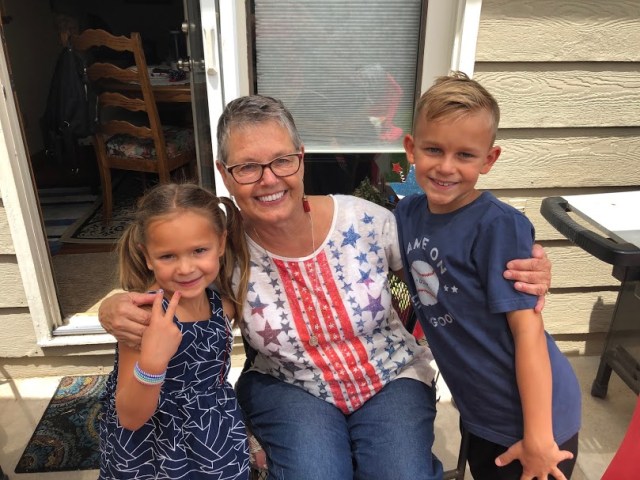
 had a snow day due to a significant snowstorm hitting Colorado. Sometime around 9:30, I FaceTimed Kaiya, who answered my call with a cheerful hello. It was 9:30 in AZ, which made it 10:30 in Denver. There she was, still in her pajamas and relaxing in her bed. What are you going to do today on your day off, I asked her. This, she replied. Good job, I thought.
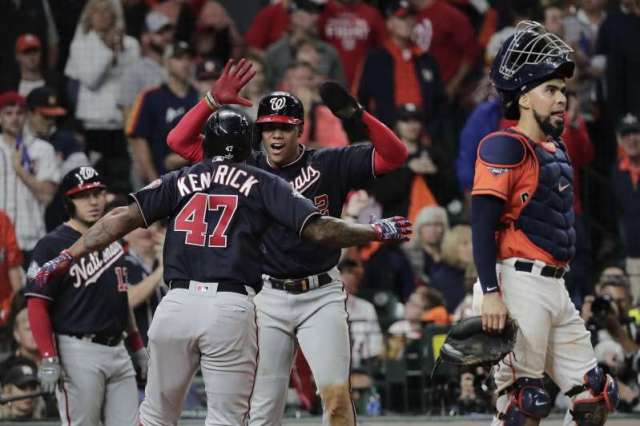
 Every year during the World Series, I am reminded of the old days, when the World Series games were during the day, and probably not on television. I clearly remember that the boys in our grade school were allowed to bring their transistor radios to class to listen to the games. It seems like it was always the New York Yankees v. somebody else circa 1963-64. I don’t remember who they rooted for, but I do remember being amazed that the nuns didn’t seem to mind a bit. Perhaps they had money on the game and were secretly happy to listen.
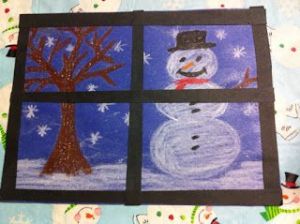 Yesterday, as the snow fell in Colorado, the sun was shining outside our AZ windows. The weather was a pleasant 74 degrees, and my friend and I even felt a tad chilly as we shared a bottle of wine on the patio of a favorite Italian restaurant yesterday afternoon. Admittedly, a glass or two of red wine warmed us up.


 The Cold Way Home is author Julia Keller’s 8th book in the Bell Elkins mystery series. Keller’s wonderful novels appear to be a well-kept secret. And it’s a secret that should be let out to the masses, or at least the masses who like mystery drama, because Keller is a wonderful writer.
 Nana's Whimsies