
You will recall that Nana’s Whimsies hosts an online book club called Ethereal Reader. Following is a review of the book the group read. Anyone is welcome to participate in our discussion via comments. The original book review, posted below, was written by Jennifer Sanchez.
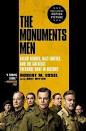 I enjoyed The Monuments Men: Allied Heroes, Nazi Thieves, and the Greatest Treasure Hunt in History by Robert M. Edsel very much. Typically when we review and discuss a book, we talk about how we felt about the author’s writing style. But while I read this book – and upon completion – I found I really didn’t have much of a thought about the author’s method of storytelling. Maybe because the genre was nonfiction.
I had never read about this aspect of WWII previously. Beckie and I saw the movie when I was approximately 130 pages into the book. I loved the movie and I think it helped me read the book more quickly than I would have without seeing it.
I was hooked on the story from the beginning . I enjoyed learning about the men that entered the war for this reason. And then of course as the story unraveled it became more and more compelling. I have read many, many novels that take place during WII. It is one of my favorite periods for a book to take place. This book made me feel emotions and have thoughts about this point in history that other stories have not brought forth.
One strong emotion was a feeling of patriotism. The evil, greed and mania that U.S. involvement helped put an end to makes me as proud of my country as I’ve ever felt. I particularly enjoyed learning about the details and territory covered by the Third and Seventh Armies and the pride they felt in the job they were doing. It brought to mind tidbits my mom had told me about one of her brothers who served in Africa. While I am certainly familiar with Generals Patton and Eisenhower, I loved hearing about their leadership, particularly within the story of this novel. Even the tasks that the Core of Engineers assisted in, following the end of the war, and their assistance to the Monument Men’s goals were amazing.
Other thoughts brought forth during this novel:
I have great respect for the men and women (example Rose) that are as passionate about their job and art as they were.
George Stout was remarkable, as the men that worked with him never failed to comment.
This novel brought forth information I had never contemplated. A paragraph on page 234 stands out regarding the amount of things that were stolen by the Nazis.
“Religious relics, altars, Torah scrolls, church bells, stained-glass windows, jewelry, archives, tapestries, …. Even trolley cars from the city of Amsterdam. “
We all are aware of the loss of lives during this war, but the amount of theft was astounding. Harry Ettlinger said, “ My knowledge of the Holocaust started really with the realization that it was not only the taking of lives but the taking of all of their belongings.”
And as the war was ending the Nazi plan to destroy bridges, factories — all things that the surviving German people would have had left from which to rebuild. Walker Hancock was quoted as saying, “The Germans were wonderfully disciplined and correct while they had the upper hand – and went berserk when it was obvious their visit was at an end.”
Walker Hancock wrote of the spring of 1945 when the war was coming to an end. The allies were going into the concentration camps and seeing things first hand. In Germany they would encounter German soldiers missing arms or legs, the civilians looking for direction or assistance. I love his words, “All such an exaggerated picture of the man-made way of life in a God-made world. If it all doesn’t prove the necessity of Heaven, I don’t know what it means.” And when the Jewish chaplain went into Buchenwald to conduct a service for the survivors and he stated they were anguished over the lack of a Torah. Hancock had one to give him and he stated, “The people were weeping, reaching for it, kissing it, overcome with joy at the sight of the symbol of their faith.” I found these such strong testaments to faith.
My last quote from the book: Lincoln Kirstein wrote to his wife at the end of the war when he was so very weary of it all, “I am not interested in lousy old Germany’s lousy old future.”
What are your thoughts? Were you aware of this effort to recover the stolen artwork during the war? Did you learn information you had not known previously?


























 Nana's Whimsies