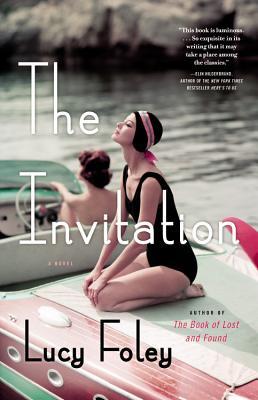
Friday Book Whimsy: The Invitation

28118525A lush and sultry novel that takes place partly in Rome and partly on a boat sailing the Italian Riviera? How can it go wrong?

The Invitation, by Lucy Foley, indeed not only does NOT go wrong, but it hits the mark by a mile. I selected the book because of its Italian location (in particular, the time spent in the Cinque Terre, which is my favorite spot in Italy), but I was surprised and pleased to find an elegantly written novel of love, intrigue, and survival in the days following World War II.

Hal is a struggling journalist who moves to Rome to try and forget what happened to him in World War II. One night, after crashing a socialite’s party, he meets the mysterious Stella. They have a wonderful night together, though she shares nothing about her life with him. This is part of her allure. They part the next day, never anticipating meeting again.

Later, the Contessa, who was the person who held the party and who took a liking to Hal despite the fact that he crashed her party, invited him to join her and friends on her boat that was going to make its way to Canne, where a film she financed was going to open. She asked him to be the journalist covering the story. Much to his surprise, he learns that Stella and her husband – a rich and powerful man who also is financing the film – are part of the group.

His interest in her is sparked once again, but this time he sees that she is a different person when she is with her husband. As the novel progresses, we learn Stella’s story, as well as just what happened to Hal in the war that impacted his life in such a profound way.

I loved the location, but I also loved the story and the characters. Hal seemingly bears the weight of the world. The Countess is wise and kind. Some of the more peripheral characters are interesting and funny. We learn Stella’s back story little by little via flashbacks, and see why she is so fearful of her husband. We even gain an understanding of what makes her husband seem so cruel.

The ending was, in my opinion, spot on. The Invitation was a great read that I can highly recommend.

Here is link to the book.

unnamed

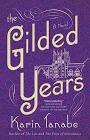
Friday Book Whimsy: The Gilded Years

searchBased on a true story, The Gilded Years, by Karin Tanabe is the story of a woman who is set to graduate from Vassar College, one of the most influential women’s colleges in the country, in the final years of the 19th Century. While women college graduates were not a dime a dozen in 1897, Anita Hemmings has a particular secret. She is, in fact, African American, and during that sad period of U.S. history, Black women were not permitted to attend this exclusive school.

But she was so bright and so determined to attend Vassar that she took advantage of her light skin and, with the approval of her family and the people in her community, she successfully passed herself off as Caucasian.

She is successful at staying under the radar until her final year, when she is given a new roommate, Lottie Taylor, the daughter of a wealthy New York City industrialist in the ilk of the Astors and the Rockefellers. Lottie is rich, spoiled, bright, and lots of fun. Despite her family’s warnings, Anita gets carried away, caught up in the entertaining life Lottie offers. Anita even goes as far as getting romantically involved with one of Lottie’s friends, the white son of a Chicago millionaire.

Soon, Anita’s carefully planned life begins to unravel, and she is faced with the possibility of being forbidden to complete her college career and graduate from Vassar.

There is no question that the historical facts are fascinating. Anita Hemming’s story was compelling and the reader can’t help but be furious that an intelligent – brilliant, really – woman in 1897 couldn’t attend a major university because of the color of her skin. I felt, however, that much of the book drifted away from the important story, and very often I felt as though I was reading a beach novel featuring the crazy antics of a couple of college students. Lots and lots of time was spent talking about the nonacademic activities. Interesting as the activities might have been, I would have liked a bit more meat about racism and sexism in the late 1900s and less about taking carriage rides in Central Park and the beautiful clothes that Anita borrowed from Lottie.

I sound harsh, and the fact of the matter is that I would recommend the book, with the caveat that it is a bit more of a light read than a serious analysis of a troubling time in our history. Having said that, I loved reading about New York City during the so-called gilded years, and I feel like Tanabe’s characters were realistic and interesting. I actually found Lottie’s character to be more compelling than Anita’s. It says a lot about an author’s writing when the reader can actually sort of like a character who ends up being pretty unlikable.

I think The Gilded Years would provide fodder for some discussion of the history of African American women in our country.

Here is link to the book.

unnamed

Friday Book Whimsy: The Last Moriarty

searchThere are dozens of authors who have taken on the task of recreating Sir Arthur Conan Doyle’s great detective Sherlock Holmes. In fact, I was shocked when I went on Amazon to try and figure out how many Sherlock Holmes-related books there are in existence. The most interesting to me is a fairly recent addition to the offerings – Mycroft Holmes — actually a mystery involving Sherlock’s brother Mycroft written by – wait for it – basketball star Kareem Abdul-Jabbar. Who knew?

For reasons that I have never quite figured out, as much of a mystery fan as I am, I have never gravitated towards Conan Doyle’s Sherlock Holmes books, which, of course, have almost a cult following. I mean to give them another try, as my interest in the great detective has been piqued again by both the PBS show Sherlock and the CBS show Elementary.

For this reason, I decided to give The Last Moriarty, by Charles Veley, a try when it showed up as an offering in my daily Goodreads Deals email a while back. I’m really ever so glad I did.

Veley didn’t contemporize the detective as does the CBS program Elementary. But he does throw in a few surprises, which for my part, I will not give away.

The two men who reside at one of the most famous addresses in London – 221B Baker Street – have been put to work on several cases. The most important involves the safety of some of the most important businessmen from the United States, including John D. Rockefeller, who have come to London for a meeting involving the national security of both countries. It seems, however, that though Holmes’ prime nemesis, Moriarty, is, in fact dead, one of Moriarty’s trenchmen has escaped from prison and is out to continue Moriarty’s work. At the same time, a young woman with a link to Sherlock’s past, makes an appearance. Together, the three attempt to save their friends from this evil enemy.

Veley’s book read easily, and the plot moved in an interesting manner. The addition of Lucy James to the Sherlock/Watson team provided a nice change, and an indication that there will be more books to come.

Good reading.

Here is link to the book.

unnamed

Friday Book Whimsy: The Woman in Cabin 10

imgresMurder on a cruise ship. It sounds very Agatha Christie, doesn’t it? All it needs is a small Belgian detective using his little gray cells to solve the mystery. Except about the only similarity between Agatha Christie and author Ruth Ware is their British background.

The Woman in Cabin 10 is Ware’s second novel. Her first, In a Dark, Dark Wood, (which I reviewed here) was a psychological thriller that took place in an all-glass house deep in the woods somewhere in England. Her second, The Woman in Cabin 10, is another psychological thriller, this one taking place on a cruise ship.

In fact, for the most part, The Woman in Cabin 10 is simply The Girl on a Train, except on a cruise ship. I found myself alternately at the edge of my seat because of gripping tension, or screaming out loud, “Oh for heaven’s sake, don’t have another drink!”

I found the book frustrating.

Laura Blacklock (called Lo) is a writer for a London magazine. Circumstances result in her getting a coveted assignment – reporting on the inaugural cruise of a very fancy schmancy small cruise ship on some rich-and-famous people will be traveling. This is her BIG CHANCE. DON’T. SCREW. IT. UP.

Unfortunately, at the very beginning of the book (and shortly before she leaves on this business cruise), Lo’s apartment is burgled while she is home. The burglar, though he has a gun, does not kill her, but instead leaves with some of her belongings. The incident shakes her up so much that she pretty much is a wreck for the rest of the book.

Already freaked out because of her own personal incident, the very first night on the cruise ship, she borrows some makeup from the woman in the next room, and later on witnesses a body being thrown overboard from that same room.

Well, it turns out no one else has seen that particular woman – EVER – and no one else heard a body being thrown overboard. And since Lo has been diagnosed with an anxiety disorder for which she takes antidepressants, and since she is already freaked out by her own scare prior to leaving, no one believes her.

So what does she do? She drinks too much, takes too many prescription medications, and tries to solve the mystery herself.

The main problem with the story, at least in my opinion, is that the character of Lo Blacklock is so inherently dislikable. I wanted to not believe her myself. She seems to be paralyzed with fear – something that might be realistic, but doesn’t make for a very interesting novel. And I seriously got so very tired of her being drunk and overmedicated. Just say no to drugs, Lo.

And yet, just as with Ware’s first novel, the writing is quite good. Good enough, in fact, that I continued to read. And while the ending didn’t blow me away with surprise, I found it to be fairly satisfying and somewhat unpredictable.

Overall, I can recommend this book for people who like thrillers such as The Girl on the Train. Just be prepared to understand that this novel, readers, is not the next The Girl on the Train, as hard as the author might try and as strongly as the publishers might try to sell the idea that it is.

Here is link to the book.

unnamed

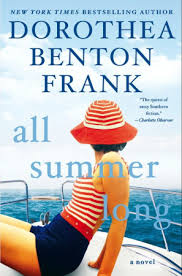
Friday Book Whimsy: All Summer Long

imgresI really used to like author Dorothea Benton Frank. I loved her descriptions of life in the low country of South Carolina. I liked her ascerbic characters and their interesting lives. I even liked the romance that was almost always a part of her story.

But her last few books have been a disappointment, and All Summer Long was really the worse one yet. I have never in my life read a book that moved along more slowly and that featured characters in whom I was less interested.

Olivia Ritchie and her husband Nicholas Seymour have a lovely condo in New York City. Olivia is a very successful interior-designer-for-the-rich-and-famous and Nicholas was an English professor who has recently retired. Having been born and brought up in South Carolina low country, he has gotten Olivia to agree to sell their NYC home and move to SC. What Nicholas doesn’t know (apparently being the dumbest college professor who ever lived) is that the couple is nearly flat broke.

Olivia continues to try to build her business by wooing an exceptionally wealthy man and his southern belle wife (who must be one of Frank’s most predicable caricatures in any of her books). As such, much of the book takes place in settings other than South Carolina. Olivia and Nicholas fly to Caribbean islands and Spain and even spend time at a mansion in New Jersey. Seeings as the South Carolina setting is about the only thing the book has going for it, the book falls entirely flat.

The moral of the story, I guess, is that money doesn’t buy happiness. But it was hard for me to find the moral in the story since all of the characters were rich and all of the characters seemed to love being obnoxious, having no interest in changing.

I hardly ever finish a book that I so heartily dislike, but I just kept plugging along because I couldn’t believe that the author wouldn’t redeem herself and her characters in some way. She simply didn’t.

I recommend you not waste your time on this novel.

Here is link to the book.

unnamed

Friday Book Whimsy: The Dollhouse

searchThe Barbizon Hotel for Women is/was a real thing. The hotel was a residence for women only from its inception in the late 1920s until it began allowing men as guests in 1981. The Barbizon was a safe place for young women new to the big city to live. Located on the upper east side of Manhattan, it was the home for many women trying to make their place in the world – women such as Lauren Bacall, Sylvia Plath, Grace Kelly, Eudora Welty.

The Barbizon Hotel may as well be one of the characters in author Fiona Davis’ captivating debut novel The Dollhouse. The Barbizon is the star of the show.

The novel is a back-and-forth story of two women, both who live in the Barbizon. One of the women, Darby McLaughlin, comes from a small town in Ohio, and is sent to New York City in 1952 by her bossy and obnoxious mother, who pays for her to attend a secretarial college in NYC. The second story is contemporary. Rose Lewis is a journalist who lives with her boyfriend in what used to be the Barbizon, but is now condominiums. However, a few of the units are still inhabited by former residents of the old historic hotel.

Rose is dumped by her boyfriend, and through a series of somewhat admittedly unlikely events, she becomes acquainted with a couple of the women who still live in their original apartments. Originally interested in these women primarily to write a story for the magazine for which she works, Rose eventually gets caught up in these two women’s compelling and interrelated stories about life in the 1950s, love, jazz music, and murder.

It is all quite delicious.

I think part of me liked the story so much because I found the whole notion that there was a hotel for women in NYC so interesting, and when I did some research and learned about some of the real-life residents who lived there, I was hooked.

Sometimes novels with back-and-forth storylines can become confusing and jumbled, but I found Davis’ handling of the style to be smooth and flowed well. Despite the fact that I was horrified at some of the choices Rose made in her search for the story, I liked the characters and found them to be realistic and interesting.

I think The Dollhouse would be a great read for a book club.

Here is link to the book.

unnamed

Friday Book Whimsy: Where’d You Go, Bernadette?

If I’d known the format of this book – entirely a series of e-mails, flashbacks, school documents, notes, and so forth – I assure you I wouldn’t have picked up this book. I generally know what I’m about to embark upon when I start a book, but I had heard so much about this novel that I dove in unprepared.

I couldn’t possibly be happier that I did, because Where’d You Go, Bernadette?, by Maria Semple, will undoubtedly be one of my favorite books read in 2016.

The characters in a book are very important to me. If I don’t like any of the characters – and in particular, the main character – I am liable to dislike the book. Bernadette Fox is not only likeable, she will be one of my favorite book characters ever. I wish she was a real person and that she was my friend.

Don’t be put off by the format of the book. The author puts it all together so cleverly that it easily reads like a novel despite the lack of chapters and traditional dialogue.

Bernadette seems to have the perfect life. Her husband Elgie is a bigwig at Microsoft Corporation in Seattle. Their daughter Bee is a prodigy, super-smart and funny, despite having been born with a heart defect that nearly killed her as an infant. Bernadette is a prize-winning architect known for “green” design long before anyone even knew what that meant. The marriage is interesting and happy.

But what most people don’t know is that Bernadette is agoraphobic. She does everything possible to avoid having to leave her odd house (originally it was a school and for the most part, nothing has changed despite the fact that the family lives there). She takes Bee to school every day, and does what’s absolutely necessary outside the house. Beyond that, she has a personal assistant (a person somewhere in India she has never met but with whom she communicates via email and text messaging) who literally manages Bernadette’s life, and therefore the life of her family.

What carries this plot, however, and prevents the reader from wanting to dislike Bernadette and her weird life, is Bernadette herself. She is funny as hell and looks at life in a way that is so interesting and quirky. It’s no wonder that Bee loves her mother so very much.

And then, one day, not long before the family was to take a trip to Antartica to reward Bee for her perfect grades, Bernadette vanishes. No one knows why or where. Only Bee is certain that her mother will turn up.

I know this plot sounds weird, but I’m telling you that you can’t help but like Bernadette, and it makes the story fun and interesting. One of my favorite things about Semple’s writing is that, while there are quite a few characters and plot twists, and we only know these characters through emails and other documents, they don’t all sound the same. The reader gets a very good sense of who these people are, for better and for worse.

The ending was clever and satisfying and just the way I would have wanted it.

Please don’t do what I could have easily done – been turned off by the format. I can’t recommend this book enough.

Here is link to the book.

unnamed

Friday Book Whimsy: Arrowood

searchI read and loved Laura McHugh’s debut novel The Weight of Blood, a creepy story that took place in the Ozark region of Missouri. So I was excited to read her newest novel Arrowood: A Novel, and I wasn’t disappointed. It was a page-turner, indeed.

The story is set in an old mansion on the banks of the Mississippi River in Iowa that was home to the Arrowood family for generations. So how do you get any better than a mystery set in a creepy old house?

Arden Arrowood was a young girl when her toddler twin sisters disappeared from the mansion on her watch, never again to be seen or heard.  Now, 20 years later, she has inherited the mansion upon the death of her estranged father. At loose ends in her life, Arden is happy to return to the mansion, which she feels was the only place where she really felt at home in her life.

But the house brings back the memories of that day, and she feels compelled to try to solve the mystery of what happened those many years ago. Where did the pretty twin girls go?

I mentioned in the first paragraph that The Weight of Blood took place in the Ozarks. The reason that is even important is because the author is masterful at making the setting part of the story. The town where the mansion is located is an actual town in the southeast tip of Iowa, barely within the state boundaries. I presume her depiction is realistic. It is easy to envision the line of old mansions lining the riverbed as the author so ably describes. That alone makes the story worthwhile.

But the plot is what the reader really sinks his or her teeth into. The story challenges the reader to think about what we really remember in our lives. It’s like the childhood game where one person whispers something into someone’s ear and by the end of the line of children, the story is completely different.

I loved this book and the characters. The ending, while somewhat surprising, had a realistic ring to it when the reader thinks back to the tips we read along the way.

Great, if somewhat spooky, book.

Here is link to the book.

unnamed

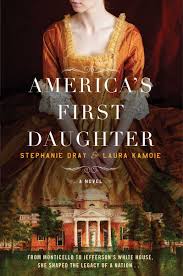
Friday Book Whimsy: America’s First Daughter

imgresWhen I was a young girl, we had a set of World Book encyclopedias. One section of the encyclopedias included information about all of the presidents up to, and including, John F. Kennedy. Subsequent presidents were included in the annual updates we also received as part of our encyclopedia subscription. That section was one of two that I read so often that the book would fall open to the spots; the other was the section on AKC dogs.

I practically memorized everything of at least a personal nature about each president, and more importantly to this review, each first lady. So I was well aware that the wife of our third – and arguably most interesting – president had died long before Thomas Jefferson was elected to office. The role of first lady, therefore, went to his eldest daughter, Martha, known by those who loved her as Patsy.

America’s First Daughter, by Stephanie Dray and Laura Kamoie, is a novel based on the life of Thomas Jefferson and, primarily, his daughter Patsy.

The story begins during the Revolutionary War when, according to the novel, the Jeffersons were forced to leave their home in Virginia and hide for months in a cabin in the deep woods  Jefferson owned. The stress caused by the war did nothing to help the health of Jefferson’s beloved wife Martha, who died shortly after childbirth. However, prior to dying, she made her eldest daughter Patsy promise to always take care of her father, and made her husband promise to never remarry.

Well, he didn’t, though the story of his long-term relationship with his slave Sally Hemings is well documented, and a major part of this book.

The story is told through the eyes of Patsy, and seems to be well-researched and true to the facts. It is well-known that Jefferson – along with many of our early forefathers – was a slave owner, and that fact – and its inconsistency with the whole all men are created equal belief as laid forth in our Bill of Rights – drives much of the story.

It is a fairly lengthy book, and much of it moved very slowly. I can’t highly recommend it except to those thoroughly interested in U.S. history in general, and the history of our third president in particular. Still, I love period literature, and it was interesting to read about the customs and the relationships during the days following the Revolutionary War.

The book, however, reminded me just what an amazing job our forefathers did in planning our government. Thank goodness.

Here is link to the book.

unnamed

Friday Book Whimsy: Temple Secrets

searchIn the way that I become aware of books to read (Amazon recommendations, daily deals offered by Book Bubs and Goodreads, regular emails from a variety of publishers), Temple Secrets by Susan Gabriel was somehow brought to my attention. My interest was captured because of my love affair with Savannah, GA, a city I have only once visited but that is the location of many books I choose to read. Think Midnight in the Garden of Good and Evil.

Only don’t think Midnight when it comes to this book. I wanted to like it a lot more than I did. The premise gave me great hope.

In this novel, the Temple family has been an influential part of Savannah’s history for generations. One of the reasons they keep their stature and influence is because going back as far as the Civil War, they have been keeping a written history of the indiscretions of the most well-known people of the city. Knowledge is power, as they say.

The book has been safely kept in a safe deposit box until suddenly, one-by-one, the secrets are being printed in the daily newspaper. No one knows who is responsible, because it certainly isn’t matriarch Iris Temple, the keeper of the book. Nor is it her half-sister Queenie, the daughter of one of Iris’ mother’s black housekeepers who has the same father as Iris. Queenie currently lives with Iris and cares for her. Nevertheless, Queenie, along with many others, becomes a suspect because it seems Miss Iris is an irascible, nasty woman with many enemies.

When Iris suddenly dies from a stroke, likely related to her concern over the release of the secrets, her estranged daughter Rose comes home from her ranch in Wyoming to bury her mother. She didn’t expect, however, to begin to see the family unravel as more and more secrets are revealed, some of which deeply affect those she loves.

Gabriel’s characters are interesting, and I rather enjoyed the descriptions of voodoo and Gullah magic. It just seemed that some of the situations were unbelievable and the characters, though interesting, didn’t seem realistic.

I would read another book by Gabriel as she writes primarily about the south which is my interest range. Still, it wasn’t the best book I’ve read about either Gullah magic or racial inequities.

Here is link to the book.

unnamed