Friday Book Whimsy: 2016 Favorites

pile-of-booksMy reading goal every year is 100 books. I’m not sure I have ever hit my goal, but I have come close. For example, in 2015, I read a total of 93 books. I’m afraid in 2016, I was a bit of a slacker, having only read 88 books – a couple of which were, quite honestly, novellas. In my world, they counted! Especially since I’m not graded on quantity. And I’m thankful I’m not rated on quality, because I don’t use the New York Times Book Review for my book choosing. Actually, I’m not graded on anything being retired and all….

Anyway, I post a book review each week, so if you are a faithful Friday Book Whimsy reader, you will be familiar with all of the books I am going to feature as my favorite five books of the year. The books may or may not have been published in 2016; they have just been read by me in the past year.  Frankly, most are books published in earlier years.

My five favorite reads in 2016, in no particular order….

Britt-Marie Was Here, by Fredrick Backman
Britt-Marie is a 60-something woman who leaves her controlling husband after she learns he is having an affair. She is compulsive and entirely set in her ways. She has been since she was a little girl and her much-adored sister is killed in a car accident. It should have been you, is the message that Britt-Marie got regularly from her mom, whether or not it was spoken out loud. So Britt-Marie begins the process of starting a new life. The only job she is able to find is the manager of a recreation center in a very small town. She has spent most of her life taking care of others and has no idea who Britt-Marie is and why anyone would care. But she learns that people do care, and begins to put together a new life where people accept her for who she is.

What I liked best about the book: Britt-Marie. I loved the main character so, so much. The book was entirely feel-good, and who didn’t need that this past year?

The Last Days of Night, by Graham Moore
The novel examines the invention of the light bulb, and the eventual replacement of gas lighting with electric lights in this entirely readable, eminently fascinating account of the legal battle waged between Thomas Edison and George Westinghouse. There is no one less interested in science than I, and yet I found the book to be fascinating. Moore uses real characters such as Edison, Westinghouse, Nikola Tesla, and Paul Kravath to give readers a snapshot of life in NYC in the late 1800s and how progress is REALLY made. It unexpectedly provided me with one of my favorite reads of the year.

What I liked best about the book: I love to learn about history and science via novels, as I find that so much easier to read. Moore was able to pique my interest in the notion of inventing and patents. It takes good writing to successfully accomplish that task.

Where’d You Go, Bernadette? by Maria Semple
This novel is everything I would hate in a book. The entire story is told via emails, text messages, flashbacks, school documents, and so forth. There is no driving narrative and virtually no dialogue. It is really all about the characters, but Semple does it so well that this book was a total pleasure to read. I had it in my library for a long time before I finally picked it up and read it, almost straight through. Bernadette is the star of the show, despite her quirky, agoraphobic nature. She is likable and believable. I would like to have her as my best friend. I don’t regularly reread books, but I will read this book again and again.

What I liked best about the book: The author’s characters are the best thing about the novel. Despite the fact that there is no driving narrative, she was able to paint clear and distinct pictures of each character through her unusual writing style.

The Nightingale, by Kristin Hannah
There is a plethora of novels available about World War II, and lots of good ones. I found The Nightingale to be one of the best I’ve read (and I’ve read more than my share) simply because it offered a different perspective on the awful war. Two sisters from a small village in France experience the war from entirely different perspectives – one as the woman and wife left behind to care as best she can for everyone around her, and one who becomes part of the French resistance. The look at the war from the women’s perspective, as well as Hannah’s beautiful writing, made this one of my favorite reads of 2016.

What I liked best about the book: There are many books – novels and nonfiction alike – about the horrific treatment of the Jews, and about the miserable conditions of the fighting men and women, but I liked reading about what it was like to try and keep your world in order under wartime conditions as the woman back home.

Tiny Little Thing, by Beatriz Williams
Christina “Tiny” Schuyler was the so-called good sister of the three Schuyler girls. She did everything the right way. She was good in school, she married well, and she was the perfect political wife to her ambitious husband. But what is missing is love. It made for a wonderful book with a thoroughly satisfying ending. Tiny Little Thing was the first book I had ever read by author Beatriz Williams, and I have read several since. They almost always have some connection to the Schuyler family, and they are very good. But Tiny Little Thing is my favorite.

What I liked best about the book:  Blackmail, adultery, Vietnam, dirty politics – all wrapped in a 1960s package. It took me a bit to get into the novel, but once I did, I couldn’t put it down.

unnamed

Friday Book Whimsy: My Cousin Rachel

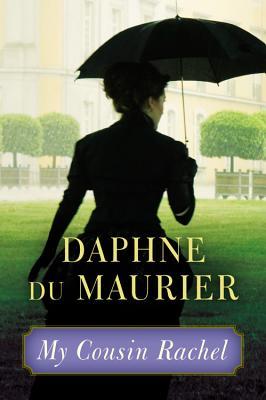
18869970Back in 2014, I reviewed what is one of my favorite novels ever – Rebecca by Daphne du Maurier. At the end of that review, I said that I hadn’t read anything else by the author, and likely wouldn’t because the book would never compare to Rebecca and I would thus be disappointed.

Recently, I succumbed to temptation, and read My Cousin Rachel, by du Maurier. I was definitely not disappointed. What an exceptional novel. I simply couldn’t put it down.

Oh, don’t get me wrong. Nothing could compare the romance and intrigue of Rebecca, a book clever because the title character – who really is the main character of the story – is long ago dead and buried. The book also has one of the best opening lines of any novel: Last night I dreamed I went to Manderley again. Mysterious, yet sublime, once you have read the novel.

My Cousin Rachel also has an intriguing first line: They used to hang men at Four Turnings in the old days. Not anymore, though.

Young Philip Ashley comes to live with his cousin Ambrose as an infant upon the death of his parents. Ambrose – the master of an estate in the Cornwall section of England – is a good and loving guardian despite the fact that he is a confirmed bachelor. Ambrose and Philip are very happy together.

Ambrose is a confirmed bachelor, that is, until he takes a trip to Italy when Philip is 24 years old, leaving him to manage the affairs. He writes letters to Philip, telling him of his activities. Soon, he begins talking about meeting a distant cousin named Rachel. Via the letters, Philip learns that Ambrose eventually falls in love with Rachel, and they marry. But then the letters become further and further apart, until finally Philip gets a mysterious letter from Ambrose that implies that Ambrose believes he is being poisoned by Rachel. Philip travels to Italy, but it is too late. Ambrose has died, supposedly of a brain disease believed to have been inherited from his father. Rachel is nowhere to be found.

Philip returns home, deeply saddened and angry beyond words at Rachel. Eventually, Rachel comes to visit, and much to Philip’s surprise, he likes her very much. In fact, as the months go by, he becomes more and more attached to “my cousin Rachel” as he calls her throughout the book. And then mysterious things begin to happen to Philip as well…..

Du Maurier’s story telling is beyond belief. Her stories are creepy without being gory. The characters are multifaceted, the opposite of one-dimensional. Her plotting is creative without being silly. I forbade myself from looking at the end of the book (as I often do, I’m ashamed to admit), and didn’t. Yet, wanting to know how the book ends kept me reading late into the night. Like Rebecca, the house and grounds were almost a character. The author’s descriptions are vivid and allow the reader to feel like they are part of the story.

The ending was highly satisfying.

My Cousin Rachel is a wonderful book that I highly recommend, especially if you like gothic literature.

Here is link to the book.  

 unnamed

Friday Book Whimsy: Belgravia

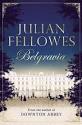
searchPeople who, like me, are still mourning the loss of our Sunday evenings with the Crawley family – Lord and Lady Grantham, the unpredictable Lady Mary and her sisters, the irascible yet loveable dowager countess, and the always loyal downstairs staff – take heart. Downton Abbey’s creator Julian Fellowes has written a book just for the likes of us.

Belgravia’s story begins on the eve of the Battle of Waterloo in 1815. The Duchess of Richmond holds a ball that is famous for decades as the highlight of social elegance. In addition to the standard social set, the duchess invited several newly-rich industrialists, shocking many of the aristocrats. A romance that is set in place at this ball between the son of an aristocrat and the daughter of a wealthy but not aristocratic working class man and woman sets off a string of intrigue, romance, scandal, and family secrets that would make Dowager Lady Grantham blush.

Fast forward to the 1840s, when secrets are revealed that set the story into play. Much like Downton Abbey, Belgravia has both the upstairs and the downstairs drama. The story, while admittedly predictable, is still fun and dramatic and a fascinating look at the mores of the the early- to mid-19th Century, when the Industrial Age was making common people wealthy.

Belgravia won’t win any literary awards. Fellowes’ novel reads more like a screenplay than a novel. But the characters are interesting and it’s fun to get a peek into their world, and the world around them. Unlike the Downton Abbey downstairs staff, the maids and cooks and butlers are not so good and open to corruption if the price is right. Lots of dastardly deeds.

A fun read for fans of Downton Abbey.

Here is link to the book.  

unnamed

Friday Book Whimsy: The Invitation

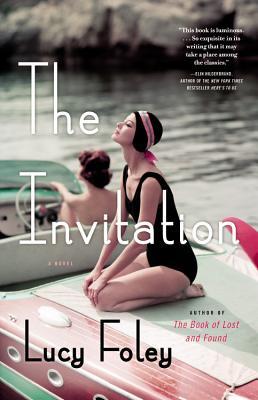
28118525A lush and sultry novel that takes place partly in Rome and partly on a boat sailing the Italian Riviera? How can it go wrong?

The Invitation, by Lucy Foley, indeed not only does NOT go wrong, but it hits the mark by a mile. I selected the book because of its Italian location (in particular, the time spent in the Cinque Terre, which is my favorite spot in Italy), but I was surprised and pleased to find an elegantly written novel of love, intrigue, and survival in the days following World War II.

Hal is a struggling journalist who moves to Rome to try and forget what happened to him in World War II. One night, after crashing a socialite’s party, he meets the mysterious Stella. They have a wonderful night together, though she shares nothing about her life with him. This is part of her allure. They part the next day, never anticipating meeting again.

Later, the Contessa, who was the person who held the party and who took a liking to Hal despite the fact that he crashed her party, invited him to join her and friends on her boat that was going to make its way to Canne, where a film she financed was going to open. She asked him to be the journalist covering the story. Much to his surprise, he learns that Stella and her husband – a rich and powerful man who also is financing the film – are part of the group.

His interest in her is sparked once again, but this time he sees that she is a different person when she is with her husband. As the novel progresses, we learn Stella’s story, as well as just what happened to Hal in the war that impacted his life in such a profound way.

I loved the location, but I also loved the story and the characters. Hal seemingly bears the weight of the world. The Countess is wise and kind. Some of the more peripheral characters are interesting and funny. We learn Stella’s back story little by little via flashbacks, and see why she is so fearful of her husband. We even gain an understanding of what makes her husband seem so cruel.

The ending was, in my opinion, spot on. The Invitation was a great read that I can highly recommend.

Here is link to the book.

unnamed

Friday Book Whimsy: The Gilded Years

searchBased on a true story, The Gilded Years, by Karin Tanabe is the story of a woman who is set to graduate from Vassar College, one of the most influential women’s colleges in the country, in the final years of the 19th Century. While women college graduates were not a dime a dozen in 1897, Anita Hemmings has a particular secret. She is, in fact, African American, and during that sad period of U.S. history, Black women were not permitted to attend this exclusive school.

But she was so bright and so determined to attend Vassar that she took advantage of her light skin and, with the approval of her family and the people in her community, she successfully passed herself off as Caucasian.

She is successful at staying under the radar until her final year, when she is given a new roommate, Lottie Taylor, the daughter of a wealthy New York City industrialist in the ilk of the Astors and the Rockefellers. Lottie is rich, spoiled, bright, and lots of fun. Despite her family’s warnings, Anita gets carried away, caught up in the entertaining life Lottie offers. Anita even goes as far as getting romantically involved with one of Lottie’s friends, the white son of a Chicago millionaire.

Soon, Anita’s carefully planned life begins to unravel, and she is faced with the possibility of being forbidden to complete her college career and graduate from Vassar.

There is no question that the historical facts are fascinating. Anita Hemming’s story was compelling and the reader can’t help but be furious that an intelligent – brilliant, really – woman in 1897 couldn’t attend a major university because of the color of her skin. I felt, however, that much of the book drifted away from the important story, and very often I felt as though I was reading a beach novel featuring the crazy antics of a couple of college students. Lots and lots of time was spent talking about the nonacademic activities. Interesting as the activities might have been, I would have liked a bit more meat about racism and sexism in the late 1900s and less about taking carriage rides in Central Park and the beautiful clothes that Anita borrowed from Lottie.

I sound harsh, and the fact of the matter is that I would recommend the book, with the caveat that it is a bit more of a light read than a serious analysis of a troubling time in our history. Having said that, I loved reading about New York City during the so-called gilded years, and I feel like Tanabe’s characters were realistic and interesting. I actually found Lottie’s character to be more compelling than Anita’s. It says a lot about an author’s writing when the reader can actually sort of like a character who ends up being pretty unlikable.

I think The Gilded Years would provide fodder for some discussion of the history of African American women in our country.

Here is link to the book.

unnamed

Friday Book Whimsy: The Last Moriarty

searchThere are dozens of authors who have taken on the task of recreating Sir Arthur Conan Doyle’s great detective Sherlock Holmes. In fact, I was shocked when I went on Amazon to try and figure out how many Sherlock Holmes-related books there are in existence. The most interesting to me is a fairly recent addition to the offerings – Mycroft Holmes — actually a mystery involving Sherlock’s brother Mycroft written by – wait for it – basketball star Kareem Abdul-Jabbar. Who knew?

For reasons that I have never quite figured out, as much of a mystery fan as I am, I have never gravitated towards Conan Doyle’s Sherlock Holmes books, which, of course, have almost a cult following. I mean to give them another try, as my interest in the great detective has been piqued again by both the PBS show Sherlock and the CBS show Elementary.

For this reason, I decided to give The Last Moriarty, by Charles Veley, a try when it showed up as an offering in my daily Goodreads Deals email a while back. I’m really ever so glad I did.

Veley didn’t contemporize the detective as does the CBS program Elementary. But he does throw in a few surprises, which for my part, I will not give away.

The two men who reside at one of the most famous addresses in London – 221B Baker Street – have been put to work on several cases. The most important involves the safety of some of the most important businessmen from the United States, including John D. Rockefeller, who have come to London for a meeting involving the national security of both countries. It seems, however, that though Holmes’ prime nemesis, Moriarty, is, in fact dead, one of Moriarty’s trenchmen has escaped from prison and is out to continue Moriarty’s work. At the same time, a young woman with a link to Sherlock’s past, makes an appearance. Together, the three attempt to save their friends from this evil enemy.

Veley’s book read easily, and the plot moved in an interesting manner. The addition of Lucy James to the Sherlock/Watson team provided a nice change, and an indication that there will be more books to come.

Good reading.

Here is link to the book.

unnamed

Friday Book Whimsy: The Woman in Cabin 10

imgresMurder on a cruise ship. It sounds very Agatha Christie, doesn’t it? All it needs is a small Belgian detective using his little gray cells to solve the mystery. Except about the only similarity between Agatha Christie and author Ruth Ware is their British background.

The Woman in Cabin 10 is Ware’s second novel. Her first, In a Dark, Dark Wood, (which I reviewed here) was a psychological thriller that took place in an all-glass house deep in the woods somewhere in England. Her second, The Woman in Cabin 10, is another psychological thriller, this one taking place on a cruise ship.

In fact, for the most part, The Woman in Cabin 10 is simply The Girl on a Train, except on a cruise ship. I found myself alternately at the edge of my seat because of gripping tension, or screaming out loud, “Oh for heaven’s sake, don’t have another drink!”

I found the book frustrating.

Laura Blacklock (called Lo) is a writer for a London magazine. Circumstances result in her getting a coveted assignment – reporting on the inaugural cruise of a very fancy schmancy small cruise ship on some rich-and-famous people will be traveling. This is her BIG CHANCE. DON’T. SCREW. IT. UP.

Unfortunately, at the very beginning of the book (and shortly before she leaves on this business cruise), Lo’s apartment is burgled while she is home. The burglar, though he has a gun, does not kill her, but instead leaves with some of her belongings. The incident shakes her up so much that she pretty much is a wreck for the rest of the book.

Already freaked out because of her own personal incident, the very first night on the cruise ship, she borrows some makeup from the woman in the next room, and later on witnesses a body being thrown overboard from that same room.

Well, it turns out no one else has seen that particular woman – EVER – and no one else heard a body being thrown overboard. And since Lo has been diagnosed with an anxiety disorder for which she takes antidepressants, and since she is already freaked out by her own scare prior to leaving, no one believes her.

So what does she do? She drinks too much, takes too many prescription medications, and tries to solve the mystery herself.

The main problem with the story, at least in my opinion, is that the character of Lo Blacklock is so inherently dislikable. I wanted to not believe her myself. She seems to be paralyzed with fear – something that might be realistic, but doesn’t make for a very interesting novel. And I seriously got so very tired of her being drunk and overmedicated. Just say no to drugs, Lo.

And yet, just as with Ware’s first novel, the writing is quite good. Good enough, in fact, that I continued to read. And while the ending didn’t blow me away with surprise, I found it to be fairly satisfying and somewhat unpredictable.

Overall, I can recommend this book for people who like thrillers such as The Girl on the Train. Just be prepared to understand that this novel, readers, is not the next The Girl on the Train, as hard as the author might try and as strongly as the publishers might try to sell the idea that it is.

Here is link to the book.

unnamed

Friday Book Whimsy: All Summer Long

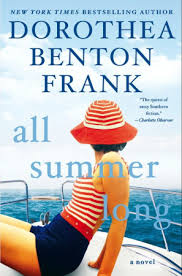
imgresI really used to like author Dorothea Benton Frank. I loved her descriptions of life in the low country of South Carolina. I liked her ascerbic characters and their interesting lives. I even liked the romance that was almost always a part of her story.

But her last few books have been a disappointment, and All Summer Long was really the worse one yet. I have never in my life read a book that moved along more slowly and that featured characters in whom I was less interested.

Olivia Ritchie and her husband Nicholas Seymour have a lovely condo in New York City. Olivia is a very successful interior-designer-for-the-rich-and-famous and Nicholas was an English professor who has recently retired. Having been born and brought up in South Carolina low country, he has gotten Olivia to agree to sell their NYC home and move to SC. What Nicholas doesn’t know (apparently being the dumbest college professor who ever lived) is that the couple is nearly flat broke.

Olivia continues to try to build her business by wooing an exceptionally wealthy man and his southern belle wife (who must be one of Frank’s most predicable caricatures in any of her books). As such, much of the book takes place in settings other than South Carolina. Olivia and Nicholas fly to Caribbean islands and Spain and even spend time at a mansion in New Jersey. Seeings as the South Carolina setting is about the only thing the book has going for it, the book falls entirely flat.

The moral of the story, I guess, is that money doesn’t buy happiness. But it was hard for me to find the moral in the story since all of the characters were rich and all of the characters seemed to love being obnoxious, having no interest in changing.

I hardly ever finish a book that I so heartily dislike, but I just kept plugging along because I couldn’t believe that the author wouldn’t redeem herself and her characters in some way. She simply didn’t.

I recommend you not waste your time on this novel.

Here is link to the book.

unnamed

Friday Book Whimsy: The Dollhouse

searchThe Barbizon Hotel for Women is/was a real thing. The hotel was a residence for women only from its inception in the late 1920s until it began allowing men as guests in 1981. The Barbizon was a safe place for young women new to the big city to live. Located on the upper east side of Manhattan, it was the home for many women trying to make their place in the world – women such as Lauren Bacall, Sylvia Plath, Grace Kelly, Eudora Welty.

The Barbizon Hotel may as well be one of the characters in author Fiona Davis’ captivating debut novel The Dollhouse. The Barbizon is the star of the show.

The novel is a back-and-forth story of two women, both who live in the Barbizon. One of the women, Darby McLaughlin, comes from a small town in Ohio, and is sent to New York City in 1952 by her bossy and obnoxious mother, who pays for her to attend a secretarial college in NYC. The second story is contemporary. Rose Lewis is a journalist who lives with her boyfriend in what used to be the Barbizon, but is now condominiums. However, a few of the units are still inhabited by former residents of the old historic hotel.

Rose is dumped by her boyfriend, and through a series of somewhat admittedly unlikely events, she becomes acquainted with a couple of the women who still live in their original apartments. Originally interested in these women primarily to write a story for the magazine for which she works, Rose eventually gets caught up in these two women’s compelling and interrelated stories about life in the 1950s, love, jazz music, and murder.

It is all quite delicious.

I think part of me liked the story so much because I found the whole notion that there was a hotel for women in NYC so interesting, and when I did some research and learned about some of the real-life residents who lived there, I was hooked.

Sometimes novels with back-and-forth storylines can become confusing and jumbled, but I found Davis’ handling of the style to be smooth and flowed well. Despite the fact that I was horrified at some of the choices Rose made in her search for the story, I liked the characters and found them to be realistic and interesting.

I think The Dollhouse would be a great read for a book club.

Here is link to the book.

unnamed

Friday Book Whimsy: Where’d You Go, Bernadette?

If I’d known the format of this book – entirely a series of e-mails, flashbacks, school documents, notes, and so forth – I assure you I wouldn’t have picked up this book. I generally know what I’m about to embark upon when I start a book, but I had heard so much about this novel that I dove in unprepared.

I couldn’t possibly be happier that I did, because Where’d You Go, Bernadette?, by Maria Semple, will undoubtedly be one of my favorite books read in 2016.

The characters in a book are very important to me. If I don’t like any of the characters – and in particular, the main character – I am liable to dislike the book. Bernadette Fox is not only likeable, she will be one of my favorite book characters ever. I wish she was a real person and that she was my friend.

Don’t be put off by the format of the book. The author puts it all together so cleverly that it easily reads like a novel despite the lack of chapters and traditional dialogue.

Bernadette seems to have the perfect life. Her husband Elgie is a bigwig at Microsoft Corporation in Seattle. Their daughter Bee is a prodigy, super-smart and funny, despite having been born with a heart defect that nearly killed her as an infant. Bernadette is a prize-winning architect known for “green” design long before anyone even knew what that meant. The marriage is interesting and happy.

But what most people don’t know is that Bernadette is agoraphobic. She does everything possible to avoid having to leave her odd house (originally it was a school and for the most part, nothing has changed despite the fact that the family lives there). She takes Bee to school every day, and does what’s absolutely necessary outside the house. Beyond that, she has a personal assistant (a person somewhere in India she has never met but with whom she communicates via email and text messaging) who literally manages Bernadette’s life, and therefore the life of her family.

What carries this plot, however, and prevents the reader from wanting to dislike Bernadette and her weird life, is Bernadette herself. She is funny as hell and looks at life in a way that is so interesting and quirky. It’s no wonder that Bee loves her mother so very much.

And then, one day, not long before the family was to take a trip to Antartica to reward Bee for her perfect grades, Bernadette vanishes. No one knows why or where. Only Bee is certain that her mother will turn up.

I know this plot sounds weird, but I’m telling you that you can’t help but like Bernadette, and it makes the story fun and interesting. One of my favorite things about Semple’s writing is that, while there are quite a few characters and plot twists, and we only know these characters through emails and other documents, they don’t all sound the same. The reader gets a very good sense of who these people are, for better and for worse.

The ending was clever and satisfying and just the way I would have wanted it.

Please don’t do what I could have easily done – been turned off by the format. I can’t recommend this book enough.

Here is link to the book.

unnamed