Friday Book Whimsy: Home is Where My People Are

searchSophie Hudson writes about what she knows best – her family and friends, her spirituality, and her southern roots.

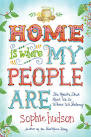
And in Home is Where My People Are: The Roads That Lead Us to Where We Belong, her second book, Hudson takes us along on her journey from childhood to being a grown up, including all of the bumps along the way. At times, I laughed out loud. At other times, I cried at a particularly poignant story. The book is eminently readable.

As in her first book, A Little Salty to Cut the Sweet, this book is a series of short tales about her life, a life that is probably not a lot more interesting than ours, but a helluva lot funnier because of Hudson’s clever perspective.

Hudson’s objective, or at least what I perceive as her objective, is to illustrate how our friends and family impact us in ways we don’t even realize at the time. Home is not just four walls that keep you warm and dry; it is the people who make you feel loved and teach you how to be a kind and productive adult just from knowing them. It is your family. But it is also your friends and your neighbors and your priests or ministers and your teachers.

As many of us did, Hudson struggled some in figuring out her relationship with God, and the people she met throughout her life have led her to a point where she is comfortable. The book, frankly, focuses a lot on her strong love of God, so if this isn’t your cup of tea, don’t bother reading it. She, however, doesn’t preach. She simply tells her story.

We met and came to love her family in her first book, and love them even more after her second. We see a side of her that is both unexpected and familiar. Hudson’s writing is so darn funny that you wish she was your best friend so that you could call her up and tell her about this funny book you just read.

I think that’s the sign of a good writer.

Buy Home is Where My People Are from Amazon here.

Buy Home is Where My People from Barnes and Noble here.

Buy Home is Where My People from Tattered Cover here.

Buy Home is Where My People from Changing Hands here.

Friday Book Whimsy: The Violets of March

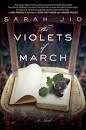
searchI love the title of this book – the first novel written by Sarah Jio, who has gone on to write six or seven more novels. And I have already admitted to frequently being drawn into a book simply by its cover or title.

The Violets of March is the story of Emily, newly divorced and trying to recover from this unexpected life change. Years back, she authored one bestselling novel, and has been unable to write another since. To once again find her equilibrium, she decides to spend the month of March visiting her beloved Aunt Bee on Bainbridge Island, across the sound from Seattle, where she had spent many happy summers.

As Emily settles in, she comes across a diary that introduces her to a mysterious love story from back in the 1940s, featuring an unknown woman named Esther, the diary’s author. She can’t stop reading, and eventually begins to learn that this story has a profound impact on her own life and the lives of those she loves. It explains many things about her life.

The book goes back and forth from Emily’s time on Bainsbridge Island to the 1940s, as Emily begins to put together some of the pieces of her own life.

The book is a romance novel, plain and simple. And there’s not a thing wrong with that. The descriptions of this lush island and the relaxed and friendly people who inhabit it caused me great enjoyment. The story was predictable, but quite frankly, I think part of its predictability was that I might have read the book before – a long time ago. It all sounded so familiar to me.

If you are looking for a pleasant and uncomplicated read, The Violets of March is for you.

Buy The Violets of March from Amazon here.

Buy The Violets of March from Barnes and Noble here.

The Violets of March from Tattered Cover here.

Buy The Violets of March from Changing Hands here.

Friday Book Whimsy: The Girl on the Train

Nana’s Note: Nanas Whimsies is currently undergoing some site construction changes. As these changes are taking place, I have noticed that some “comments” are vanishing. I assume the Case of the Missing Comments will be solved once my construction is complete. In the meantime, rest assure that I am actually seeing the comments, though they sometimes disappear. More about my web site changes at a later date.

searchI was drawn to the premise of Paula Hawkins’ novel The Girl on the Train even before it became apparent to me that it was going to be one of the Big Reads of 2015. Being a story teller at heart, it is not uncommon for me to observe someone in, say, the grocery checkout line, and create a story about him or her. The story becomes quite real to me, though I generally don’t see the person again and never find out whether or not my story is even remotely true.

The girl on the train is Rachel Watson, an unhappily divorced young woman who commutes daily on the same train to London. During her daily commute, the train passes a row of houses and Rachel observes two people living in one of the houses, an attractive couple she calls Jess and Jason. Rachel begins to invent a story about the two people she observes daily and their supposedly happy life.

Unfortunately, one day as she is passing by the house, she observes “Jess” kissing a strange man. The next day Rachel learns that “Jess” (whose real name, it turns out, is Megan) has gone missing. Thus, Rachel is drawn into the real-life story, as she feels compelled to make sure the police know about the stranger.

The Girl on the Train has a definite Gone Girl vibe to it. The story is narrated from three perspectives, giving the reader the opportunity to see what has happened from different viewpoints. We learn the depths of Rachel’s unhappiness, which lead her to severe alcoholism. (Or does her alcoholism lead her to unhappiness?) Her alcoholism becomes almost a character in the novel, often driving the story.

Megan and her husband (whose name isn’t Jason, but Scott) don’t have the wonderfully carefree life imagined by Rachel, and as the book progresses, we learn Megan’s disturbing story.

The final narrator is Anna, the wife of Rachel’s ex-husband, who seemingly wants nothing more than to have her husband Tom’s alcoholic ex-wife leave them alone with their baby and their life.

When Megan’s body is finally discovered, the story — as told from the different perspectives — unfolds. Creepy as it all was, I couldn’t put the book down.

Hawkins’ debut novel has the readability of that coming from a master storyteller, and I dare you to figure out the murderer very much in advance.

Comparisons to Gone Girl are inevitable, but the ending was more satisfying. I look forward to future books.

Buy The Girl on the Train from Amazon here.

Buy The Girl on the Train from Barnes and Noble here.

Buy The Girl on the Train from Tattered Cover here.

Buy The Girl on the Train from Changing Hands here.


Friday Book Whimsy: A Rule Against Murder

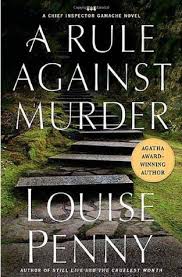
imgresI don’t make a habit of reviewing books that are part of a series. In particular, I wouldn’t normally review a book that is number 4 in the series.

Still, I can’t stop myself from writing a review highly recommending A Rule Against Murder, the fourth in a series by Louise Penny, if for no other reason than to strongly urge mystery lovers who haven’t yet discovered Inspector Gamache to do so AS SOON AS POSSIBLE.

And I would suggest you not start with number 4, but, just like Maria in The Sound of Music, start at the very beginning; it’s a very good place to start. Pick up Still Life, and begin your journey into the French-speaking part of Canada around Quebec in the little town of Three Pines.

Penny’s mysteries are gentle, but definitely not cozy mysteries. The townfolk – at least the ones we hear about in every book – are not typical small-town characters. They are complex, sometimes unlikeable, but always interesting. The protagonist, Chief Inspector Armand Gamache of the Sûreté du Québec, might be my favorite detective of all the mysteries I read – and I read a lot. He is smart and logical, kind and gentle, a combination of Sherlock Holmes and Miss Marple. People who meet him can be lulled into thinking he’s simple, but he most definitely is not.

The first three books in the series had a mystery-within-the-mystery that encouraged you to read the next story to see how and if it’s wrapped up. That mystery is brought to a surprising and satisfying finish at the end of the third book in the series, The Cruelest Month.

While that storyline was tantalizing, the absence of it made A Rule Against Murder a refreshing change. That, and the fact that the first quarter of the book is simply a love story about Inspector Gamache and his marvelous wife Reine-Marie. Their relationship is one of the things I like best about this series, and it permeates this entire book.

Gamache and his wife are taking their annual vacation at the country inn where they had spent their honeymoon many years earlier. Penny’s descriptions about the couple’s sweet and loving relationship make this a love story as well as a mystery.

The Gamaches must share the inn with an extremely unpleasant and odd family, and predictably, murder ensues.

Gamaches team arrive at the inn and begin the process of trying to figure out the identity of the murderer.

Readers are rewarded with Penny’s beautiful descriptions of the location and the marvelous food and service. I don’t think I’ve ever read a book that made me so wish I could be there. Well, except for the murder part.

The best thing about this book, and all of the Gamache mysteries, is Gamache himself. Treat yourself to a wonderful read.

Buy A Rule Against Murder from Amazon here.

Buy A Rule Against Murder from Barnes and Noble here.

Buy A Rule Against Murder from Tattered Cover here.

Buy A Rule Against Murder from Changing Hands here.


Friday Book Whimsy: The Unexpected Waltz

searchI’m on just about every email subscription list having anything to do with books as I am an avid reader and always on the lookout for something interesting to read next. It was through one of these emails – from publisher Simon & Schuster I think – that The Unexpected Waltz, by Kim Wright came to my attention.

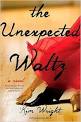
I was immediately drawn to the title and the cover – things I’m embarrassed to admit often draw me to a book. I looked it up on Amazon only to find it only had 33 or 34 reviews. That seemed like a bad omen. Perhaps few had read the book, and perhaps there was a good reason for that. Still, that title and that cover….

I’m happy to say I loved the book. And the dancing wasn’t the least of what I loved about the book, I must admit.

Kelly Wilder’s much-older husband passed away a year ago, and she has spent the past year hiding from life, despite the fact that he left her a fortune. In fact, we learn as the story goes on, that she has spent most of her life doing what she is expected to do and playing it safe. By accident, she stumbles into a dance studio run by a Russian immigrant, and before she knows what is happening, she has signed up for classes.

The dance classes and the people she meets through the classes awaken her to what life has to offer and for all intents and purposes change her life for the better.

I loved the storyline and the characters, but I equally loved the descriptions of the ballroom dances. Being a staunch fan of Dancing With the Stars, it was fun to read the about the dances, the difficulty of the steps, design of the clothing, and the focus required to dance well.

Many moons ago, some people with whom I worked confided in me about their concern for a friend of theirs who had signed up with Arthur Murray to learn to dance. Since he was a single male, they had initially been very supportive. However, what seemed to them as his growing dependence on the classes made them increasingly nervous. I never learned exactly how it all played out, but I thought about it as I read this novel. I can see how learning to dance could equate to learning to take control of your life, and become sort of addicting. Wright presents the potential of becoming addicted to dancing very well.

The novel offers a variety of characters, all loveable and quirky. I liked that the book is about friendship and never really a love story, at least not a typical love story. And I enjoyed seeing Kelly reach her potential at this later stage in her life.

It is really a lovely novel that left me feeling good, and wishing I could learn to dance!

Buy The Unexpected Waltz from Amazon here.

Buy The Unexpected Waltz from Barnes and Noble here.

Buy The Unexpected Waltz from Tattered Cover here.

Buy The Unexpected Waltz from Changing Hands here.


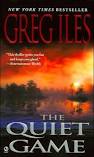
Friday Book Whimsy: The Quiet Game

searchEvery time I would look at Goodreads or Amazon or any other book reviewing website in 2014 for good mysteries, Natchez Burning by Greg Iles always came up. At one point I was on hold at the library for the book because there’s nothing I like more than a gothic southern mystery. At some point, however, I realized that Natchez Burning, while it proclaims to be a standalone book, is actually the fourth in a series. I’m somewhat of a stickler about reading books in order, (I like to watch characters develop) so I immediately determined I would start with the first in the series, The Quiet Game.

I’m so glad I did, as it gave me really good background on the main character – Penn Cage – and his personality.

Cage grew up in Natchez, Mississippi, and eventually became a lawyer, married, and practiced law in Houston, Texas. He returns to Natchez with his daughter following the death of his wife. Both he and his daughter are heartbroken and need the steadiness and love of his mother and father.

They are definitely welcomed with open arms by his parents, but it becomes abundantly clear almost immediately that things are not right in Paradise. His father, a highly-respected and well-loved doctor, is being blackmailed by a ruthless foe who has knowledge about a long-ago mistake the doctor made.

In addition to his parents’ problems, Cage is drawn into a long-ago murder case that has racial implications, and has the potential to bring down not only local and statewide officials, but it could impact the very head of the FBI.

The mystery is strongly compelling (I simply couldn’t put the book down), but I was also drawn into the lives of the characters themselves. I love southern fiction, and this was that at its very best. As many mysteries as I read, I have gotten quite good at figuring things out, but this one kept me guessing until the very end. Not necessarily whodunit, but how they were going to prove it. There were even times I doubted the good doctor. It seems lots of people know something, but they are all playing “the quiet game.”

I am so very glad that there are a few more in this series, and am eager to begin to work my way towards the critically-acclaimed Natchez Burning.

Buy The Quiet Game at Amazon here.

Buy The Quiet Game at Barnes and Noble here.

Buy The Quiet Game at Tattered Cover here.

Buy The Quiet Game at Changing Hands here.


Ethereal Reader: The Invention of Wings

searchI think we all tend to think that the fight for civil rights and women’s rights began in the 1960s. Or at best, the suffrage movement was the first time that women fought for justice. I suspect that there were very few brave enough to stand up for women’s right prior to the early 1920s, so it is really interesting to be introduced to equal rights advocates who lived in the early 1800s!

The Invention of Wings, by Sue Monk Kidd is the real-life story (told in novel form) of Sarah Grimke and her sister Angelina, who were loved and loathed alike around the 1830s. The Grimkes grew up in the south, daughters of wealthy slave owners in Charleston, South Carolina.

In Kidd’s novel, Sarah, the star of the show, is given the gift of a young slave of her very own for her 11th birthday – something she clearly doesn’t want and is extraordinarily uncomfortable having. But her parents force her to accept the gift and refuse to allow her to free the young slave girl, known as Hetty to her white owners but as Handful to her mother and her fellow slaves.

Kidd’s novel is written in a back-and-forth style – one chapter is life as seen by Sarah Grimke, the next is life as seen by the fictional slave girl Hetty. Through their accounts, we become acquainted with the Grimke family as well as Hetty’s strong-willed mother, Charlotte. Charlotte is determined to become a free woman, and extracts a promise early on from Sarah to make sure Hetty is free one day.

Sarah does what she can, within the boundaries of the society in which she lives. For example, she secretly teaches Hetty to read despite the fact that it is against the law to do so, and Hetty is punished when Sarah’s parents become aware that Hetty can read.

Kidd takes her characters through decades of their lives. Both Hetty and Sarah are met with happiness and great sadness as they age. Despite the fact that Hetty is a fictional character, Kidd gives her such a distinct personality that you feel as though you experience her difficult life right along side of her.

The novel gives a wonderful picture of a horrible time in our nation’s history, and does it in a way that makes us happy to know the characters involved. Well, at least the main characters, as Sarah’s parents (particularly her mother) and siblings are despicable. Their treatment of the slaves made me cringe. Unfortunately, as the world changed around them, Sarah’s mother and, in particular, a sister , really never did see the evils of slavery.

I can’t recommend this novel more. It deserves all of the accolades it received this past year. It isn’t the easiest novel to read as the subject matter is disturbing, but Kidd’s writing and her development of this extraordinary pair of women makes it all worthwhile.

As an aside, and having nothing to do with Kidd’s writing, I was able to obtain a electronic version of the book that didn’t have Oprah’s comments. As I prepare this review, I don’t think that is possible any longer. I think if you choose to read this book electronically, you will have to put up with her comments whether you want to or not. I find that unbelievably annoying and the fact that she thinks we all want to read her comments extraordinarily arrogant. But I’m just a crab. I don’t know if others feel the same.

Buy The Invention of Wings from Amazon here.

Buy The Invention of Wings from Barnes and Noble here.

Buy The Invention of Wings from Tattered Cover here.

Buy The Invention of Wings from Changing Hands here.


Friday Book Whimsy: RIP Kent Haruf

A number of well-known and well-respected authors have died this past year. P.D. James, Gabriel Garcia Marquez, and Maya Angelou come immediately to mind. There are likely others that I am forgetting right now. But as good as those above-mentioned authors are, their deaths didn’t hit me as hard as the recent death of author Kent Haruf. I seriously felt as though a dear friend had died. Well, not really one dear friend, but many dear friends who live in the fictional town of Holt, Colorado, where most of Haruf’s books take place.

Haruf was, plain and simple, a magnificent writer. His use of dialogue and character development are as good as it gets. I can hardly bear to say goodbye to Mr. Haruf and to any future stories he may have written. Thankfully, he had just this summer completed one final novel about Holt, Colorado. His wife apparently ordered him to finish the book before he died, and he complied! The novel, Our Souls at Night, is scheduled to be released in June.

In memory of Mr. Haruf, I am reprinting a previous book review of what will always be one of my very favorite novels — Plainsong.

Kent Haruf, may you rest in peace, and thank you for giving us friends in Holt.

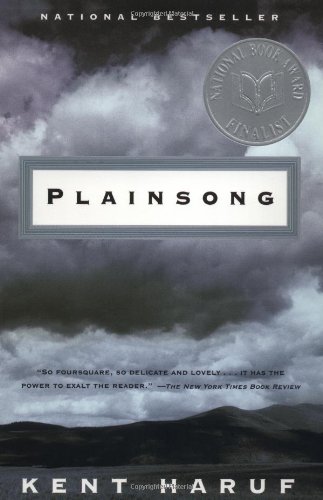
Plainsong

41jsYTkajiLI will say right up front that this was a reread. And I will read Plainsong again and again and again. This beautiful book is among my top three favorite books, no question about it.

Plainsong, by Kent Haruf, much like the television program Seinfeld, is a book about nothing. But I eagerly read every word, and while I read, I kept wistfully looking at how much of the book was left, simply not wanting it to end.

Plainsong is about five or six people who live in a fictional small farming town in eastern Colorado. Though their lives intersect, (because how can they not in such a small community?) each has their own story to tell.

Bobby and Ike are brothers – young boys of 9 and 10 – who are forced to face much sadness during these few months in their young lives. Their mother suffers from deep depression and leaves them with their father to move to Denver. Guthrie is a high school teacher who faces his own moral dilemmas. Victoria is a 17-year-old girl whose mother and father have both deserted her, leaving her to face her pregnancy alone. She turns to Maggie Jones, a kind teacher, who realizes the importance of relationships. She takes her to live with the McPheron brothers.

The McPheron brothers are the stars of the show. Harold and Raymond McPheron are old bachelors who have lived together since birth, in the same house. They are hard-working ranchers who are set in their way, living their simple life. They are kind, however, the kindest, most endearing characters you will ever meet in a book. It is safe to say that the McPheron brothers are two of the most memorable characters I have ever come across in a book. I have never forgotten them, and I never will.

Haruf’s writing is beautiful. It’s why the book is worth reading, plain and simple. He writes in short, clear sentences. His descriptions are simple, not elegant in that phony way that some authors have. You can so clearly see and smell and taste what he describes.

You don’t have to be very far into the book to see what I mean. In the first few pages, Guthrie is waking his sons for school. They are having trouble waking up, but he finally succeeds and leaves them. A few minutes later, he walks again past their room.

Here’s what Haruf says:

When he returned to the hallway he could hear them talking in their room, their voices thin and clear, already discussing something, first one then the other, intermittent, the early morning matter-of-fact voices of little boys out of the presence of adults. He went downstairs.

When I read that paragraph, I immediately thought about the sounds of my little grandkids when they are downstairs playing together – just two of them. I can’t really hear what they’re saying, but I hear their little voices going back and forth, discussing their make-believe game, whatever it is, or discussing something important in their lives.  Haruf captured that experience in just a few words.

One of my favorite things about his writing is that it is so subtle. He doesn’t preach and he doesn’t horrify you with gore and violence, though violence does take place in this book. But he gets his point across through the eyes of the characters. An example: Ike and Bobby witness a terrible act by some teenagers. Later, they return to the scene, bringing along a friend to whom they had related the story. The boys are disturbed by their friend’s prurient and unsympathetic interest in what transpired and his desire to take something from the scene. These two young boys’ simple empathy to the girl who was the victim tells the reader so much.

Haruf’s dialogue is nothing short of magnificent. He uses a technique that I sometimes find distracting – he doesn’t use quotation marks to identify the dialogue. However, somehow it works in this book. The dialogue is so true, so realistic, that it doesn’t need to be set off in any way. In particular, the McPheron Brother’s dialogue is absolutely dead on right. When I would read their words, it would immediately set me in mind to some of my uncles, or older people I have met in my life, particularly small-town farmers or ranchers. You have to read it to know exactly what I mean. Haruf’s dialogue writing is unbelievably good.

This is a wonderful, wonderful book. Treat yourself to a read.

Buy Plainsong from Amazon here.

Buy Plainsong from Barnes and Noble here.

Buy Plainsong from Tattered Cover here.

Buy Plainsong from Changing Hands here.


Friday Book Whimsy: What Should I Read?

Nothing makes me happier than when I come across someone’s recommended reading list. My daughter-in-law Lauren recently sent me this link to a blogger she follows, who, while her blog is mostly about sewing and crafts, apparently also likes to read. This is a list of her recommendations, and I have read a few of them and concur. In particular, I share her love of the book Tell the Wolves I’m Home, by Carol Rifka Brunt. It is a lovely story.

Here is a link to her recommendations.

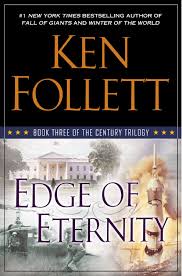
Friday Book Whimsy: Edge of Eternity

imagesEdge of Eternity is book three in a trilogy written by Ken Follett. Much like his Pillars of the Earth books, Follett presents history through fictitious characters and situations related to historical fact. The first book of this trilogy, Fall of Giants, introduced us to characters who lived during the early part of the 20th Century, including World War I. The second book in the trilogy, Winter of the World, carried these same characters forward, added offspring, and introduced us to events during the post-WWI period and into and just after World War II.

I really enjoyed both of those books. I always like learning history, or at least historical background, through novels that I find entertaining. Though both were enormously long, I couldn’t put either of those books down.

Winter of the World was published in the fall of 2012, so I have been waiting eagerly for this third book for two years. I literally wrote the date of publication in my calendar so that I could download the book immediately. I knew Follett was going to present the years of the Cold War.

I dove in with relish.

Follett is such a good storyteller that I found, once again, I was immediately caught up in the story. However, little things started bothering me.

Did people really talk like that?

Do all men really look immediately at a woman’s breasts, no matter the situation in which they’re meeting or who the woman is?

Do women really giggle, while men laugh?

Are all “good guys” sexy and handsome or pretty and beautifully dressed, and are all “bad guys” really homely and beady-eyed and sporting crew cuts?

Could Mr. Follett possibly be using, well, stereotypes?

But I kept at it because I am really interested in that time in history.

But seriously, when everyone in the entire world is pretty darn sure that while they are sleeping, the missiles located in Cuba are going to be shot at the United States which will retaliate by sending nuclear bombs into the Soviet Union and the world is going to end before daylight, what they all decide to do is have sex? And not with their spouse? My friends, according to Mr. Follett, there was an unimaginable amount of boinging going on all around the world the days during, and following, the Cuban Missile Crisis. Who knew?

I’m not exaggerating.

I PROMISE you I’m not a prude. But the amount of sex in this book became absolutely distracting to what was an attempt to be good storytelling. And the stereotypes that the author presented are embarrassing to his status as a well-read author.

About halfway through the book, I began counting the number of women who giggled. I came across seven instances of highly-positioned women in the Soviet Union and the United States who giggled (using Follett’s word), just in the second half of the book. I was greatly distressed. There wasn’t a single male giggler.

And I also PROMISE you that I am aware and comfortable with the fact that fiction writers don’t have to present facts. They can be biased. And unlike some critics, I don’t think Mr. Follett necessarily presented all liberal characters in a positive light and all conservative characters in a negative light. He certainly didn’t make the Kennedys out to be saints. I guess I must admit I can’t think of a single conservative character who was presented in any kind of positive light. But, still, that’s the author’s prerogative.

However, if you are claiming to write historical-based fiction and you don’t give President Ronald Reagan, Pope John Paul II, and Prime Minister Margaret Thatcher the slightest credit for helping to dismantle communism in the Soviet Union and East Germany, you simply can’t be taken seriously. If you are to believe the author, Mikhail Gorbachev pretty much single-handedly was responsible for the Berlin Wall being torn down. The pope and the Catholic hierarchy in Poland were concentrating on building up their own importance and Mr. Reagan was busy being a liar and a crook. Poor Mrs. Thatcher isn’t even mentioned.

I am sorry to say that I simply loathed this book, though I read all 1,100 plus pages. I owe the fact that I read the entire book to Follett, who, despite the faults I mentioned, tells a good yarn,  even if the characters were one-dimentional.

Buy Edge of Eternity from Amazon here.

Buy Edge of Eternity from Barnes and Noble here.

Buy Edge of Eternity from Tattered Cover here.

Buy Edge of Eternity from Changing Hands Bookstore here.