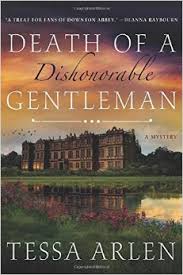
Friday Book Whimsy: Death of a Dishonorable Gentleman

imgresThink Downton Abbey with a big dash of Miss Marple, and you will begin to get a flavor of Death of a Dishonorable Gentleman, a debut novel by Tessa Arlen. Fans of Downton Abbey will heartily enjoy Arlen’s story featuring a look at the upstairs/downstairs phenomenon in pre-World War II England.

Lord and Lady Monfort are hosting their annual summer ball at their estate, Iyontwood. Both the upstairs privileged class and the downstairs servants have been involved in the preparations. Unfortunately, the ball concludes with the disappearance of a young house maid and the daughter of one of Lord and Lady Montfort’s close friends (who had attended the ball), as well as the gruesome murder of a particularly distasteful character, the nephew of Lord Montfort. Are the matters related? The search for the young girls and the killer ensues.

Lady Monfort sees immediately that her beloved son is going to quickly become the prime suspect. So she asks for the help of Iyontwood’s pragmatic housekeeper Mrs. Jackson (Downton fans, think Mrs. Hughes). Together, the two of them work to find the real killer using their skills and individual connections.  Since almost everyone at the ball seems to have a good reason for wanting the despicable character dead, the solution isn’t readily apparent.

In addition to being a pretty darn good murder mystery, the novel presents a clear picture of the crumbling of the peerage system beginning shortly after World War I. I don’t know if I would have enjoyed the novel as much were I not such a big fan of Downton Abbey. I definitely understood the upstairs/downstairs relationships better than I would have pre-Downton Abbey.

Arlen lays out the mystery very subtly and effectively. She leaves clues all along the way, so readers must pay attention. I did not solve the mystery and was surprised at the solution.

Since this is a debut novel, I’m not sure whether this will become a series. I rather hope so, because I was very fond of the characters and would like to meet them again. I think I can definitely count on more offerings from this writer, and I look forward to reading them in the future.

Buy Death of a Dishonorable Gentleman from Amazon here.

Buy Death of a Dishonorable Gentleman from Barnes and Noble here.

Buy Death of a Dishonorable Gentleman from Tattered Cover here.

Buy Death of a Dishonorable Gentleman from Changing Hands here.
 

Friday Book Whimsy: Recipe for Disaster

searchAuthor Stacey Ballis had me at miniature schnauzer.

Ballis is a new author to me, though she has written a total of eight books. Judging from the titles, many of them incorporate cooking and food into the book, something that will draw me every time. It also seems as though many of the books include a dog, and a different kind of dog each time. Recipe for Disaster had a miniature schnauzer, which is the kind of dog I had when I had a dog, and is probably the only kind of dog I would ever own.

I fully admit I bought the book because of the schnauzer, and was disappointed and surprised that the dog was actually kind of mean and not a bit loveable, at least to the main character, Anneke. Despite the author’s presentation of the dog, I must admit to liking this book very much.

There are many plot concepts going on. Recipe for Disaster includes recipes, a dusty journal discovered in the pantry of an old house, an abusive upbringing, best friends, all of the usual suspects included in what is referred to as chick lit, a term of which I’m not terribly fond.

In one single day Anneke loses both her job and her boyfriend. She decides to go all in on a project in which she is involved – an old house in an up-and-coming Chicago neighborhood that she has slowly been rebuilding into something magnificent. Anneke learned about old houses and construction from her stepfather, the only person who had ever loved her fully and unconditionally.

In the course of construction, Anneke comes across an old journal/cookbook written by the housekeeper/cook of the original owners back in the 1800s. Surprisingly, the book provides guidance and a sense of stability to Anneke, who also learns to cook by following the recipes.

There are some problems with the story. Ballis’ descriptions of the rehabilitation are detailed to a fault. Anyone interested in home design and/or architecture will find it fascinating. Even though I’m not particularly a home designer, I found her detailed description of the rehab project quite interesting. Still, I did a lot of skimming through those sections.

Furthermore, Ballis’ writing style is such that she uses long, detailed paragraphs, something that can become tedious reading. Nevertheless, I found the plot to be interesting and the characters likeable.

In fact, I liked the main character very much. Anneke is not a typical protagonist. She isn’t particularly attractive, she loves to eat Chicago’s delicious foods, and her weight illustrates her love for food. She is independent and has a hard time getting close to people. A surprise visitor and a strange new friendship/relationship helps Anneke to begin to trust and love.

The ending was somewhat predictable, but the journey to the ending was full of surprises.

I will definitely pick up another of Ballis’ books, and soon.

Buy Recipe for Disaster from Amazon here.

Buy Recipe for Disaster from Barnes and Noble here.

The Recipe for Disaster from Tattered Cover here.

Buy Recipe for Disaster from Changing Hands here.
 

Friday Book Whimsy: Under the Same Blue Sky

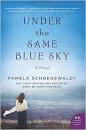
under the same blue skyUnder the Same Blue Sky is Pamela Schoenewaldt’s third novel and I have watched her novels get better with each offering.

Schoenewaldt writes about immigrants, or at least has in her three novels to date. Her debut, When We Were Strangers, is the story of a young girl who comes to America from the Abruzzo region of Italy to escape the whims of a lustful father. In Schoenewaldt’s second offering, Swimming in the Moon, her main character, Theresa, comes to America from Naples, Italy, along with her mother who struggles with mental illness.

Under the Same Blue Sky introduces us to a family who emigrated from Germany to what seems to be one of Schoenewaldt’s favorite locations – Pittsburgh. The main character, Hazel, lives with her mother and father who are shopkeepers and they are living a happy life. That is, until World War I breaks out and suddenly the neighbors no longer see American immigrants but instead see evil Germans who are America’s enemies.

In the course of adjusting to their disrupted lives, Hazel learns a devastating secret about her family, and everything changes. She eventually leaves to take a job as a teacher in a small farming community, where she begins to find happiness.

Until, oddly I thought, she discovers she has the ability to heal. Once the community realizes Hazel has the power to cure, she is nearly overcome by people wanting her healing powers and not understanding that not everyone can be healed.

I say “oddly” because once Hazel leaves this small community to learn more about her family secrets, the healing thing just sort of dies down.

Despite this rather strange and (I thought) random part of the book, I found the novel to be simply magnificent. I loved all of the characters and haven’t been able to forget them, despite the fact that I read this book some months ago. The story was interesting and I found I couldn’t put the book down.

One of the things I most liked about the story was getting another perspective about what was really an awful war – World War I. We forget how American Germans (and in World War II, also Japanese) were treated once they became America’s enemies. Interesting and sobering.

My only complaint, once again, is the storyline around Hazel’s ability to heal. I would LOVE to have another story that features her healing abilities and how it impacts her life without getting distracted by another storyline.

Nevertheless, I highly recommend this wonderful book.

Buy Under the Same Blue Sky from Amazon here.

Buy Under the Same Blue Sky from Barnes and Noble here.

The Under the Same Blue Sky from Tattered Cover here.

Buy Under the Same Blue Sky from Changing Hands here.

Friday Book Whimsy: Coming Home

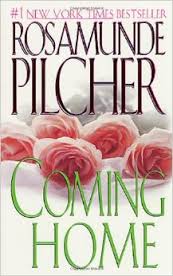
imgresIn my 61 years on this earth I have read exactly two Rosamunde Pilcher books. I read Shell Seekers a few years ago as part of a book club and I just recently completed Coming Home.  I enjoyed Shell Seekers (perhaps Pilcher’s most well-known book), but apparently not enough to quickly pick up another. However, I recently was in the mood to dive into a long, romantic, British novel after completing a particularly violent and disturbing book that involved dog fighting. That’s all I’ll say about that.

Coming Home was the perfect book to read.

I am always kind of embarrassed to review a book that probably most of my readers have read several times over the years. But I found Coming Home to be such an enjoyable book that even if you have already read it, I think you should pick it up and enjoy it again.

The novel takes place just prior to, during, and just after World War II, mostly in the Cornwall area of England. When the novel begins, Judith is a young girl. Her father is in some sort of foreign service, and Judith hasn’t seen him for several years. Her mother mostly lives with her father, but at the beginning of the novel, is with Judith and Judith’s 4-year-old sister Jess. Mother gets Judith settled into boarding school in Cornwall, and then she and Jess leave to be with Judith’s dad in Singapore, expecting Judith to join them in a few years.

Unfortunately World War II happens, and things go awry. But a wealthy family steps in and Judith becomes a part of their life.

The story has its ups and downs, its tears and laughter, and its romances and foibles. But the characters in this delicious novel are unforgettable. I get so tired of caricatures: Rich people are evil; uncles are perverted; lonely aunts tipple away their lives. Pilcher threw aside caricatures when she wrote this wonderful story, and her memorable characters result in an amazing story of love that transcends everything. And not just romantic love, but also love between parents and children and friends and aunts and uncles and cousins.

I loved the Cornwall background. Pilcher’s descriptions are so vivid and thorough. In fact, she takes so much time describing a place that there could be a danger of losing her readers. Fortunately, at least for me, her descriptions were so clear and lovely that I enjoyed every word, and felt throughout the book that I could see the colors and hear the sea and taste the salt in the air.

While lengthy (as all good British epic novels should be), I will never again hesitate to pick up a Pilcher novel and hope for the best.

Buy Coming Home at Amazon here.

Buy Coming Home at Barnes and Noble here.

Buy Coming Home at Tattered Cover here.

Buy Coming Home at Changing Hands here.

Friday Book Whimsy: At the Water’s Edge

searchAuthor Sara Gruen’s books seem to all have a peculiar bent. But peculiar in a good way, because Gruen does such a wonderful job of making her characters believable and, if not likable, at least memorable, and the stories interesting.

I haven’t read all of Gruen’s books, but I liked Water for Elephants so much that I was eager to pick up At the Water’s Edge even after reading the book’s unusual description. The Loch Ness Monster? Really?

The book captivated me from the very first page and I couldn’t stop reading.

It’s 1945, and Philadelphia socialites Maddie, her husband Ellis, and his best friend Hank make fools of themselves at a fancy dancy New Year’s Eve party. Ellis relies upon his parents’ money to live, and he was on unsure footing with them anyway because he married “below him.” Their embarrassing actions push his parents over the edge, and they cut off Ellis’ funds.

To try and get back on their good side, the three decide to travel to Scotland in the midst of World War II to try and track down the Loch Ness monster – something Ellis’ father had unsuccessfully attempted years before. In fact, it appears that his father actually faked photos of the so-called monster.

The trio stays in a modest inn run by a group of Highlanders who are insulted by the Americans’ snobbish ways and apparent lack of understanding of life in a country at war. Eventually, Maddie befriends the Scots, and becomes closer and closer to them as her marriage begins to deteriorate.

Gruen does an excellent job of character development. Little by little, readers begin to see the shallowness of the two men in particular, and the plot develops in a way that makes for a compelling story.

It’s a love story and an historical novel wrapped in one wonderful book. While perhaps not as clever as Water for Elephants, At the Water’s Edge makes me want to pick up the remainder of Gruen’s books.  It’s a great read.

Buy At the Water’s Edge at Amazon here.

Buy At the Water’s Edge at Barnes and Noble here.

Buy At the Water’s Edge at Tattered Cover here.

Buy At the Water’s Edge at Changing Hands here.

Friday Book Whimsy: My Brilliant Friend

imgresIt’s easy for me to tell if I dislike a book, if I like a book, or if I love a book.

If I dislike the book, I abandon book. Without a shred of guilt. But here’s how I tell the difference between me liking a book and loving a book. If I have a bit of spare time and I sit down with my IPAD intending to read but instead open up my newest game addiction Candy Crush Soda (to which  6-year-old Kaiya got me hooked), then I like the book.

I played a fair amount of Candy Crush Soda while reading My Brilliant Friend, by Elena Ferrante. At least at first.

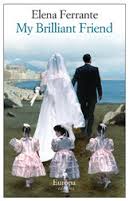
My Brilliant Friend tells the story of two girls – Lila and Elena – growing up in a suburb of Naples during the years following World War II. Both girls are extremely bright, but Lila is held back by parents who don’t believe that daughters need to be educated. Instead, she is expected to become part of the family’s shoemaking and repairing business. Elena, on the other hand, is allowed (not necessarily encouraged) to continue her education.

The book offers the reader a vivid picture of Italy in those years when the people were getting back on their feet following the war. The characters are passionate, often violent, having and displaying strong emotions.

The two girls continue to be best friends, though they often find themselves competing against one another. Lila is probably the naturally smarter of the two girls, and the book ends with her getting married to a man who likely won’t give her what she truly wants from life.

The book is the first in a series referred to as the Neopolitan Novels. The fourth book in the series – The Story of the Lost Child – is scheduled to be released in September 2015. Interestingly, very little is known – or at least disclosed – about the author, even in her native Italy. She may or may not be a mother. She may or may not be from Naples. She gives no face-to-face interviews and has offered only a scattering of written interviews. Unusual behavior for an author, most of who are looking for every way possible to garner publicity.

Once I was fully ensconced in the book, I set Candy Crush Soda aside, and can recommend the book as an excellent story of friendship and an interesting portrayal of the Italian culture.

Buy My Brilliant Friend from Amazon here.

Buy My Brilliant Friend from Barnes and Noble here.

Buy My Brilliant Friend from Tattered Cover here.

Buy My Brilliant Friend from Changing Hands here.

Friday Book Whimsy: Don’t Know Much About History

My blog audience knows by now that I love mysteries. At the end of the year, if I look at the list of books I have read, more than half are probably mysteries. And the ones that aren’t often will have a mystery element to them. Like who is the crazy woman in the attic in Jane Eyre?

But the other genre of books that I love is historical fiction. I love to learn about history via a fictional story. I wish, for example, that I had read the whole series of Henry VIII books by Philippa Gregory prior to our visit to England in 1993. That trip took place more than 20 years after I studied World History, and I thought “Henry VIII” was a song by Herman and the Hermits.

I have given some thought to the best historical novels I have read in the past couple of years, and I’m not ready to commit that the following are the five best historical novels I’ve ever read. But they are five really good novels from which I learned a lot about an historical event.

So, in no order…..

other bolelyn (2)Moloka’i by Alan Brennert is the story of a young Hawaiian girl who contracts leprosy and is sent to a leper colony on the island of Moloka’i. I know the plot sounds depressing, but it simply wasn’t. It was a heartwarming story about love. I learned that the island of Moloka’i actually did have a leper colony located on it, and it was where Father (Saint) Damian worked with lepers for years in the 1800s before he, himself, died of leprosy. It was wonderful to learn about this amazing man, though he certainly wasn’t the focus of the story but only a bit player. Moloka’i is one of my favorite books of all time.

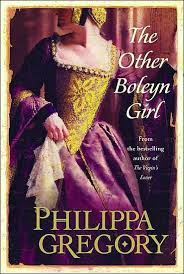
other bolelyn (1)The Other Boleyn Girl by Philippa Gregory was the first book I ever read by this author. The book was riveting, and got me hooked on reading all of the books about Henry’s bevy of wives and mistresses. The Other Boleyn Girl tells the story of Anne, Mary, and George Boleyn and their strange relationship through the eyes of Mary, who was Henry’s first Boleyn love and led to the infamous and unfortunate relationship with her sister Anne. Seemingly decently researched and definitely well-written.

orphan trainOrphan Train by Christina Baker Kline is an excellent story about an event in history I knew absolutely nothing about. Apparently in the late 19th and early 20th centuries, orphans from the East Coast were sent by train to the Midwest where they would be adopted by families to work on the farms or in the businesses. Orphan Train is the story of one of these orphans, now an elderly woman, who befriends a young orphan girl, tied by their backgrounds. Good writing, but mostly just an interesting story.

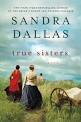
true sistersTrue Sisters by Sandra Dallas, is the story of four Morman women who move from their homes in Iowa City (one coming from as far away as England) across the plains and over the Rocky Mountains to Salt Lake City, on foot, pushing handcarts carrying all of their worldly goods. You can only imagine the obstacles they faced. Again, while I knew that Mormans moved from Iowa and Illinois to Salt Lake City, this particular mode of transportation was new to me. A beautiful story of friendship by one of my favorite authors (and not just because she lives in Denver!).

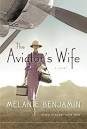
aviatorThe Aviator’s Wife by Melanie Benjamin is the story of Anne Morrow Lindbergh, the wife of Charles Lindbergh. Though the story is about Anne, the reader learns a lot about aviation and about the famous Charles Lindbergh (who, in my mind, was half cray-cray). The story of the kidnapping of the Lindbergh baby is particularly well-told and interesting.

Oh, what the heck, for good measure…..

inventionThe Invention of Wings by Sue Monk Kidd is the story of Sarah Grimke and her sister Angelina, feminists before anyone even remotely conceived of the word. But it is also the story of slavery as told in a secondary storyline about a fictional slave girl. The writing is beautiful and the story was amazing – both glorious and horrifying. A wonderful read.

And there you have it folks, six historical novels that should be on your bookshelf or in your electronic reader.

Friday Book Whimsy: The Life Intended

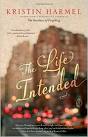
searchKate and Patrick are blissful newlyweds. One morning Patrick tells Kate that he has something important to talk to her about that evening. Unfortunately, he is killed in a random accident that day. (It happens in the first three pages of the book, and it’s the gist of the story, so I’m not giving away a secret.) Kate is inconsolable over losing her husband whom she loves so much. Randomly, she doesn’t seem to give one single thought to what he was going to tell her that evening.

Fast forward 12 years, and our Kate is getting ready to marry Dan, perfect husband material. She should be delighted, but isn’t. She just can’t get over the death of Patrick. It doesn’t help that she begins having weirdly realistic dreams about her life with Patrick as though he hadn’t died. In the dreams, she has a happy life that includes a hard-of-hearing daughter. From that moment on, the reader must begin suspending reality. Kate knows things because she sees them in her dreams.

I found The Life Intended, by Kristin Harmel, to be enjoyably readable, even if unrealistic. The main character, Kate, begins learning sign language as a result of her dreams so that she will be able to understand her daughter in future dreams. Through her ASL classes, she meets Andrew, who works with the Deaf community, especially young people. Kate begins to help him out through her occupation as a music therapist. Life unfolds….

Despite the decidedly odd premise of the story, I enjoyed this book I liked learning about the Deaf community, about sign language, and about music therapy. I enjoyed Harmel’s character development and liked the characters I was supposed to like and disliked the ones I should. I got a bit tired of Kate’s mooning over Patrick after 12 years. (I don’t think grief has a time period, but seriously, moooooooning). Still, the author was aptly able to depict the nature of Kate and Patrick’s relationship in just a few pages, and that is impressive.

Though some of the events that happened at the end were predictable, I was caught by surprise at others.

I definitely would pick up another of Harmel’s books based on The Life Intended.

Buy The Life Intended from Amazon here.

Buy The Life Intended from Barnes and Noble here.

Buy The Life Intended from Tattered Cover here.

Buy The Life Intended from Changing Hands here.

Friday Book Whimsy: A Spool of Blue Thread

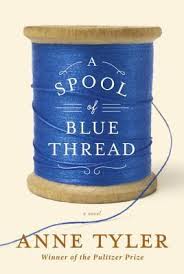
imgresAnne Tyler’s books, like the television program Seinfeld, are generally stories about nothing. To be more specific, they aren’t plot driven, but instead, are more about how the characters respond to something and/or to each other. And the gift is in her beautiful writing.

I think Tyler is one of those authors that you either like or you don’t. Nothing in between. And she has her good novels and her less good novels. I can’t say I’ve ever read one that I heartily disliked.

I think A Spool of Blue Thread, however, purportedly Ms. Tyler’s last novel (she has written 20 to date), is one of her better stories. I can’t relate a plot, really, because I’m not kidding when I tell you that there most often isn’t a plot as such. But I had strong feelings, positive and negative, for the characters in the book.

As with most of Tyler’s novels, A Spool of Blue Thread (and don’t you love that title?) takes place in Baltimore. She tells us about the fairly normal Whitshank family, but as you examine them further, you see the cracks and the gaps. Nothing earth shattering. No ax murderers. But the complicated people that all families include.

It is also the story of a house. A big house built by the father of our Mr. Whitshank. The younger Mr. Whitshank is a very likeable and patient man who struggles with the foibles of his quirky wife, his difficult eldest son, and his relentless aging. If you consider a house to have human qualities, this particular house has seen its share of laughter and crying. It was designed and built with love by a not particularly loveable man.

The best thing about Tyler’s stories is the tenderness in which she presents the characters. You can love them or hate them, but they are never presented unkindly.

Somewhere around the middle of the book, the story jumps back in time to give us a picture of Mr. Whitshank’s parents, and it felt sort of unexpected and confusing. Still, in the end, it gave us a good picture of not only his parents, but the Whitshank family members with whom we are familiar from the first part of the book. Because of Tyler’s lovely writing, it works.

If you want to get lost in what feels like a nice summer evening, pick up Tyler’s last novel. In fact, pick up any one of her novels.

Buy A Spool of Blue Thread from Amazon here.

Buy A Spool of Blue Thread from Barnes and Noble here.

Buy A Spool of Blue Thread from Tattered Cover here.

But A Spool of Blue Thread from Changing Hands here.

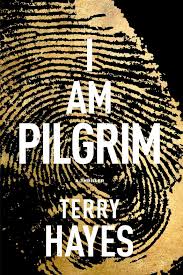
Friday Book Whimsy: I Am Pilgrim

imgresI am a big fan of mysteries. I even like a good suspense thriller – you know, the kind where it seems like an old English manor house is haunted but you find out in the last few pages that it isn’t, but that it was only the lord of the manor’s crazy wife locked in the attic.

But the one kind of mystery/thriller that I avoid like the Black Plague is one in which the book’s synopsis includes the phrase American intelligence operative. They scare me too much. I find them to almost always be confusing and unrealistic. Jack Reacher? Nope. Mitch Rapp? No, thank you. Scott Horvath? I’d rather not.

But as I perused books last year, I Am Pilgrim by Terry Hayes kept coming up. One reviewer called the book “unputdownable.” Wow. That is compelling praise.

So I bought the book for Bill because he is a big fan of Jack Reacher, Mitch Rapp, and Scott Horvath. Big. Fan.

He devoured the book and gave it high praise. Five out of five.

So I finally acquiesced and read the book.

With apologies to the reviewer from Booklist, it was indeed unputdownable. It was also unsleepable-at-night-after-you’ve-read-itable.

I Am Pilgrim is a murder mystery wrapped in an issue of national security. Connected but not the same. Having two stories in one book makes for good reading.

Pilgrim, who has answered to a number of names in his life and job, was an American operative who worked for an intelligence agency that oversees the CIA – sort of follows up and “handles” errors they may have made. He has retired, but, in helping the NYC police as sort of a hobby, he stumbles into what appears to be a simple murder mystery. It becomes clear to Pilgrim quickly, however, that the murderer was extraordinarily thorough. What’s more, the killer clearly followed the rules as written by Pilgrim himself in a book he published about criminal investigations after he retired.

At the same time, we meet a young Saudi Muslim who watches his father get beheaded because of perceived disloyalty to the Saudi royalty. He vows to destroy the United States because of what he sees as its allegiance to Saudi Arabia, and has devised an almost perfect plan with which to accomplish his goal.

The story plays out slowly, and Hayes leads the reader to nerve-wracking suspension. The author, a screenwriter by profession, tells the story of these two men in a back-and-forth style, and the reader sits at the edge of his or her seat and watches the horror unfold. It is up to Pilgrim to save the nation. And it is a race to the finish.

You hear talk about books that you simply can’t put down. I Am Pilgrim was a book I couldn’t put down. Despite its length (over 600 pages), the chapters were short and I just kept thinking “I have to know what happens next.”

As I read the reviews once I had finished the book, I was amused to read one viewer’s complaint that Hayes’ “science” was unreliable. Thank God for that, I thought to myself. Otherwise it would be an instruction manual for destroying the world.

I Am Pilgrim is definitely not for everyone. But I must admit I found it an absorbing story, and I am eagerly awaiting Hayes’ next novel.

Buy I Am Pilgrim from Amazon here.

Buy I Am Pilgrim from Barnes and Noble here.

Buy I Am Pilgrim from Tattered Cover here.

Buy I Am Pilgrim from Changing Hands here.