
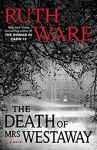
 Author Ruth Ware specializes in thriller novels with twists and turns, generally with protagonists who are troubled and often with questionable pasts. I will admit to always looking forward to her next novel, and I will also admit to almost always wondering why I was so eager to read the book when it often leaves me troubled or dissatisfied by either the characters or the ending, or both.
Unfortunately, The Turn of the Key, Ware’s latest thriller, left me feeling the same as I felt with the others. Unfulfilled and somewhat disappointed.
Rowan Caine stumbles across a help wanted ad that seems too good to be true. She has been working for terrible pay at a daycare center, and would like to make more money and be more fulfilled. Here is an advertisement for a job that not only pays well, but meets all of her other needs — some independence, darling children, an extremely nice employer. She applies for the job and is quickly hired.
That, of course, is when all hell breaks loose. The children’s father almost immediately makes a pass at her. The mother seems too good to be true. The caretaker is tall, dark and handsome. Before long, one of the children is dead, and the nanny is the prime suspect. She knows she didn’t do it, but who did?
The author must have a fascination with houses. The house in her novel In a Dark, Dark Wood was made entirely of glass, which added to the creepiness of the wooded setting. In The Turn of the Key, the house is “smart,” operating using technology.Though the creepiness of being watched by cameras and operating all of the systems using voice or touch technology could have — should have — contributed to the creepiness of the book, it missed its mark. As did the references to spiritual activity, which were just silly.
I will admit that the twist towards the end of the book caught me by surprise, but by that time I had lost interest in all of the characters. The ending was completely unsatisfying.
I can’t recommend this novel, despite the potential it offered.

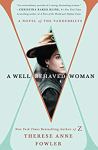 One of the things I always have to remind myself when I read historical novels is that, given that they are novels, the perspective depends on the whims of the author. I’ve read books — both novels and nonfiction — in which New York City socialite
 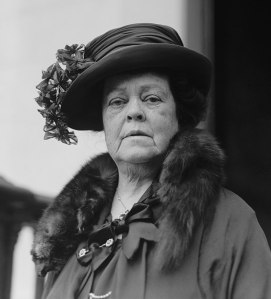 the Civil War. They were destitute. In this novel, Alva used her beauty and brains to win over C.J. Vanderbilt, who made no bones about the fact that he was marrying her because he felt she could use those same attributes to help his family be accepted by the New York City old money families.
 I admit to not hesitating to pick out a book because of the title or the cover. So The Floating Feldmans by Elyssa Fiedland caught my attention on both accounts. I mean, really? The Floating Feldmans? Who couldn’t want to read a book with that title?
 According to a footnote from Jim Fergus, the author of One Thousand White Women, during the presidential term of Ulysses S. Grant, consideration of a program by which white women would volunteer to wed members of Indian tribes as a way of assimilating the Indian people into white culture was actually considered. Considered and, not surprisingly, dismissed. One Thousand White Women is the story of what might have happened had the program actually taken place.
 Once in a while, I’m in the mood for a tome. A real multigenerational novel that has surprises and family drama and things that work out in the end. And, it takes many luxurious reading hours to get to the end. I am especially fond of an epic novel if the writing is good.
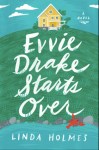 Sometimes it feels good to read a book that makes you smile, not only as you’re reading it, but after you put the book down. Evvie Drake Starts Over was a book that left me smiling long after I closed the book. Well, shut off my Kindle. Author Linda Holmes is a pop culture correspondent for National Public Radio, and has a good handle on everyday normal people. People like Evvie Drake.
 When I look back at my reading list thus far in 2019, it seems as though I’ve read a lot of books that take place during the Great Depression, or just after. It’s probably accidental, though I will admit to a somewhat perverse enjoyment in reading books set around this troublesome time. The people who lived through those years were/are so stalwart because they had to be in order to survive. They have an enviable sense of loyalty and tenacity.
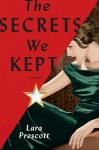 Between the end of World War II and President Ronald Reagan’s stern warning to the Soviet Union — Mr. Gorbochev, tear down this wall — was a period of fear of communism and secrets about weapons and rocket ships and likely a lot of misunderstanding, not only by the people in power, but by the common folk like you and me. This frightening environment was no more obvious than in the 1950s, when the so-called Red Scare was at its most pronounced.
 Author Fiona Davis writes novels about historic locations and addresses in New York City.
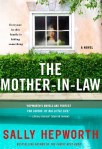 A thriller involving the death of a mother-in-law with the daughter-in-law being the prime suspect sounds juicy, doesn’t it? And, in fact, it was a really good thriller that kept me guessing until the very end.
 Nana's Whimsies