Friday Book Whimsy: Be Frank With Me

I approached Be Frank With Me, by Julia Claiborne Johnson, with some trepidation. After all, it was a debut novel in which the title character is 9 years old. Still, it was being compared to Where’d You Go, Bernadette – a book by Maria Semple – that I also approached with trepidation, and that book turned out to be one of my favorite books ever.  So I dug in. I’m still patting myself on my back for my great decision.

Alice Whitley is given an unusual assignment by the publisher for whom she works. She is to become the personal assistant to writer M.M. Banning (called Mimi), who is world-famous for a classic book she wrote when she was a young adult, but she hasn’t written a book since. She lives as a recluse of sorts with her 9-year-old son, Frank.

But the unconventional writer lost her fortune in a Ponzi scheme, and now she is forced to write another novel to pay her bills. Alice will handle her affairs and keep her on target while she writes. One of her main assignments is to take care of Frank.

Frank is not your ordinary 9-year-old. He has a photographic memory, he dresses like he is a movie star straight out of the 30s and 40s, and he has no filter. He says what he thinks and he thinks what he says. He is clearly a genius. While the author never even suggests that he is autistic, it’s what obviously comes to the reader’s mind.

But eccentric though he might be, that same reader will be unable to not fall in love with this child. He is innocent and wise beyond his years. He loves his mother and Mimi loves him right back. It is a sweet – if odd – relationship.

Alice’s fondness for Frank grows throughout the book, and she sets out to learn the secrets in Mimi’s (and therefore, Frank’s) past. Who is Frank’s father? Is it Xander, the odd fellow who shows up on occasion and gives Frank piano lessons? And what has made Mimi not write for so many years?

Like Alice, everyone who reads this book will fall in love with Frank. He is a character I will never forget. I hope Julia Claiborne Johnson doesn’t wait decades to write her next book as did Mimi because I am eagerly awaiting her next book.

Here is a link to the book.


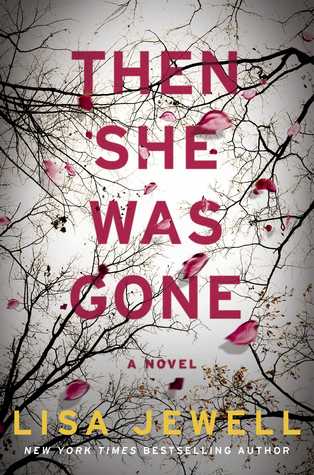
Friday Book Whimsy: Then She Was Gone

I can’t believe that there are books written by author Lisa Jewell that I haven’t read, because every time I pick one up to read, I can’t put it down. She’s that good.

Then She Was Gone is no exception.

Laurel Mack’s 15-year-old daughter Ellie disappeared 10 years ago on her way to school. Laurel has been unable to get her life back into order following her disappearance. She is mentally unavailable for her other children and she and her husband eventually split up.

One day at a coffee shop, Laurel meets Floyd, and the two hit it off. He is handsome, kind, and funny, and seems to be the perfect man with whom Laurel can get back into the saddle. Except, when she meets his 9-year-old terribly precocious daughter Poppy, Laurel is amazed to see that she looks exactly like Ellie.

Nevertheless, the two become close, and Poppy grows to love Laurel. But is Floyd too clingy? And why-oh-why does Poppy look so much like her long-missing daughter?

In typical fashion, Jewell doesn’t try to fool the reader. We know pretty early on who kidnapped Ellie. However, I dare the reader to figure out why,however. Jewell hands out the books’ secrets little by little, like candy on Halloween.

Then She Was Gone was creepy and suspenseful, with lots of curve balls. I found the ending to be satisfying, if not exactly what I’d hoped for.

Highly recommend.

Here is a link to the book.

Friday Book Whimsy: The Glass Forest

There are books in the popular thriller genre that capture the reader right from the get go and don’t let go. Two Girls Down, by Louisa Luna, (which I recently reviewed) was such a book. There are others that sneak up on you, sort of like Freddy Krueger hiding in the basement. The Glass Forest, by Cynthia Swanson, started sloooooow, but once it grabbed me, I kept on reading to see what would happen next.

It’s 1960, and 21-year-old Angie Glass is happily married to her husband Paul. They have the perfect life in a small town in Wisconsin, and have recently been blessed by the birth of a baby boy.

One day, Angie answers the telephone. On the other line is Paul’s 17-year-old niece Ruby. She informs Angie that her father — Paul’s brother Henry — is dead, and that her mother Silja is missing. Angie and Paul rush to their home in upstate New York. Ruby has visions of helping a inconsolable teenager. Instead, upon their arrival, they find a mysterious and perfectly calm teenaged girl.

As the story unfolds, we learn that neither Henry nor Paul are exactly who they appear to be. Through flashbacks of Ruby’s mother Silja, it becomes clear that Ruby doesn’t know her husband at all.

The story unfolds slowly, and I found myself both intrigued and disturbed at the same time. But one thing was for certain; I was unable to stop reading in my desire to find out the truth, the whole truth and nothing but the truth.

I found I had to keep reminding myself that the story took place in 1960, which was why Angie was so meek and submissive to her husband. Still, the end of the story surprises the reader with the strength of the three women — Angie, Silja, and Ruby.

The Glass Forest was suitably creepy and readable.

Here is a link to the book.


Friday Book Whimsy: The Summer Wives

It’s 1951, and young Miranda Schuyler joins her mother on Winthrop Island. She is still reeling from the death of her beloved father in World War II. Her mother is finally beginning a new life by marrying one of the wealthy summer inhabitants of the island, Hugh Fisher, and everyone should be happy.

Shortly after her arrival, Miranda witnesses a young lobsterman diving from his boat to save another fisherman who has been knocked into the water. She runs to help and is immediately attracted to the young lobsterman, Joseph.

It isn’t long, however, before Miranda realizes that though the island’s inhabitants appear to get along, there is an invisible dividing line between the full-time residents and the rich summer residents. Furthermore, there is hanky-panky afoot; hence, the novel’s title: The Summer Wives.

Miranda returns to the island in 1969, and readers learn that much has happened in the interim, including Joseph being put in prison for murdering Miranda’s stepfather Hugh. But now Joseph has escaped and Miranda is suspected of hiding him.

In author Beatriz Williams’ typical style, the story is told from different perspectives and  even from different years. The story flows, however, despite the different viewpoints.

The author has made a career out of books featuring different members of the Schuyler family. It is even possible to obtain a family tree of the Schuyler clan.

The Summer Wives is one of my favorite books from this author.

Here is a link to the book.

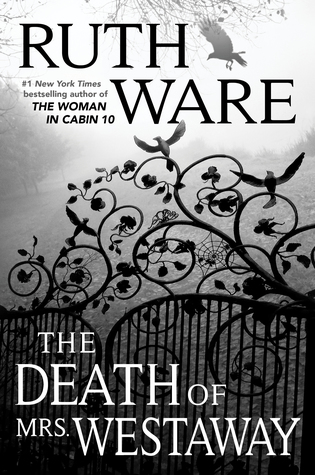
Friday Book Whimsy: The Death of Mrs. Westaway

When author Ruth Ware comes out with a new novel, I always get sucked in by the title. The Woman in Cabin 10; In a Dark, Dark Wood; The Lying Game. Her latest thriller caught my attention for the same reason: its title. The Death of Mrs. Westaway sounds like it could have been written by Agatha Christie.

I have always been somewhat disappointed by Ware’s stories, however. Her writing is respectable and the stories are always interesting enough that I keep on reading. It’s generally her characters that I find troubling. I have to find something in a protagonist to like or the book will leave me dissatisfied.

I found The Death of Mrs. Westaway to lean somewhat in that direction; yet, I found the main character — a young woman named Hal — to be a bit more likable and less one dimensional.

Hal’s life is at its lowest point. Her mother (she never knew her father) has died. Hal’s career as a tarot card reader like her mother barely covers her living expenses. In fact, she is in debt to a low-life lender who has threatened death if she doesn’t fork up the money in short order. Money she simply doesn’t have.

And then she receives a letter telling her that her grandmother has died and she has been left an inheritance. Voila! This could be the answer to all of her money problems. There is only one problem. Her grandmother died years ago. The letter must have come to her in error. Still, what harm could there be in playing dumb and going to the funeral and the subsequent meeting with the lawyer?

Well, it turns out things get more and more complicated when Hal finds out that she not only was mentioned in the will, but Grandmother left her the whole shooting match — most of her money and the estate in which she lives. The estate which is INCREDIBLY SPOOKY. Hal’s new aunts and uncles aren’t thrilled with this notion, though they try to be nice to her.

But not only is the estate spooky, there is a very creepy housekeeper who dotes uncomfortably on one of Hal’s new uncles. This could be Mrs. Danvers’ (of Rebecca fame) younger sister.

While Hal’s new family appears to be understanding, it quickly becomes apparent that someone doesn’t want her to be around. And why are there pictures of her mother — her real-life mother who by all accounts isn’t even related — around the house?

The story is tied up quite satisfactorily if somewhat predictably. Still, I found this to be my favorite of all Ruth Ware’s novels. Having said that, I must tell you that The Death of Mrs. Westaway is no Rebecca by a long shot.

Here is a link to the book.

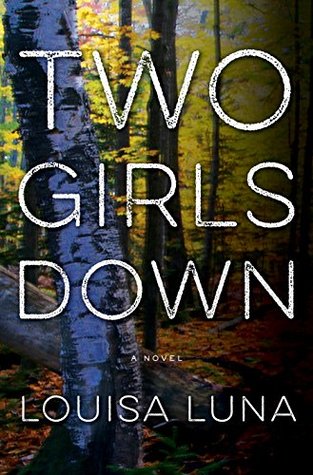
Friday Book Whimsy: Two Girls Down

In Two Girls Down, author Louisa Luna introduces a new series — or at least I hope it becomes a series — featuring a strong, determined private investigator named Alice Vega who specializes in finding lost children.

She is called upon following the apparent kidnapping of two young sisters from a Pennsylvania shopping mall after being left alone in a car for a few minutes while the mother runs in to make a purchase. The mother is a blue collar worker who finds the wheels of justice don’t necessarily turn as quickly when you’re lower income, especially when your small town’s police department is up to its neck in heroin and meth cases.  To make working with the police a bit easier, Vega convinces Max Caplan — a former policeman who resigned amidst a scandal — to help her find the two missing girls.

While pedophilia is rampant in this story, there is never a point where I felt uncomfortable or thought the author was being gratuitous. She told her story without the need for graphic details.

I found the main characters to be complex, interesting, and likable, despite numerous flaws. Cap is the divorced father of a teenaged girl, which makes him even more determined to find the missing girls. Should this become a series, I hope his daughter has a strong presence because I found her to be eminently interesting.

At first, it appears that Cap and Vega will have an antagonistic relationship; however, it isn’t long before each develops a grudging respect for the other. While there was only a hint of their apparent chemistry, the two detectives will make a formidable duo should the author decide to continue the series.

A good start, and a compelling read by a new writer in the popular genre of thrillers.

Here is a link to the book.

Friday Book Whimsy: A Dangerous Crossing

A murder mystery on a cruise ship just as the world is about to embark on another war appealed to me. After all, if Hercule Poirot could solve a murder mystery on the Orient Express, why couldn’t the same thing happen on a cruise ship?

It’s 1939, and Lily Shepherd is eager to leave her home and her difficult life in England for Australia, where she is promised a job as a domestic worker as part of a relocation program.

She boards a cruise ship where, despite the fact that she is a second-class passenger, there is still promise of romance and music and cocktails. It isn’t long before Lily and her two roommates meet a wealthy and mysterious couple with a rather twisted relationship. They don’t even seem to like one another, but they certainly know how to have fun. Lily becomes friends with some of the livelier passengers, and becomes smitten with one man that she hopes has similar feelings.

In a clever twist, the author — Rachel Rhys — opens up A Dangerous Crossing with a prologue in which the boat is already docked in Australia and a woman being led off of the boat in handcuffs, having been accused of a murder. The remainder of the book challenges readers to figure out who is murdered and who is the murderer.

Rachel Rhys is a pen name for a British author who has written a number of suspense novels, but this is her first attempt at an historical novel. I found the book quite readable, though the characters were a bit flat. The ending rather took me by surprise, though I had partially figured out what was going on.

If you don’t mind a bit of slogging along, and if you can suspend belief long enough to buy the notion that a second class cruise passenger could intermingle with first class passengers in 1939, you might enjoy the story. It is a relatively light read with lots of glamorous clothes and lifestyle descriptions.

Here is a link to the book.


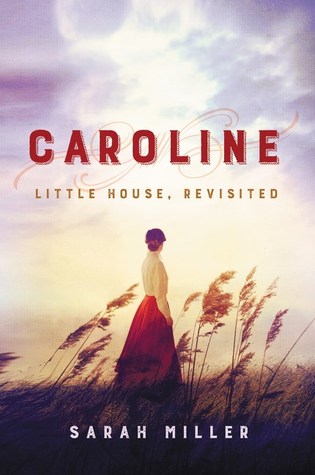
Friday Book Whimsy: Caroline: Little House, Revisited

I will confess to you — and is my face red to do so! — that I have never read a single Little House on the Prairie book by Laura Ingalls Wilder. I did watch the television program, but frankly not religiously. Still, I like All Things Westernso when I learned about Caroline: Little House, Revisited, a new novel by Sarah Miller, I was all in.

The novel was authorized by Little House Heritage Trust, the first knock-off to earn this honor. Caroline: Little House, Revisited tells the familiar story of the Ingalls’ journey from their home in Wisconsin to the Indian territories of Kansas. But, rather than telling it from the perspective of Laura, this story is told from the perspective of Caroline — Ma, as she is known to most of us.

In this novel, we are told about the perils facing the family on their journey, and also as they made their new life in the unfamiliar Indian territory in Kansas. Caroline, it would seem, is the glue that held the family together. She is not fearless — far from it, in fact. Her new life terrifies her, but she works endlessly and uncomplainingly, to keep her family fed and clothed and safe from all kinds of dangers.

The novel provides a picture of life in the 1870s in unsettled middle America. It provides a good look at what it must have been like to move, uninvited, into what had been Indian land — both from the settlers viewpoints and the viewpoints of the Indians. The story isn’t presented as black and white, but rather, gray.

The book shows the relationship between Charles and Caroline, and, if accurate, they were truly uncharacteristically in love. It confirms the books’ and television show’s assertion that Laura was a tomboy and extremely close to her father. It demonstrates the absolute reliance upon neighbors, whether you liked them or not.

Man, it was hard work being a woman in the pioneer days of unsettled territories. While I have always looked with some envy on pioneer women, this book makes me once again realize that I would never have made it. I am no Caroline Ingalls.

I loved this book and recommend it highly.

Here is a link to the book.

Friday Book Whimsy: The Italian Party

The only thing better than a novel set in Siena, Italy, is a novel set in Siena in the 1950s during the Cold War. Author Christina Lynch’s debut novel is a somewhat muddled but often clever mix of mystery, romance, and history, with a dash of spy thriller thrown in for good measure.

Scottie and Michael are newlyweds, each with a secret. Michael’s job, allegedly a American-built tractor salesman, takes him to Siena, in the heart of Tuscany. Scottie immediately embraces the food, the people, the culture of Italy, but Michael’s secret prevents him from enjoying their new home in the same way.

When Scottie’s Italian language teacher — a teenager who has a bit of a crush on the pretty American woman — disappears, Scottie takes it upon herself to try and find out what happened to her friend and language teacher. What follows is a almost-believable whodunnit.

The story is somewhat weak, and I found the ending to be a bit off-putting. Still, the setting was spectacular and fun. The author bribes her reader with stories about hearty Tuscan wines and delicious food. She tosses in funny, if somewhat sad, history about the fear of Communism following World War II and America’s self-appointed role in preventing its rise. She also gives the reader a taste of what it was like to be a woman in the 50s, or, for that matter, a man. Lynch even gives the reader a dash of the Palio — Siena’s famous horserace.

If you are a lover of All Things Italian — as am I — you will enjoy this novel.

Here is a link to the book.


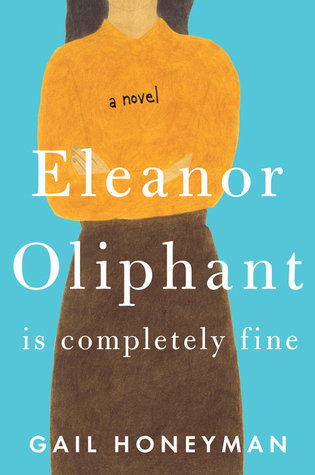
Friday Book Whimsy: Eleanor Oliphant is Completely Fine

Eleanor Oliphant is Completely Fine is author Gail Honeyman’s first book, and her debut novel, like her main character, is completely fine.

Eleanor Oliphant is 28 years old. She lives alone in a small apartment and works in an office. She has no friends and limited social skills. She says what she thinks without a filter. Her main activities are drinking too much vodka on weekends and talking to her mother on the telephone once a week or so.

Eleanor’s quiet life is disrupted when she meets Raymond, who is the IT person in her office. He is as kind as he is unkempt and unattractive. They become friends. The friendship is cemented when they help an old man they find unconscious and ill on the street. They take him to a hospital, where his life is saved.

As the novel progresses, the reader learns — little by little — about Eleanor’s completely dysfunctional upbringing. Eleanor, herself, knew little about her past life. As she becomes more comfortable with her friendship with Raymond, she gives him permission to look into her past. What he learns is horrifying.

The reader is kept in the dark as to where Eleanor’s mother actually is. It might be prison. It might be a psychiatric facility. It isn’t until the very end that the reader learns the surprising truth about Eleanor and her mother.

While Eleanor’s past is dark, the novel really isn’t. Eleanor is completely likable, as is Raymond. The novel is sad in places, but laugh out loud funny in other places. I have rarely enjoyed a story or liked a character so well.

The novel was somewhat overlong and this reader felt a bit more editing would have been helpful. Still, I recommend Elearnor Oliphant is Complete Fine wholeheartedly and without reservation. Because she is. Completely fine, that is.

Here is a link to the book.