Eatin’ Midwest

columbus house

Our family house — three bedrooms, one bath, for our family of six!

It didn’t matter what stressful event was happening in our lives – be it a failed math exam, a broken engagement, or the Cuban Missile Crisis, our Grammie Gloor would always say, “Ehhhhh, no matter what, you have to eat a little something.”

With that as our life’s motto, it is quite surprising that we don’t all look like Jabba the Hut.

What Grammie was really saying was that food is the thing that brings us together. Preparing a meal for others brings joy to anyone who likes to cook. Sitting together over a meal creates an atmosphere of love and closeness that is often hard to get otherwise.

It’s the attitude of people in the Midwest.

I grew up eating plain, simple, and good food. I am fully aware that not everyone who lives in Nebraska eats the way we did. I’m sure there were and are vegetarians, or people who avoid fried food, or those who enjoy cooking and eating a fine French meal. Maybe even people who eat seafood that doesn’t come from a can. Hard to imagine.

The food I grew up eating – both at home and when we ate out – was simple, delicious, often not particularly healthy, and it’s what I crave to this very day.

While Bec and I didn’t set out to eat more beef and fried food in one week than we generally eat in six months, it’s what happened. It was part of our effort to get back to our roots.

It started on our first day, a mere four hours after we got into the car. We stopped at Ole’s Big Game Bar in Paxton, NE. Paxton is a town of about 550 people in western Nebraska. The story goes that at 12:01 a.m. the day after the end of Prohibition in 1934, Ole opened his bar. He was, and continued to be for the next 35 years, a devoted big game hunter. The bar illustrates his devotion to this sport. As you dine, peering down at you are such taxidermied creatures as an elephant, a polar bear, a giraffe, as well as multiple deer, moose, and elk. It borders on creepy, albeit fascinating. The food, however, is delicious. Bec and I enjoyed the Sunday buffet, which included chicken fried steak and fried chicken. Why only eat one fried item when you can have two? A lettuce salad featuring iceberg lettuce. No arugula or watercress here. We enjoyed every bite.

Bec is being watched over by an elephant!

Bec is being watched over by an elephant!

While in Columbus, we ate at the restaurant at which our family celebrated nearly all important life events – birthdays, anniversaries, graduations. We had a glorious night catching up on the news of our cousins in the best way possible – over yummy food at the Husker House. In honor of Mom and Dad, we drank ice cold martinis. The piece de resistance – following a meal of a prime rib bigger than a basketball – was a grasshopper. Grasshoppers are dessert drinks made with Crème de Cacao, Crème de Menthe, and, if made correctly, ice cream. Mom and Dad served them each year at their annual Christmas party. Grammie, who rarely drank, would drink two or three of these yummy cocktails BEFORE dinner. Her cheeks would get pinker with each sip.

grasshopper drink

We ended our heart-stopping dining on our way home when we ate dinner the final night at Chances R, a steak house in York, NE. Figuring we had eaten enough beef, we elected to eat something healthy like chicken. Never mind that it was fried. Details, details. It was thoroughly yummy.

Chances R

Again, not everyone in Nebraska eats this way, and certainly not as often as we did last week. We had to fit a whole lot of cholesterol into a short period of time so we needed to do some serious eating. To balance out our diet, and to prevent us from having to make a beeline to a cardiologist as soon as we got back home, our cousin Kate kate mealprepared a delicious meal of tequila lime chicken, and her meal included VEGETABLES. Our cousin Chris also kept us full and content without causing us to keel over. And we enjoyed fresh oysters while in the Old Market of Omaha. So there.
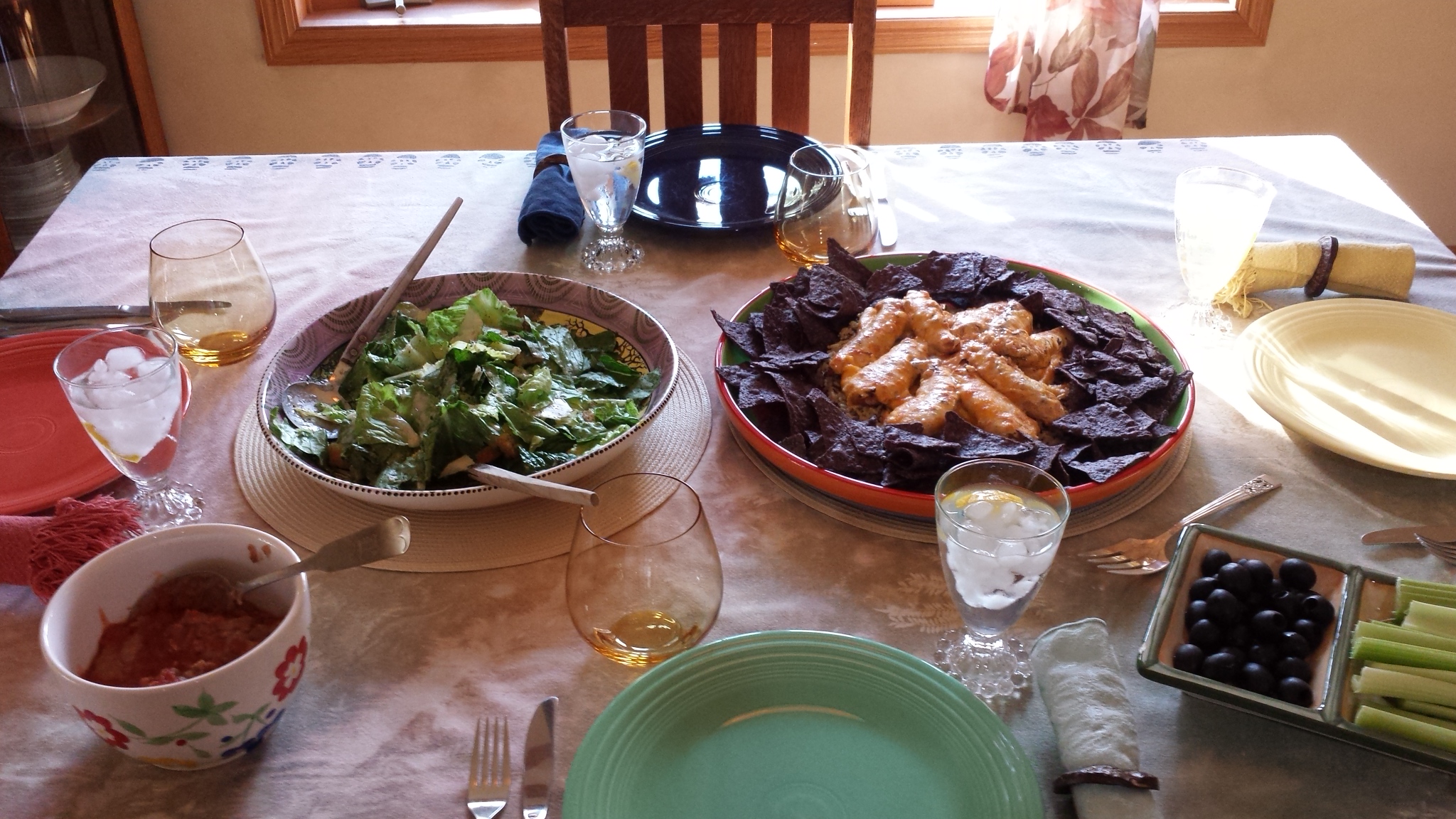
When our families got together, there was always food involved. Casseroles, jello salads, cucumbers with sour cream and dill, fried chicken, potato salad, macaroni salad. Lots of food. And always delicious. Feeding our bodies fed our souls. It’s the Midwestern way. Even today, when my family gathers, it’s almost always over a meal.

Some of my favorite things to make to this very day are recipes I collected from my mom and my aunts – particularly my Aunt Leona. When I make Mom’s wilted lettuce or Leona’s frozen cuke salad, it takes me back to my roots in the same way as looking at old pictures does. Food memories.

Bec and I enjoyed our culinary experiences almost as much as we enjoyed spending time with our relatives. The best part was that we mostly got to do the two together.

Leona’s Frozen Cuke Salad

2 qts. sliced cukes

2 T. salt

Mix and refrigerate 2 hours. Drain and rinse.

Make syrup

½ c. vinegar

1-1/2 c. sugar

Onion to taste

Green and red pepper to taste

Parsley (optional)

Bring to boil, then remove from heat. Cool the syrup slightly and pour over cukes. Refrigerate another 24 hours.

Put in containers and freeze.

Leona’s note: We prefer to keep in frig and eat.


Those Lazy Hazy Crazy Days of Summer

tomatoesI cook differently in the summer than I do in the winter. I think everyone does. In the winter, I love to do all those wonderful braises either in the oven or in my Dutch oven on the stovetop. The smell of a tough cut of meat cooking slowly, releasing its grip on its tight muscles to become delicious and tender makes my mouth water.

In the summer I’m more likely to fire up the grill and cook chicken or steak or some kind of chops with just simple seasonings like salt and pepper and maybe some Montreal seasoning (I’ve grown obsessed with the Chicago-style). Fast cooking and quick clean-up. Perfect for summertime when the house is hot. One of my favorite things to do in the summer is prepare the entire meal outside. Grilled vegetables. Potatoes cooked in tin foil. Chops or chicken cooked over the fire.

I’m pretty sure nowadays you can get most vegetables in grocery stores all year long. I remember the days when that wasn’t so. You had to wait until summer to enjoy fresh corn on the cob, for example. I recollect my mom buying home-grown corn on the cob from somewhere in the late summer – likely a farm stand on the side of the road — and bringing it home for us to clean. What I also remember is that every single time, at some point we found a worm in the corn. Organic corn on the cob, though we hadn’t ever even heard of that word. But, ewwwww. Man I hated finding that worm.

Now, I’m not promising that the vegetables you get in the winter are as good as those you get when the vegetables are in season closer to home. And of course they are much more expensive. That’s why I don’t generally buy any kind of melons any time except when they are in season, and even that is iffy. And there really isn’t anything more disappointing than a cantaloupe or honeydew melon that isn’t ripe. There is absolutely no flavor.

As an aside, I sometimes dream about the melon we ate in Italy. We would order cantaloupe with prosciutto as an antipasto any time it was available on the menu. Yum. It was always good. I don’t know how they do that. Maybe it’s because we always visited Italy in the summer when the melons were in season. In Colorado, we get Rocky Ford melons sometime midsummer, and they are also good. But where is the artwork by Michaelangelo?

Even though vegetables are available most of the year, there are certain things I simply don’t make in the winter. Mostly salads, I’d say. I make a really good salad out of fennel and grapefruit and oranges that is so refreshing when it’s hot outside. I love the tart flavor of the citrus coupled with the sweet licorice flavor of the raw fennel. Not for everyone, but I love it.

I also make any and every kind of tomato salad I can think of in the summer, particularly when the homegrown tomatoes start showing up at the farmers’ markets. A hothouse tomato is just as disappointing as an unripe melon. Maybe more so. As I wait on my tomato plants to begin bearing the fruit, and then wait a bit longer as the tomatoes ripen on the vine, I buy the heirloom tomatoes at Whole Foods. It’s a shame about the second mortgage and all, but I love any kind of salad made with tomatoes and I just can’t wait any longer. I recently made a tomato and avocado salad that had a delicious lime dressing.

Earlier this summer I bought a hanging tomato plant at Home Depot. It has a headstart on the other tomatoes and I am already harvesting the cherry tomatoes. Well, I’m harvesting the tomatoes that I manage to keep the grandkids from picking when they’re still green. It’s so tempting and all…. Mylee in particular just can’t keep her hands off! I’ve trained her not to pick them when they’re green, but boy-oh-boy, they are so snatched off the vine the second they show the slightest bit of pink when she’s around.

As the temperatures reach the 90s, I’m even able to talk Bill into eating a salad for dinner. Of course it helps if there is also steak and bleu cheese dressing involved in the mix.

Here are a couple of recipes for good summer salads.

Citrus Salad, courtesy Giada De Laurentiis and Food Networkgrapefruit fennel salad

Ingredients

1 large orange, peeled and ends trimmed

1 grapefruit, peeled and ends trimmed

1 large or 3 small fennel bulbs, thinly sliced

¼ c. extra virgin olive oil

¼ c. packed fresh basil leaves

Kosher salt and freshly ground black pepper

1/3 c. chopped walnuts, toasted

Process

Place a sieve over a medium bowl. Hold an orange over the bowl, and using a paring knife, cut along the membrane on both sides of each segment. Free the segments and let them fall into the sieve. Repeat with the grapefruit. Squeeze the membranes over the bowl to extract as much juice as possible, reserving the juices in the bottom of the bowl. Place the fruit segments and fennel in a salad bowl.

In a blender or the bowl of a small food processor, blend together the oil, basil, and 3 T of the reserved juice in until smooth. Season with salt and pepper to taste. Pour over the fruit and fennel. Add the chopped walnuts and toss until all of the ingredients are coated.


Avocado and Tomato Salad, courtesy laylita.comtomato avocado salad

Ingredients

1-2 ripe tomatoes, sliced

1 ripe and firm avocado, peeled, pitted and sliced

¼ white or red onion, sliced or diced

Cilantro leaves, whole or coarsely chopped

Juice of 1 lime

1-2 T. olive oil

Salt to taste

Process

Arrange the tomato slices on a large plate. Next add the onion, and finally the avocado slices. Drizzle with the lime juice and the olive oil. Sprinkle with cilantro and salt to taste.

Nana’s Notes: I didn’t use oranges or walnuts in my Citrus Salad, though both would be yummy. I just didn’t have them on hand. And yet I had fennel. Weird.Oranges would provide a bit of sweetness which would be good.


Feeling Herby

bush pickup truckI know I’ve told you this before (and let me just add that by time I post my 365th blog, there will be absolutely nothing that I haven’t told you before; bet you’re all looking forward to that), gardening is one of those things that I want to like to do, but simply don’t.

When we bought this house in Denver, the owners apparently were avid gardeners and enjoyed their backyard. One of the notable things about this house for me, in fact, was the raised garden bed in the back yard. ( Remember – I WANT to like to garden.) The homeowner told me the soil was chock full of nutrients and good for growing all sorts of vegetables, “even celery” I remember her saying. Like that meant anything to me.

But for the next three or four growing seasons, I gave it the ol’ college try. I would talk Bill into helping me turn the soil in the spring. (And by help me, I mean he would do it and I would watch.) I would plant seeds for early vegetables such as radishes and carrots and lettuce. I would push beans into the ground, thinking about all of the yummy ham and green beans I would make mid-summer. I planted five or six tomato plants, determined that I would can what we didn’t eat. Zucchini, green peppers, jalapeno peppers, even cauliflower and broccoli.
With great excitement, I would watch the little plants sprout. But pretty soon I saw weeds begin to sprout too. That’s when the trouble began. You see, I hate to weed. So before too long, there were more weeds than plants, and I could almost hear my beans gasping for air. And what wasn’t being overpowered by weeds was being eaten up by pests. Slugs? Ewwwwww.

After a few years, Bill got tired of turning over the soil for a garden that would not live to harvest. Thus ended my short-lived gardening career.

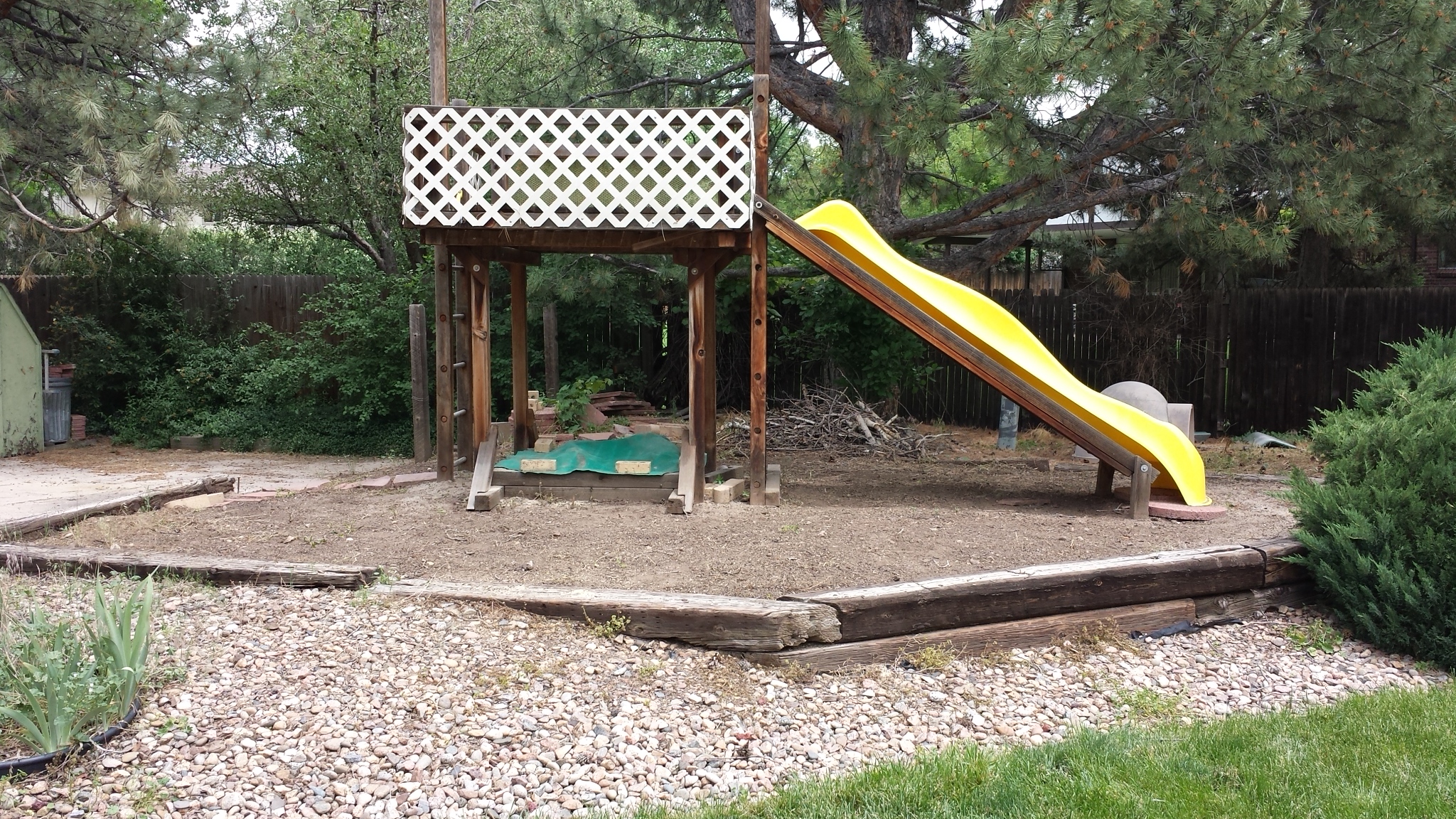
Instead, we accepted a donation of a children’s play set and had it placed right play areaon top of where my garden used to sit. The kids have had many, many hours of fun. And I’ve gotten my garden vegetables from farmers’ markets.

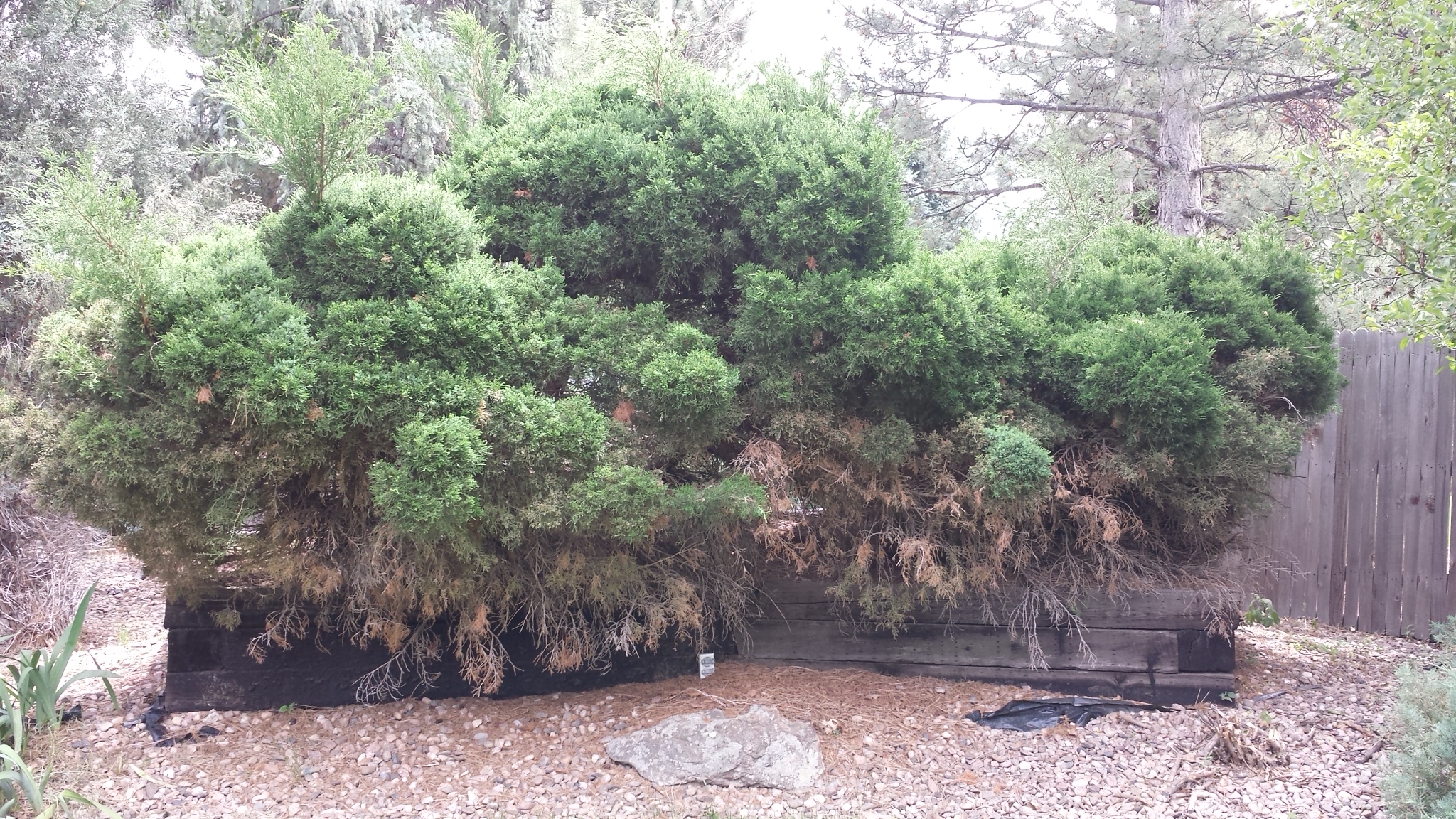
As sort of an aside, there is an area in our yard with a grouping of evergreen bushes. When we moved into the house, the former homeowner had carefully pruned the trees into the shape of three birds. That, too, was a short-lived experience. Here’s what the area looks like now…..

bushy pickup

At one point, Bill used his electric pruner and when he was all finished, we decided it resembled a pick-up truck. You can see the very slight resemblance even yet….

But no birds. Who do you think we are? Walt Disney?

Now I’m very happy to have three tomatoes planted in the ground – a yellow heirloom, an Early Girl hybrid, and a grape tomato. I also have one potted red heirloom tomato plant that seems to like its location on our patio. A basil plant sits in the ground amidst my petunias.

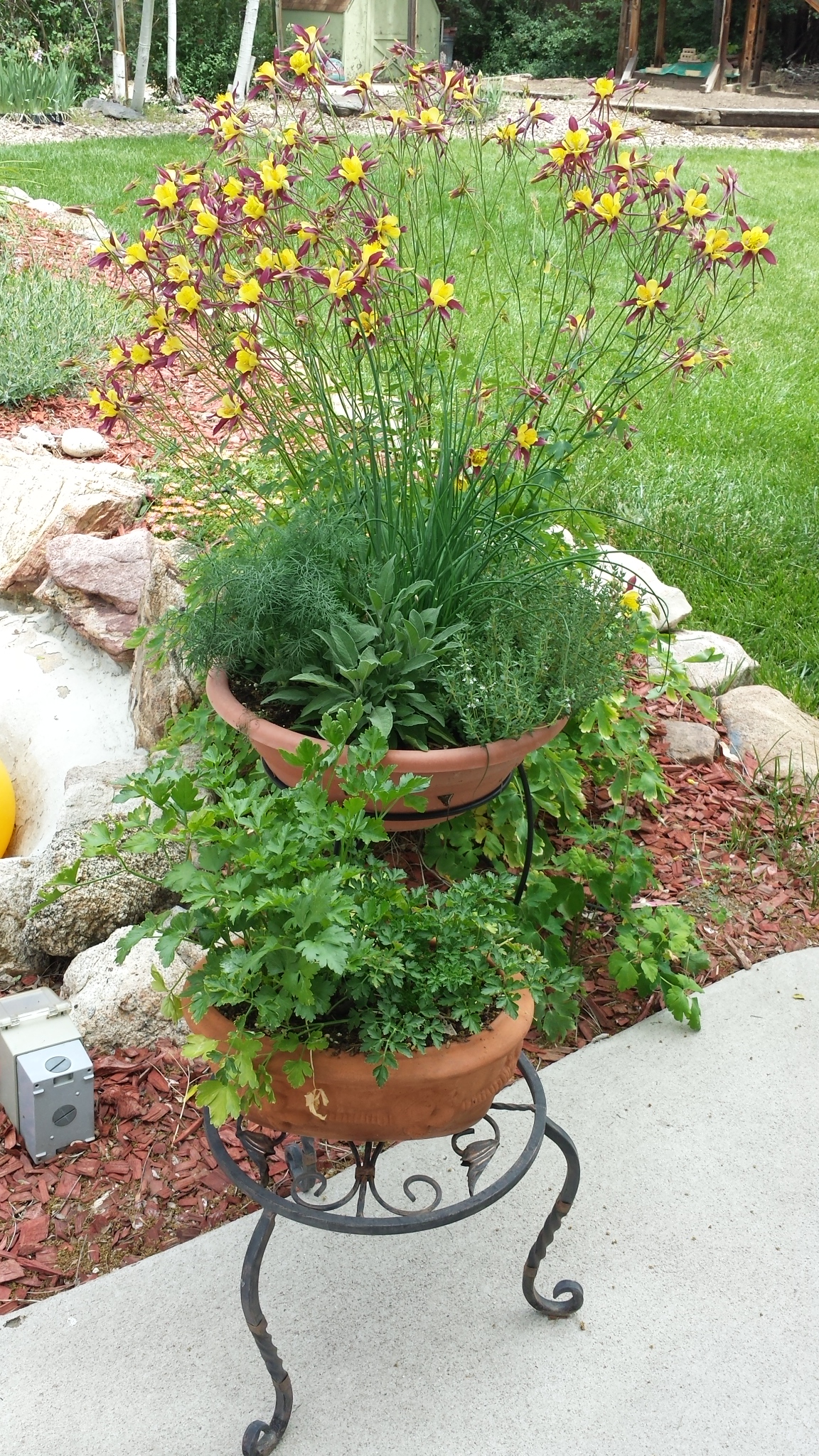
the screamI mostly focus my attention these days on my herb pots. I have one pot of Italian parsley. Another container holds dill, oregano, sage, thyme, and chives. I used to plant my herbs in a strawberry pot – you know, those tall pots that have the little pockets on the side? But each spring when I would go to empty out the dirt in order to refill the pot with fresh soil and herbs, invariably a centipede would be present and my heart would momentarily stop. I looked like the screamer in Edvard Munch’s famous painting. Now I go for a flatter pot from which I can easily dump the dirt into the garbage with my eyes closed, thereby negating the need to see a centipede and recreate The Scream.

All of the grandkids, and Kaiya in particular, love to rub their hands on the fresh herbs, thereby releasing the fragrant smell. They will sniff their fingers and excitedly pick off a piece of the herb plant and put it in their mouth to taste. My goal this summer is to teach them to cook with herbs.

Here’s one yummy recipe….

Scallopine Saltimbocca, Roman Style, courtesy Lidia’s Italian-American Kitchen

Ingredients

4 portions veal, chicken, turkey, or pork scallopine

Salt

Freshly ground black pepper

4 slices Italian prosciutto, cut in half crosswise

8-12 large fresh sage leaves

All-purpose flour

3 T. extra-virgin olive oil

6 T. butter

¼ c. dry white wine

1 c. chicken stock or chicken broth

Process

Season the scallopine lightly with salt and pepper, keeping in mind that the prosciutto is cured with salt. Cover each scallopine with a half-slice of the prosciutto. Tap the prosciutto with the back of a knife so it adheres well to the meat. Center a sage leaf over the prosciutto and fasten it in place with a toothpick, weaving it in and out as if you were taking a stitch.

Dredge the scallopine in the flour to coat both sides lightly. Tap off excess flour. Heat 3 T. olive oil and 2 T. butter in a large heavy skillet over medium heat until the butter is foaming. Slip as many of the scallopine, prosciutto side down, into the pan as fit without touching. Cook just until the prosciutto is light golden, about 2 minutes. Turn and cook until the second side is browned, about 2 minutes. Remove and drain on paper towels. Repeat with remaining scallopine, adding more oil if necessary.

Remove all the scallopine from the skillet and pour off the oil. Return the pan to the heat and pour in the wine. Add the remaining 4 T. butter and cook until the wine is reduced by about half, about 3 minutes. Pour in the chicken stock and bring to a vigorous boil. Tuck the scallopine into the sauce. Simmer until the sauce is reduced and lightly thickened, about 3 – 4 minutes.

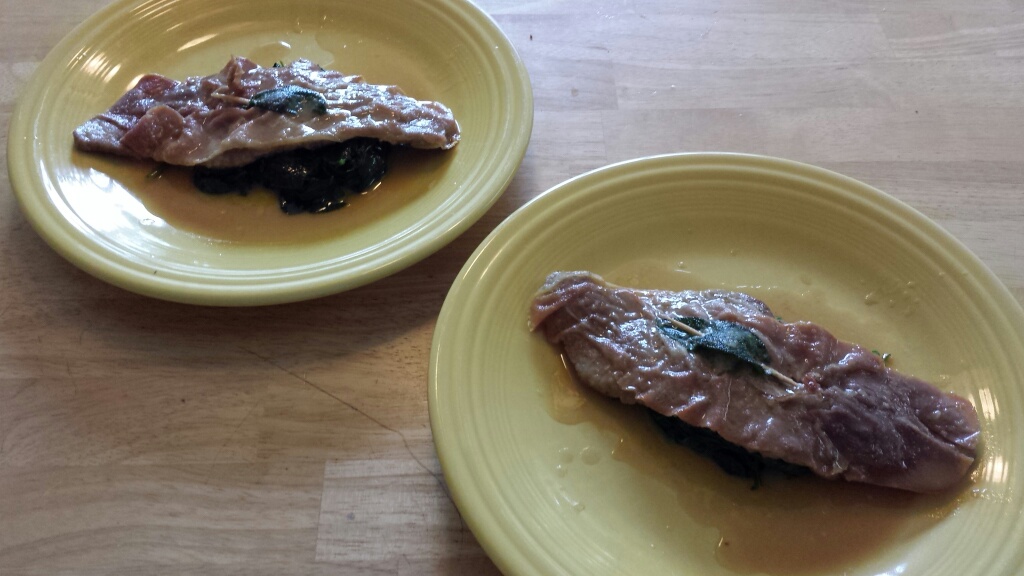
To serve, spoon the spinach in a mound in the center of each plate. Arrange the saltimboccasaltimbocca over sautéed spinach. Spoon some of the pan sauce over the scallopine and serve immediately.


Something’s Fishy

Desert-IslandWhen asked that inevitable small gathering question — What food would you take on a desert island if you could only take one? – well, for me, it would have to be pasta. Specifically, spaghetti. Practically speaking, you could gather and catch all sorts of things that you could put on pasta and have an entirely enjoyable meal. Think of the lemons and limes you could squeeze onto the pasta, along with all of the fresh seafood.

Because, friends, while I love a red sauce with meatballs and Italian sausage, and I think a good Bolognese sauce is out of this world, there is nothing I like better than pasta with clams or shrimp or calamari or scallops or – oh my word – lobster.

I love most kinds of seafood – both fish and shellfish. Off the top of my head, I actually can’t think of a kind of fish that I don’t like. And here’s the thing – spending my formative years in the heart of cattle and corn country, fish and shellfish were not big on the list of things we ate while growing up.

Being a cradle Catholic, I well remember the days when you couldn’t eat meat on Friday. Mom would throw together a salmon loaf or a tuna casserole or maybe heat up some fish sticks on Friday. Dad would be crabby. But then she and Dad would stay up until midnight so that she could fry him a skinny steak and some eggs.  But I don’t remember her ever preparing any kind of fresh and delicious fish. At least not when I was a child.

There’s probably a reason for the lack of fresh fish in her cooking repertoire – no fresh fish available. I have no recollection of any fish being sold in the grocery stores. Perhaps you could have found some frozen fish, though I’m not even sure about that. I don’t remember finding fish on the menu of any restaurants except perhaps for trout almondine. Anglers might have pulled fish out of some of the nearby lakes, and there were probably some kind of fish swimming in the Missouri River that borders eastern Nebraska, but none made it to the Gloor table.

So why do I like fish so much?

Bill is a different story. He tolerates some fish. Up until about a year ago, I would have told you Bill dislikes all fish. After more than 20 years of marriage, I finally figured out that he really only dislikes salmon – which is the fish I always tried to feed him. He would never complain, but his face always looked so sad when I placed the salmon down in front of him. Now I know I can serve him a mild white fish like tilapia, and he only looks a little sad.

“Did your mother ever make fish when you were little?” I asked him the other day.

He said yes, but pretty much like my mom did. Tuna casserole, perhaps trout almondine. Since Bill’s father grew up in North Carolina, I imagine fish wasn’t what he was yearning for after a hard day’s work at the steel mill either. But Bill said there was one kind of fish the entire family enjoyed. There was a restaurant called Phil Schmidt’s in Hammond, Indiana. Every once in a while, Rex and Wilma McLain would pile the four kids into the Buick and drive to Hammond for lake perch. I hope I can try fresh lake perch before I die.

You either like fish or you don’t. The majority of our grandkids like most fish. Dagny says no thank you to fish of any kind, as does Kaiya. But the other day Bill and Alastair went on an outing that included lunch, and when Alastair was asked what he wanted, instead of the hamburger Bill expected him to order, he chose fish and chips. Alastair will ALWAYS choose fish of any kind. You should see him when I make mussels.

I’ve been going on and on about fish because the last recipe I’m going to post this week includes scallops. This recipe is a bit different from the others I have searchposted this week in that it is a recipe I have made many times. However, it comes from a cookbook from which I make exactly two recipes – this one and Spaghetti Carbonara. I could actually just copy these two recipes down and give away the cookbook. However, I happen to really love this particular cookbook despite its limited use by me. So it maintained its place on my bookshelf following the Great Cookbook Giveaway.

By the way, in the same way that I WISH I liked to garden and I WISH I liked baseball, I WISH I liked to fish. I look longingly at the folks standing in the river on the way up to Estes Park wearing rubber boots to their knees and casting their flys. I know!  I can spend the day fishing, come home and grill up the fresh trout, serve it with the green beans I harvested from my garden, and listen to the Colorado Rockies on the radio. In my next life.

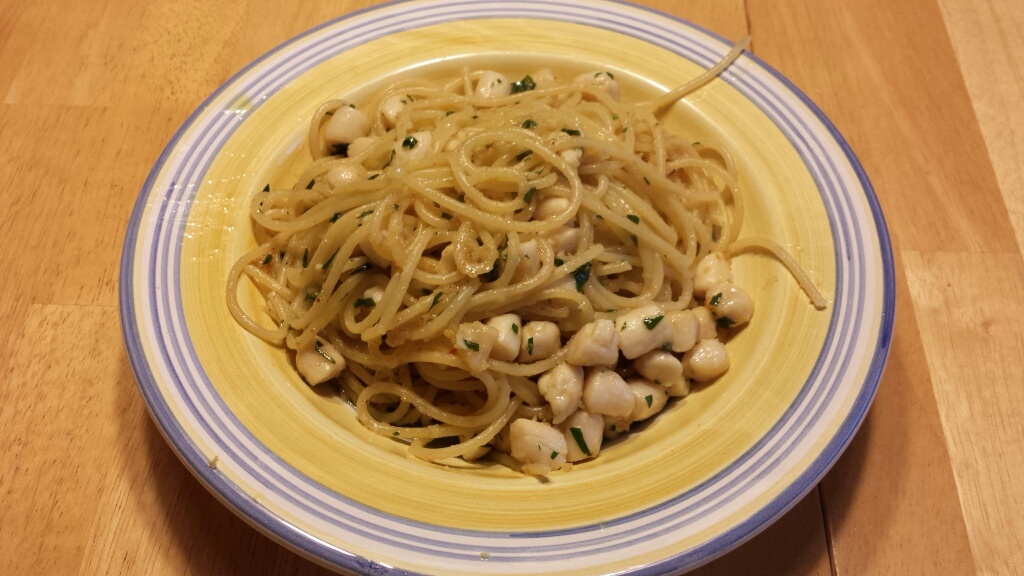
Scallop Sauce with Olive Oil, Garlic, and Hot Pepper, courtesy Essentials of Italian Cooking by Marcella Hazan

Ingredients

1 lb. fresh bay or deep sea scallops

½ c. extra virgin olive oil

1 T. garlic, chopped very fine

2 T. chopped parsley

Chopped hot red chili pepper, to taste

Salt

1 to 1-1/2 lb. pasta

½ c. dry, unflavored bread crumbs, lightly toasted in the oven or in a skillet

Process

Recommended pasta: As in so many other seafood sauces, spaghettini, thin spaghetti, is the most congenial shape but spaghetti is an equally valid choice.

Wash the scallops in cold water, pat thoroughly dry with a cloth towel, and cut up into pieces about 1/8 in thick.

Put the olive oil and garlic in a saucepan, turn on the heat to medium, and cook, stirring, until the garlic becomes colored a light gold. Add the parsley and hot pepper. Stir one or twice, then add the scallops and one or two large pinches of salt. Turn the heat up to high, and cook for about 1-1/2 min, stirring frequently, until the scallops lose their shine and turn a flat white. Do not overcook the scallops or they will become tough. Taste and correct for salt and hot pepper. If the scallops should shed a lot of liquid, remove them from the pan with a slotted spoon and boil down the watery juices. Return the scallops to the pan, turn them over quickly, then turn off the heat.

Toss thoroughly with cooked drained pasta, add the bread crumbs, toss again, and serve at once.

scallops

Nana’s Notes: I always use the little bay scallops as I think they are sweeter and more bite-sized for this dish. Since the use of Parmgiano Reggiano cheese is eschewed with seafood in Italy, the bread crumbs provide a little extra flavor and crunch. I absolutely LOVE this sauce, and always serve it with spaghetti. Serve with bread to dip in the olive oil. It would work perfectly on a desert island.

By Essentials of Italian Cooking from Amazon here.

By Essentials of Italian Cooking from Barnes and Noble here.

When I Grow Up

imgresA couple of years ago, I entered a contest offered by Real Simple Magazine in which contestants wrote – in 500 words or fewer – about a memorable cooking experience they shared with a  friend. I have no idea how many people entered the contest. It could have been thousands; it could have been five. All I know is that I was selected to be one of the five finalists.

I didn’t win. The winner was selected by readers’ online votes. I launched an ambitious Facebook campaign, but seeings as I only have 62 Facebook “friends,” the campaign didn’t really pass muster. But hey, being one of the finalists was impressive, no? Well, unless only five people entered….. .

I love to write, and I think that it is something that I don’t particularly suck at. (Except that I just ended that sentence with a preposition.) Here’s the thing. From the time I was a little girl, that’s what I wanted to do for a living – write. I vividly remember my BFF and I writing stories in elementary school – not for a homework assignment, but just because we wanted to write stories. We turned them into our third grade teacher, who likely had a good laugh over them, but accepted them graciously. I would LOVE to see those stories now. I wonder if Miss Gaspers saved them? She could be a millionaire when I become a famous writer. See? I still want to be a writer when I grow up.

The funny thing is that when I was 18 and entering college, what I decided to major in was Human Development – specifically, teaching preschool. No writing. By that time, either I had forgotten that I liked to write or I simply didn’t have the slightest idea what sort of careers involved writing.

Between the time I quit the University of Nebraska (intending never to return to college) and began attending the University of Colorado (after realizing I didn’t want to be a Safeway checker my whole life), Watergate happened. Suddenly it was cool to be a journalist. I earned my degree in journalism and my advanced degree in communications. Boom. My third grade dream was finally being fulfilled. I actually did spend my entire professional life writing at least some of the time.

I bet there aren’t many people who actually have a career as an adult doing what they dreamed to do as a child. After all, there just aren’t that many openings for NBA players or princesses. I only know two: our son David always wanted to be a lawyer, and is; and my niece Maggie always wanted to be an elementary school teacher, and was a great one until she quit to be a great mom. In fact, I can picture Dave in his kindergarten class wearing a little tiny suit with a little tiny bow tie explaining torts to the rest of the class as they played with finger paints.

I began wondering what my grandchildren want to be when they grow up. So I asked. Here is the rundown:

Addie (11): Math Teacher or Business Owner

Alastair (9): Architect

Dagny (8): Entomologist

Maggie Faith (6): Teacher or “a normal mom” (as opposed to an abnormal mom?)

Kaiya (5): Teacher

Mylee (3) Doctor

Joseph (5) Fireman and superhero (not mutually exclusive I’m happy to say)

The two little boys can’t talk yet, so their dreams remain a mystery for the time being.

Impressive. They are our future, my friends.

Back to the Real Simple contest. As I said, I did not win (which would have gotten me an assignment as a guest writer for their magazine). My consolation prize? A cookbook entitled dinner tonight: done! (really with the annoying lack of capital letters and the exclamation point). I felt a little like Charlie Brown when he opened his mailbox and found only a rock. Oh well.

dinner tonight: done! was one of my cookbooks that I had never used. So annoyed wassearch I, in fact, that I had never even cracked it open until this week. Lo, and behold, it actually has some good recipes. Guess I will retrieve my ball and bat and go back to the playground. Even if it has that exclamation point in its name and the author thinks (s)he is e.e. cummings.

Out of all of the recipes, I chose ham. Random, I know. But the ham I had for Easter brunch tasted so good to me and I thought the recipe sounded good. It was. In deference to my husband who isn’t a fan of asparagus, I used green beans.

By the way, the recipe titles also don’t have capital letters. Sigh.

ham dinnerapricot-glazed ham with potatoes and asparagus, courtesy Real Simple’s dinner tonight: done!

Ingredients

1 3-lb. boneless ham

¼ c. apricot preserves

1 pound fingerling or some other small potatoes (about 12)

Kosher salt and pepper

1 pound asparagus, cut into 1-inch pieces

3 T. olive oil

1 T. white wine vinegar

1 T. prepared horseradish

¼ c. fresh dill sprigs

Process

Heat oven to 350 degrees. Place the ham on a foil-lined rimmed baking sheet and cook until heated through, 50-60 minutes, spreading the ham with the preserves after 20 minutes of cooking.

Meanwhile, place the potatoes in a large saucepan and add enough cold water to cover. Bring to a boil and add 1 t. salt. Reduce heat and simmer until tender, 15-18 minutes. With a slotted spoon, transfer the potatoes to a colander. Run under cold water to cool, then cut into quarters.

Return the water in the saucepan to a boil. Add the asparagus and cook until tender, 2-3 minutes. Drain and run under cold water to cool.

In a large bowl, whisk together the oil, vinegar, horseradish, ½ t. salt, and ¼ t. pepper. Add the potatoes and asparagus and toss to combine; fold in the dill. Thinly slice the ham and serve with the vegetables.

Buy dinner tonight: done! from Amazon here.

Buy dinner tonight: done! from Barnes and Noble here.

What did you want to be when you grew up?

Lost Art of Cookbooking

bookshelf (1)At last count (which was about 10 minutes ago), I had 51 cookbooks. Out of those 51 cookbooks, I likely haven’t prepared a single recipe from, hmmm, probably three-fourths of them. Out of the ones from which I have cooked, I have probably only made one recipe out of all but three or four.

That leaves about 35 cookbooks that do nothing in the way of helping me prepare dinner. And only three or four that have been more than simply thumbed through.

And that’s nothing. At one point I had two bookshelves – each with two shelves – completely full of cookbooks.  Book stacked on top of one another. Books overflowing with handwritten recipes stuffed inside. One day I simply couldn’t look at the mess any longer. I was  brutal in determining whether the cookbook stayed or went to Goodwill where perhaps it would get a new home in which the cook-of-the-house would pay it some attention. Adopt-a-book.

Needless to say, I love cookbooks. I thoroughly enjoy reading recipes – even recipes for food I would never make. I particularly like cookbooks that have stories that go along with the recipes. I kept some good examples of those types of cookbooks.

I regularly comtemplate the notion of my compulsive cookbook purchasing. Recently, while still in Arizona, I began wondering if others share my love of cookbooks. I started asking my nieces and nephews the names of their favorite cookbook.

“Excuse me?” they all asked. “Favorite what?”

That’s when it became clear to me that no one uses cookbooks any longer. And if I’m being honest, including me. If I need to know how to make something, I go to the internet, just like everyone else.

A couple of my nieces told me they cut recipes out of magazines or print out recipes that they find online and keep them in a notebook. All of them use Pinterest. But no cookbooks.

I asked Bec if she had a favorite cookbook. She admitted that since she had moved so frequently – most recently from northern Virginia to Phoenix – she didn’t hang on to a lot of cookbooks. But she recalled that when she was first married, she used a Cooking for Two cookbook a great deal. I’m guessing it was  published by Betty Crocker and she probably received it as a wedding gift. All of we Baby Boomers had cookbooks published by Betty Crocker. The big Betty Crocker Cookbook is still my go-to cookbook for everyday cooking. I pull it out every single time I make homemade pancakes or biscuits-from-scratch.

Jen told me her most-used cookbook is one of Lidia Bastianich’s Italian cookbooks. I will be reviewing Lidia’s newest cookbook on Friday. I have every single one of Lidia’s cookbooks. I use some more than others. My Lidia Bastianich Italian American Cookbook is one that I still frequently use. There are red sauce or olive oil stains on many of the pages. That is the sign of a good cookbook.

This week my plan is to blow off the dust from four different cookbooks and prepare a meal from each. Some I will not have tried before; others are part of my existing repertoire.

The first cookbook I pulled off the shelf is called Screen Doors and Sweet Tea, searchby Martha Hall Foose. It is one of my favorite cookbooks, though I haven’t prepared a single recipe from it until last night, when I made Country Fried Steak and Gravy. Along with each deliciously southern recipe, Foose gives a story about the recipe’s origin or a family memory relating to the recipe. Though I grew up in the Midwest as opposed to the South, the small-town experiences she describes are nearly identical.

In fact, the name itself is the reason I bought the cookbook. To this day I am a big fan of screen doors. I vividly remember our back door being open all summer long during my youth. In the evening, we would hear the June bugs hitting the screen as they flew towards the light in the kitchen. Ewwwww. The sound of a wooden screen door slamming – thump….thump,thump – is etched in my mind and reminds me of summer.

Do you have a favorite cookbook?

Country-Fried Steak,courtesy Screen Doors and Sweet Tea, by Martha Hall Foose

Ingredients

1-1/2 lb. beef round steak, tenderized and cut into 4-inch pieces about ¼ inch thick

1 c. unbleached all-purpose flour

Salt and freshly ground black pepper

Pinch of cayenne pepper

1 t. baking powder

1 large egg

Vegetable oil for frying

1 small onion, thinly sliced

¼ c. cake flour

2 c. whole milk

Hot pepper sauce

Process

Pat the steak dry. In a bag, combine the all-purpose flour with 1 t. salt, 1 t. pepper, the cayenne, and baking powder. Add the steak pieces one at a time and shake in the flour to coat. Set the coated steak aside.

In a small dish, beat the egg with 2 T. water. Dip each flour-coated steak piece in the egg wash and then shake in the bag with the flour again to coat well. Set the steak on a rack for about 15 minutes to dry slightly and to help the coating adhere.

Set a wire rack over a baking sheet lined with newspaper or paper towels. In a 10-inch skillet, heat ¼ in o oil over medium-high heat until it shimmers. Place Country Fried Steakthe steak pieces in the skillet and cook until the sides begin to turn golden brown, 3 to 4 minutes per side. Carefully6 turn and rearrange the meat, cooking until no juices are running out and the crust is a deep brown, about 4 minutes. Set the steaks to drain on the wire rack.

Pour all but ¼ c. of drippings out of the skillet. If there is not enough oil left in the skillet, add enough to make ¼ cup. Add the onion. Heat the skillet over medium heat and scrape the brown bits from the bottom of the skillet. Sprinkle the cake flour evenly over the hot oil, stirring constantly. Cook for 1 to 2 minutes, until slightly brown. Slowly stir in the milk until smooth. Reduce the heat to low and simmer for 10 minutes, stirring occasionally, until thickened. Season with salt, pepper and hot sauce.

Return the fried steak pieces to the skillet with the gravy and simmer for 5 minutes. Serve immediately.

Nana’s Notes: I used top round that I pounded with a tenderizing hammer. Next time I would buy cube steaks. They are already tenderized and are thinner. The round steak is plain and simply kind of tough, and it really needs to be no thicker than a quarter of an inch. With that change, this recipe was a winner.

Buy Screen Doors and Sweet Tea from Amazon here

Buy Screen Doors and Sweet Tea from Barnes and Noble here


Cooking For One or Two: Cooking from Down South

My sister Jennifer Sanchez is going to become a regular contributor to Nana’s Whimsies, offering us her unique perspective on cooking for one or two.
cooking for one
          Many years ago, thirteen to be exact, I was met with the challenge of cooking for one. For nearly all of my adult life I had cooked for a family and suddenly this changed. It took a long time to adjust to cooking for one but over many years I believe I have this down pat.
          When I was first single I knew a couple of things. One, I was never going to be the person who ate a bowl of cereal or a bowl of popcorn for dinner. The second thing I figured out quickly was dining on a Lean Cuisine after a long day at work wasn’t going to work for me. I thought surely if I ate it with a glass of wine, that would pull it up a notch. Blah, yuck, gross.
          On occasion I’ll post on Nana’s Whimsies and give you ideas for cooking for one or two. Yummy dinners that are as satisfying as cooking for a family.
          I love to watch Food Network. And I love to read new recipes. One thing I most alwaysjennifer do is cut the recipe in half and sometimes in thirds. I always find that it works perfectly that way.
          Be forewarned, I make a few changes to every new recipe I try. For example, this recipe called for melted butter in the sauce. I’ve never added butter, so I can’t tell you if it’s better that way. Paula Deen would say it is better that way!
Caroline Style Barbecue Chicken,  courtesy of Food Network Magazine
Ingredients
¼ cup yellow mustard
1/8 cup apple cider vinegar
1/8 cup packed light brown sugar
¾ tsp of mustard powder
1 tsp hot sauce
¼ tsp of Worcestershire sauce.
Process
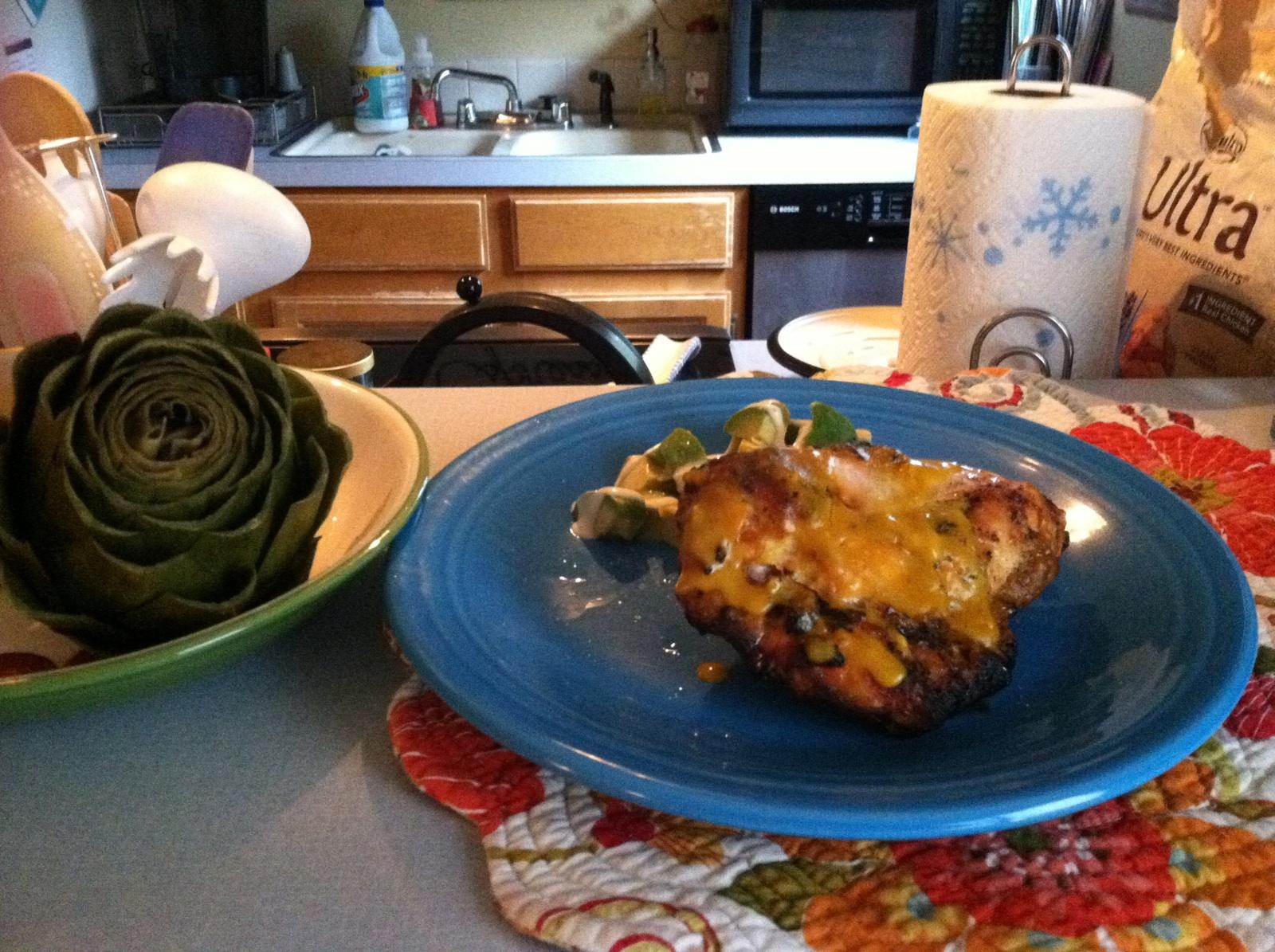
Whisk all ingredients in a bowl and prepare a bone in chicken breast to grill. Sprinkle some olive oil over the breast and season with garlic salt and course pepper. Let the chicken breast sit in the sauce for approx 10 minutes.
Grill the chicken, basting with the mustard sauce during grilling.
Jen's dinner
          I think chicken can be tricky to get done on the grill so if the meat has nice grill marks but the outside seems to be close to burning, turn off one side of the grill and let the meat finish cooking from the heat of the grill. In the winter I’ve made this in the oven as well and it is equally as good.
I served it this night with steamed broccoli (steamed in the microwave or baked in a hot oven in the winter) with a little of the mustard sauce sprinkled on top of that. I made an artichoke as well.


Make Yourself Homely

I’ve mentioned two or three thousand times that my paternal grandparents came to the United States from Switzerland in 1924. I never asked them directly why they did so, but I imagine the economy had been impacted by World War I, and perhaps they even saw the handwriting on the wall regarding another imminent war. Ask your parents and grandparents question now, Kids. It will soon be too late.

amerika1905

This is the actual ship upon which my grandparents sailed from Bremen to NYC in 1924.

As you know if you paid attention during World Geography, Switzerland is a small country bordered by Germany, Austria, Italy, and France. The language spoken by the Swiss people depends upon the nearest border country. In other words, some people speak French and some speak Italian. But the majority of folks speak German, or at least a form of German. My understanding is that the formal written language is German, but I can tell you from personal experience that the spoken language is a Swiss dialect form of German. I studied some German, but never was able to understand a word my grandparents spoke when they weren’t speaking English.

When my grandparents settled in Columbus, my grandfather – who now had his own business – immediately took lessons to learn to speak English. I don’t think he was required to do so; he just presumed that to successfully run the bakery, it would help to know the English language. He always spoke perfect English.

My grandmother, on the other hand, didn’t study to learn English. Now don’t get me wrong. She

Grammie knittinglearned English. She just didn’t take formal lessons. She learned it by talking to people and working the front end of the bakery.

Imagine that. Imagine suddenly living in a place where you didn’t speak a word of the language. Bill and I struggled with language enough during our big adventure, and that was only for three months, and as tourists, we could get away with a lot. For Grammie and Grandpa, English was going to be the language they spoke for the rest of their life. I’ve always been amazed at how well they adjusted.

And especially my grandmother – learning the language without a single lesson. Now don’t get me wrong. She didn’t speak perfect English. But she spoke her version of English and it was certainly understandable by everyone. In fact, it was absolutely perfect to our ears.

If you have ever studied a foreign language, you probably know that there are certain words that you just don’t translate well. It might take five or six words to explain what a word means, and then it still doesn’t quite fit the bill.

Grammie had a lot of words like that. Dad picked them up, and so did Mom. In fact, we all learned what really was, for all intents and purposes, a secret language. Our spouses had to learn them, and our children have listened to them since birth.

Since most of them are either Swiss/German words, or a variation of such, I am not certain how they would be spelled. Many likely would require an umlaut, which is a symbol placed over a vowel indicating a slight variation in the sound. My keyboard doesn’t include the umlaut, and most would have trouble pronouncing it anyhow. You just have to work with me here.

I will give the word, spelling it the best I can, give as much of a definition as I can, and then use it in a sentence.

So:

Fuscht — mess around with, as in “Will you quit fuschting with your hair.”

Blurt — stupid, silly, as in “The TV show Nashville is becoming very blurt.”

Honyock (pronounced hun-yock) — little stinker, as in “Austin Joseph Jensen is a honyock.”

Bundy — a group of people who are a handful (important distinction). So, this word requires a bit of explanation. Here’s what I mean: The congregation at my church would not be called a bundy. However, there is a family that comes to church every Sunday. They take up the whole pew. The family consists of a couple of Grandmas and Grandpas, some grown children and their spouses, and some grandchildren. The grandchildren are constantly crawling back and forth on the pew, going from one grandma to another. During the handshake of peace, everyone has to hug everyone else, and it causes quite a disruption. This family is a bundy.

Frufra — backside, as in “She fell down and landed on her frufra.”

Rappsli — grating, as in “I am going to rappsli some Swiss cheese.”

Schmutzig – this, of course, is an actual German word, meaning dirty, as in “How could you have gotten your clothes so schmutzig in such a short time?

Klotch – hit, as in, “I just got klotched in the head.” In fact, I think klotching was always in the head. I don’t think one got klotched in the stomach, for example.

Knible – rolling pin, and mostly the ones without the handles.

Schweinhunt – this is another actual German word, literally translated as pig-dog. In German, it is highly offensive. In our case, it was almost an affectionate rebuke that meant you were being naughty. My brother said he was often called a schweinhunt.

Kaput – another German word meaning end. For us, it meant a final end, and generally of a piece of machinery, a car, or something that was totally and finally broken.

Boobly – this was Grammie’s word for the little topknot made out of yarn that she put on every single hat she ever knitted or crocheted for us. People frequently wear hats with booblies. For example, the NFL football players this past year all wore stocking caps with booblies. However, something tells me Peyton Manning didn’t refer to his topknot as a bloobly. It was.

Schnabel – Well, I’m not going to translate this one for you. Use your imagination.

While we have all picked up the words as a natural part of our vocabulary, it is interesting to note that it doesn’t seem like our children have. Perhaps we don’t use the words as often as our parents and grandparents did. Or maybe our kids just prefer to use words that are actually in the Webster Dictionary. Still, it makes me kind of sad to see these words pass into obscurity.

The title of my post, by the way, comes from something my grandmother used to say when someone would come to visit her at her home. I’m not sure she ever knew her error, and no one seemed to have their feelings hurt.

Do you have any family words that you use?

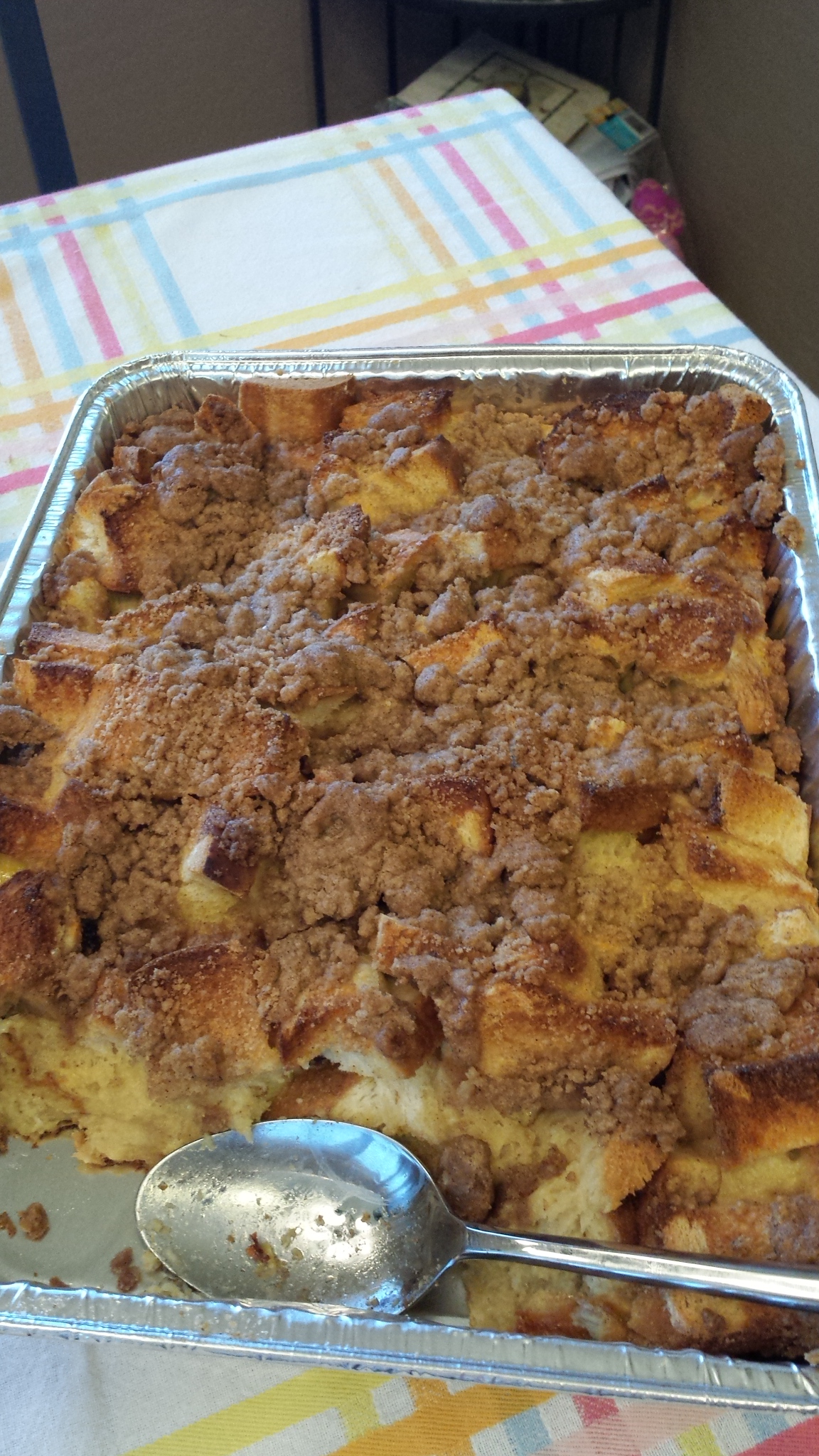
In yesterday’s post, I mentioned a delicious French toast casserole that I made for Easter brunch, and someone asked for the recipe. I am happy to provide it, and highly recommend you try it when you have calories to spare.

french toast casseroleBaked French Toast, courtesy Ree Drummond, The Prairie Woman, and Food Network

Ingredients

Butter, for greasing

1 loaf crusty sourdough or French bread

8 whole eggs

2 c. whole milk

½ heavy cream

½ c. white sugar

½ c. brown sugar

2 T. vanilla extract

Topping

½ c. flour

½ c. firmly packed brown sugar

1 t. cinnamon

¼ t. salt

Freshly grated nutmeg (optional)

1 stick cold butter, cut into pieces

Process

For the French toast: Tear the bread into chunks, or cut into cubes, and evenly distribute in the pan. Crack the eggs in a big bowl. Whisk together the eggs, milk, cream, white sugar, brown sugar and vanilla. Pour evenly over the bread. Cover the pan tightly and store in the fridge until needed (overnight preferably). Or you can make it and bake it right away.

For the topping: Mix the flour, brown sugar, cinnamon, salt and some nutmeg in a separate bowl. Stir together using a fork. Add the butter and with a pastry cutter, mix it all together until the mixture resembles fine pebbles. Store in the fridge.

When you’re ready to bake the casserole, preheat the oven to 350 degrees. Remove the casserole from the fridge and sprinkle the topping over the top. Bake for 45 min. for a softer, more bread pudding texture or for 1 hour-plus for a firmer, crispier texture.

Serve with butter, syrup and berries.

Nana’s Notes: This casserole is decadent. It is the best baked French toast I have eaten. I served it with real maple syrup. We reheated leftovers yesterday, and I think it might even be better the second day.


Wascally Wabbit

croppedI had one of those bolt-up-in-bed moments a week or so ago when something popped into my head that I hadn’t thought about in 45 years.

Every Easter, Gloor’s Bakery sold bunny cakes.

I texted my brother.

“Remember Dad’s bunny cakes?” I asked him.

“Yes,” he responded. “But in my mind they are mom’s bunny cakes. I remember doing the jelly beans and colored toothpick faces under her guidance.”

Hmmmm.

I texted Jen.

“Do you remember that we sold bunny cakes at the bakery at Easter?” I asked.

“Yes,” she replied. “Mom was very enthusiastic about her bunny cakes at Easter time.”

Really?

The reason that surprises me is that Mom generally didn’t get particularly enthusiastic about bakery holiday rigamarole. And she heartily disliked cake decorating. And yet she apparently liked making these bunny cakes. Who would have guessed?

They were very cute, and we sold a whole lot of bunny cakes every Easter as I recall. They were decorated and stored in the freezer. I remember opening the freezer door and having 15 or 20 pairs of jelly bean eyes staring back at me.

I asked Bill if he would be interested in trying to recreate the bunny cake. He agreed and that’s how we spent yesterday morning.

Here’s a tutorial. Don’t expect miracles. I am not Ree Drummond.

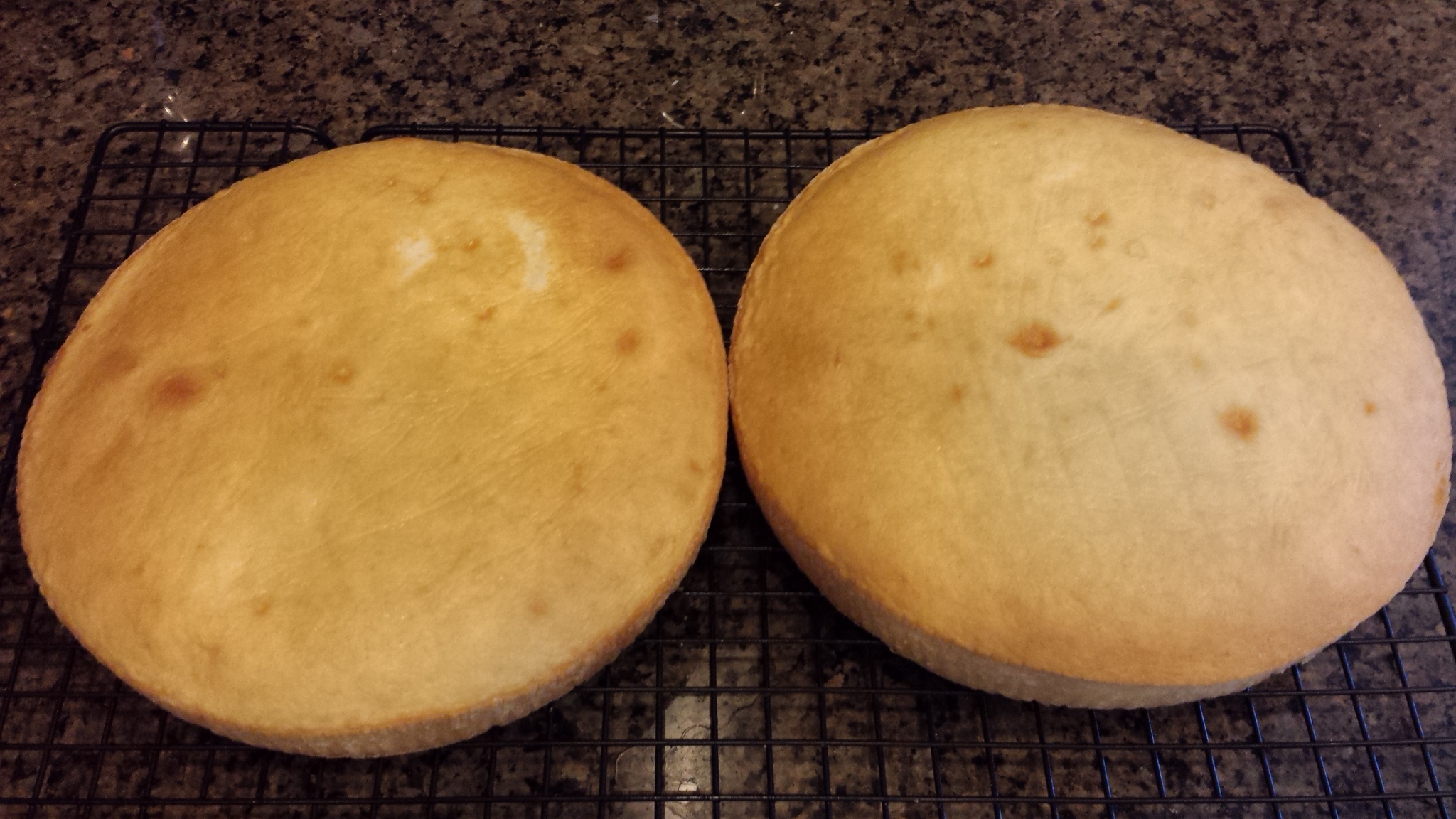
I baked a two layer white cake. I chose to use a cake mix since I wasn’t sure how it would turn out. I baked it the night before and put the two layers in the freezer so they would be easier to work with….

two cakes

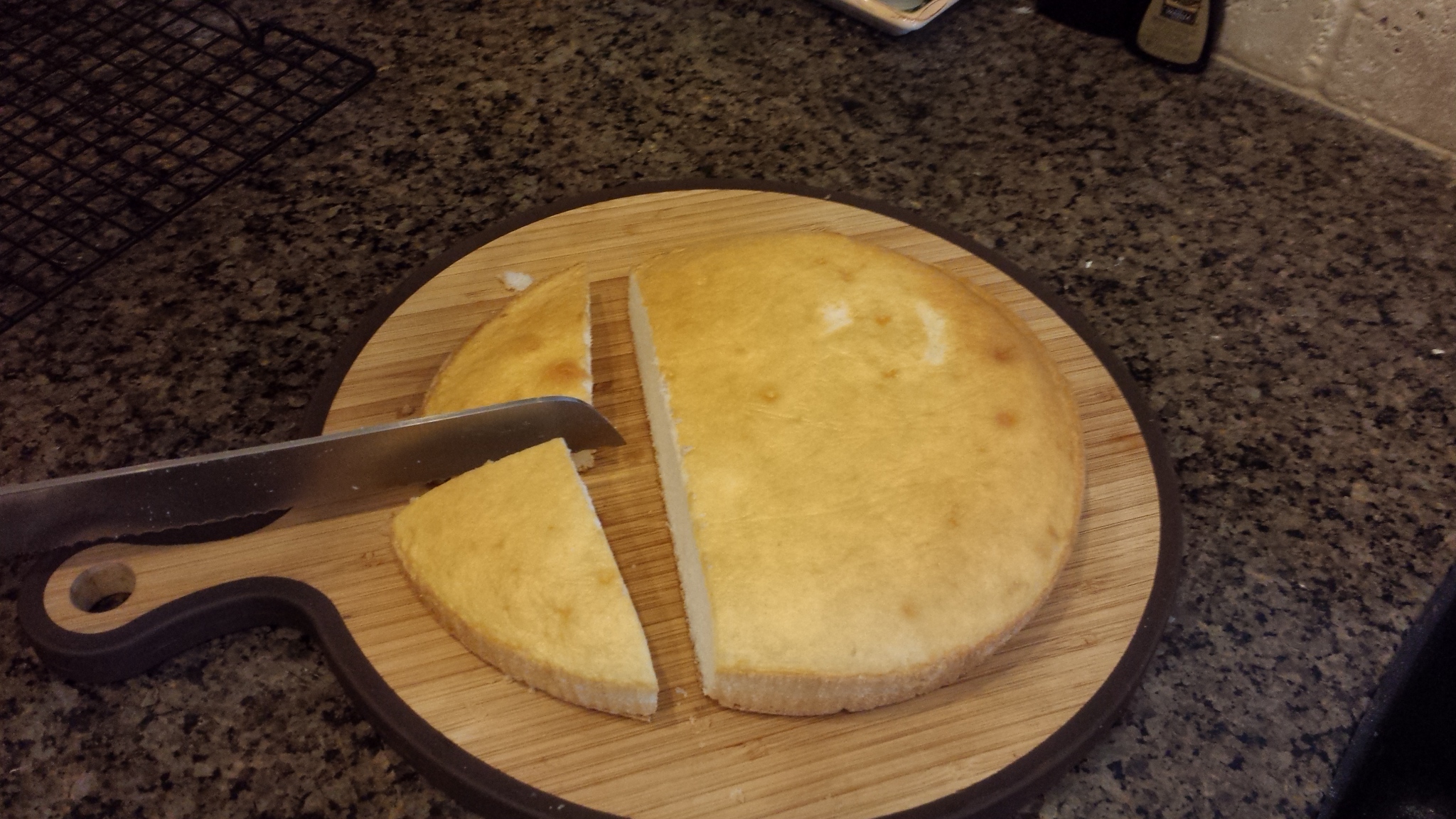
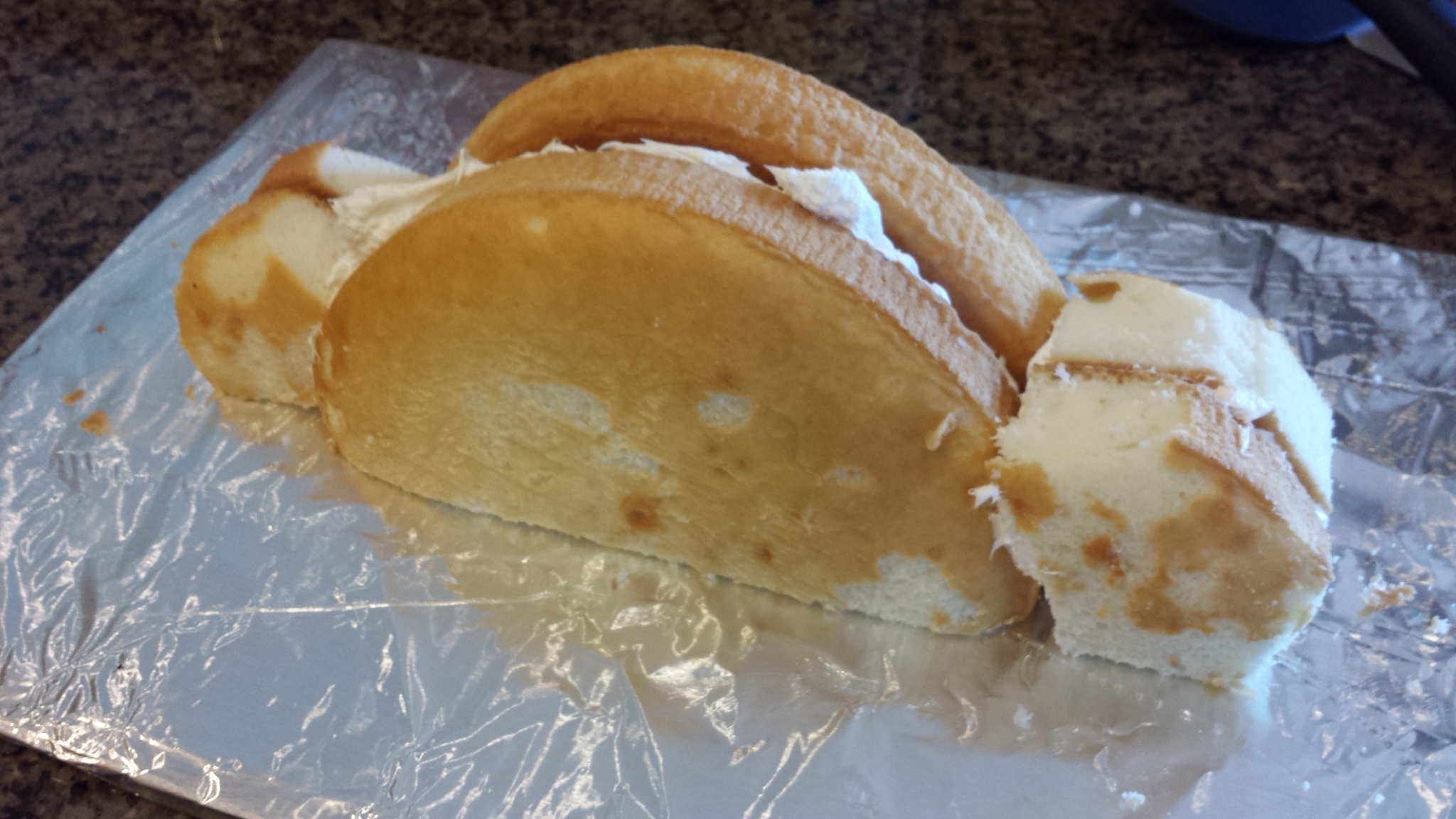
I cut one of the cake layers in half, and stood each half upright for the bunny’s back….

put together


I cut ends from the second layer, then cut them in half to use for the bunny’s head and tail….

head and tail

Bill did a lot of sculpting. I don’t remember my mom doing any sculpting…..

glued together

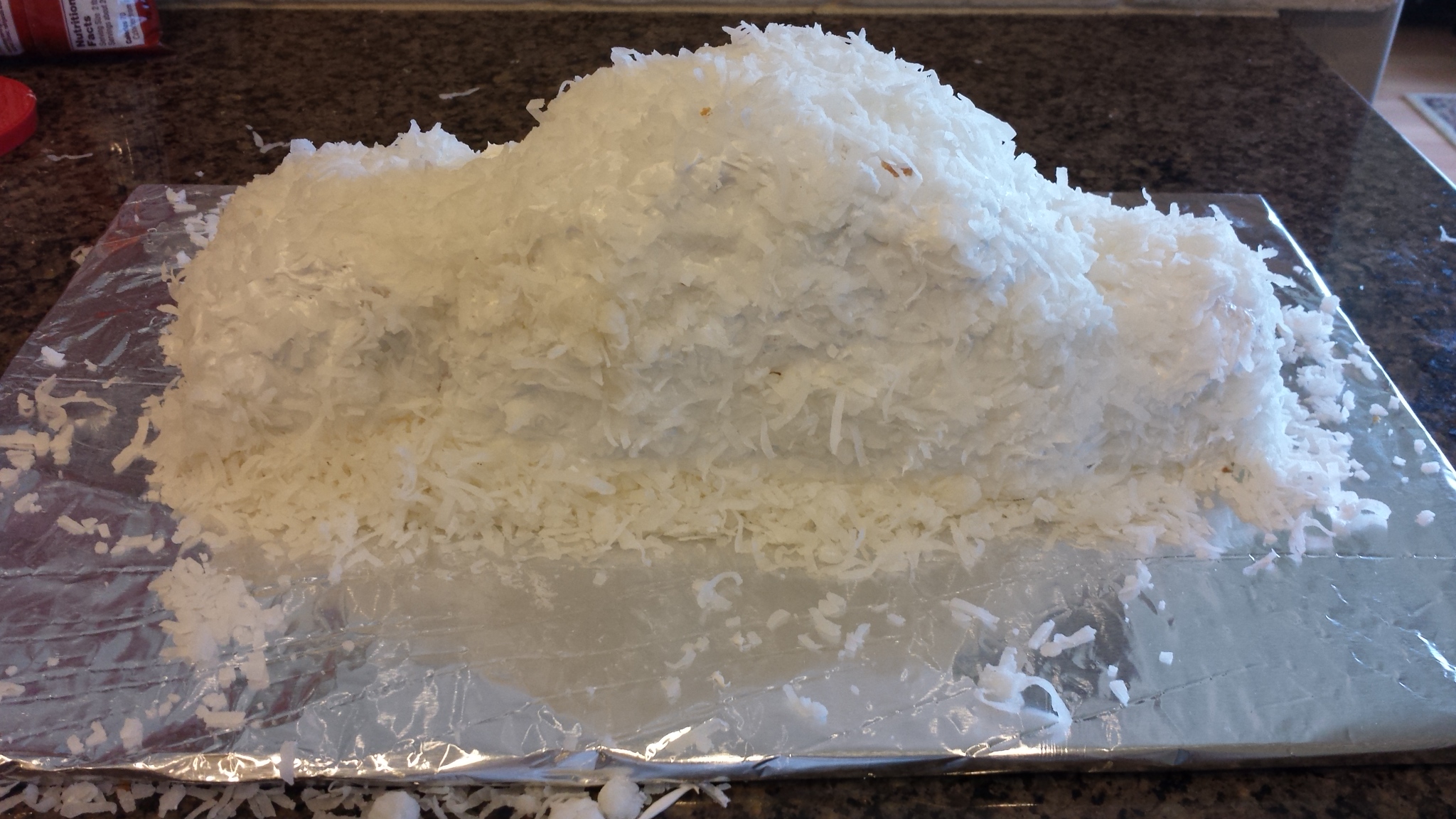
I iced the cake and covered it in sweetened coconut. At this point it looks like a 1956 Chevy that has been left out in a snow storm. No rabbit resemblance….

old buick snow

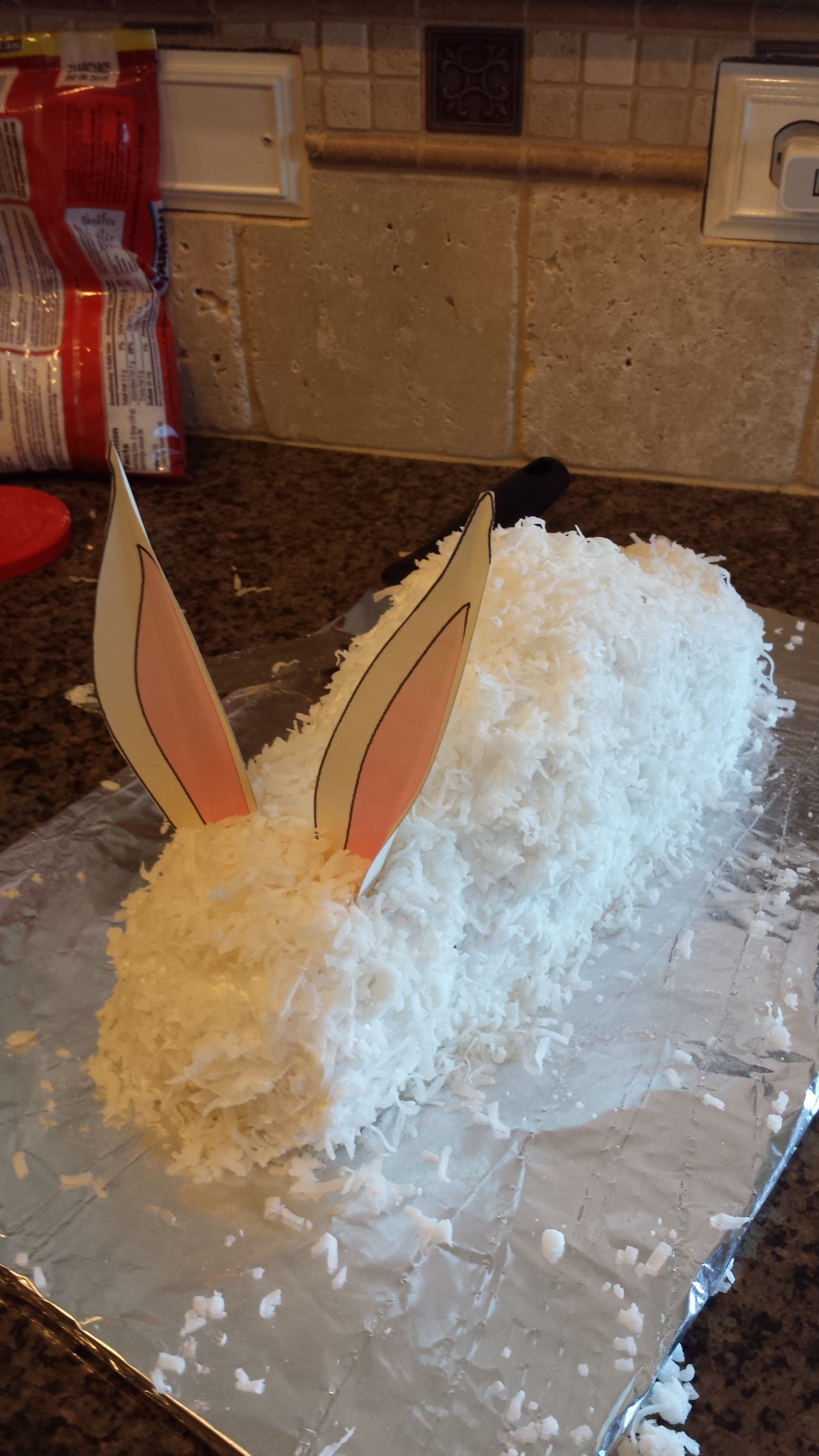
Aha! Add a pair of cardboard ears and the whole world changes…..

taking shape


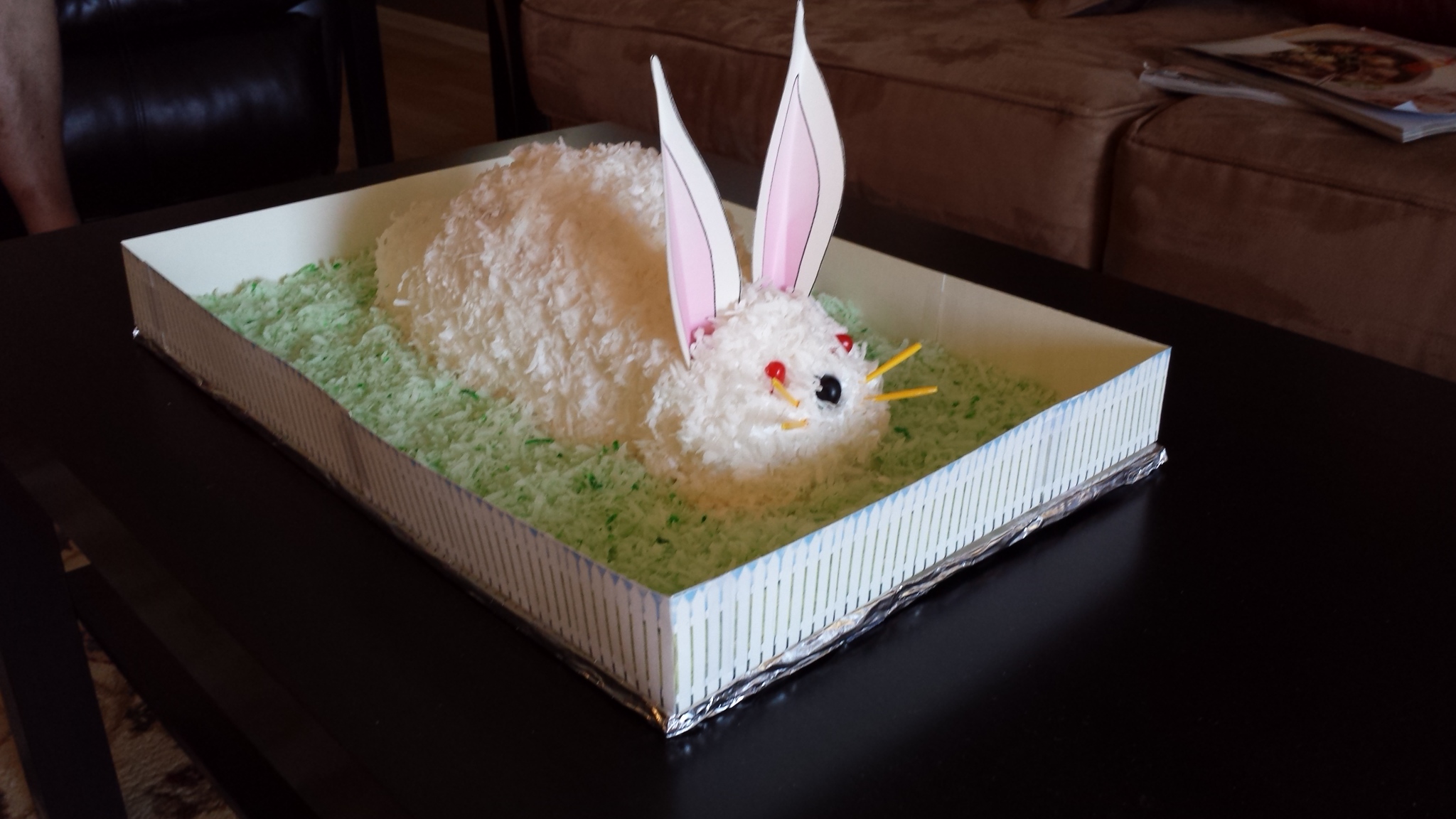
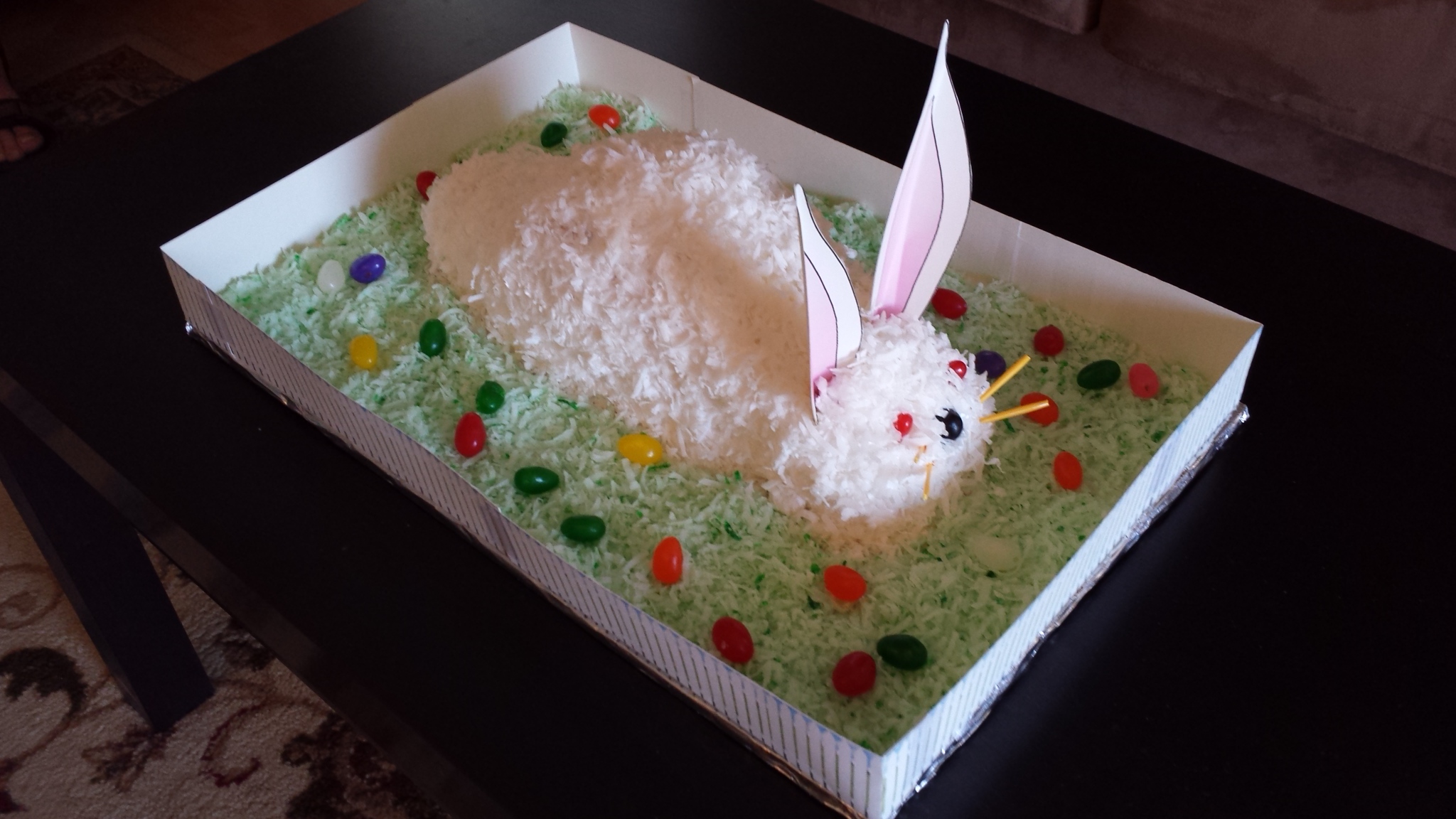
A couple of toothpicks and some jelly bean eyes and nose, and you have yourself a reasonable looking rabbit. Bill constructed the white picket fence. He simply can’t stop himself…

ta da 3

The final result….

ta da 4

Nana’s Notes: I am very satisfied with my end product, but I am quite certain Mom did no sculpting, so I’m not sure how she made the head and tail. Bec and/or Dave will know, and will tell me. I also think my bunny ended up bigger than the ones we sold at the bakery. That likely has something to do with my head and tail.


Bunny Up

I think Easter has gotten to be kind of a complicated holiday. Perhaps it’s because it really has become so secularized that we’ve lost our focus on what’s actually important about this holy day. But that’s perhaps a post for another time.

blast-from-the-past-4-434x603

This photo is of no one I know, but the Easter bunny is the scariest thing I’ve ever seen. Just why do we do this to our children?

Easter was a pretty big deal for our family when we were growing up. This was in large part because we attended Catholic school where we weren’t allowed to forget the meaning of Easter. But we were children, after all. So there’s no denying that one of the most awesome things about Easter was our new finery.

In the 50s and early 60s, our Easter finery included a sport coat and tie for my brother (along with a fresh crew cut) and a fancy new dress for the three girls. And of course, the Easter bonnet. It was a must. For one thing, back in those days we were required to cover our heads when we entered the church. Most of the time we did this by wearing a chapel veil, which was a small round lace cloth that we pinned to the top of our heads. But on Easter, we wore a bonnet.

As a small child, Mom kept our hair short. A pixie cut, and my bangs were always crooked. As an aside, the woman who cut our hair – Fay – must have hated children, or at least cutting children’s hair. She would use a razor and hat with sashliterally yank, yank, yank at the hair. I hated getting my hair cut ALMOST as much as I hated going to our also-children-hating dentist. In fact, the first time my current hair stylist brought out a razor to cut my hair, I began screaming uncontrollably. (Not really, but I did feel compelled to tell her about my childhood experience.) But I digress.

I don’t know how my sisters felt about their short hair, but I yearned to have long hair. So when it came time to buy my Easter hat, a requirement – non-negotiable – was that it have a long grosgrain ribbon going down my back. When wearing the hat, I would swish my head back and forth so that the ribbon would sometimes flip over my shoulder, you know, like a pony tail. Pitiful, no?

glovesGloves and patent-leather shoes with white anklet socks were also a requirement with our finery. I loved wearing my white gloves. In fact, I wish women still wore gloves when they dressed up. There is nothing more elegant. One year I even had white gloves with pink flowers embroidered on them. Sigh.

When we walked into St. Bonaventure Catholic Church, it was filled with men, women, and children dressed to the hilt in similar Easter finery. We would look around to see if our friends had prettier hats and dresses than we. We would make sure we walked up the aisle in such a way that our new patent leather shoes click-click-clicked on the hard floor.

Nowadays kids mostly get the finery and forgo the church service. That makes me sad.

What has gotten complicated nowadays – at least in my opinion – is that it is another excuse to give children gifts and take children to organized activities. When I was young, we got an Easter basket and that was it. We would color the hard-boiled eggs the night before and place them in our basketrin-easter-baskets. When we awoke on Easter morning, the Easter bunny had come, filled our basket with candy, and hidden the basket – in its entirety – somewhere in the house. I’m pretty sure our Easter bunny didn’t have the patience to hide each individual egg. Our bunny was a little cranky.

We did have an Easter egg hunt, however, at Pawnee Park. For whatever reason, Grammie loved Easter. And she loved hiding the little plastic Easter eggs in the trees and bushes around this pretty park. There were no organized eggs hunts. We saw many other families doing the exact same thing. Such fun.

Then we would make our way home to another feast prepared by my mother that always included a ham and creamed potatoes.

A feast fit for a king. And fit to celebrate the Risen King.

Creamed Potatoes

Ingredients

6-7 russet potatoes, peeled and cubed

3 T. butter

1/4 c. all-purpose flour

1 t. salt

1/2 t. pepper

2 c. milk

Chives and/or parsley

Process

Place cubed potatoes in a large saucepan and cover with cold water. Bring to a boil. Reduce heat; cover and cook until tender, approximately 15-20 min. In a separate pan, melt butter. Add flour, salt and pepper, and whisk until smooth. Gradually add milk, whisking as you pour. Bring back to a boil; cook until thickened, about 2 minutes.

Drain the potatoes and place them in a serving bowl. Pour the cream sauce over the potatoes and gently stir to coat. Sprinkle with herbs if desired.