
Denver Public Schools (probably just like public schools in most metropolitan areas) contain a diversity of students that frankly, is one of the best things about public education. All of my grandkids (well at least the ones that go to school) are in public schools. That’s appropriate, because my grandkids also represent a bit of diversity.
Tonight Bill and I will be attending Southmoor Elementary’s Multicultural Night. This celebration offers the students a chance to acquaint their fellow students and families with their culture and background. My McLain grandkids will be representing their Scottish heritage.
Well, David McLain and his first-born – Adelaide – take this charge very seriously. Addie and I have been baking shortbread for several days now (shortbread being the delicious sugar-like cookies traditional to Scotland. They are yummy for sure.
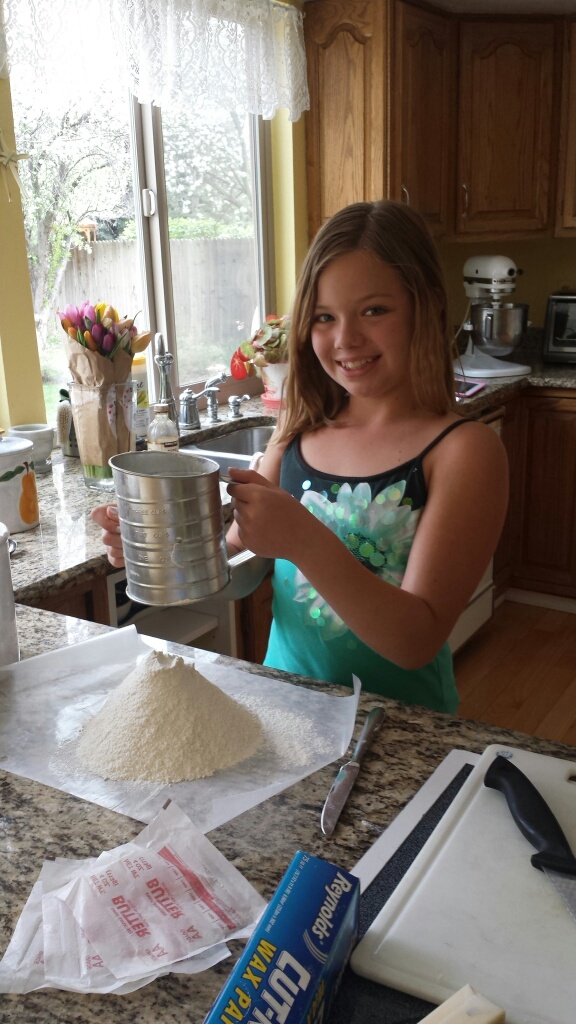
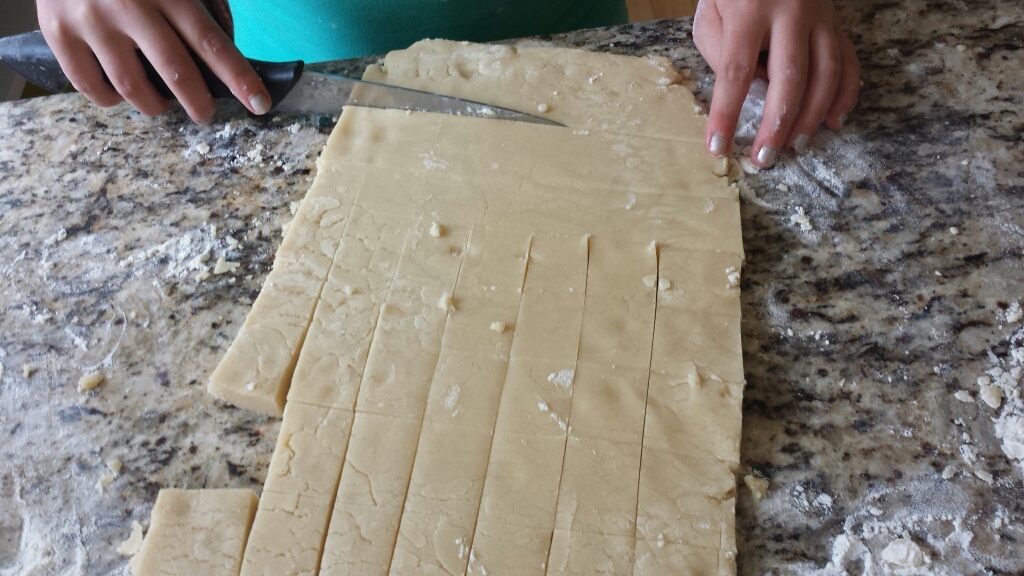 But David and Adelaide McLain don’t stop at shortbread. Oooooooh noooooo. It wouldn’t be an evening about Scotland without a haggis.
I’m not going to tell you what a haggis is. Check this link. Suffice it to say that the two Scots made it from scratch. They minced the sheep internal organs, mixed it with the oats and other ingredients, and wrapped it in a lining of sheep stomach. Well, to be honest, a sheep’s stomach is the traditional lining; I think they used a synthetic stomach. This afternoon the “package” will be steamed 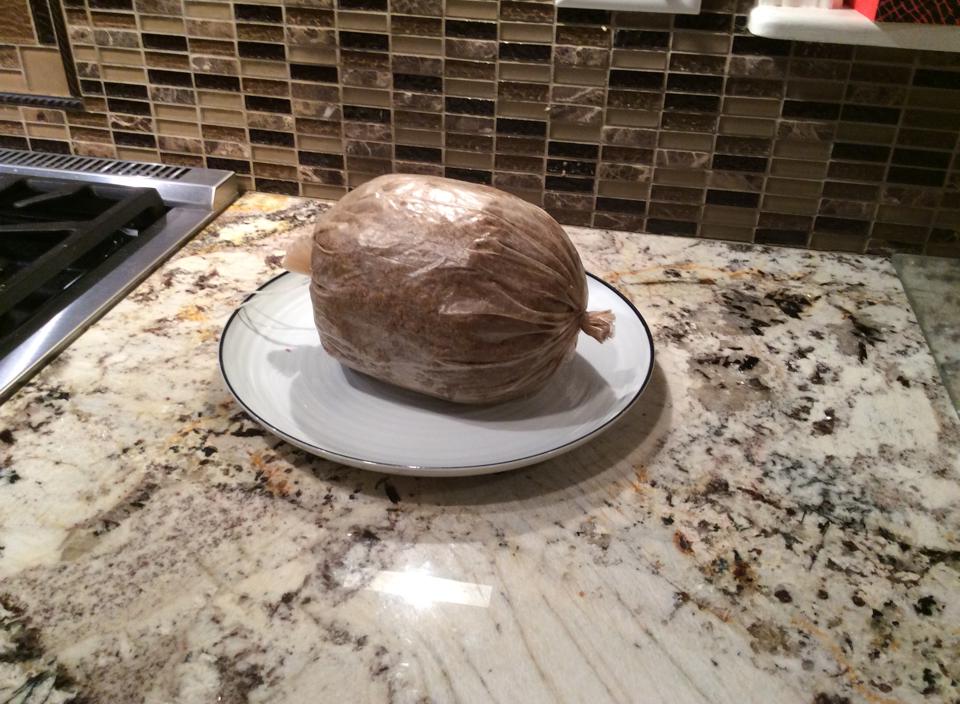 for three hours in the family kitchen. God bless my daughter-in-law.
If David has his way, he will have a friend pipe in the haggis. What does this mean? It means someone will be playing a tune (can you call it a tune?) on a bagpipe as they ceremonially bring in the haggis. At this point, traditionally, someone recites the Address to a Haggis. Initial plans called for that person to be Addie. I don’t think that’s going to transpire as she does have other homework!
Address to a Haggis, by Robert Burns
Fair fa’ your honest, sonsie face
Great chieftain o’ the pudding-race!
Aboon them a’ ye tak your place
Painch, tripe, or thairm:
Weel are ye wordy o’ a grace
As lang’s my arm.
The groaning trencher there ye fill
Your hurdies like a distant hill,
Your pin wad help to mend a mill
In time o’ need,
While thro’ your pores the dews distil
Like amber bead.
His knife see rustic Labour dicht
An’ cut you up wi’ ready slicht.
Trenching your gushing entrails bricht,
Like ony ditch;
And then, O what a glorious sicht,
Warm-reekin, rich!
It goes on for five or six more stanzas of – well, I really don’t know what to call it. At the line in the third stanza: His knife see rustic Labour dicht the speaker normally draws and sharpens a knife, and at the line An’ cut you up wi’ ready slicht, plunges it into the haggis and cuts it open from end to end. Apparently this ceremony is a highlight of the evening. I’m hoping against hope that the two don’t plan on having Adelaide slit open the haggis. Please God.
David will undoubtedly wear his kilt (in which he got married, by the way). I don’t think 9-year-old Alastair owns a kilt yet, but it is most certainly in his future. Bill would probably wear his except for the fact that I will be picking him up at the airport as he returns from Chicago and we will be driving directly to the school. Praise God.
One quick Scotland story. Shortly after we were married, Bill and I traveled to Scotland along with David’s girlfriend (who is now his wife), and our son Court. We met up with David (who had spent a semester studying at the University of Edinburgh in Scotland), and his brother Allen who was traveling around Europe. We arrived at our bed and breakfast in Glasgow. Bill sent me to check in while he unloaded the car. When I arrived, I told the proprietor my name, and spelled it: McLain. With a typically Scottish disdain, the man said to me, “You don’t spell your name correctly. It should be MacLaine.”
“It’s not my name,” I told the man. “I married it.” With a huff, he gave me the key.
By the way, the title of this post is a Scottish proverb for “What’s meant to happen will happen.”
Guid cheerio the nou!
Traditional Scottish Shortbread
Ingredients
3/4 lb. unsalted butter
1 c. white sugar
1 t. vanilla
3-1/2 c. all-purpose flour
1/4 t. salt
Process
Preheat the oven to 350 degrees.
In the bowl of an electric mixer fitted with a paddle attachment, mix together the butter and sugar until they are just combined. Add the vanilla. Sift together the flour and salt, then add them to the butter and sugar mixture. Mix on low speed until the dough starts to come together. Dump onto a surface dusted with flour and shape into a flat disk. Wrap in plastic and chill for 30 minutes.
Roll the dough 1/2 in thick and cut into the desired shape. Place the cookies on an ungreased baking sheet and sprinkle with sugar. Bake for 20 to 25 minutes, until the edges begin to brown. Cool on a rack.
Nana’s Notes: This, unfortunately, is one of those recipes that really requires (or at least works MUCH better) with a large Kitchen Aid mixer. The dough simply doesn’t come together otherwise. Don’t let your dough chill more than 30 minutes because it becomes practically unworkable. Addie and I rolled the dough out into a rectangle, and then cut the cookies into squares. However, you could certainly use cookie cutters. One recipe I saw called for pressing the dough into a cake pan, cutting the dough like you would a scone into triangles, and then baking. After the cookies are baked, you would then have to again cut the cookies on the indent. Lots of options. By the way, if you don’t have a big mixer, give it a try with a smaller mixer. The dough likely won’t come together, but you could still press it into a cookie sheet. They won’t be quite as pretty, but hey, how can you go wrong when your recipe is butter and sugar and vanilla?















 Nana's Whimsies