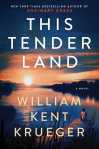
Friday Book Whimsy: This Tender Land

When I look back at my reading list thus far in 2019, it seems as though I’ve read a lot of books that take place during the Great Depression, or just after. It’s probably accidental, though I will admit to a somewhat perverse enjoyment in reading books set around this troublesome time. The people who lived through those years were/are so stalwart because they had to be in order to survive. They have an enviable sense of loyalty and tenacity.

Those attributes are readily displayed by the main characters of  This Tender Land, a novel written by one of my favorite authors, William Kent Krueger. The novel is set during the Great Depression, mostly in Minnesota, but all along the Mississippi River into St. Louis. It tells the story of three boys and a young girl who are forced to grow up quickly.

The Lincoln School provides education and shelter for young Indian children as a way to integrate them into society — in other words, make them act like white kids. The problem is that it is run by a greedy and wicked woman and her dopey husband who does whatever she asks him to do.

Odie O’Banion and his brother Albert are not Native Americans, but find themselves there after both their mother and father died. Odie, in particular, finds it hard to fit in, and pays the price through beatings and solitary confinements. One day, things get out of hand, and he is forced to flee. He convinces his brother and another friend, an Indian boy named Mose, to steal a canoe and make their way down the Minnesota River towards the Mississippi. A young girl named Emmy, whose mother recently died in a tornado, convinces them to take her along so she doesn’t have to live at the school.

They meet many obstacles along the way, and encounter a variety of people — both good and bad — as they try to outrun those who are hunting them.

I love Krueger’s writing. It is lyrical and beautiful and firmly realistic. His characters, too, ring true. Twelve-year-old Odie is the narrator, and while I liked him a great deal, I will say that his dialogue seemed a bit advanced for his age. That didn’t interfere one bit with my enjoyment of the novel.

I found This Tender Land to be a very satisfying read.

Here is a link to the book.

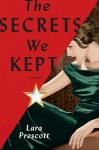
Friday Book Whimsy: The Secrets We Kept

Between the end of World War II and President Ronald Reagan’s stern warning to the Soviet Union —  Mr. Gorbochev, tear down this wall — was a period of fear of communism and secrets about weapons and rocket ships and likely a lot of misunderstanding, not only by the people in power, but by the common folk like you and me. This frightening environment was no more obvious than in the 1950s, when the so-called Red Scare was at its most pronounced.
The Secrets We Kept, by Lara Prescott, is the story of plain ol’ ordinary women who by both chance and circumstance became spies. Or, if not spies, at least secret-keepers. After all, while the men in power dictated the memos, they were the ones who typed them.

But another thing that transpired in the early 1950s was that a man named Boris Pasternak finished the novel on which he had been working for many years. It was called  Dr. Zhivago. And it was the bane of the Soviet Unions leadership’s existence. They would do almost anything to prevent this so-called subversive propaganda from being released.

It is this scenario which resulted in Irina — a quiet, nondescript woman whose mother came from Russia, and Sally — a beautiful if disarming and strong-willed woman, being pulled from the clerical pool to assist in secretly bringing this novel to the United States to be published.

At the same time, Pasterak’s long-time mistress Olga, the model for Lara in Dr. Zhivago, fights her own battle to help with the cause, including many long years in a Soviet prison.

The Secrets We Kept  is a novel of espionage, but it is also a novel of 1950s sexism, love, friendship, and the power of the written word. Based on a true story, the author’s descriptions of this time in our history, and the role the book played, is powerful. I loved the book.

Here is a link to the book.


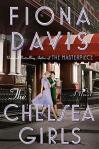
Friday Book Whimsy: The Chelsea Girls

Author Fiona Davis writes novels about historic locations and addresses in New York City.  The Dollhouse is about the famous Barbizon Hotel, a safe place to live for young women in the 1920s and 1930s who were alone in NYC and trying to make it on their own.  The Address is a fictional account of a group of folks living at the Dakota Apartments, which was THE place to live in the late 1800s. The Masterpiece told the fictional story of an art institute that at one time was located in Grand Central Station.

In her most recent novel, The Chelsea Girls is located in — no surprise — Hotel Chelsea in NYC. The hotel at one time was the address for artists of all types, from actors to writers to visual artists. It is also the home of our two protagonists — Maxine Mead and Hazel Riley. Both aspiring actresses, they meet working as part of a USO group entertaining troops in Naples at the very end of World War II. Maxine is strong-headed and confident while Hazel lacks confidence. Nevertheless, they become fast friends.

At the end of the war, Hazel returns to New York City and finds a residence at The Chelsea. Maxine goes to L.A. to become an actress. In 1950, she returns to New York, and is integral in getting a play that Hazel has written into the hands of an interested producer. Not only that, but Maxine convinces him that Hazel should be the director. He agrees, provided that Maxine be the leading lady.

Trouble begins when Sen. Joseph McCarthy’s Red Scare turns to the entertainment industry to seek out communist sympathizers. Both Hazel and Maxine get caught up in the trials, leading to a fascinating and educating story that shows both sides of the issue.

I have read all of Davis’ books, and The Chelsea Girls is far and away my favorite of the four. I love books set in the 1950s. I love books set in NYC. And I love books from which I can learn some history. The Chelsea Girls meets all of those criteria.

The characters were complex and interesting. Surprises abounded. A touch of romance and a touch of mystery.

It will probably be one of my favorite books in 2019.

Here is a link to the book.

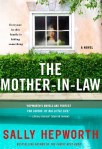
Friday Book Whimsy: The Mother-in-Law

A thriller involving the death of a mother-in-law with the daughter-in-law being the prime suspect sounds juicy, doesn’t it? And, in fact, it was a really good thriller that kept me guessing until the very end.
The Mother-in-Law, by Sally Hepworth, features Ollie and Lucy, who have a good life with their three kids. Lucy had always dreamed of having a mother-in-law to take the place of her own mother. Alas, though Ollie’s mother Diane has always been cordial to Lucy, she is not warm and fuzzy, and their relationship isn’t like Lucy had hoped.

The family is surprised one night by a visit from the police, who are there to tell them that Diane was found dead that day, an apparent victim of suicide. Though it seems impossible that the woman whose strength Lucy has always admired could be dead by her own hand, there are traces of poison in her body, and a suicide note near the body supports the theory. And, of course, she had recently been diagnosed with cancer.

Except, an autopsy indicates absolutely no sign of cancer. Oops. How can this be?

Eventually, the police begin to suspect that it might be murder rather than suicide, and Lucy is the only person who has had problems with the apparently generous Diane.

The police investigation brings them closer and closer to charging her with murder. Family secrets are brought to the surface as Lucy begins her own investigation into the truth.

I really enjoyed The Mother-in-Law.

Here is a link to the book.


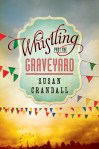
Friday Book Whimsy: Whistling Past the Graveyard

Now tell me, who wouldn’t be drawn to a book entitled Whistling Past the Graveyard? I mean, is it a supernatural tale involving ghosts? Is it one of the thriller novels that have become so popular? Is it a gory mystery story?

The novel, written by Susan Crandall, a midwestern author who understands the mindset of a 9-year-old girl, is none of the above. Instead, it is a coming-of-age story that convincingly demonstrates what the world was like in the 1960s, when civil rights hadn’t yet reached the southern states.

The story’s narrator is young Starla Claudelle whose mother deserted her as an infant and ran away to Nashville to become a star. Starla’s father works far away in the oil fields of Louisiana, and visits Starla as often as possible. Starla lives with her mean-spirited grandmother who seems to resent her very existence.

One day, facing what Starla believes will lead her to be sent to reform school, she runs away without a word to anyone — even her very best friend. She hasn’t gone very far when she is picked up by a young African American woman named Eula who agrees to drive her to Nashville to find her mother. To Starla’s surprise, in the back seat of the car is a white infant wrapped in a blanket.

Eula takes Starla back to her house to gather supplies for the baby before they take off for Nashville. They face Eula’s abusive husband, and this leads to that. Before they know it, the three are running away from trouble towards Nashville.

I read the book very carefully, waiting to pounce upon the author for writing dialogue and thoughts inconsistent with those of a 9-year-old, but couldn’t find any. Though sometimes I wanted to take that girl over my knee for her impulsive and often dangerous behavior, she remains true to her 9-year-old self throughout the story.

As you can image, things don’t go well in Nashville. There are a lot of lessons learned, both by Starla and by the kind and sweet-natured Eula. The ending was satisfying and true to the rest of the story.

I enjoyed this book very much, and will read more by the author.

Here is a link to the book.


Friday Book Whimsy: Meet Me in Monaco: A Novel of Grace Kelly’s Royal Wedding

I was 3 years old when the bell of Hollywood — Grace Kelly — married Prince Rainier III of Monaco. Had I been older, I would undoubtedly have been as enamored of that romantic story as I have been of all of the love affairs and marriages of the Windsors in Great Britain. I love me some queens and princesses.
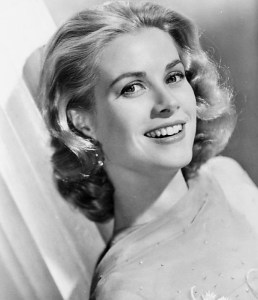
I recently read a novel about two women who helped make the wedding gown for Princess Elizabeth, now queen of Great Britain. I found that I loved that story primarily for the descriptions of the gown and the wedding. Because I so enjoyed that story, when  Meet Me in Monaco: A Novel of Grace Kelly’s Royal Wedding showed up as a recommendation, I was on it!

The novel is like eating a French pastry and drinking a cup of café au lait in Paris. Or more accurately for this book, in the French Riviera. It is light and delicious and I loved every word of it.

It is a novel, so except for the wedding, not much of it is factual. Still, every time the authors — Hazel Gaynor and Heather Webb — would describe how Grace Kelly was dressed, I would get busy with Google images to see for myself. The book took way longer to read because I spent a considerable amount of time looking at pictures of the oh-so-beautiful Grace.
It is a love story, but don’t let that put you off. The romance is part of the fun. Sophie Duval is the proprietor of a perfume shop in Canne, France. She inherited the love for the making of perfume from her father, from whom she learned about flowers and herbs and the chemistry involved in perfume making.

It is 1956, and Hollywood actress Grace Kelly is in Canne for the film festival. The immensely beautiful woman is one of the most popular people in the world, and her presence is noted by the papparazi who follow her everywhere. One day, to escape a photographer, she runs into the perfume shop and asks Sophie to hide her, which she does. The two women become friends. But Sophie is unexpectedly attracted to the English photographer, and they, too, develop a friendship.

The story told by the two authors is — well, to use a word that would have been popular in the late 1950s when the story takes place — DREAMY. In addition to the romance involving Sophie and James (the photographer), you also have the romance involving Grace Kelly and her prince.

The descriptions of the area are so vivid that I actually could see the colors of the Mediterranean and taste the food and wine. It really was great story-telling.

Great romantic fluff for a day when a reader is feeling blue.

Here is a link to the book. 


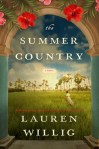
Friday Book Whimsy: The Summer Country

An epic mystery that takes place on a sugar plantation on the lush island of Barbados in the 1800s was a somewhat unexpected pleasure when it came to summer reading.
It’s 1854, and Emily Dawson is the daughter of a poor minister and his wife (who has devoted her life to fighting for the end of slavery). Being the poor relations, it was always expected that when her much-loved grandfather passed away, the family’s shipping business — which began in Barbados — would go to her cousin Adam. What wasn’t expected is that her grandfather would leave her the title to Peverills, a sugar plantation in Barbados.

Emily accompanies her cousin Adam and his wife to Barbados where she learns that Peverills is nothing but a crumbling burnt-down building, having been destroyed by a fire in 1816 by frustrated and angry slaves. What could her grandfather have been thinking?

Emily decides to stick it out and do some detective work of her own to try and find out her grandfather’s motives. What she, working alongside a black physician who was formerly a slave, discovers is a shocking secret that changes the way she looks at her life.

The Summer Country, by Laura Willig, is set against such a beautiful background that is in sharp contrast to the ugliness of slavery and the pretentions of the wealthy landowners. It seems not a whole lot changed between 1816 and 1854.

I enjoyed this novel a lot, admittedly largely because of its setting. Still, Willig knows how to spin a yarn and create unforgettable characters. It was a really good summer read.

Here is a link to the book.

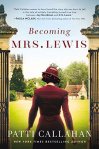
Friday Book Whimsy: Becoming Mrs. Lewis: The Improbable Love Story of Joy Davidman and C.S. Lewis

I have always found C.S. Lewis to be an amazingly interesting person. He was a lackadaisical Christian who became an apologist for Christian teachings and philosophy as an adult having been influenced by friends J.R.R. Tolkien and G.K. Chesterton. He was married to writer Joy Davidman, with whom he shared an enormous love.

Becoming Mrs. Lewis, by Patti Callahan, is a mostly-based-on-reality story of how the two writers met and fell in love. Joy Davidman was married to another writer who was an abusive alcoholic with two children when she began a correspondence with the writer C.S. Lewis. Once an atheist and communist, Davidson was converted to the Christian belief following what she saw as a miracle involving her husband after fervent prayer.

Her relationship with her husband was failing, and she finally left to spend some time in England where she met with and began a friendship with C.S. Lewis that changed her life. Later, she divorced her husband and moved her children to England, where they spent their remaining formative years with their mother and C.S. Lewis, who finally married in 1956.

The book is based on truth. The story is so interesting that the fact that the story moves pretty slowly and there are far too many words (was there an editor?) didn’t deter from the interesting tale. The author’s story made me wish that I, too, could have been a friend of C.S. Lewis.

In real life, Davidman and Lewis only had four years together as husband and wife. She died of cancer, and he died a few years later. If you have read any of his books about his faith — particularly  A Grief Observed — you become very familiar with the love between the two of them, and the love and belief he had in Christianity.

I recommend the book if you don’t mind a bit of slow read.

Here is a link to the book.


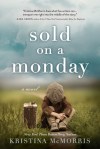
Friday Book Whimsy: Sold on a Monday

Some time back, I read (and reviewed) a novel written by author Lisa Wingate entitled Before We Were Yours. Her novel took place in the late 1930s, and was the story of children who were kidnapped by an orphanage and then sold. The story was based on fact. It was one of the best books I read that year.

Because of my connection to that book, Sold on a Monday, by Kristina McMorris, caught my attention. It too, took place in the 30s, this time during the Great Depression. The story was based on a real photo taken during the Depression that the author came across while doing some research. The photo was of two small children sitting in front of a rundown farmhouse next to a sign that read 2 Children For Sale. Off she went with an idea for a historical novel.

Reporter Ellis Reed is lucky to have a job during the hard times of the early 30s. He is the society writer for a newspaper, a job he loathes. He yearns to be an important journalist. In the course of work, he comes across a sign advertising the sale of two children. He shoots a photo, but is unable to interview anyone.

When he returns to his office, he convinces his boss that the story is important, and the editor agrees to print it along with the photo. Unfortunately, the photo — and the negative — are destroyed. What are the chances? So he does that thing that reporters are not ever supposed to do. He sets up a fake photo and writes a fake story. Bad things ensue.

In the meantime, Lily is stuck in the dead-end job of being the newspaper’s secretary, while she really wants to be a writer. Since she is a single mother of a little girl, she knows she can’t be choosy. When Ellis’ dirty deed leads come to her attention, the two of them work together to try to make things right again.

Perhaps this book would have worked better, had the author based the story on these two children in the same manner that Wingate’s story was of the kidnapped children. Instead, the children become almost an afterthought with the attention focused on the two protagonists. Unfortunately, the author’s character development and ability to move a story along made this a book I slogged through. I finished the novel, but was left feeling that the story could have been so much more.

In her Afterword, we learn that surprisingly little is known about the real photograph. There apparently is some evidence, however, that the mother who was selling the children wasn’t doing it because she was poor, but instead, just because she wanted to be childless.

Here is a link to the book.

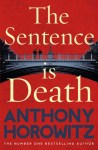
Friday Book Whimsy: The Sentence is Death

Author Anthony Horowitz is one of my favorite writers. He is the creator of and writer for two of my favorite Brit mystery programs: Foyle’s War and Midsommer Murder. He has also joined the legion of folks who have written Sherlock Holmes mysteries, but done a much better job of most. With his  2018 novel The Word is Murder, he came up with one of the most clever story ideas I’ve ever come across as a reader. He continues this clever idea in The Sentence is Murder.

What is the idea? With a wink at Sherlock Holmes and Dr. Watson, Horowitz writes himself –not a takeoff on himself, but actually his very own person — as a character in the book. In fact, he is Dr. Watson to London private investigator Daniel Hawthorne’s Sherlock Holmes.

London attorney Richard Pryce is found dead in his home, having been hit over the head with a bottle of expensive wine. It seems clear from the get-go that one of his clients — a famous, if odd writer is the murderer. After all, she threatened to kill him with a bottle of wine in front of a restaurant full of people. Still, just like Sherlock Holmes and Dr. Watson, nothing is as it seems.

though Horowitz (the character) is getting much better at figuring out the nuances of the mystery, he still is pretty klutzy when compared to the much-more astute Hawthorne.

The mystery is good, but the real fun is reading about Horowitz’s insecurities and problems around writing and producing real-life shows like Foyle’s War as part of the story line. And it was fun to get to learn a bit more about the heretofore secret life of the brilliant detective Hawthorne.

I loved this book, and can’t wait for the next.

Here is a link to the book.