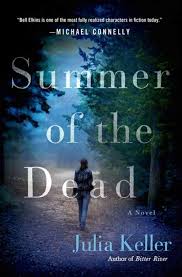
Friday Book Whimsy: Summer of the Dead

imgresI enjoy good books for lots of different reasons. I’m not necessarily a purist. I can enjoy a lighthearted read that I recognize isn’t great literature just because I enjoy the story and like not having to think too much. I am a big fan of really good dialogue, and sometimes even if the story isn’t necessarily terribly compelling, I might enjoy the book because of what’s being said. And I love a good mystery.

Summer of the Dead, by Julia Keller, is the third and latest in a series about prosecutor Bell Elkins who has returned to her roots in a small town in West Virginia. Keller’s books are not lighthearted, but all three of her books have had the same result – I haven’t been able to put them down. Each one is better than the last.

I love the characters, largely because they are not perfect. Bell simply can’t find a way to be happy, it seems. Her daughter currently lives in Washington D.C. with Bell’s ex-husband. She was supposed to come home to Bell for the summer, but went to Europe instead. Bell’s sister Shirley, fresh out of prison, has come to live with Bell until she can get settled. Drama ensues.

Three seemingly unrelated murders take place in the small town of Acker’s Gap, West Virginia, and Keller gives us all sorts of red herrings to distract us. The ending took me completely by surprise. As an avid mystery reader, that rarely happens.

In Summer of the Dead, we meet Lindy Crabtree, the daughter of a coal miner who suffers from dementia and lives in the basement of their tiny ramshackle home. Lindy keeps herself occupied by being an avid reader and taking care of her father.

Mr. Crabtree is a haunting character, apparently based on a real-life story the author came across in her research. Having been a coal miner for most of his life, Mr. Crabtree is only comfortable in dark, tiny spaces, mostly hunched over. Keller’s writing gives the reader a startlingly clear picture of the elderly coal miner.

Which brings me to what I like best about this amazing writer – her descriptions. Without ever having seen the small, fictional West Virginia town of Acker’s Gap, I could find my way around. I know. I know. It’s fiction. Still, you know what I mean.

Not just the town, but the people who live in the town, are clearly painted in my mind.I love Keller’s development of Bell’s sister Shirley. I hope we continue to see her in future books.

Consider this description of the Crabtree home….

The interior of the house was similar to the exterior, like a dirty sock turned inside out despite the fact that both sides are equally filthy. It was ramshackle, compact, and claustrophobically cluttered. An ancient gray haze seemed to hover over the stuff, as if select portions had lain undisturbed for slow-turning centuries, like the spoons and combs and vases of Pompeii. Bell had been in a lot of houses in Raythune County that looked just like this, houses that were gradually sinking back down into the dirt they’d emerged from.

Can’t you just picture that house?

Keller’s books aren’t cheerful. I hope at some point that Bell will find some happiness. But they aren’t depressing either, simply realistic. The books are well-written and very readable, and the mysteries are well-crafted.

I can’t recommend this book enough, as well as her previous two (A Killing in the Hills and Bitter River). Great reading.

Buy Summer of the Dead from Amazon here.

Buy Summer of the Dead from Barnes and Noble here.

Buy Summer of the Dead from Tattered Cover here.


Workin’ Nine to Five

imgresIn the past few months, I have noticed that I get regular notices on my telephone from Google regarding traffic situations on the road on which I am traveling. When it first happened, I was driving on I-36, AKA the Boulder Turnpike, heading towards Estes Park. As I was dodging construction equipment resulting from a road construction project that has been going on for about 25 years, my phone dinked, alerting me of a message. Soon thereafter, I was forced to come to a dead stop, so I checked my message. Google was informing me that there was road construction on the Turnpike and I would be delayed by 15-20 minutes.

It, quite frankly, creeped me out. How did my phone know where I was? I concluded that I must have at some point turned on some sort of GPS tracking system, justifying it by assuring myself that by doing so, Google would be able to help me find my phone should I lose it or it gets stolen. As if anyone steals phones that aren’t IPhones.

Anyhoo, since then, I have been getting regular traffic alerts. Mostly they come long after I have figured it out myself, but sometimes they come in advance. The thing is I don’t check messages when I’m driving, so by time I see the message about the traffic situation, I’m usually already there.

Like everyone else, I am getting used to the fact that Google and Amazon and Facebook know more about my life than I know myself. Still, something interesting has been happening in the past couple of weeks. I have been getting alerts telling me it will take me 14 minutes (or however many minutes) to get to work.

I find that really interesting because I haven’t had a job since November of 2007. I wonder where Google thinks I work?

When the message appeared yesterday, I finally investigated further. Apparently Google believes I work in a mostly retail area in south Denver called Streets of Southglenn.

Now, my son works in an office building at the Streets of Southglenn. It’s true I regularly drive there to meet him for lunch. Maybe once a week or so. Apparently Google doesn’t think I work very hard since I only go there once a week.

But, the thing is, I drive a lot of places regularly. I drive to Mass every Sunday. I visit the library once a week or so. I go to the grocery store almost every day. Why did Google decide I work at Streets of Southglenn? I wonder what they think I do for a living?

I could be a food server at Snooze Restaurant. I might work in the automotive department at Sears. Maybe I’m a lingerie model at Victoria’s Secret. Perhaps I dish out ice cream at Dairy Queen.

It’s only going to get creepier my friends.

Have you had any experiences with technology that have made you sit up and take notice?

By the way, God is apparently a Bronco’s fan because take a look at this sunrise taken from our upstairs bathroom window….

Sunrise

Go Broncos!


Can You Tell Me How To Get to Sesame Street?

searchBill, who is a lawyer, was scheduled for rare hearings downtown Tuesday and Wednesday. I saw him off with a kiss and a smile, expecting a quiet day.

I sat down with my book, and after a bit, noticed that my wrist was beginning to hurt. Well, not just hurt. Throb.

On Saturday afternoon, following our train ride to Glenwood, after we had checked into our hotel, I had noticed the beginnings of some pain in my wrist. I thought carefully, but couldn’t come up with anything that I had done that would result in wrist pain. Sure, my walk to the dining car was somewhat ungraceful, but I hadn’t taken a free fall face first into the aisle, saving myself only by breaking my fall with my wrist. Hadn’t happened.

So I ignored it.

But it didn’t go away. In fact, by Monday afternoon, I noticed that not only was it hurting, it was swollen as well.

Again, I thought and thought, but couldn’t come up with a reason for a sprained or fractured wrist.

So I ignored it.

But as I sat in my chair yesterday morning feeling increasing pain in my wrist, I decided it warranted a visit to a doctor.  I called my doctor’s office, and after they finished laughing hysterically, they told me I might get in to see them sometime before the 2016 Summer Olympics in Brazil.

They suggested an urgent care near their office.

I know you think I’m going to tell you a horror story about waiting to see the doctor in urgent care, but the fact of the matter is, beyond hearing the two receptionists talk unceasingly about food, it all went pretty well. I filled out my ten thousand forms (thankfully, it is my left wrist and I’m right-handed), and was called in very quickly to the examination room.

It wasn’t long before a man walked into the room.

“Hello,” he said, as he entered. “I’m Dr. Bob.”

Dr. Bob? Was I on Sesame Street? I can’t have a serious conversation about my medical condition with someone who calls himself Dr. Bob.

Anyway, Dr. Bob looked at my wrist, prodded it a bit so that he could see me wince in pain, and asked me about any accidents I may have had. When I explained that I couldn’t recall any accidents, he said, “Do you think I should I take an X-ray?”

Seriously? He’s asking me? I have degrees in journalism and communications, not orthopedic medicine. I throw up at the sight of throw up. I never got a grade above D+ in any science class I ever took. And he’s asking me if he should do an X-ray.

I think he sensed my annoyance when I said, “Dr. Bob, I don’t know whether or not you should take an X-ray. Do you think you should take an X-ray?”

At the end of the day, we (since now I’m apparently his medical partner) decided against an X-ray at this time. He sent me home with a splint and thesplint suggestion that I make an appointment with a hand specialist for a week from now that I either make or break, depending on whether or not I’m still in pain.

I think Dr. Bob might have earned his medical degree from Dr. Bob’s School of Medicine for Animals and Big People Too.

Kids’ Whimsical Cooking: Apple Cake

maggie faith 1st grade photoMy name is Magnolia. I’m Addie’s sister. I am 6 years old. I helped my nana make an Apple Cake.

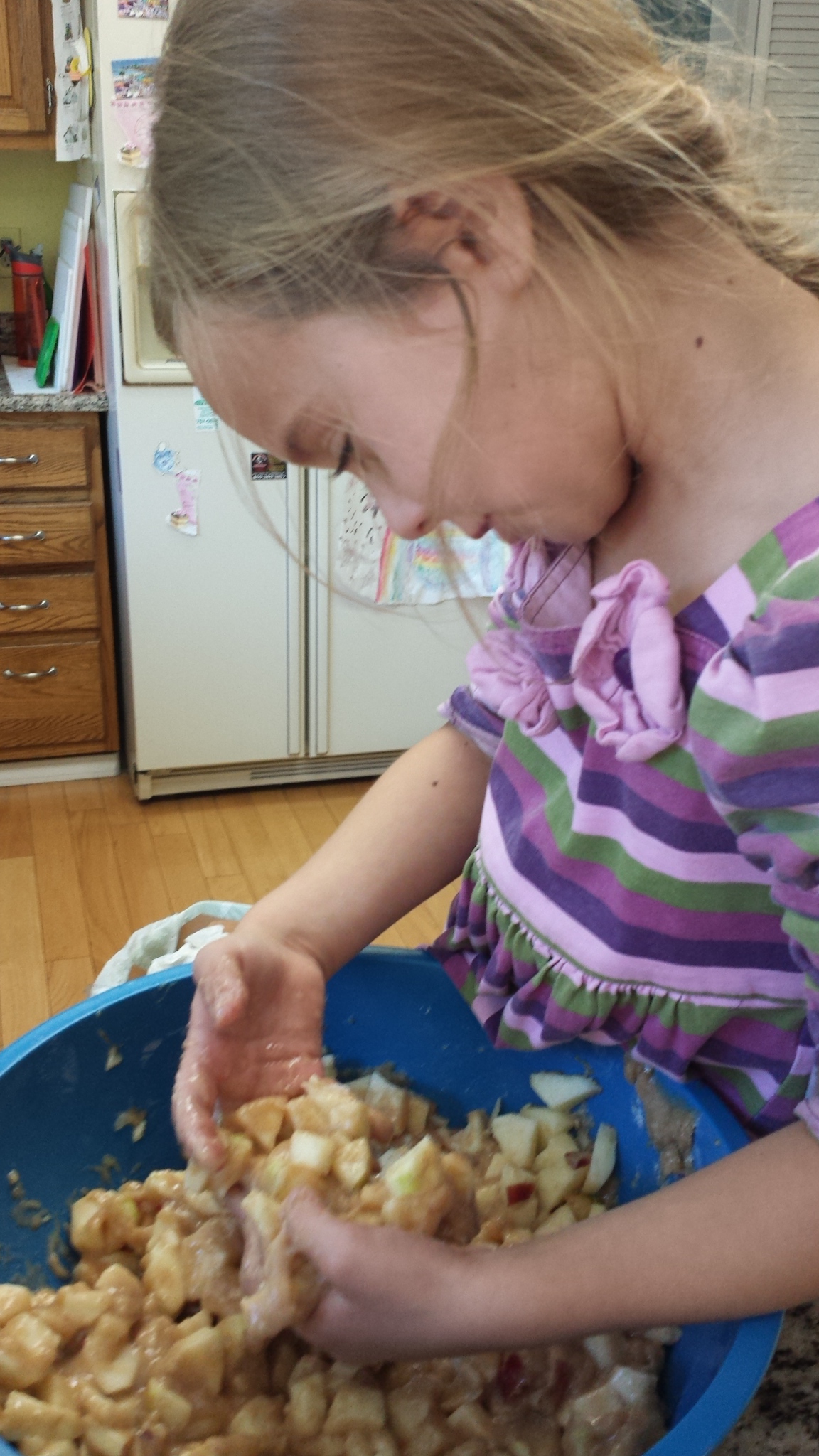
I like that it smelled good. My favorite smell was the cinnamon. I liked that I could mix it with my hands. I washed them first so they were clean. I licked the bowl clean. It tasted really yummy.

I think this would be a good project for kids to do with their grandmas or their moms or dads.

I hope you like my recipe.


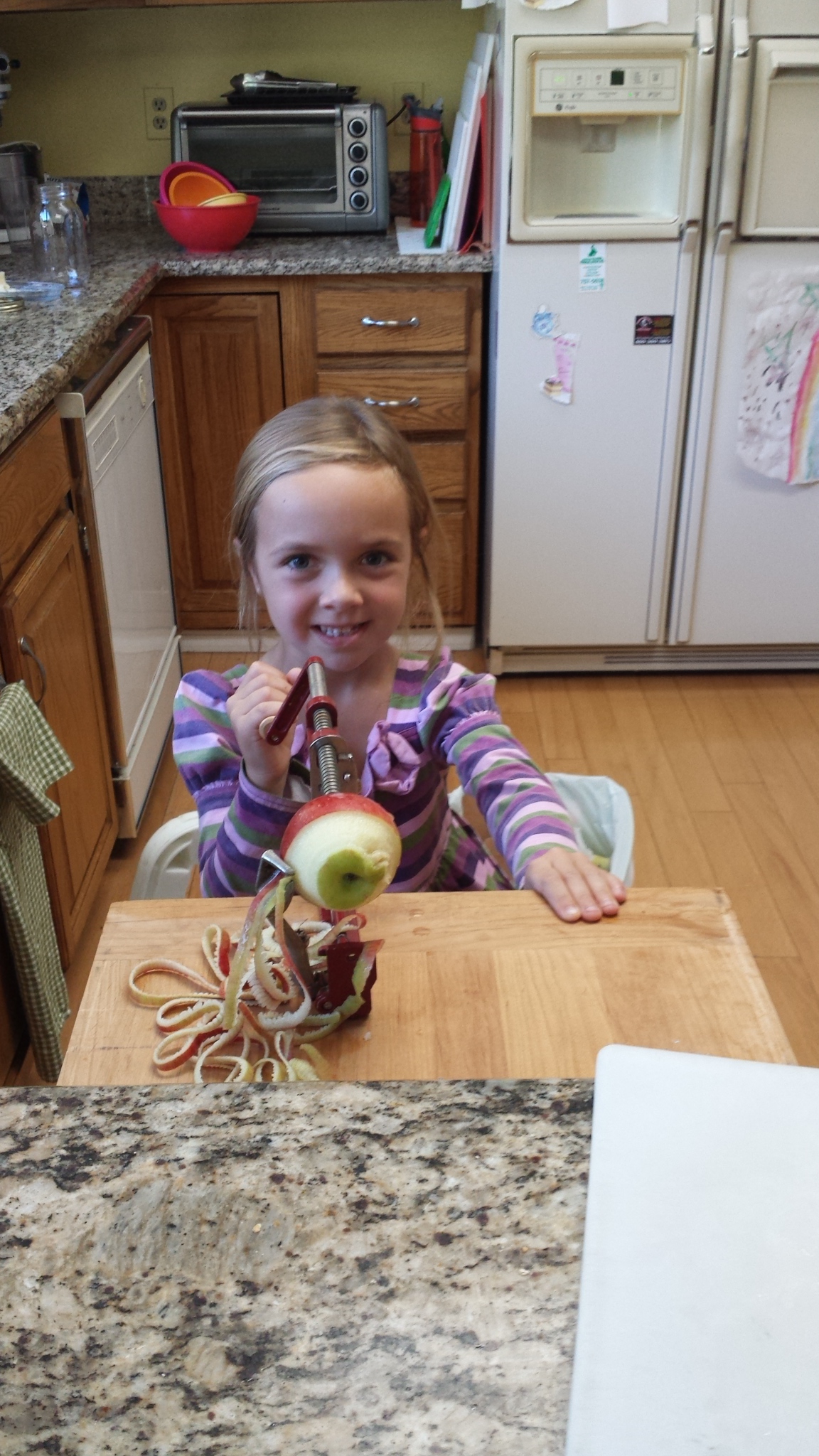
First, peel the apples…

peeling apples


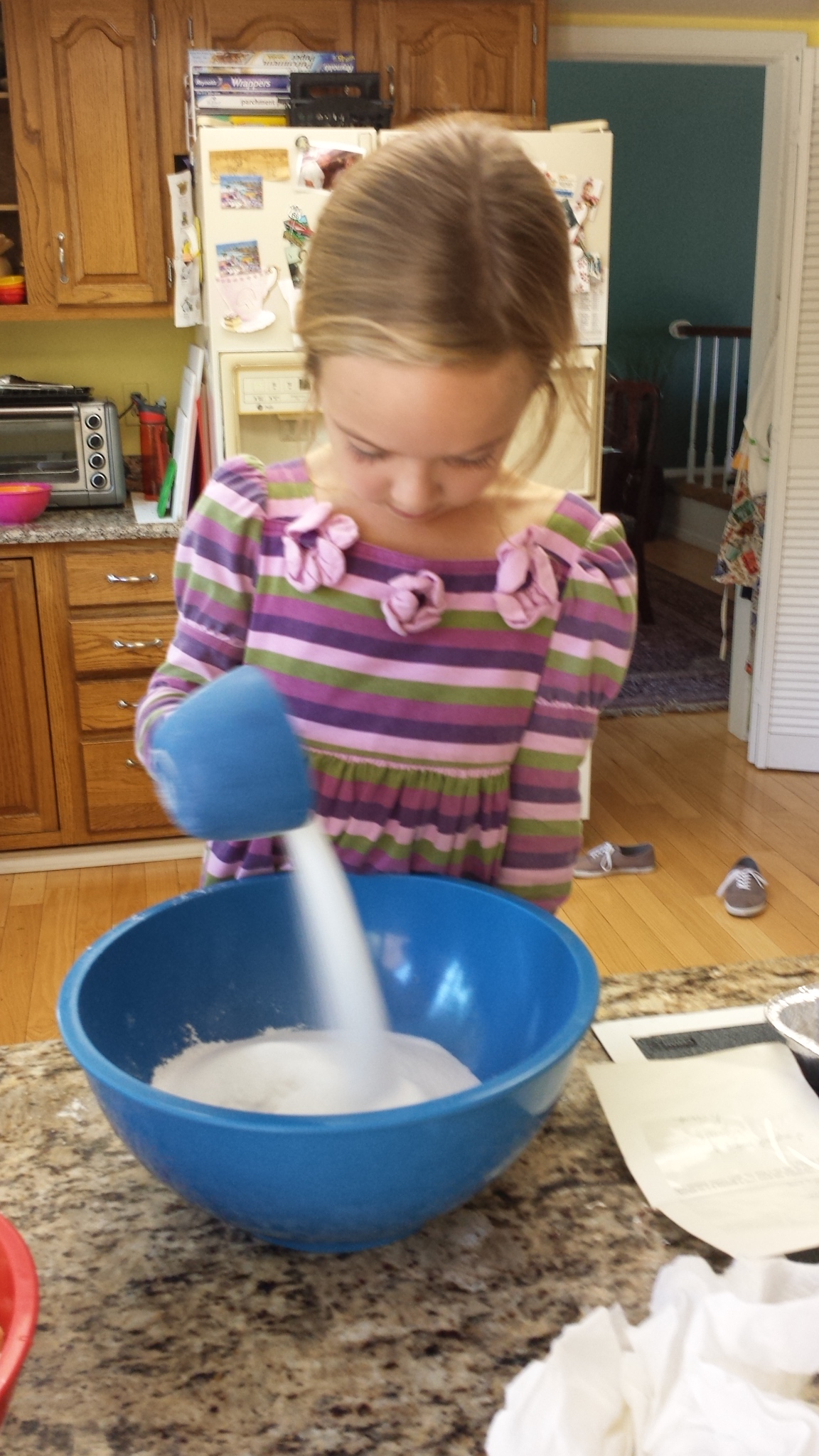
Then pour in the ingredients….

pour sugar


Mix (I used my clean hands)

Mixing with hands

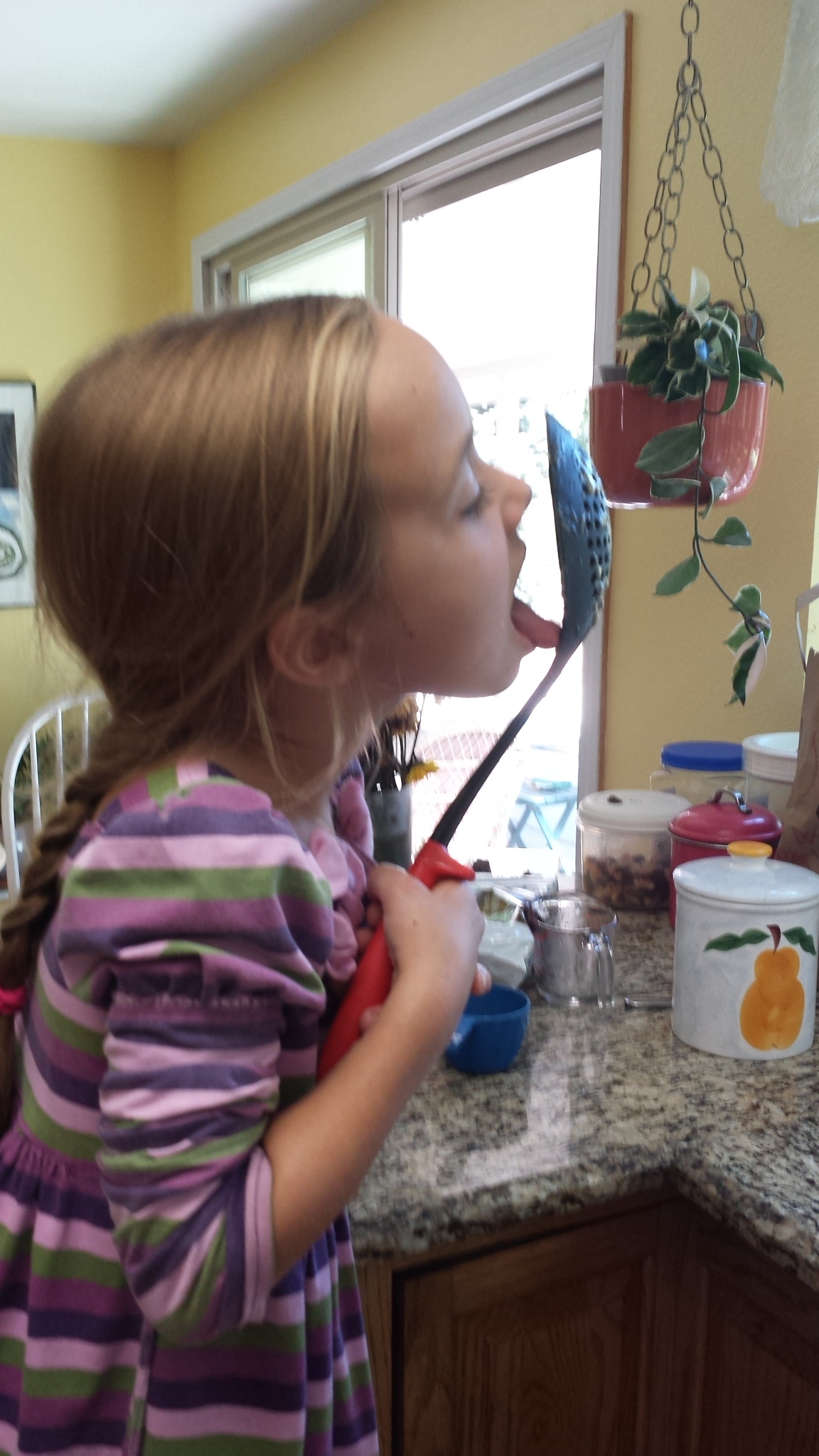
Don’t forget to lick the spoon…..

licking the spoon


Apple Cake

Ingredients
2 c. flour
2 c. sugar
2 t. cinnamon
1 t. baking soda
1 t. baking powder
1 c. shopped walnuts
1 c. vegetable oil
2 t. vanilla
2 eggs, beaten
1/4 c. brandy
4 c. chopped apples (peeled)

Process
Mix all ingredients and press into a greased 9 x 11 baking dish. Bake at 350 for 1 hour or until center bounces back when touched. Serve with a dollop of fresh whipped cream.

Nana’s Notes: I have offered this recipe before, but it’s worth repeating. It is quite an easy recipe for kids with adult supervision. Magnolia was envious of her sister Addie always being featured in my Kids’ Whimsical Cooking feature, so voila! My little protege.

Reluctant Traveler: All Aboard

Good mornin’ America, how are you

Don’t you know me? I’m your native son.

I’m the train they call the City of New Orleans.

I’ll be gone 500 miles when the day is done. – Arlo Guthrie

20141018_100636During our various and sundry travels through Europe, Bill and I have logged a lot of miles on trains. For the most part, train travel in Europe is efficient, relatively inexpensive, ranging from bearable to darnright fun, and handy as can be. Even in Italy — thanks to Mussolini — the trains run on time.

Bill used to take the train from the University of Southern Illinois (go Salukis!) to Chicago, but that was some time ago and he hasn’t traveled by American train since. As for me, until this past Saturday, I never set foot inside an Amtrak train.

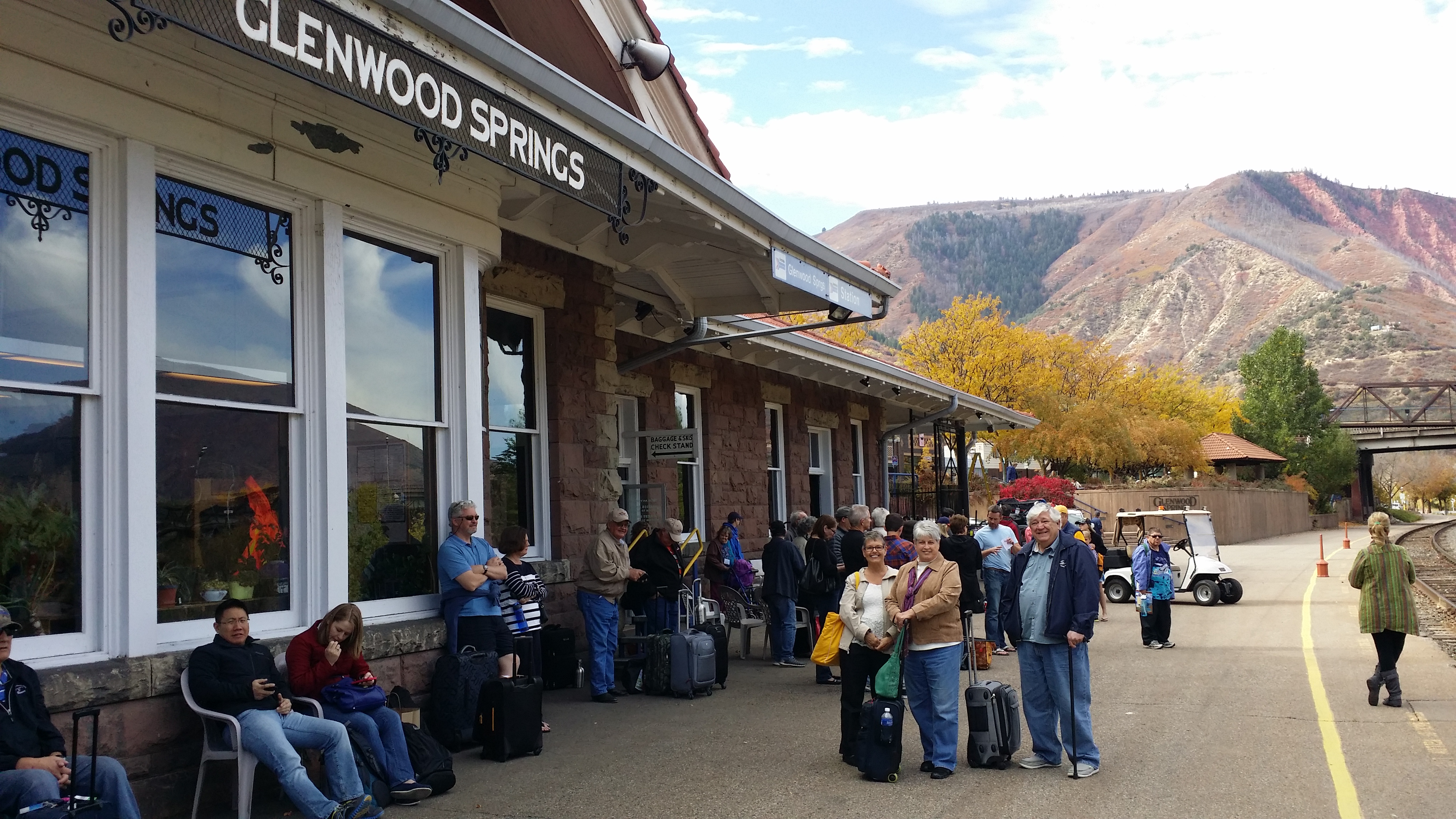
This past weekend — to celebrate Bill’s birthday — we rode the California Zephyr from Denver to Glenwood Springs. Mussolini would have been proud. The trains ran on time. Well, mostly. The train from windowpassenger train system just isn’t what it is in Europe, and probably never will be. But we wouldn’t have had more fun if the Eiffel Tower had been waiting at the end of the line.

The Zephyr goes from Chicago to San Francisco with many stops in between. We took the line between Denver and Glenwood Springs for our very quick trip. We traveled with our friends John and Carol. John is a highly experienced train traveler, having logged lots of miles in the past few years after becoming thoroughly fed up with the complications of air travel. So he was our guide.

It is very quiet. No clickity clack, clickity clack. Apparently those days are gone. But as we made our way to the dining car, I couldn’t help but notice that it was difficult to walk. (The man couldn’t have been nicer about me thumping him in the head with my purse as I nearly fell onto his lap.)

As we took our seats, I pointed out that I had never once seen Hercule Poirot or any other Agatha Christie character being flung around as they walked to the glamorous dining car while solving mysteries on the Orient Express or any other train on which they seemed to always be traveling. john carol kris waiting for trainJohn explained to me that European passenger trains have their own rail lines and they are smooth as a baby’s behind while Amtrak shares its comparatively crappy rail lines with the numerous freight trains that rule the American rail roost. Oh, and Hercule Poirot is a fictional character.

By the way, our dining car wasn’t glamorous, but on the plus side, we didn’t have to wear tuxes and evening gowns. And the food was highly acceptable.

Here’s another thing Hercule Poirot never experienced — exposed buttocks. As we entered Glenwood Canyon, John explained that tradition dictates that the folks rafting or fishing the Colorado River moon the passenger trains as they go by. (This would only work in America, of course, because in Europe the passenger trains are so plentiful that there would be danger of getting one’s butt cheeks sunburned.)

Mooning happened — twice, in fact. Once on the way up and once on the way back. Unfortunately, both times it was on the other side of the train from where I was sitting. I saw nary a bare buttock.

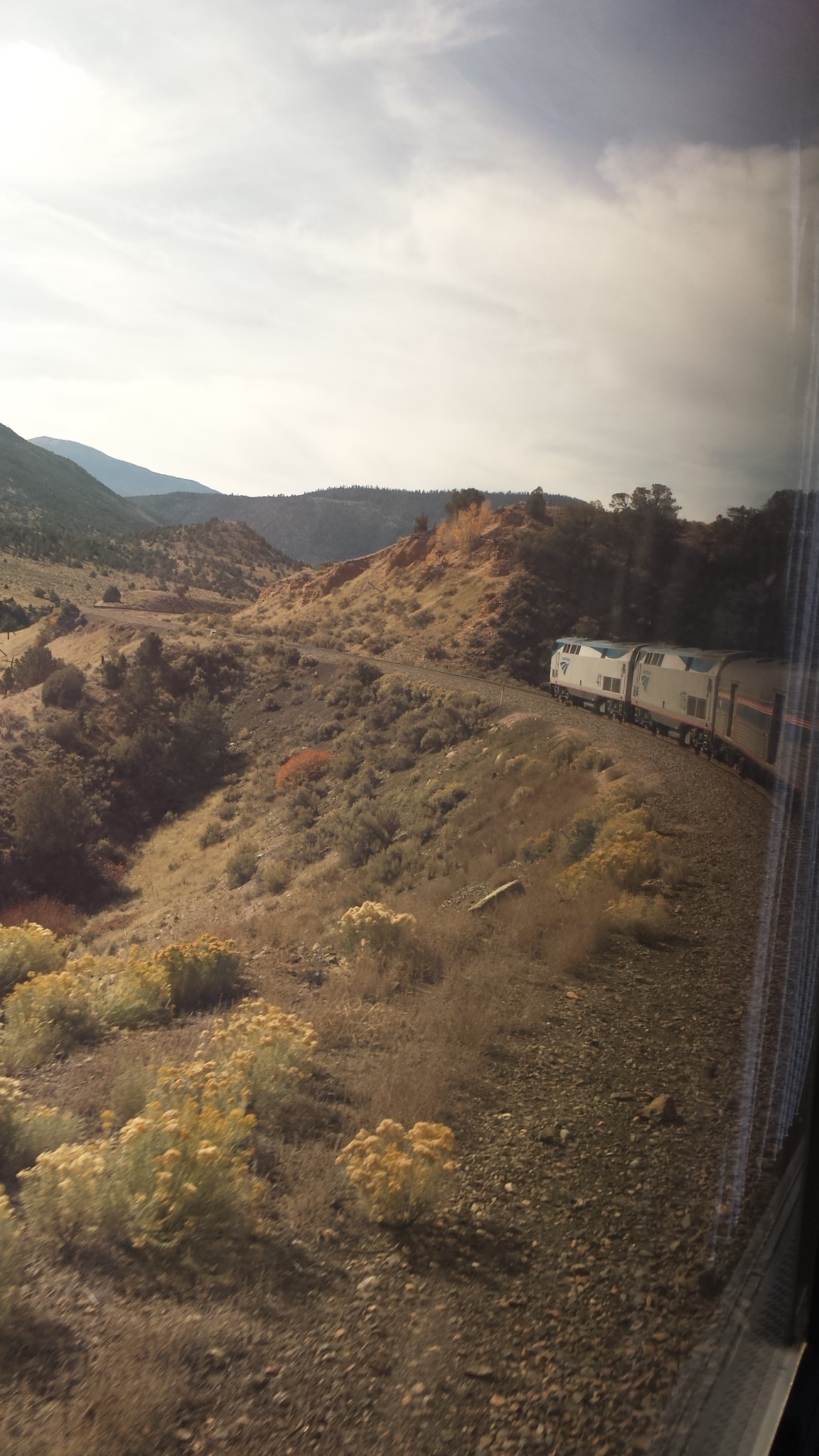
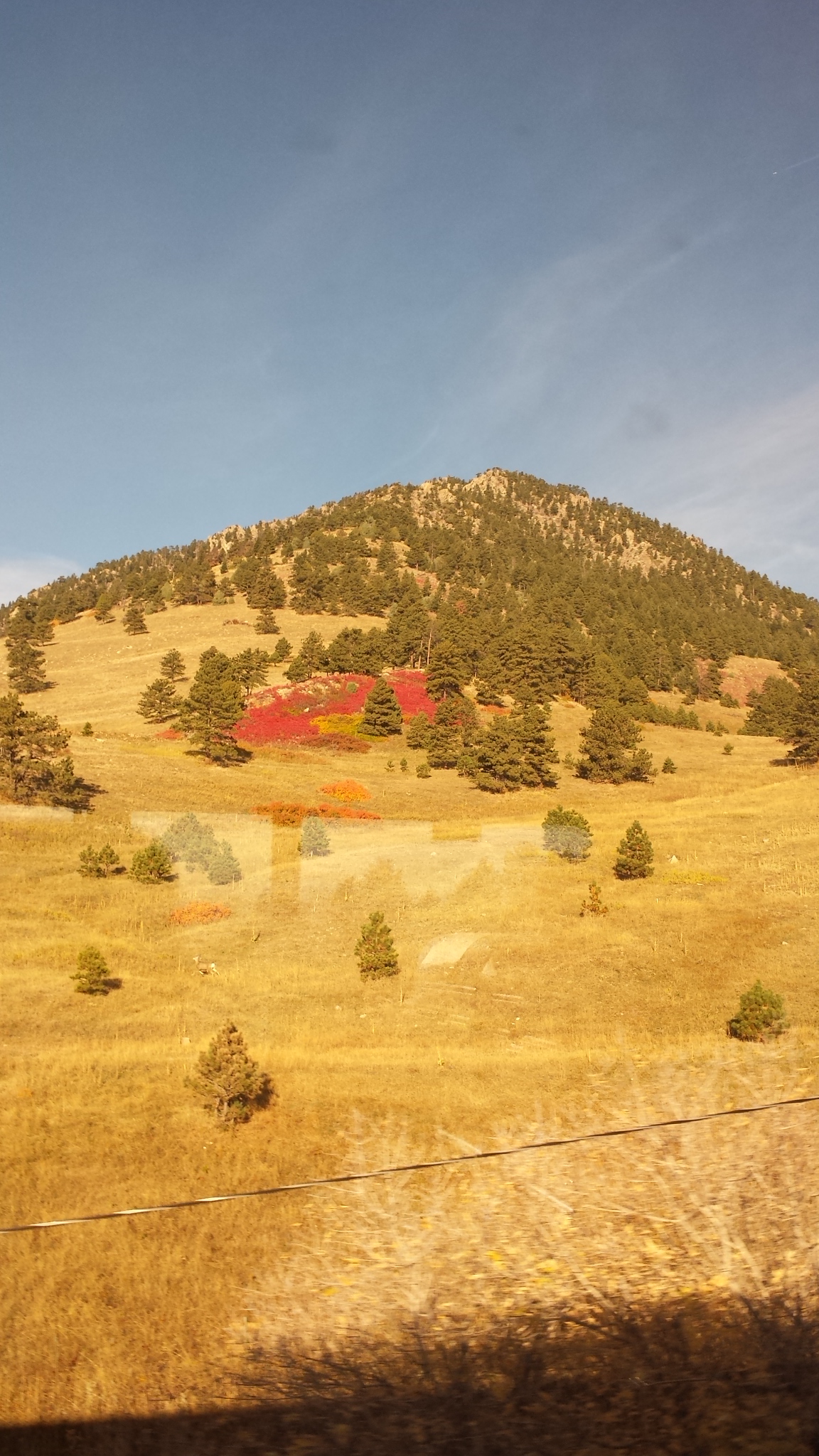
What I did see, however, was spectacular scenery from just about the moment we left Denver’s Union Station until we pulled into the station in Glenwood. Autumn colors, wildlife, roaring creeks, and beautiful Colorado mountain wild flowers. And the good news was we all could enjoy the view since someone else was driving the train. (I don’t suppose you call it driving a train, but whatevah.)

Here are a few other things I learned on this trip:

A) When the train is getting ready to leave a station, it blows its horn like this — long, long, short, long. That is Morse code (dash, dash, dot, dash) for “q”, and that means “Here comes the Queen.” A long-time tradition, probably dating back to Queen Victoria.

B) When you pay for a sleeper car (which we splurged on for the trip back), meals are included in the price. With careful planning and a total disregard for whether or not we were actually hungry, we managed to fit two meals into our five-and-a-half hour trip, thereby making the upgrade pay for itself. By the way, the family sleeper provided us privacy and free meals, but we did no actual sleeping. I’m very happy to report this fact.

And C) when the flight attendants on airplanes tell you to put your head between your legs in the event of a crash landing, it’s to save your teeth so your body can be identified.

I can’t make this stuff up.

We had a wonderful weekend, and I’m determined to take a lengthier train trip sometimes soon.

In the meantime, here are some of the sights we saw….

glenwood pool

The famous hot springs pool in Glenwood Springs was ablaze with color.

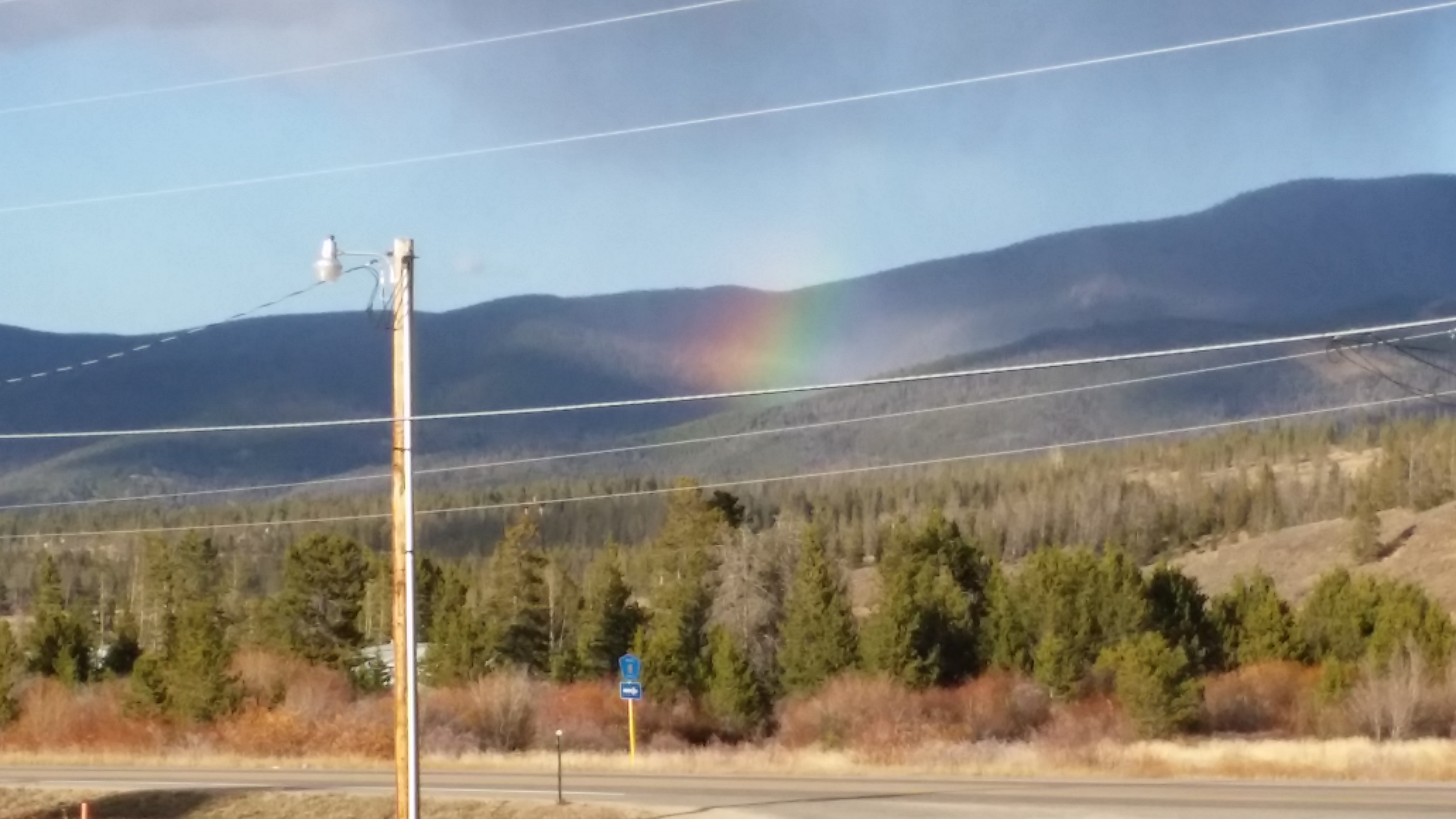
rainbow

We caught sight of a rainbow during our trip back to Denver.

kris by train view from train3 view from train 1 view from train 2


That’s Enough

The majority of my granddaughters are happy to mug for a camera. In particular, my two 6-year-olds, Magnolia and Kaiya, can smile instantly and prettily as soon as they see a camera coming their way.

Four-year-old Mylee, well, not so much. She will pose, but not particularly happily….

….as you will be able to tell from this video….


Have a great weekend.

Friday Book Whimsy: Roses

searchIf I was debating the merits of Roses with myself, me and me would be in a fight.

This novel by Leila Meacham has many things that I like in a good read. It takes place over a number of years and over a couple of generations, the location is on a cotton plantation in east Texas (and I do like books that take place in the south), and there is lots of drama and angst. A good, meaty read, one would think.

But the reason I would be in a fight with myself is that on the one hand, there were so many things NOT to like about this book, but on the other hand, I couldn’t put it down. I think that speaks to the quality of the writing.

The story features three families who establish, and basically run, a small town in east Texas. One family is in the timber business; one family is in the textile business; and one family owns a cotton plantation. The families remain loyal to their roots, and get along splendidly.

Problems arise when the patriarch of the cotton plantation family dies and leaves the plantation to his daughter – wholly bypassing his wife and his son. He does this because he recognizes that only his daughter Mary loves the plantation as much as he did and will not sell it off as he knows his wife and son would.

An unforgiveable offense, and one that shapes the novel’s story.

There are a couple of things that annoyed me about the book. One is that Meacham begins the book with the ending. In other words, there is no surprise at all since you know that Mary dies and doesn’t leave the plantation farm to her niece, as everyone expected her to. The idea, I believe, is that the author lays out that fact, and then tells the story to explain why Mary made that choice.

The second problem I had with the book is that I think I was supposed to like the characters more than I did. Book reviewers compare Roses to Gone With the Wind and Mary to Scarlett O’Hara. The difference, I think, is that while Scarlett was annoying at the beginning of the novel, her love of, and commitment to, Tara seems believable, perhaps because of the story’s setting during the Civil War. I couldn’t help it – I found Mary’s commitment to Somerset and willingness to put it before everything else simply silly and short-sighted.

I also couldn’t understand why Mary’s mother and brother were so angry that Somerset hadn’t been left to them. It isn’t like Mary didn’t provide generously.

Finally, throughout the novel, we are told just how much Rachel loved and respected and trusted Mary, her husband Ollie and their dear friend and timber baron Percy. Suddenly, when Somerset isn’t willed to her as expected and she learns a secret about Percy and Mary (a secret that it seems every single other person in Texas knows) she totally turns on them. It never seems realistic to me that Rachel wouldn’t simply go to Percy and ask if it is true.

Having said all of these bad things about the book, I will tell you that I liked it more than I didn’t. As I mentioned, I enjoyed the writing style, and the story kept me reading. It’s a lengthy endeavor, but if you like epic novels, you are liable to enjoy this story.

There is a prequel that was written after the publication of Roses. I will consider reading it as it might help set the stage for some of the actions that transpire in Roses.

I think the book would be a good one for a book club discussion, as indicated by my own conflicting feelings.

Buy Roses from Amazon here.

Buy Roses from Barnes and Noble here.

Buy Roses from Tattered Cover here.

Greatest Generation

Reinie navyDang. I really wanted to come up with a different title for this post. The fact of the matter is, however, that Tom Brokaw really nailed my parent’s generation. They really were the greatest.

Baby Boomers come in second.

This past week as I’ve looked a bit deeper into the lives of a few of my aunts and uncles – all part of that Greatest Generation – I have been reminded why they were great.

I think a couple of things that happened during my mom’s and dad’s lifetimes really molded them into the kind of people they were.

The Great Depression undoubtedly had a profound impact on how that generation looked at life. Nearly everybody was deeply impacted. Oddly, both of my parents claim to have been somewhat protected from the worst of the situation. My mom’s family lived on a farm. She often told me that she never remembers being hungry or even wanting for food. “We always had vegetables,” she would tell me, and would describe a meal of thinly-sliced radishes on buttered bread, or a salted tomato sandwich. For her, that seemed nothing to complain about. I’m pretty sure that would have brought a complaint or two from me.

My dad’s family, of course, had the bakery. While meat may have been a scarcity, they always had bread and rolls to eat. The only thing I ever imagesremember Dad complaining about was that Grammie considered “Heavenly Hash” to be a meal. Heavenly Hash is a concoction consisting primarily of fruit, marshmallows, and whipped cream. Some recipes call for rice, but I don’t know if Grammie bothered with anything like that. Dad would be hungry after a long day at school and work, and the sweet meal just didn’t cut it for him.

But I also recall him talking about how Grammie would hand out rolls and bread to the hobos who would stop into the bakery looking for food. “Dad would be baking in the back of the store at the same time Mom was giving away bread and rolls in the front,” my father told me. What an example of generosity of spirit.

The other event that must have shaped their lives was World War II. Whether you served in the military or watched from the sidelines, it would have been impossible to not be impacted. I recently watched a 7-part special on the Roosevelts, and was able to get a pretty clear picture of just how scary the world must have felt at that time whether or not you were fighting overseas.

Despite everything, things seemed to be easier back in my parents’ younger days. Oh, you didn’t have the modern conveniences, there was no Internet and IPads were not even a twinkle in Steve Jobs’ parents’ eyes.

But take cooking, for example. You didn’t have to worry about where to find turbinado sugar or gluten-free flour or Meyers lemons or whether or not your seafood was sustainable. You just cooked. You were happy if you had any sugar. You probably didn’t have access to any kind of fresh lemon if you lived in Columbus, Nebraska; you just used the bottled stuff. Even I, at this very moment, don’t fully understand how or why or when seafood is sustainable.

No extra-virgin olive oil. More than likely you just used lard. What can I say?

My second cousin Kate told me this week that she has her grandmother’s (my mom’s eldest sibling) recipe box. Her favorite recipe (likely because it is in her grandmother’s handwriting) goes like this….

Clare’s Dressing

7 cups bread cubes

1 cup celery chopped

1 cup onion

1 lb. pork sausage

Fry, remove and slosh the bread in the fat.  Put into container and add 1 can cream of chicken soup, season and bake at 350.

The Barefoot Contessa has never instructed me to “slosh the bread in the fat.”

At the same time, Kate told me they spent every Christmas Eve at her grandmother’s house. “EAT,” Clare would tell them, even though they were as stuffed as the turkey. Because people who like to cook like to see their food enjoyed.

And they always dressed in their Christmas finery for dinner, ready for Midnight Mass. Kate said she only remembers Clare missing Midnight Mass once, when she offered to stay home with Kate’s 6-month old baby on an especially cold Nebraska Christmas Eve.

But I am going on too long, and I will leave you, and my aunts and uncles, with one final recipe….

Mary Ann’s Cole Slaw Dressing

2/3 c. sugar

1/2 c. vinegar

Boil 1 minute.

Chill, then blend with:

1/4 t. salt

1/2 t. dry mustard

1 t. grated onion

1 c. oil

1 t. celery seed

Refrigerate

It remains my favorite cole slaw dressing to this day.


Praise the Lard

Marg_Reinie.jpgMy mother was the youngest of 14 kids, two of whom died as infants. There are a full two decades between Mom and her eldest sibling. Despite the age difference, Mom was close to all of her brothers and sisters. I have always found that remarkable and something to be modeled.

While two of Mom’s siblings died as infants, the remainder lived to be adults. Her brother Karl, however, was only 35 when he died. He survived World War II only to be felled by a bleeding ulcer.

Two things about Karl’s death have always interested me. First, he died in April of 1947; Mom and Dad were married in January of 1948. At their wedding nine months after Karl passed away, Mom didn’t wear a traditional wedding gown  because she was still officially in mourning over the passing of her brother Karl. I think in today’s world she would have worn a traditional gown. And, by the way, I have never known what color Mom’s dress was since the photo is in black and white. I wish I had asked her that question. (Kids, ask your parents questions now.) Jen thinks it was aqua. I hope it was.

Second, Karl married his wife Kathryn in 1938 at the age of 25. I assume he spent a couple of years at least serving overseas in the military. I know he served  in the Army in World War II, and so I think he would have been overseas for some number of years. He came home to Kathryn, they had two children, and then he died in 1947.

His wife, my Aunt Kathryn, was 34 years old when her husband died. She lived until 1999. Here’s the thing – she never remarried. She was only married nine years, and probably some of those nine years were spent apart, and yet she remained single the rest of her life.

I, of course, never asked her why. I can tell you this much…I remember her as an absolutely lovely woman, tall and slender with the tiniest waist imaginable. Though I’m sure my memory is flawed, I recall her ALWAYS wearing a shirtwaist dress that showed off her tiny waist. Her hair was perfect, in a French twist or some other sort of upswept do.

So, it’s always interested me that this beautiful woman remained a widow for some 52 years. I wonder why. Maybe that’s just what women of her generation did. Or maybe she just was so busy being a single mother of two that she didn’t have time or energy to find a new husband. I know she was a working mother, holding down a job for many years at a local savings and loan.

Or, in a more romantic scenario, maybe she so loved her husband that no one could ever replace him.  (Or maybe I read too many romantic novels.)

When my parents still lived in Columbus, Mom laid flowers on Karl’s grave every Memorial Day, right after leaving flowers at the gravesite of her parents.

One of Karl’s kids worked for my Dad at the bakery (a large number of Mom and Dad’s nieces and nephews worked for them at various times). Chuck was our delivery man, if my memory serves me. He was one of an illustrious group of my cousins – all around Mom and Dad’s age (remember Mom was the youngest of 14) – with whom they socialized. I believe two or three beers were consumed in each other’s company.

I learned during our recent trip back to Columbus that Chuck is now a deacon in the Catholic Church. Who would have guessed?

But here’s something Chuck never knew (and if I’m lucky, will never find out). I babysat on several occasions for their children. I was probably 12. One night, the baby pooped her diaper. I didn’t want to change a dirty diaper, because, well, I was 12. So I simply didn’t. Poor kid. That’s what you get when you only pay 35 cents an hour. My second cousin probably has toilet issues to this day.

My Aunt Kathryn would bring a chocolate cake as her offering to our family reunions. It was only after asking for the recipe recently that I learned the cake uses lard. I was so horrified to learn that fact that I Googled “chocolate cake with lard” and was surprised to see many recipes pop up. I further learned  that lard no longer has the reputation of being an instant killer, at least by chefs in the know. In fact, some maintain that lard, in its purest form, is healthier than vegetable shortening. The problem, of course, is that to get lard that isn’t hydrogenized and bearing preservatives is nearly impossible. Still, the result is a light and fluffy texture that shortening can’t offer.

And let me just add that my week of desserts has been one of the best weeks in Bill’s chocolate-loving life.

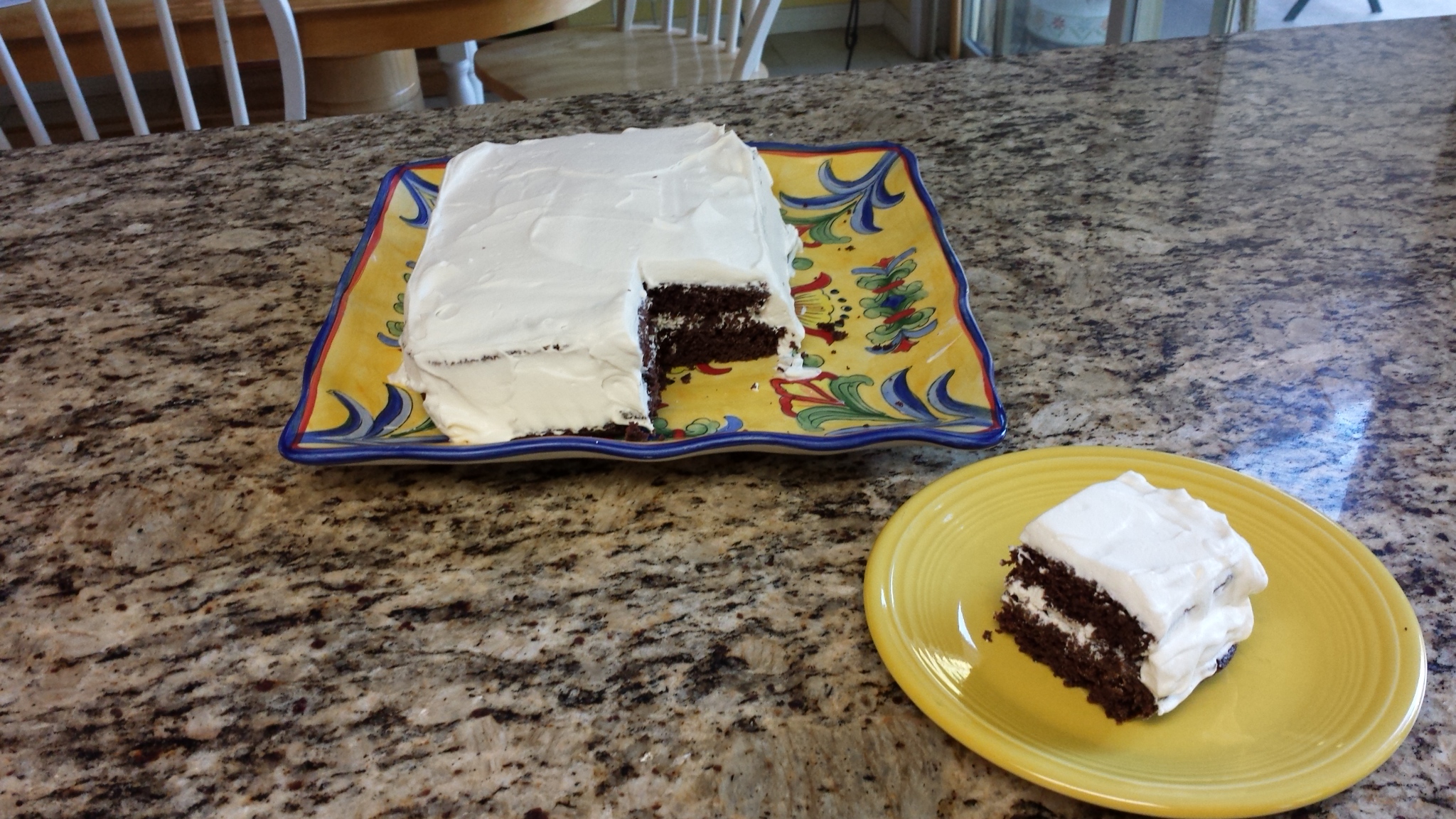
Kathryn’s Chocolate Cakekathryn's cake
1 c. lard

2 c. sugar

2 eggs, beaten

1 c. sour milk (add a t. vinegar to milk to sour)

1/2 c. cocoa

2 t. baking soda

2 1/2 c. sifted flour

1/2 t. salt

1 c. boiling water

1 t. vanilla

Cream lard and sugar.  Add eggs and milk.  Beat well.

Sift cocoa, flour, soda and salt three times. Add to the first mixture a little at a time.  Add boiling water and beat well.  Add vanilla.

Pour into a 9 X 13 in pan. Bake at 350 degrees for one hour.

Nana’s Notes:  I’m guessing on the size of the pan. Her recipe doesn’t give me a clue. I cut the recipe in half and baked it in a 9 X 13 in. pan, thinking that her original recipe made a half sheet cake. I should have used a 9 X 9. So I baked it for half the time, cut the cake in half and made it a layer cake.

In all honesty, I didn’t like the cake as much as other chocolate cake recipes I have made. I am extraordinarily susceptible to the power of suggestion, and I just couldn’t get past the fact that it was LARD. Not for health reasons, mind you, but because lard is animal fat. I don’t know. It just bugged me. Bill thought the cake was good, and his only criticism was that it didn’t have chocolate frosting!