Saturday Smile: Paper or Plastic or Metal?

My sister Bec was in Fort Collins for a few days this past week. She offered to make Jen, with whom she was staying, a shrimp boil. You know, those wonderful all-in-one-pot meals involving shrimp and potatoes and corn and sausage cooked in wonderful seasonings. But it seems Jen, who lives by herself, didn’t own a large cooking vessel. Bec went to the store to buy the ingredients for the shrimp boil, and bought Jen a large pot in which to prepare the meal. When she went up to the check stand, the cashier was just finishing up with a customer. Bec laid her groceries, including the pot, onto the check stand.

“Is this pot yours?” the cashier asked her. Bec said it was. “Shall I put your groceries right into the pot?” he asked her. Bec said yes.

He scanned her groceries and gave her the total. It came to something like $9.76. The pot alone was more than that.

“I don’t think that can be right,” Bec told him, and pointed out the cost of the pot alone.

“Oh,” he said. “I thought you brought the pot in with you.”

Paper, plastic, or metal pot?

Cooking pot

Have a great weekend.

Friday Book Whimsy: The Alienist

imgresIn this day and age of television’s Dr. Phil and Dr. Bob Hartley (Bob Newhart), it’s hard to imagine that at one time psychologists were considered to be nothing but quacks. The entire science of psychology was considered suspect. In fact, I don’t believe psychology was considered a serious science until the likes of Carl Jung or Sigmund Freud hit the scene.

The belief that the so-called science of psychology could not be taken seriously is the basis for author Caleb Carr’s The Alienist. Published in 2006, it is the first in a two-part series featuring New York City psychologist Dr. Laszlo Kreizler. Psychologists were referred to at that time as alienists.

In Carr’s mystery novel, Dr. Laszlo and his colleagues try to figure out who is brutally murdering young transgender prostitutes, slicing them into small pieces. Normally a psychologist wouldn’t be asked to help solve such a case, but in 1896, when this novel takes place, Laszlo is a college buddy of then-Police-Commissioner Teddy Roosevelt. Still, Commissioner Roosevelt asks Dr. Laszlo and his friends to keep a low profile until the case is solved.

Carr’s use of Roosevelt in his novel is clever and I believe adds to the uniqueness of this mystery story. Laszlo uses psychological methods to try and figure out who could be committing these horrendous murders, and why.

In addition to the smattering of real historical characters among the fictional characters, I also liked that one of the members of this unique group of detectives is a smart and strong-willed woman. Though she is Roosevelt’s secretary, he recognizes her abilities and appoints her to the group.

Carr’s novel presents a vivid picture of New York City at the turn of the century. His writing is so realistic that I can feel the rain and smell the odors of the areas in which the murders take place. I enjoy being able to get a strong sense of place from an author’s words.

The book is long and reads slow. There were times when I felt as though many, many words could have been left out. Many, many scenes, in fact. Nevertheless, the ending was tricky and the characters were interesting and likable.

Good read for Victorian-era mystery lovers.

Here is a link to the book.

unnamed


Thursday Thoughts

Home Again
Now that we are back in Colorado, at least for a bit, it is back to our regular routines. Like flossing regularly. Except that now I read that the U.S. Department of Health and Human Services is saying flossing probably isn’t necessary. Whaaaaaat? If I did my math right (which I’m sorry to say isn’t a given despite a very good high school algebra teacher), that means I have wasted something like 448,950 seconds of my adult life unnecessarily flossing. Those are seconds I could have spent on more important activities like playing Pokemon GO. And by the way, should the Department of Health and Human Services be worrying more right now about the Zika virus and less about our oral hygiene? Just sayin’….

Can We Watch Julia Child?
Kaiya, Mylee, and Cole were visiting the other day. As I was scrolling through Netflix to find something that we all could watch without having to cover anyone’s eyes, 7-year-old Kaiya noticed that Fixer Upper was on my Netflix list. “I like Flip or Flop a lot better,” she informed me, referring to a popular HGTV show. “You watch Flip or Flop?” I asked her, and she nodded. In the meantime, 6-year-old Mylee was lobbying for Cupcake Wars. What ever happened to Captain Kangaroo? I’m relieved to say that 2-year-old Cole was perfectly content with Mickey Mouse Clubhouse, which he refers to as Mee Mow. He hasn’t yet discovered HGTV or Food Network, although I’m pretty sure his father is encouraging a strong interest in SportsCenter.

Puzzling
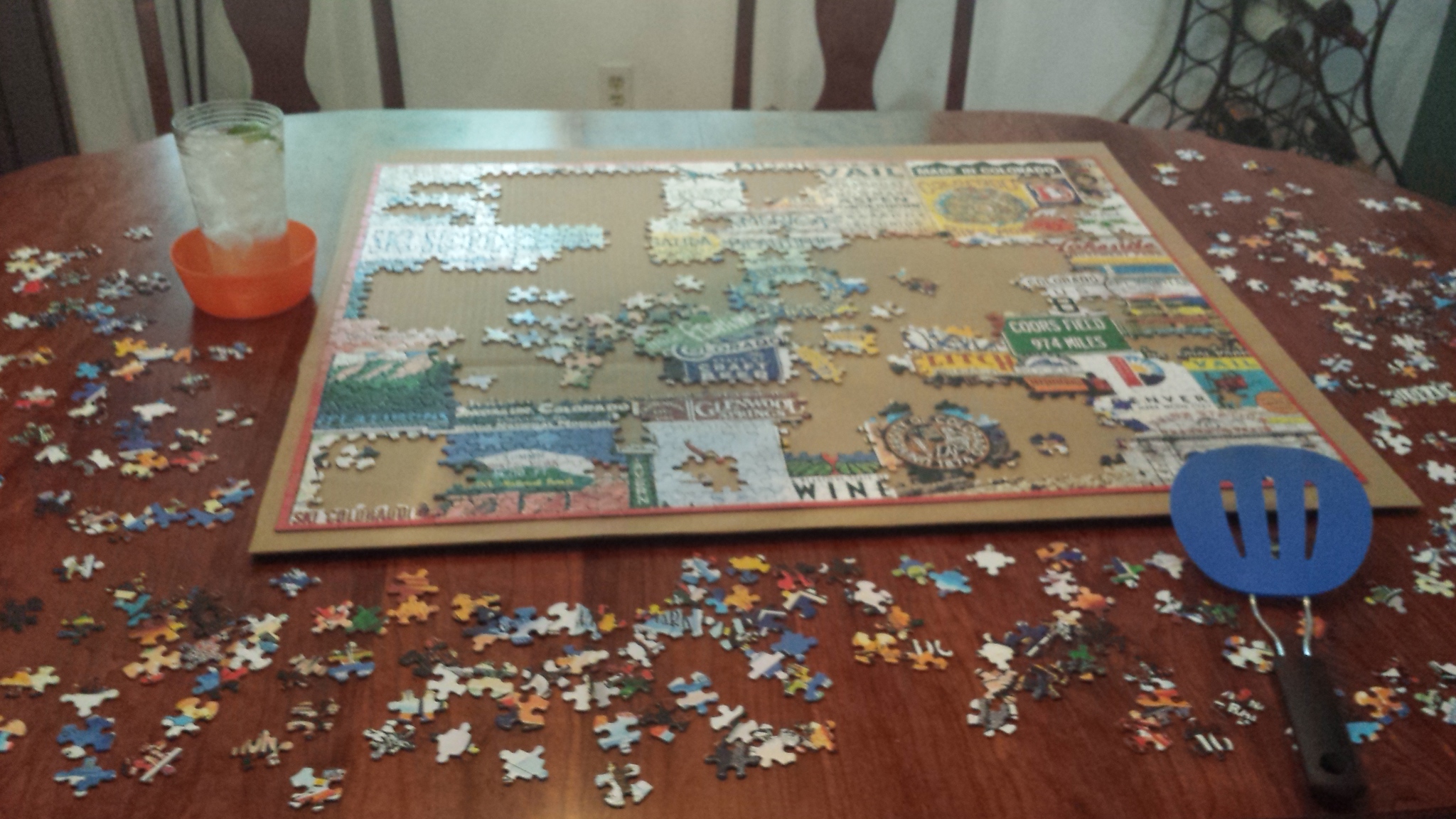
A couple of years ago, I got into puzzles. I had a puzzle going all of the time, both in Denver and in Arizona. My puzzle-of-choice is Springbok, with its large sturdy pieces, and even more important, the pieces of all different shapes. Before I got distracted from working on puzzles, I had discovered White Mountain puzzles and developed sort of a love affair with them and their busy, nostalgic content. As of late, I have no longer been working on puzzles. But the other day, Bec and I visited the Denver Art Museum (someplace I hadn’t been for probably 25 years), and, as is always the case, we stopped in the gift shop. I do love me some museum gift shops. I walked over to the puzzles and found a White Mountain puzzle depicting different memories/places/tourist attractions of Colorado. On impulse, I bought it. I spent a bit of time in the first stage – separating the pieces that make up the puzzle’s frame from the other pieces, and then dug in. And was immediately hooked once again… And yes, that’s a gin and tonic next to the puzzle. All the better to think spatially…

20160803_173028

Expired
The other day I was rooting through our medicine chest trying to locate a bottle of aspirin that I was sure was somewhere. I finally found it, not in the medicine cabinet but in the little cabinet right next to it. I was distraught to see that it had expired many years ago. It occurred to me that my bathroom cabinets were probably full of all manner of expired products, and I undertook a thorough examination. By the time I was finished discarding bottles of expired medications and other products, my medicine cabinet was practically empty. The winner (or loser, depending on your outlook) was a bottle of prescription eyedrops with Bill’s name on the label that expired in 1986. That was long before we were married, meaning he moved that bottle at least twice after it had expired. I am thankful, however, that he likely hasn’t actually USED the drops for – using Abraham Lincoln’s vernacular – over a score. I was surprised I didn’t come across Castor Oil or laudanum.

Packing My Bags
I have mentioned before that I am a sucker for all of the various and sundry quizzes and lists offered by Facebook. The other day I came across a list of what the “perfect women’s body” is in various countries. I was delighted to read it because I learned that I don’t actually have to lose any weight. I just need to move to either Colombia or Romania. I think I’ll like the food better in Colombia.

Ciao. Gotta go work on a puzzle….

You Really Can Go Home Again

Urban legend always hints that people who live on the east coast – NYC, Boston, Baltimore, Philadelphia – don’t even know that Nebraska exists. Hmmmm. Nebraska? Is that somewhere over by Idaway or South Mexico? Isn’t that where all the Indians live?

I don’t know if it’s true that the Great Plains states remain a mystery to New Yorkers or Californians – just one of the so-called flyover states – but I will tell you that even as one who left Nebraska to put roots elsewhere, I never fail to be proud that I grew up in the Midwest.

All my life – both when I lived in Nebraska and after I moved to Colorado – I have heard people complain about that long drive on I-80 through ugly Nebraska. The sentiment makes me laugh because, while certainly the mountains of central and western Colorado are magnificent, the eastern plains are, well, less than splendid. But the cattle that graze on that land and the wheat that grows both summer and winter in eastern Colorado feed all of us throughout the United States and frankly, the world. So to me, it’s beautiful. It’s all beautiful.

And once you cross into Nebraska and start following the Platte River past field after field of corn and soybeans, the scene is frankly bountiful and gorgeous. It reminds me of the vineyards in Tuscany in sort of a weird way.

Midwesterners work hard, whether or not they are farmers or ranchers or city folk. Hard work, family, faith, and the Cornhuskers are what make most Nebraskans tick. It’s as simple as that. And if you spend your formative years in Nebraska, it is always part of you, even if you call yourself a Coloradan or an Arizonan.

Bec tells a funny story about a time when she was driving around her town of Chandler, AZ, shortly after she had moved there. She passed a field of something green. Hmmm, she said to herself. There’s a field of sorghum.

Wait, what? She reminded herself that she didn’t have the slightest idea of what sorghum was or even its purpose. But when she got home, she googled it. Yes, you guessed it. The field was, in fact, sorghum. Somewhere inside her head that had lived in Germany and Alabama and Washington, DC, for way more years than in Nebraska, she recognized sorghum.

The recent few days that we spent in Nebraska for my family’s reunion were wonderful, and made all of us nostalgic. Those cornfields are so beautiful, one of us would say about every 15 minutes. It looks like there’s been a lot of rain, another would say, interest in weather being a perfect indicator of a Midwesterner.

Here are some of the things we saw and did while in Nebraska…..

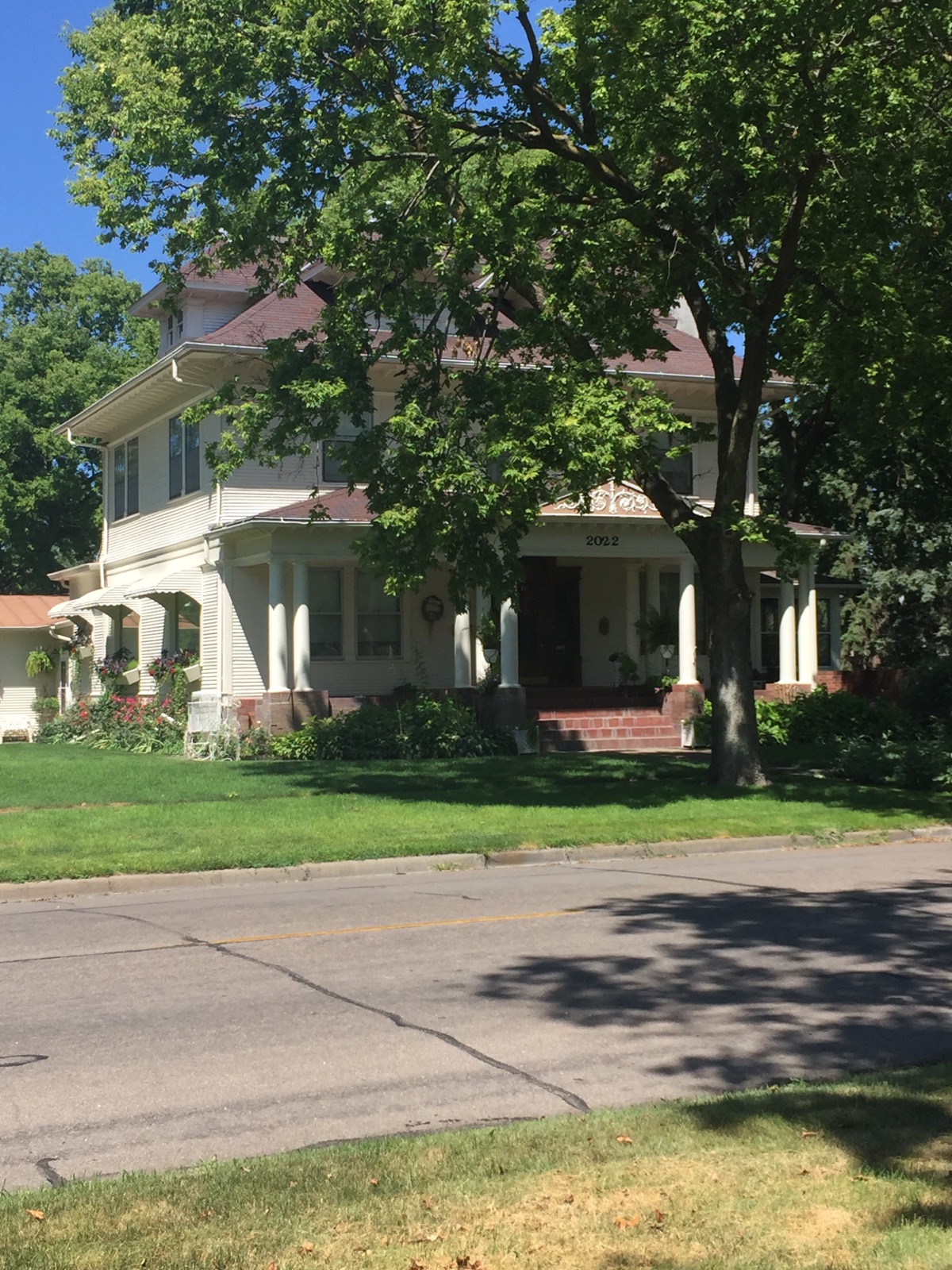
Beautiful old houses surrounded by magnificent trees (Do you know that Arbor Day started in Nebraska? Do you even know what Arbor Day is?)….

Nielsons house

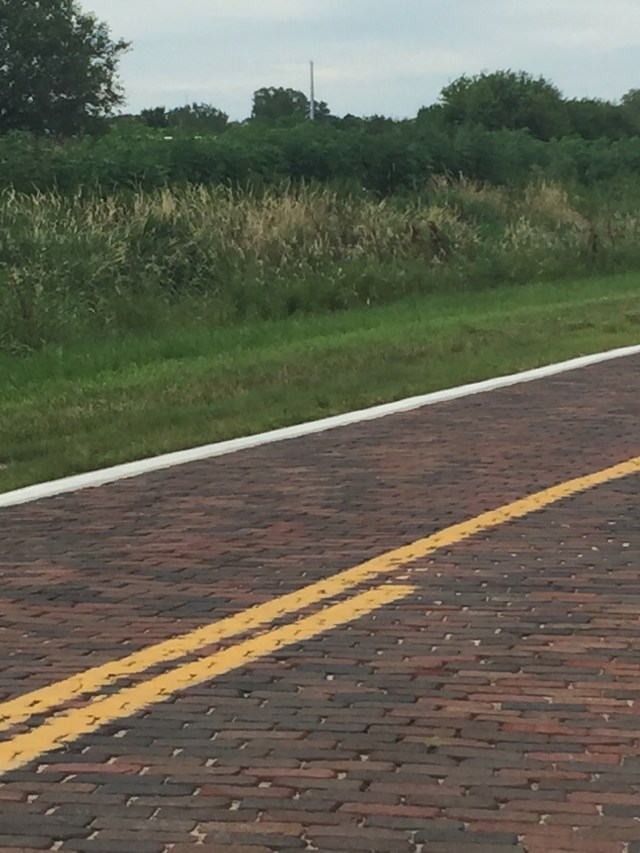
We drove on the Lincoln Highway quite by accident while in Omaha. Bec instructed her car’s GPS to take us the shortest way to St. John the Evangelist Catholic Church in Valley, Nebraska, on Saturday evening, and the GPS took us on old Highway 30 – the Lincoln Highway – which at that point is a brick road. Lincoln Highway was built in the early 20th century and passes through a total of 14 states, 128 counties, and more than 700 communities across the United States….
Lincoln Highway Omaha

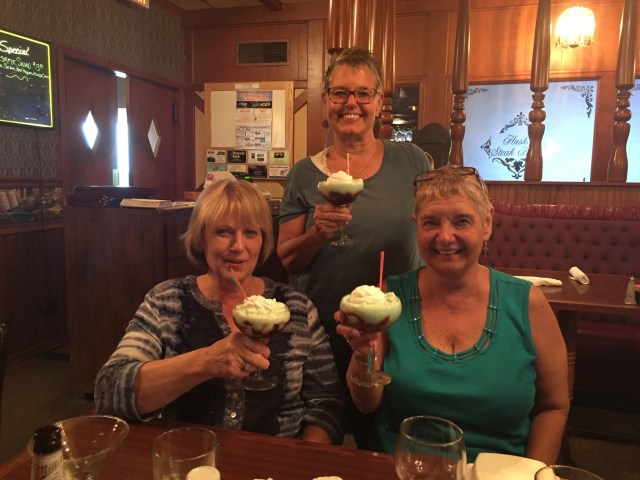
My immediate family has history at Husker House Restaurant in Columbus. It was where we went for celebrations. My mom and dad celebrated their 25th wedding anniversary at Husker House. We celebrated birthdays and first communions and confirmations at Husker House. So, it’s a command performance when we are in Columbus. This time, Bec, my cousin Marilyn, and I toasted my parents with a Grasshopper following our fried chicken dinner….
marilyn bec kris grasshoppers

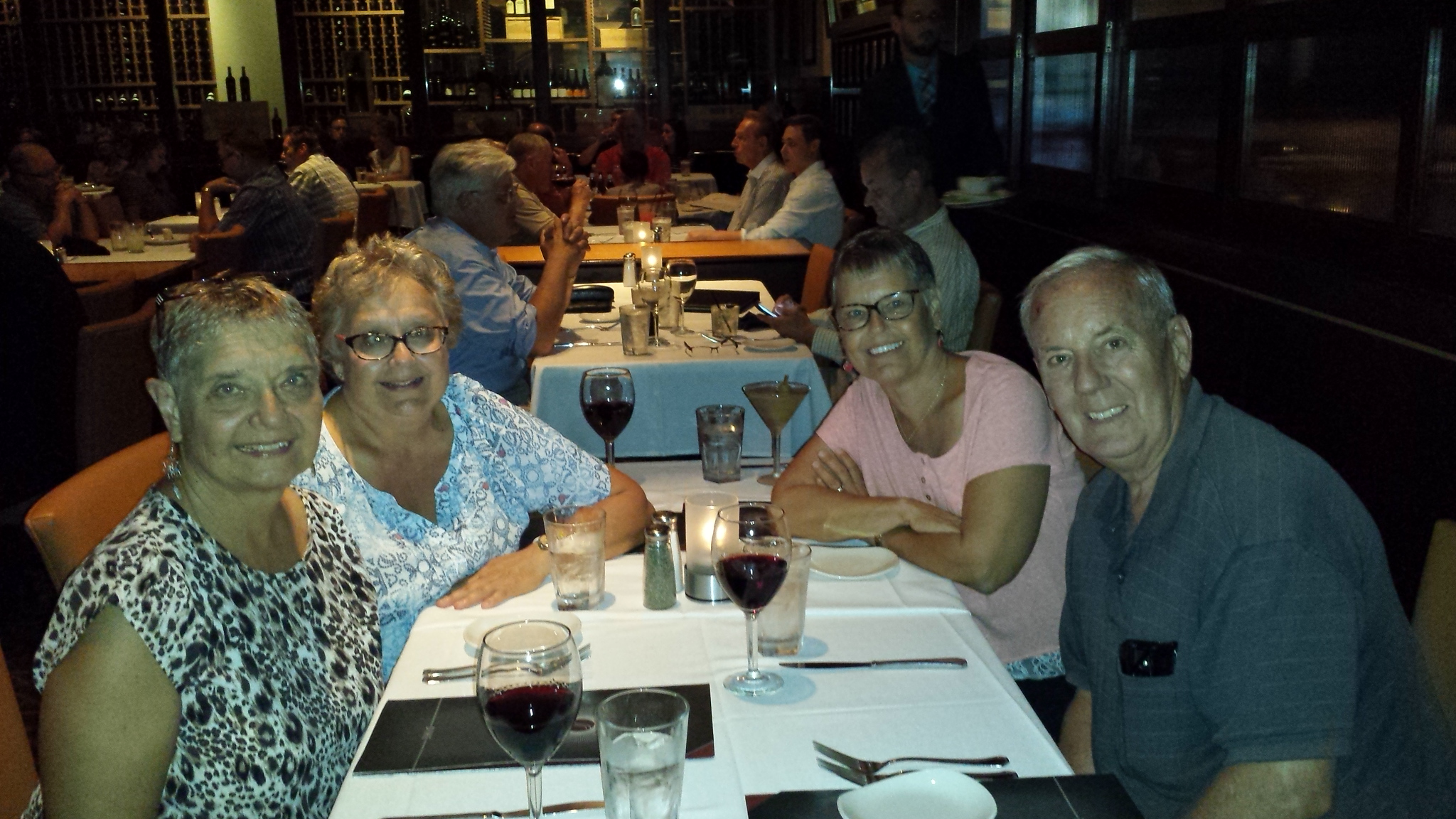
And the reason we chose fried chicken, my friends, is because by that time we had practically eaten nothing but beef because NEBRASKA. Bill, Bec, Jen, and I ate our first meal in Nebraska at a steakhouse. What else?……

bec bill jen kris sullivans 2016 omaha

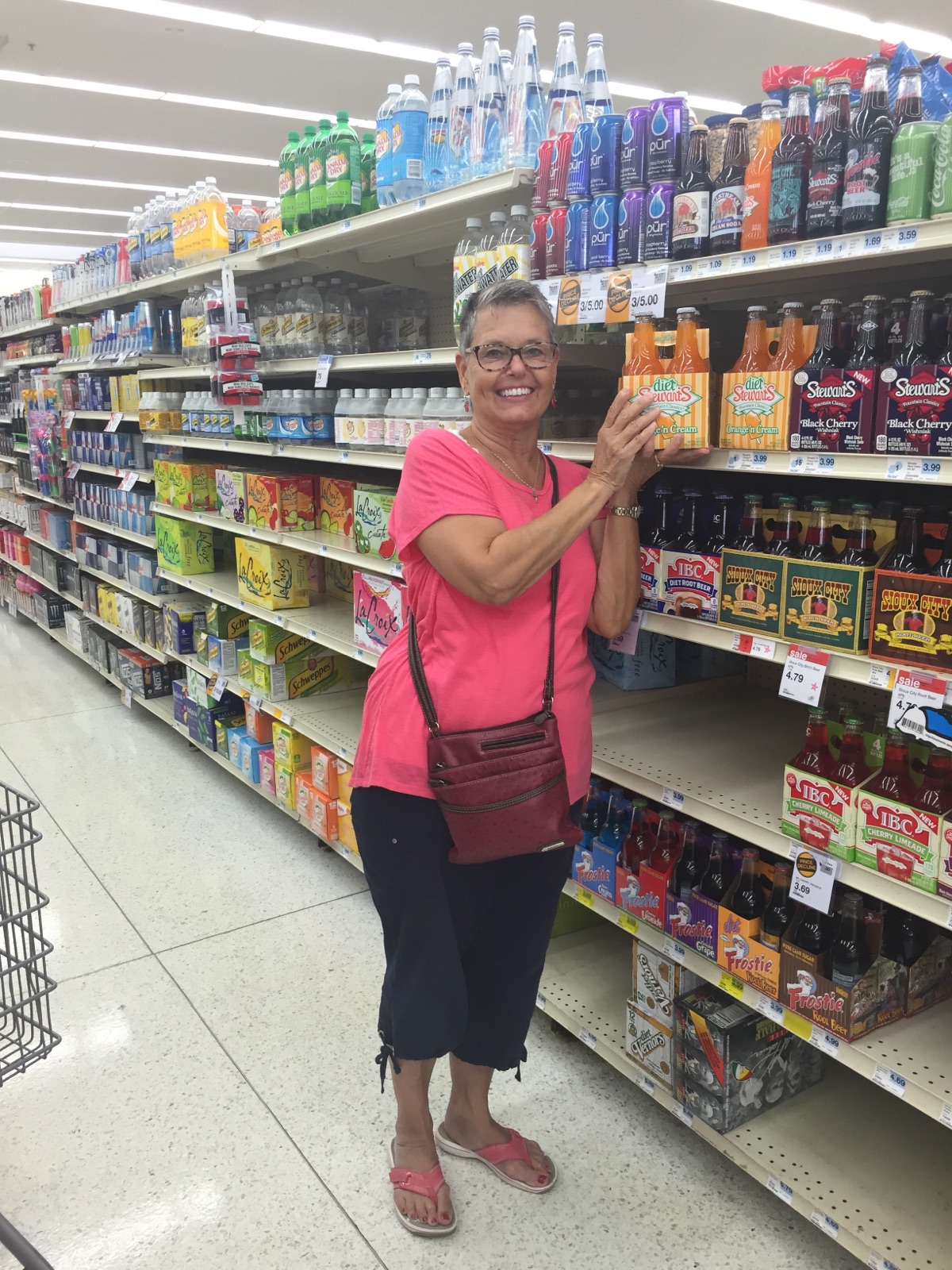
And finally, what do you suppose I found on the shelves of a Hyvee Supermarket in Omaha, NE? Stewart’s Diet Orange and Cream soda. Yay Alastair!….

Kris Stewarts Hyvee Omaha

While I consider myself a Coloradan — at least mostly, deep down inside me, I am a Nebraskan-at-heart. And, by the way, Go Big Red!

Micekville

In the town in which I grew up, the railroad tracks divided Columbus into two areas — the north side of the tracks and the south side of the tracks.  It wasn’t any kind of a formal division. Streets didn’t become avenues; street names didn’t change from North Whatever to South Whatever; there was no West Side Story or Hatfields and McCoys. The railroad tracks simply went all the way through the town, and trains passed through Columbus, dividing the town into two, about every 10 or 15 minutes, or at least that’s how it seemed. There was only one viaduct, so residents either drove out of their way to cross the tracks on the lone viaduct west of downtown or waited for the long train to makes its way past your street.

The Miceks — my family — lived on the south side of the tracks. And many proudly lived – at least for a period of a few years back in the post-WWII days when Baby Boomers were just out of diapers – within spitting distance of one another.

I learned about what I – and I, alone – call Micekville at the family reunion. Oh, I vaguely recalled that my mom and dad rented a house across from Grandpa Micek when Bec was a toddler and before I was born. By the time I came along, Dad and Mom had built their own home a full 10 blocks or so away, across the tracks. And I, of course, was also aware that my mom’s brothers Elmer and Leonard (along with their families) still lived near each other in the area just south of the railroad tracks even when Mom and Dad sold their business and their house and dropped anchor in Leadville, Colorado.

But I never knew that there was a point in time when my Grandpa Micek, then a widower, took in my mom’s sister Anne who had recently been widowed herself after a bolt of lightning killed her farmer husband, leaving her to raise five children on her own. Along with Anne and her children, my mom’s bachelor brother Ray moved into that same house across the street from where my folks lived. Just down the street, Leonard and Elmer had their homes, as did my mother’s brothers Bob and Ted and their families.

See what I mean? Micekville.

And just for good measure, my dad’s parents had a home just a stone’s throw from there. It was a village.

Eventually, two of my uncles moved their families not just out of Micekville, but out of Columbus altogether. Anne’s kids grew up and she and Ray moved near our home, as did my aunt and uncle, always called Cork and Jeep. It might have been on the north side, but the reality is that it was only a short bike ride away.

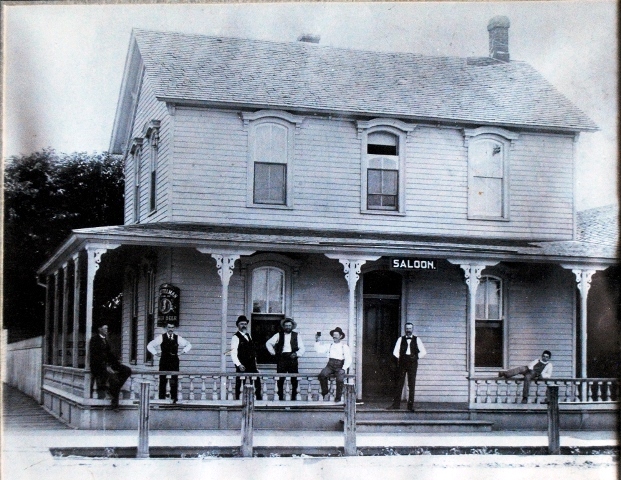
I'm happy to say the men standing in front of Glur's aren't my relatives. At least I don't think so....

I’m happy to say the men standing in front of Glur’s aren’t my relatives. At least I don’t think so….

Columbus’ original downtown was on 11th street, just south of the railroad tracks. At some point the downtown moved two blocks north to 13th street, which is where my folks had their bakery. After that change, 11th Street consisted mostly of bars or somewhat lonely businesses. But one of the businesses that wasn’t lonely was Glur’s Tavern. (Interesting article here.) Supposedly the oldest continuously-running tavern east of the Mississippi, it was just a hop and a skip from Micekville. Stop in any afternoon or evening, and you wouldn’t be surprised to see one Micek or another at the bar sipping a beer or a pop. Bec recalls the Micek clan gathering some evenings in Glur’s beer garden where she and her cousins would run and play, drink root beer and eat popcorn while the parents yakked. By time I came along, the beer garden wasn’t part of my parents’ leisure activities because they had a business to run. But I have vivid memories of walking hand-in-hand with my grandmother (who by that time lived in an apartment above the bakery) to Glur’s Tavern to get a strawberry ice cream cone. Always strawberry. And we inevitably had to wait for a train before we could cross the tracks to get to Glur’s. That was okay because we got to wave goodbye to the cabooseman. He always waved back.

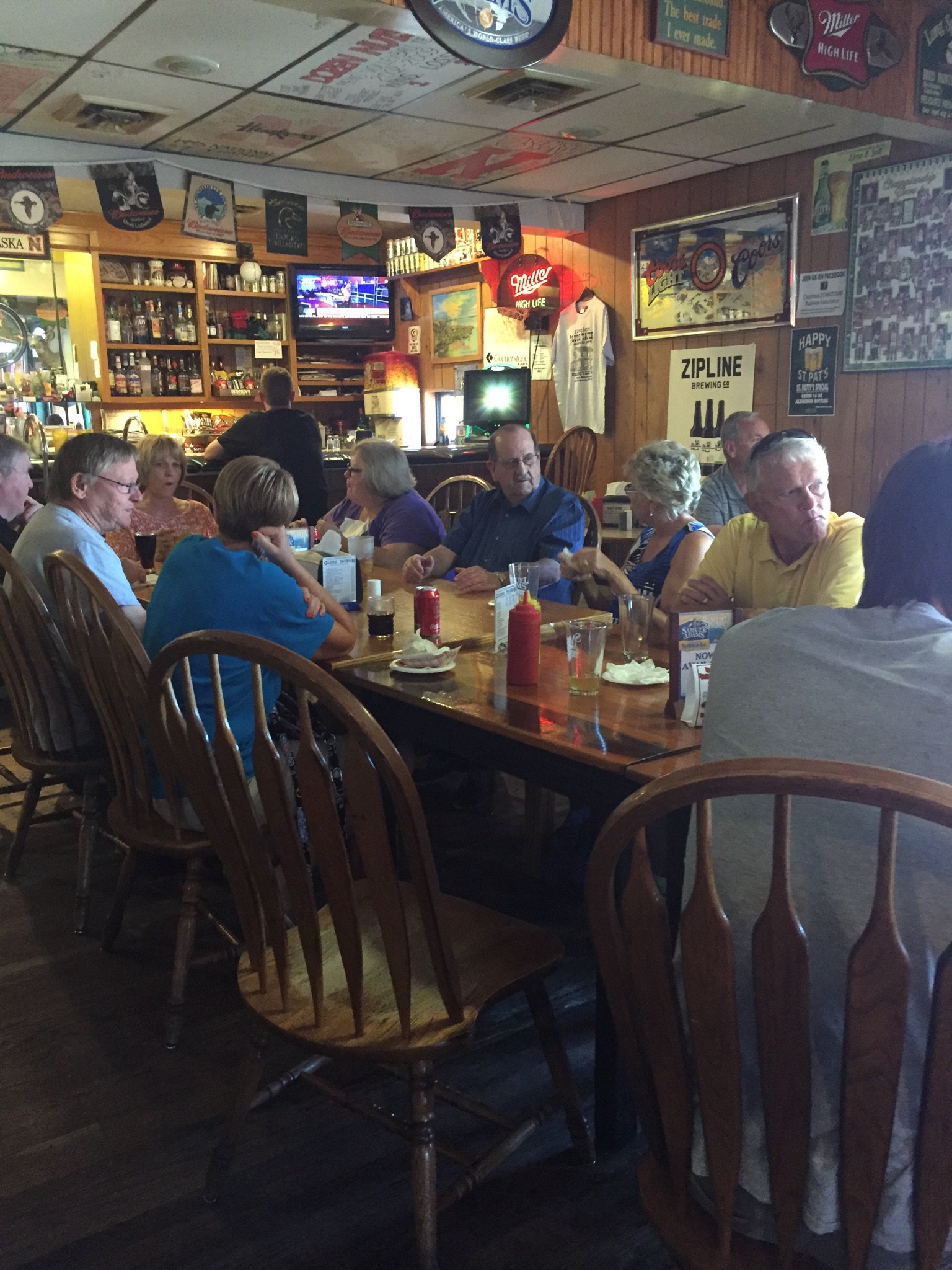
The day after the reunion, Bill, Bec, Jen and I decided we wanted to stop at Glur’s Tavern to see if it had changed (it hadn’t, not even the towel in the bathroom) and to maybe have a burger and a pop. We walked into the door, and Glur’s was nearly empty except for one large group sitting in the middle of the room where several tables had been pushed together.

Guess who it was? Miceks. Billions and billions of Miceks. (Well, not really, but it almost seems like, doesn’t it?…..)

Miceks at Glurs

Sometimes, things don’t change as much as you think.

Reuniting

I have mentioned perhaps four or five hundred times that my mother was the youngest in a large Catholic family. For the most part, her family lived in Boone County, Nebraska, in the heart of the Great Plains and smack dab in the middle of farm country. Her father was, among other things, a farmer, though it appears there was no family love for farming, as evidenced by the fact that none of the boys became farmers. In fact, the only reason there are farmers in the family is because some of my mom’s sisters married farmers. A glance at the family tree quickly tells me that my grandmother was, for all intents and purposes, pregnant for nearly 23 years, marrying in January of 1904 and having her first baby (who died the day he was born) in December of that same year. Mom was born in 1926.

And though my mom was a full 21 years younger than her eldest living sibling, she and her brothers and sisters were a close-knit group. My grandmother (understandably exhausted after giving birth for the 14th time, after which she undoubtedly told my grandfather to get his own bedroom) died before my mother reached adulthood, and was sick for quite a while before she died. So my mother was largely cared for by older sisters. Her closest friends were her nieces and nephews, some her own age or older.

As I grew up in Columbus, I spent considerable time with my aunts and uncles, many of whom lived within walking distance of our home. Mom’s siblings, I think, were her best friends, even as an adult. She made sure we knew them all, even the ones who lived elsewhere. That’s commendable, I think, and something I took for granted, but appreciate now a great deal.

And I appreciated it even more during our visit last week to Nebraska where we attended a reunion of many of my cousins from my mom’s side. Oh my word, what a good time we had!

What I like about family (or at least what I like about THIS family) is that, though I hadn’t seen some of my cousins for several decades, it was like I had seen them yesterday. And even better, it was like talking to my mom.

The cousins range from farmers to school administrators, from truck drivers to highly-trained computer technicians. But they all have twinkly eyes (mostly blue) and a sharp sense of humor that is both self-deprecating and pointedly aimed. While not all of my living cousins were able to be there, we were lucky enough to have the oldest (living) and the youngest present. I laughed for three hours. I recalled my mom’s sense of humor and realized that my brother’s hilarious way of looking at life might come from her side of the family.

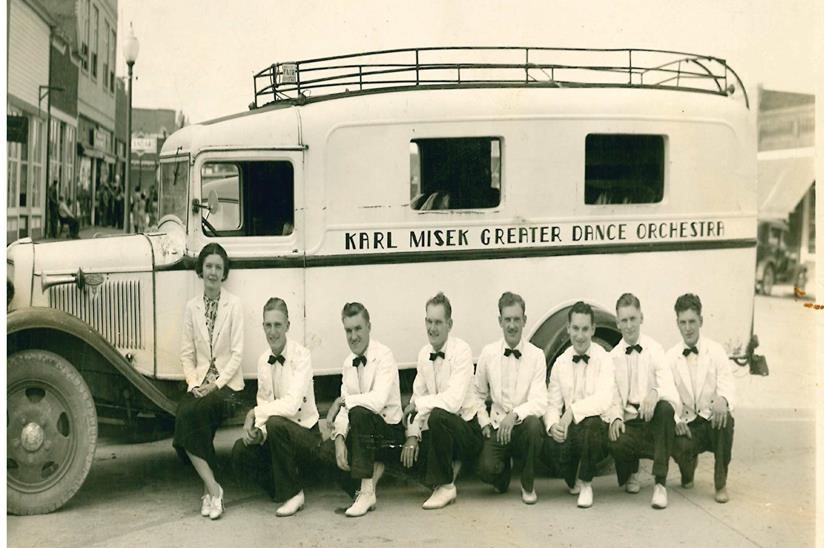
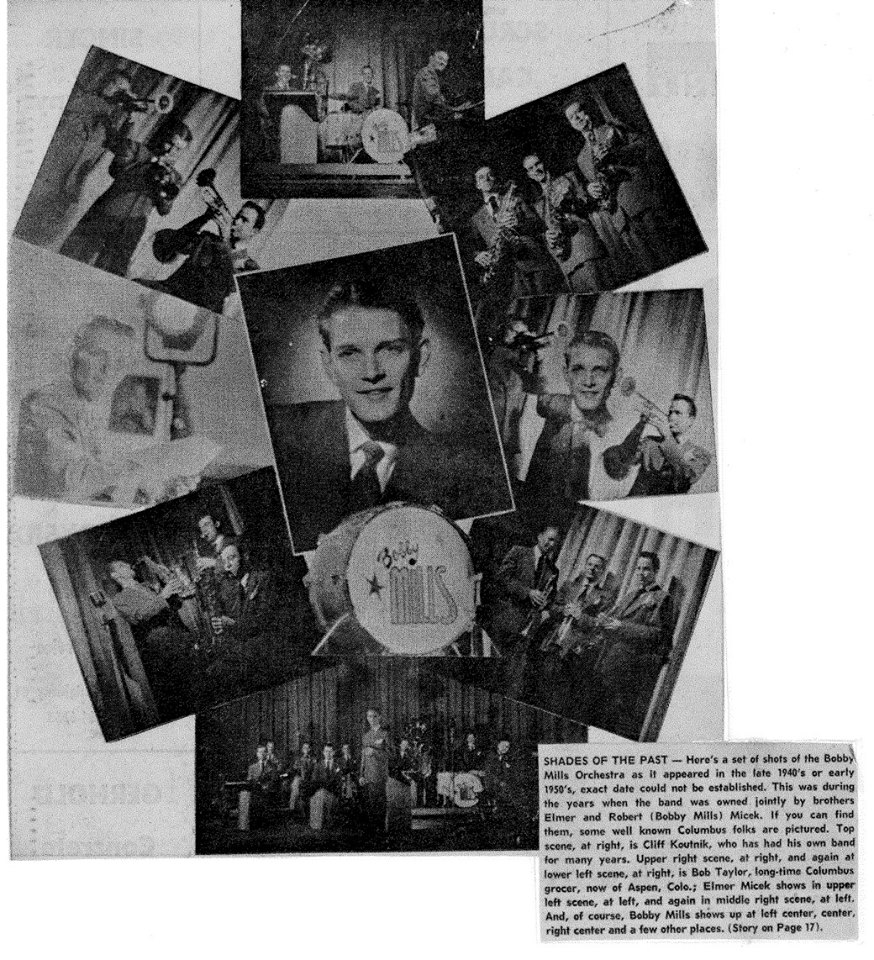
We reminisced. We caught up on kids and grandkids. We learned new things about our parents and were reminded of old things we had forgotten. Those of us who never knew our Micek grandparents got an education on not only their life, but what life was like back in the days when Grandpa Charles and Grandmother Anna were trying to raise their large boisterous family. That was from which the music commenced, I learned. Grandpa wanted to keep his boys busy and out of trouble so he bought them all a musical instrument and they learned to make music together.  The music bug took….
Micek orchestra (2)

Bobby Mills 2 (2)I was reminded about the family reunions we used to have regularly as we grew up in the 1960s and 1970s. They were held in a variety of places. Sometimes we gathered at Pawnee Park in Columbus. We picnicked at least once at a cabin jointly owned by several of Mom’s brothers. But no matter where the reunion was held, we could count on a couple things: the food would be delicious and plentiful, and we wouldn’t run out of beer. Just like last week’s reunion, there was always lots and lots of laughing.

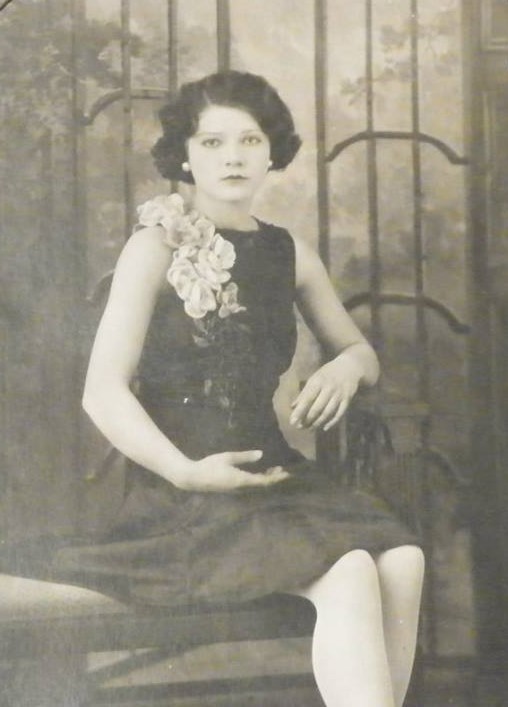
Without this reunion, I wouldn’t have seen this photo of my mother for the first time…..

Mom photo 1 (2)

Or seen how absolutely STUNNING my Aunt Vickie was when she was young……

Vickie (2)

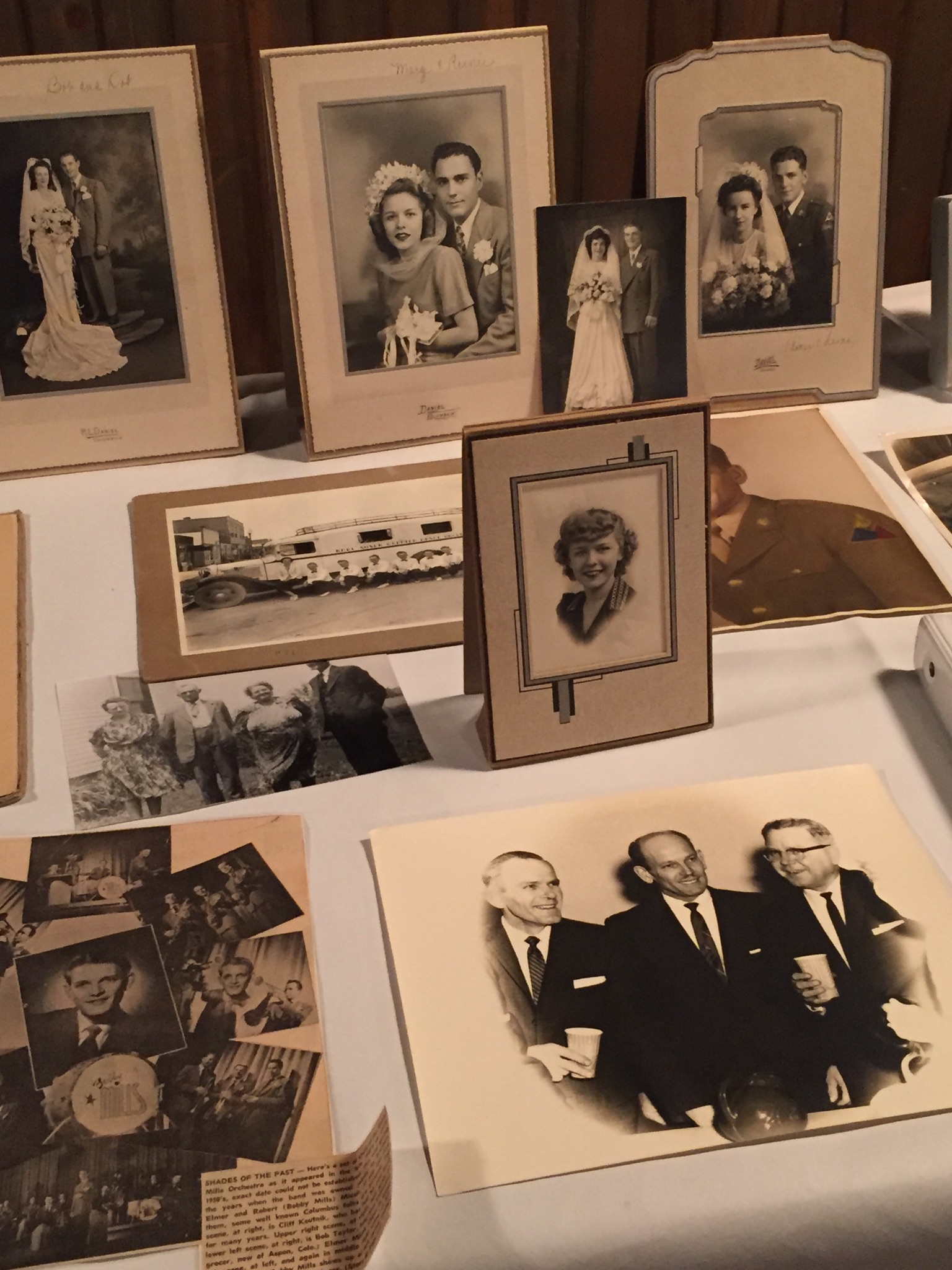
Or seen these beautiful wedding photos of my aunts and uncles….

photo table

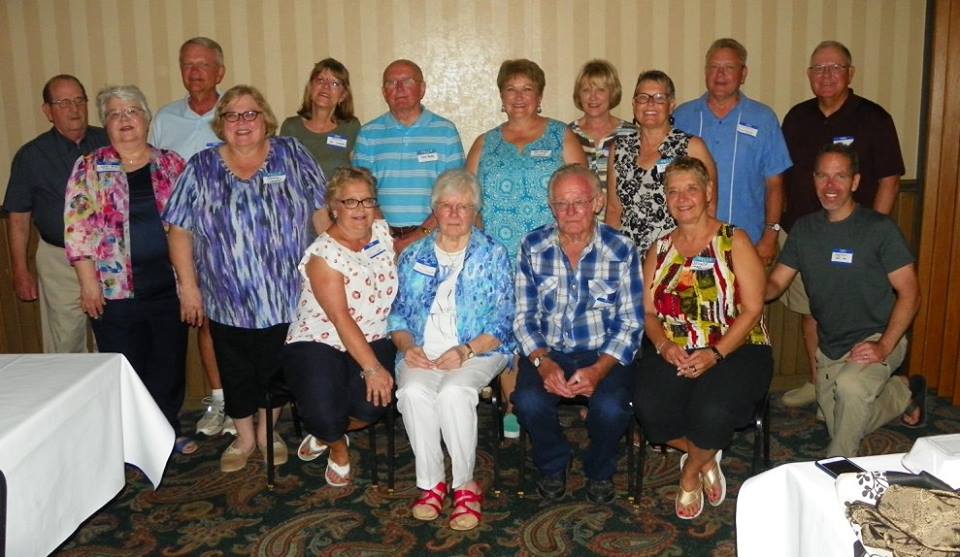
This reunion reminded me once again just how important family – extended family – is in our lives and how family helps make us who we are……

cousins 2016 reunion

Back row (l-r) Bill, Jim, Rhonda, John, Joni, Marilyn, Kris, David M., Tom; Front row (l-r) Kathleen, Nancy, Jen, Mary, David K., Bec, Andrew

This post linked to the GRAND Social