
There have been about 1,207,436 novels written about World War II in the past 15 years. I’ve read a lot of them, because I find that period of time interesting and tragic. Some have been bad; many have been good. I picked up Our Darkest Night because I found the plot description interesting. Moreover, while I have read many books about England and France and Germany during World War II, I haven’t read many about Italian Jews.
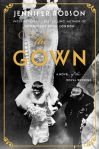
I will also admit that I was interested in the novel because I enjoyed author Jennifer Robson’s novel The Gown, a novel (I reviewed it here) that took place just after WWII, and gave the back story about Then-Princess Elizabeth’s wedding gown. The Gown was a wonderful book, and I was optimistic about Our Darkest Night.
I wasn’t disappointed. I enjoyed the book very much.
Antonina lives with her family in Venice. It’s 1943, and as the Germans appear to be losing the war, things are getting even more difficult and frightening for Jews in Italy. In an effort to keep his daughter safe, Antonina’s father takes a drastic step to keep his daughter safe. He, with the help of a friend who is a priest, convinces Nico Gerardi, a Catholic man (who left the seminary to help care for his family’s farm,) to pose as Antonina’s new husband, and take her to the farm near a small Italian village. Antonina reluctantly agrees to this arrangement. They not only have to convince the German authorities that they are married, but they also have to convince Nico’s family, who can’t know the truth for their own safety.
The novel could have been satisfying as simply a romantic story. Robson, however, takes the reader to the dark side of the closing days of the war. It wouldn’t have been as good a novel had she not done so. It was World War II, after all. The descriptions of life in concentration camps was disturbing and terribly sad. The story paints a clear picture of the strength of family and love.
While I know the Germans were the bad guys in WWII, it would be nice if an author could resist caricatures of German soldiers. There must have been some who recognized the evil with which they were surrounded. Having said that, I was happy to see a Catholic priest presented in a positive light for a change!
I highly recommend this book, as I did The Gown.

 Sometimes I just want to set aside all of my serious mystery books or sad stories about unhappy people going through difficult times and read a book that will just make me smile. Maybe it’s not great literature, maybe it won’t be reviewed by the New York Times. But it will be like eating a dish of ice cream for dinner — not particularly nourishing, but oh-so-enjoyable.
 So the announcement of a royal wedding brings light and joy into the downtrodden people of Great Britain. And the question of the day is what will her dress look like.
 Nana's Whimsies