Friday Book Whimsy: The Hundred-Foot Journey

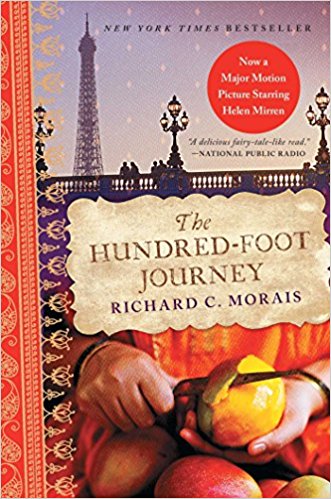
I’m a big fan of books that deal with food and cooking. Think Julie and Julia, which remains one of my favorite books (and movies, for that matter) of all time. So despite never having seen the movie, I was excited to read The Hundred-Foot Journey, a novel by Richard C. Marais.

But despite my eagerness, I have to admit that I was disappointed.

The novel actually is two stories. The first part of the book tells the story of the Haji family, Muslims who operate a restaurant in pre-World War II Bombay, India. Young Hassan watches his exuberant and frankly, almost overbearing father and gentle, food-loving mother as they take over the restaurant from his grandfather. Hassan grows up smelling the aromas of cumin and turmeric and curry, and learns to cook by watching the family. Eventually, tragedy strikes, and the family is forced to leave Bombay and move elsewhere with some unexpected money.

They first land in England, but that never quite pans out. Eventually, the Haji family’s truck breaks down in a small French village called Lumiere, and Mr. Haji decides that destiny mandates Lumiere is where they stay. He opens up an inexpensive Indian restaurant across the street from a restaurant operated by a well-renowned Michelin two-starred chef. But Madame Mallory will not have it, doing everything in her power to run the Haji family out of town. She becomes particularly enraged when she discovered that young Hussan has a perfect palate.

Once again, tragedy strikes, and Madame Mallory ends up taking the young man under her wing and teaching her everything she knows about cooking.

And then we move on to the second story, which I found, frankly, boring. Haji cooks at a variety of restaurants until he finally opens his own in Paris. He has a series of love affairs which never really amount to anything. There is only a vague tie-in with the previous part of the novel.

One of the main problems that I saw was that the food part of the novel – always my favorite – simply didn’t grab me. Generally when I’m reading a novel dealing with food, I begin yearning for the food being described. It’s true that at the beginning of the book, I craved Indian food. But in the second half of the book, the food descriptions simply didn’t connect with me. There was not much description of the cooking or the enjoyment of the meals. The author simply told us that Hassan made this or that. Boring.

Personally, I would have liked to see either an emphasis on the relationship between Madame Mallory and Hassan, or a more interesting story of Hassan’s time in Paris. The two stories simply seemed disjointed to me.

The book isn’t awful, but I couldn’t overwhelmingly recommend it either.

Here is a link to the book.

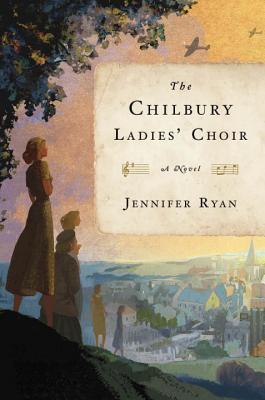
Friday Book Whimsy: The Chilbury Ladies’ Choir

Once you start reading books that take place during World War I and World War II, it’s hard to get away from it. Amazon and Goodreads both start feeding you recommendations based on what you’ve been reading and there are somewhere in the neighborhood of a million books that take place during the world wars. Most are terribly sad. The Chilbury Ladies’ Choir was a glimpse of blue sky in the dark sadness of death and hatred that war brings.

The Chilbury Ladies’ Choir is a debut novel by writer Jennifer Ryan. Though certainly not a deep and meaningful literary look at WWII as, say Sophie’s Choice, I truly enjoyed the story and the characters.

When it becomes clear that England must become involved in World War II, the small English village of Chilbury isn’t immune. One at a time, the men of the village are called to serve their country, leaving the women to carry on. Though the vicar advises that the town disband its choir because there are no male singers, the women elect instead to continue, making the controversial choice to have a women’s-only choir. Egad! But the women’s choir not only provides an outlet for singing, but more important, it provides a support group for the women of this village.

The story is told primarily through letters, which give readers a look at five particular women and how they are impacted by the war. Among the five women, particularly meaningful to me was a timid young widow whose only child is called to serve. As the weeks and months go by, she becomes stronger and more independent. She eventually becomes a driving force in keeping the town together.

The Chilbury Ladies’ Choir was a gentle reminder that war not only affects those fighting the battles, but also those left behind.

I loved the book and give it a strong recommendation.

Here is a link to the book.

Friday Book Whimsy: A Certain Age

I’ve gone through a period where it seems as though many books I’ve read take place during either World War I or World War II. I don’t need to tell you that, while they are often interesting, they are also invariably and understandably sad.

Perhaps the time period in which it takes place – the 1920s — is the thing I liked best about A Certain Age, a novel by one of my favorite authors, Beatriz Williams. That time of glamour and jazz in which people acted as though Prohibition didn’t exist, and women were freed from their corsets and gaining more and more independence. And what could be better than a novel set in the Roaring Twenties in New York City?

Wealthy Mrs. Theresa Marshall, a woman approaching middle age and bored with her marriage to a rich older man who is a serial philanderer, fights her boredom by becoming involved in an affair with a considerably younger man. She has no plans to divorce her husband, as they have a kind of understanding. But her young lover Octavian, has fallen for her and would like to get married. That is, until he meets Sophie, the daughter of a newly-wealthy man who has a mysterious past. If you are an opera fan, the plot might be familiar to you as the book is loosely based on an opera by Richard Strauss called Der Rosenkavalier.

One of my favorite things about Beatriz Williams is that many of her novels are based on different members of the wealthy Schuyler family. As such, many of the stories are loosely related. In A Certain Age, Sophie’s best friend is Julie Schuyler, who we learn is the great aunt of the main characters in three of my favorite Williams novels: Tiny Schuyler of Tiny Little Thing, Pepper Schuyler of Along the Infinite Sea, and Vivian Schuyler of The Secret Life of Violet Grant, all of whom are sisters. Not necessarily pertinent to the story, but fun nevertheless.

I will admit that it took me a bit of time to get into the novel. I felt it started slowly. Furthermore, I initially found Theresa to be offputting. She appeared to be shallow and every time she called Octavian Boyo, which she did all the time, my skin crawled. As the novel progressed, however, I began to understand the complicated Mrs. Marshall, and even grew somewhat fond of her. Sophie was a wonderful character, and I loved watching her come into herself, despite her sad past.

A Certain Age is a romantic novel wrapped in a mystery, and the ending was satisfying, if somewhat predictable. I love Beatriz Williams’ writing, and A Certain Age didn’t disappoint.

Here is a link to the book.

Friday Book Whimsy: The Coincidence of Coconut Cake

I love coincidences, I love alliteration. I love coconut cake. I had high hopes for a book with a title that encompassed all three loves.

The Coincidence of Coconut Cake, by Amy E. Reichert, didn’t quite satiate my reading appetite. More like a Hostess Twinkie than a made-from-scratch coconut cake, it was too predictable. Promised by the publisher to be a cross between How to Eat a Cupcake and You’ve Got Mail, it unfortunately didn’t have the wit or romance of either.

Reichert is described as being an author who likes happy endings about characters that you would invite to dinner. The Coincidence of Coconut Cake had the requisite happy ending – and I do like me a happy ending — but I’m not sure I’d particularly like to dine with any of the main characters.

Luella – called Lou – is the owner and chef of a French restaurant that is just barely making it in Milwaukee. A mean-spirited restaurant critic puts the nail in the coffin when he writes a scathing review of the restaurant after dining there on a particularly bad night for Lou, who just caught her fiancé in bed with another woman.

Lou drowns her trouble at a neighborhood bar, where she meets British-born Al, and they strike up a friendship. Al mentions to Lou that he hasn’t found anything good about Milwaukee so far, and she agrees to show him all of the wonderful food traditions in the area. They agree to not talk about their jobs. Eventually a romance blossoms.

It won’t come as a surprise to you to learn that it turns out that Al is the restaurant critic who is responsible for Lou’s restaurants ultimate failure. All the expected angst transpires, and is eventually settled happily.

The premise is cute, but the plot is fairly predictable and the characters are a little too one-dimensional for me. The Coincidence of Coconut Cake isn’t horrible, and the parts where they talk about cooking and food are fun for someone who likes to cook and eat as do I. But don’t dive in expecting a great novel with a lot of interesting twists. It won’t happen. Just enjoy it for what it is, a simple romance novel with a spattering of recipes and cooking.

Here is a link to the book.

Friday Book Whimsy: The Light Between Oceans

The Light Between Oceans, a novel by M.L. Stedman, is the story of love, loss, despair, hope, and redemption. While I wouldn’t call it the saddest book I’ve ever read, it would rank among the most poignant. And it definitely is a story I won’t soon forget.

Tom Sherbourne returns to his home in Australia after surviving the horrors of World War I, filled with guilt. Why did he survive? He takes a job on a tiny and isolated island off the southern coast of Australia where he takes care of the lighthouse. Doing something good for others helps him forget his past. It is a quiet and lonely existence. On one of his trips back to the mainland, he meets – and eventually marries – Isabel, a young woman looking for a change in her life and eager to have a family. Unfortunately, things don’t go as planned. Isabel suffers miscarriage after miscarriage, and finally has a stillbirth after which she is unable to have children. Her sadness is almost beyond bearing.

So it seems like a miracle when a boat drifts up to the isolated island carrying a dead man and a living baby, cold and hungry. They bury the man and nurse the baby back to health. Isabel thinks it’s a miracle and believes they are meant to be parents to that child. She is convinced, and subsequently convinces a reluctant Tom, that the mother is dead and that the child would be placed in an orphanage if the truth was known by the authorities. They stay mum, and raise the child as their own.

When the child – whom they name Lucy – is 2 years old, they return for a visit to the mainland, and what they learn there changes their lives forever. Not only their lives, but the lives of several others. They face a moral dilemma.

The Light Between Oceans was a difficult book to read, because there was no right or wrong answer. It was a classic Solomon’s baby scenario. No bad guys; all good guys. No win.

The author’s writing was beautiful. Her descriptions made me understand exactly what it felt like to be so lonely and isolated, and to have a great need to love and be loved.

As far as I am concerned, the book ended about the only way it could. It was a tear-jerker, and that’s no lie. I can recommend this book with that caveat.

It has been made into a movie starring Michael Fassbender, Alicia Vikander and Rachel Weisz, and it was largely filmed in Australia. I can’t decide whether or not to watch the movie….

Here is a link to the book.

Friday Book Whimsy: White Collar Girl

I graduated from Journalism School in 1977 and immediately got a job as a reporter on a small-town newspaper. Even in 1977, journalism was largely a man’s world. Though my editor was a woman, she was likely editor because her father owned the newspaper. She and I were the only two women in the entire organization.

Given all of this, I was interested in reading White Collar Girl, a novel by Renee Rosen. Rosen is the author of three other books, all of which take place in Chicago, as did White Collar Girl. This novel takes on the world of journalism in the 1950s, when being a woman reporter was nearly unheard of except for the society pages.

The novel’s protagonist, Jordan Walsh, is the child of two reporters-cum-authors, both of whom were quite successful in their own right back in the day. Jordan’s brother had also been a reporter for the Chicago Sun-Times, but died mysteriously in a hit-and-run accident that didn’t seem to be very well-investigated by the Chicago Police Department. The Walsh family has never quite come to grips with his death.

So Jordan is proud and pleased to be offered a job with the Chicago Tribune, thinking this, finally, would bring her family out of their depression. She is ambitious, and while she is hired to work on the so-called women’s pages, she is optimistic that she will be able to become an ace general news reporter through hard work and great writing.

Things aren’t going along very well until Jordan finds a confidential source who is feeding her such good information that she finally captures the attention of the editors. Through grit and tenacity, she begins to build her own success. However, the source quickly helps her realize that her brother’s death was certainly no accident, and she might be next.

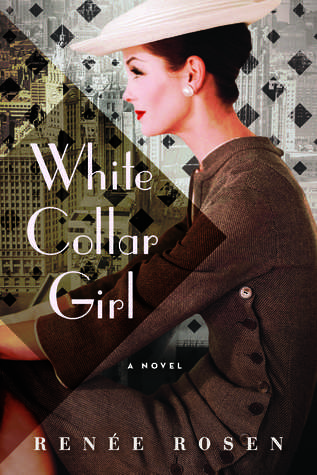
I wanted to like this book. I mean, look at the cover. It’s beautiful. I loved the period feel to the novel. I think the author totally captured the way life was in the 1950s, particularly for women. I loved her descriptions of the clothes and the city and the cars and the attitudes and the frustrations Jordan met along the way.

I just didn’t love the book. I can’t say it was awful, mostly for the reasons stated above. But the writing was so slow. It seemed as though I would read and read and read and only get through a few pages. The mystery of her brother’s death was fairly predictable, and the ending was abrupt and weird, almost like the author got just as tired of writing the book as I did reading it and just wrapped it up quickly.

Much as I would like, I simply can’t overwhelmingly recommend this novel.

Here is a link to the book.

Friday Book Whimsy: Cancel the Wedding

Cancel the Wedding, a debut novel by Carolyn T. Dingman, isn’t a book I would have picked up to read without a bit of urging by someone I trusted. A fellow reader who knows I like mysteries recommended it a bit hesitantly, as she knows I am not a huge fan of a strictly romance novels, but assured me that though it had a bit of debut-novelness about it, the writing was good, the story was more than just romance, and the mystery was fun.

So, despite the novel’s title, I dug in. My assessment? I enjoyed the story but I was equally glad I had gotten the book from the library rather than paying hard-earned money for it.

That said, I recommend the book for fairly light reading.

The book’s protagonist Olivia has a powerful job that she hates, a handsome and smart fiancé with whom she is bored, and an interesting life in which she is largely disinterested. The only interesting part of her life is that her recently-deceased mother had left instructions in her will to her two daughters to return her ashes to the small town in Georgia where she grew up but never talked about to her daughters.  Their mother specifically instructed that half of her ashes would be sprinkled in the lake and the other half onto a certain gravesite.

Both daughters put off the task until Olivia realizes how dissatisfied with her life and thinks perhaps a change of scenery would do her good. She and her niece Logan head off to Georgia and a change of pace.

Upon arrival, Olivia comes face to face with the knowledge that there was more to her mother’s life than anyone in her family knew. She takes it upon herself to try and solve the mystery.

The romantic element comes when she meets Elliott, who not only helps her discover the truth about her mother’s past, but actually personally finds the final link.

This is not a terribly meaningful novel that will change a reader’s life. But Dingman’s writing is solid and the story kept my interest, despite being fairly predictable. I do love books that take place in the south, and this fit the bill to a T.

I recommend it for someone looking for a light-hearted novel to distract them from their real-life difficulties.

Here is a link to the book.

Friday Book Whimsy: The Tumbling Turner Sisters

searchHow can you not want to read a book with a title like The Tumbling Turner Sisters? I fully admit that I was drawn to Juliette Fay’s historical novel simply by its title, alliteration included. The book didn’t disappoint. It was a sweet story from beginning to end.

I know little about vaudeville, and frankly, never really considered it at all. After reading this book, however, I know a bit more and found that I learned about history and how people lived during vaudeville’s heyday via the novel.

The story, which commences in 1919, begins when Mr. Turner gets in a bar fight and loses the use of his hand, and therefore, his job. The family was going to be destitute until Mrs. Turner decides that vaudeville would be the perfect way to bring in income and make her life more interesting to boot. At her urging, her four daughters – three teenagers and her eldest whose husband dies of Spanish flu on his way home from serving in World War I — begin teaching themselves to become acrobats – tumblers, really. Once they have trained themselves sufficiently, they find a manager and begin to tour in the vaudeville circuit, primarily in the New York area.

The story is told in two voices – Gert’s and Winnie’s, two of the teenagers. Gert is independent and restless, happy to be an entertainer. Winnie tumbles because it’s what she must do for the family, but would rather have stayed in high school and then attended college. What I really liked about the author is that even if the reader didn’t know who was narrating by the chapter title, we would be able to tell. The voices are that unique.

The story is sweet and entertaining. Fictional characters mix with real-life characters (such as Archie Leach, who was an acrobat in vaudeville before becoming Cary Grant). Each chapter begins with an actual quote from someone who had begun his or her career in vaudeville. Some of the quotes made me laugh out loud.

The characters are likable and the plot is interesting. Lessons are taught without being preachy. The book was fun and entertaining. I will definitely read more by the author, of whom I had never heard prior to stumbling onto the novel.

It would be a great book club read.

Here is a link to the book.

unnamed

Friday Book Whimsy: Kitchens of the Great Midwest

searchI really had no idea what to expect when I started author J. Ryan Stradal’s debut novel, Kitchens of the Great Midwest. Would it be a story about cooking? Would there be recipes? Would it be restaurant reviews for Midwest eateries? What I didn’t actually expect, however, was that it would be such a charming and wonderful story that yes, involves cooking, but mostly involved family dynamics. I absolutely LOVED this book.

It is the story of Eva Thorvald, abandoned as an infant by a mother who preferred devoting her life to being a sommelier rather than a wife and parent. Eva’s doting father, who was himself a chef, began developing Eva’s palate shortly after her birth. Unfortunately, he died soon after Eva’s mother left, leaving her to be reared by kind and loving relatives.

Eva has a gifted palate, beginning at a young age when she began growing and then selling chocolate habanero peppers. Eventually, Eva grows to become a gifted chef with a very unusual way of offering her food.

The storyline seems mundane; however, the way the author chose to tell the story was, in my opinion, ever so creative and clever.

The book consists of 8 chapters, each which could nearly stand as a short story in itself. The main character of each chapter is not Eva, but someone who has a tie to Eva in some way. Via those vignettes, the reader learns about Eva and how she becomes who she is, a good and kind person and an amazing and creative chef.

The entire story takes place in – you guessed it – the Midwest. The story begins in Minnesota, but parts of it take place in South Dakota and Iowa. As such, the reader becomes familiar with a lot of the peculiarities of Midwest cooking. And Midwest people. I’m not from Minnesota, but I would imagine that Minnesotans would be greatly amused by this description of Eva’s grandparents: Theirs was a mixed-race marriage – between a Norwegian and a Dane – and thus all things culturally important to one but not the other were given a free pass and critiqued only in unmixed company. Like lutefisk, which, according to the novel, is whitefish that is bounded, dried, soaked in lye, resoaked in cold water, and ends up looking like jellied smog and smelling like boiled aquarium water.

The book does contain some recipes, but not regularly, such as at the end of each chapter. When it comes to food, the book shines in its descriptions of the art of simple cooking using fresh ingredients. But I will tell you right now that thoughI am someone who likes to cook, and therefore enjoyed the recipes and descriptions of food, mostly I loved the clever story-telling, and the main character, Eva.

The book, my friends, is currently selling for a mere $3.99 on Kindle, and I encourage you to buy it!

Here is a link to the book.

unnamed

Friday Book Whimsy: To Capture What We Cannot Keep

searchBeatrice Colin’s novel To Capture What We Cannot Keep could have been complete drivel, and I would still have read it front to back simply to learn about the construction of the Eiffel Tower, the novel’s focus.

Thankfully, it wasn’t drivel. It was, in fact, a passably readable love story, love between two people, but more importantly, love for a creation that turned sheets of metal into one of the most, oh heck, THE most recognizable structure in the world.

I found Colin’s novel, though about a difficult love affair, interesting mostly in its portrayal of 19th Century Paris and the incredible changes that were taking place at this time and in this place. Impressionist art was becoming more palatable to more people. Women were becoming increasingly independent. The city was abuzz in preparation for the 1889 World’s Fair, for which Gustave Eiffel’s tower was going to be the entrance.

Cait lost her husband to a weird accident when still a young woman. Left nearly penniless, she becomes the paid companion for the two teenaged children of a wealthy Scotsman. As part of her duties, she accompanies them to Paris, where preparations are underway for the upcoming World’s Fair. There she meets and falls in love with Emile, the engineer in charge of the tower’s construction. The seemingly-doomed love affair comes to a head at the end of the book in an amazing scene in which Cait climbs to the top of the tower despite a fear of heights to seek out Emile.

Aside from Cait, Emile, and Eiffel, the characters are insipid and self-absorbed and quite unlikable, just as I suspect the author crafted them. But as I mentioned before, the main character is the Eiffel Tower itself.

I have been lucky enough to stand in front of the Eiffel Tower and have my breath taken away by its beauty. Colin’s novel made me think for the first time just how NUTS people must have thought Eiffel was to think that a tower made out of metal was going to be anything but hideous. Metal and bolts and nothing else.

And I had also never thought about the difficulty involved in building such a structure, especially given the times and the lack of computers to measure the wind and the air pressure and the seismic activity. Lots of best guesses and fingers crossed.

I was actually quite surprised at how much I enjoyed this novel. As with The Last Days of Night from which I learned about the invention of the light bulb, Capture What We Cannot Keep taught me a great deal about architecture, engineering, and the construction of one of our most endearing landmarks.

Here is a link to the book.

unnamed