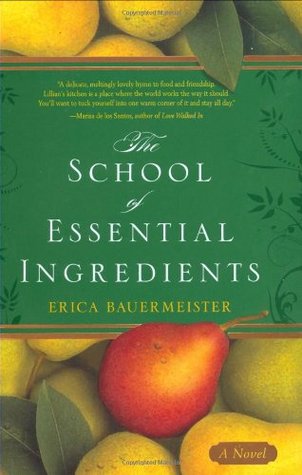
Friday Book Whimsy: The School of Essential Ingredients

Erica Bauermeister’s novel,The School of Essential Ingredients, SHOULD have been a book that I really enjoyed. It is all about food and cooking and how the two can shape your life, and that is something I believe and about which I enjoy reading. And in fact, the story started out grabbing my attention.

Lillian is a successful chef and restaurant owner, who once a month closes her restaurant and teaches cooking classes. The classes, however, are not just about food and the preparation of meals. She believes (as do I) that good food and friends and family gathered around the table are essential ingredients for a happy life. So her classes were as much about enjoying life and friends and family as they were about preparing food.

So about the first third of the book, as Bauermeister introduced us to the characters, I was all in. I liked the variety of people and life backgrounds and reasons for taking a cooking class. But unfortunately, it didn’t take long before the characters all started seeming exactly the same. They even talked the same.

I am more than willing to suspend reality when reading a novel. But the class consisted of eight people, all of whom it seemed had lives that were coming apart at the seams. But after a class or two, and upon learning the proper way to prepare a roast turkey, their lives changed. No matter their background, suddenly they develop a suburb nose for good wine. They can differentiate between different herbs and spices in a dish simply by a single taste.  All this in a couple of classes.

Bauermeister’s writing is flowery and reminded me of drinking a wine that is just a little too sweet for the meal being eaten. Her characters ended up being boring and annoying, at least to this reader. By the end, I wanted one of them to take a taste of something and not like it. It didn’t happen.

I don’t think I will attempt another of the author’s food books. I’m not that hungry.

Here is a link to the book.

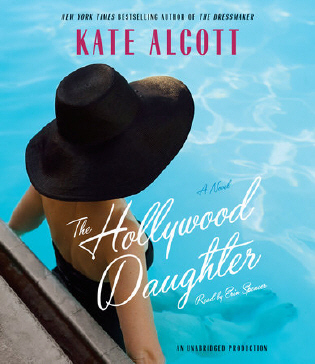
Friday Book Whimsy: The Hollywood Daughter

Author Kate Alcott tells a beautiful story of mother and daughter relationships set against the glamour of 1950s Hollywood and the darkness of the McCarthy years in this interesting and intelligent novel, The Hollywood Daughter.

I’m kind of an easy date when it comes to stories about Hollywood, much as I try to act like a grown-up reader. Last year I read All the Stars in the Heavens by Adriana Trigiani, which is a novel about the love affairs between Loretta Young and Clark Gable. I ate it up like an ice cream cone on a hot day. So when I came across The Hollywood Daughter, it was a given that I would read this novel that ties closely to Hollywood legend Ingrid Bergman’s controversial relationship with Roberto Rossellini. Controversial at the time, that is. Nowadays it would be quite a ho-hum relationship.

Jessica Malloy is a young girl at the beginning of the novel, the daughter of a Hollywood publicist for actress Ingrid Bergman. Jessica’s mother is distant and apparently clinically depressed, since she spends much of the novel in bed. In the absence of her mother, Jessica feels a connection to Bergman, who appears to have it all going for her. The connection isn’t just something Jessica dreams of; in fact, because she goes to a fancy-dancy school in Beverly Hills and Bergman’s daughter is on the carpool list, and because Jessica’s father is Bergman’s publicist, Jessica actually gets to know the actress.

Years go by and Bergman disappoints her devoted fans by falling in love with Rossellini, getting pregnant with his child, divorcing her husband and moving to Italy. At the same time, Senator McCarthy’s hearings begin and everyone is looking at everyone else, wondering just who are the bad guys. The atmosphere directly impacts Jessica’s father and their family dynamics.

It was fun to get some historical perspective of the times through the eyes of Jessica, from a small girl up until young adulthood. The background about Bergman was interesting, especially given just how the times compare to today’s Hollywood goings-on.

The Hollywood Daughter was a fun read and an interesting historical perspective.

Here is a link to the book.

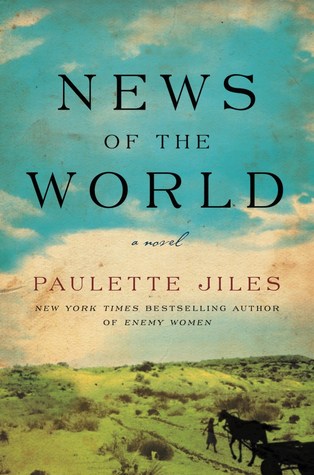
Friday Book Whimsy: News of the World

For reasons I can’t quite explain, I am drawn to novels that take place in the Old West of the 1800s. I like to imagine what it was like to live in the days before electricity, iPads, Snapchat, and nightly news.

News of the World, by Paulette Jiles, had an interesting premise. The protagonist, Captain Jefferson Kyle Kidd, served in – and was greatly impacted by – the Civil War. Now, however, he is just an elderly man who makes his money by traveling around northern Texas reading the news to people willing to give a dime or so to learn what’s happening in the world and who can’t read it for themselves. His wife is long dead, and his two daughters live far away. Still, while he’s a loner, he is satisfied with his life.

One day, he is offered a $50 in gold by the United States Army to return a 10-year-old orphan girl to her family in southern Texas. The child’s parents had been killed four years earlier by Kiowa Indians, who for unexplained reasons, took the child and raised her in the Kiowa tradition. The Army rescued her, and despite the fact that she was perfectly content in her new life, decided she needs to be returned to a distant aunt and uncle in San Antonio.

Thus begins a 400-mile journey by an elderly man and a little girl who speaks only the Kiowa language. She is terrified at the beginning, but eventually senses the man’s gentle nature and eventually comes to call him Keh-Pun, the Kiowan word for grandfather. He, in turn, tries to teach her English so that she will be able to communicate with the family she doesn’t know.

While the duo has several adventures along the way south, the book turns out to not be a story about cowboys and Indians; instead, it is a story about love and kindness. The pace is slow, sort of matching the pace of the pair as they make their journey. There are funny scenes as the little girl Johannah tries to learn the ways of the white people.

The twist comes when Captain Kidd and Johannah finally reach San Antonio, only to find a couple who is interested only in using Johannah as an indentured servant. Captain Kidd makes a decision that changes his life, and the little girl’s, forever.

As I mentioned, this is not an action novel, but a novel about relationships, trust, and love. I enjoyed the book, though I found the pace a bit slow at times. Still, it is a very short book, just this side of a novella.

Here is a link to the book.

Friday Book Whimsy: The Opposite of Woe: My Life in Beer and Politics

I struggle a bit with memoirs. Unless one’s life is really interesting or they became famous for doing something really interesting, I kind of think they are self-indulging. Because of this feeling, I am very picky about choosing a memoir in which to invest several hours of my life.

Having said that, I will tell you that I was interested in The Opposite of Woe: My Life in Beer and Politics by Colorado Governor John Hickenlooper for several reasons. The first, of course, is that he is the governor of Colorado, and I live in Colorado. The second is that in my past life when I was paid actual cash to write, I had occasion to meet the governor, though at that time he wasn’t the governor, but the Denver mayor. The third reason is that I knew that in his earlier life, Gov. Hickenlooper had lived in Maine, and had, at that time, been acquainted and associated with Bill’s kids’ uncle, who also lived in Maine. I had heard through the grapevine that their Uncle Bob was featured fairly significantly in the memoir.

What I found was a relatively well-written account of a pretty unusual and interesting life. The governor, like many of us, couldn’t quite find his niche in life. Impacted by the death of his father at a very early age, and then death of his stepfather unusually early as well, Hickenlooper did a bit of this and a bit of that before he started a brewery/restaurant in Denver and had a significant impact on the development of the city. And, by the way, he learned to brew beer from Uncle Bob, who thereby earned a spot in the book.

Unfortunately, the book had some of the problems I often see in memoirs: too much information. I frankly did a lot of skimming. The saving grace is that some of what felt like pretension was modified by a self-deprecating sense of humor.

I can’t say I would recommend this book to anyone who isn’t interested in Hickenlooper himself. But if you’re a fan, you might find some of his life background interesting.

Here is a link to the book.

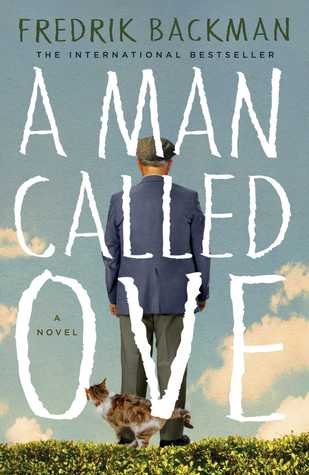
Friday Book Whimsy: A Man Called Ove

I believe I might be the last avid reader to have not read A Man Called Ove, a novel by Fredrik Backman. Part of the reason that I put off reading this book was that I so loved another novel written by Backman —  Britt-Marie Was Here — and didn’t feel that anything could compare favorably to one of my favorite novels ever written.

The comparisons between these two books are obvious. Both protagonists are seemingly crabby people who manage to find happiness despite themselves. Britt-Marie was not so much crabby as simply set in her ways.

On the other hand, Ove is as crabby as one can be, and just wants to be left alone following the death of his beloved wife, who brought out the best in him. He gets up at the same time every day. He eats the same breakfasts and does the same activities. However, he can’t get over the loss of his wife, and decides that suicide is the only answer.

Except that one suicide attempt after another keeps getting thwarted, first by his new neighbors who knock over his mailbox while trying to back up a truck; an estranged neighbor is in desperate need for his help; a scroungy cat seems to think he lives with Ove. Eventually, Ove realizes that he is important to a lot of people.

The novel is – in a word – charming. I don’t think I liked Ove quite as much as Britt-Marie, but the novel was an absolute pleasure to read. The characters are loveable and their funny ways at looking at life – and at Ove – made me laugh.

Anyone who reads this book and doesn’t feel more hopeful and happy after is simply a curmudgeon him or herself.

Treat yourself to a few days with Ove.

Here is a link to the book.

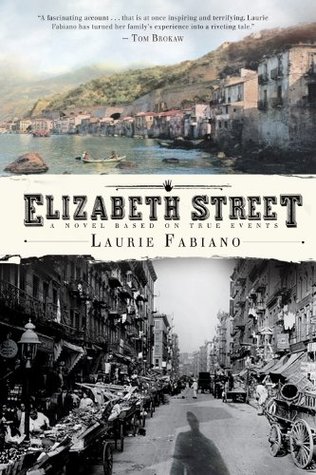
Friday Book Whimsy: Elizabeth Street

My husband and I have been lucky enough to travel fairly extensively in Italy. The bulk of our time has been in Rome, the Cinque Terre, and all over Tuscany. However, we were able to spend a bit of time in Naples and Sicily. Enough time to know that even now, in the 21st century, northern Italy and southern Italy are kind of like two different universes. Elizabeth Street, by Laurie Fabiano, reminded me that it wasn’t all that long ago when Italy wasn’t the republic that it is today, and the people in the north looked down on the people in the south and people in the south barely tolerated people in the north.

Fabiano’s novel is based on the true story of her family in Calabria – a region that is located in the “toe of the boot” that is Italy. The economy, even now, is largely dependent on fishing.  Being only a stone’s throw from the island of Sicily, the area was impacted by what would now be called the mafia.

In the beginning of Elizabeth Street, Giovanna Costa and Nunzia, the boy she has grown up loving, are married. Nunzia leaves almost immediately for New York City, where he plans to earn money in the land with streets paved with gold and return to his town of Scilla and his wife with comfortable wealth. He unfortunately dies in a construction accident caused by owner negligence. When Giovanna learns of his death, she travels to America to find out what happened and see where he is buried.

Giovanna is surprised to find that the Italian area of NYC is actually fairly segregated in the early 1800s, with Calabrians barely speaking to immigrants from Rome or Milan. She is a strong-willed and intelligent woman, and eventually learns midwifery from a woman doctor from northern Italy who lives nearby. Eventually  Giovanna marries again, this time to a widower, not for love but for more practical reasons. She marries a man who is kind and happy to have a wife to care for the children from his first marriage.

Eventually, she and her husband build a successful grocery business and things look positive. That is, until they come face-to-face with the increasing power of the so-called Black Hand, a group that was the prequel to the Mafia we know today who extorted business owners for large sums of money. The story focuses on the strength of character of Giovanna despite the trials they faced. As it is based on a true story, it was somewhat of a history lesson about life in big cities in the early 20th century.

The author told a fascinating family story with unexpected twists and turns. I loved the fact that, though a novel, it stayed true to course since it was based on her own family history.

Admittedly the story was a bit slow moving at times. But I enjoyed the descriptions of NYC in the early 20th century and, of course, all the descriptions of food and family.

Here is a link to the book.

Friday Book Whimsy: An Available Man

I love a good romance novel as much as the next person, particularly if the romance is part of a really good story. But I must admit that I get a bit tired of being able to tell right from the get-go that a man will be the love interest because they are described as tall and broad-shouldered, with piercing blue eyes. No one falls in love with an average looking fellow with faded brown eyes and a small belly paunch.

Perhaps this is the biggest reason that I so enjoyed An Available Man by Hilma Wolitzer. The main character of the novel is a man in his late 50s who is a high school science teacher. Edward Schuyler is still grieving the death of his beloved wife following her bout with cancer. He can’t seem to find joy in his life anymore, but despite the fact that he’s very lonely, he simply doesn’t seem to have a particular interest in trying to move on.

Without his knowledge, his adult stepchildren take it upon themselves to place an ad in a book review magazine seeking the company of a mature woman for their dad. Pretty soon the replies start pouring in and the children admit to what they had done. Resistant at first, Edward finally realizes that he really would like to have someone with whom to keep company. What follows are a series of sometimes sad, but mostly funny experiences as lonely women clamber to make his acquaintance.

The author writes with a deft hand and a quick wit. Wolitzer presents Edward as a charming, smart, likeable man who isn’t looking to replace his wife but just wants someone to share his life with. He may not be broad-shouldered, but he is kind and funny and deserves the happiness that awaits.

I found this to be a sweet story with an extremely satisfying ending.

Here is a link to the book.

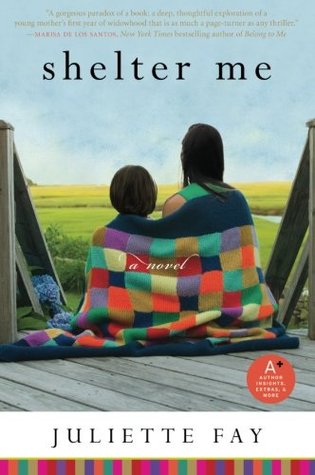
Friday Book Whimsy: Shelter Me

A few months ago, I reviewed The Tumbling Turner Sisters, author Juliette Fay’s most recent novel. That particular novel may well end up being one of my favorite reads of 2017 (though it was written in 2016). What’s more, following my post, I got a very nice email from the author thanking me for my review. Now, my mom would say that was just good manners, no?

Because I enjoyed that book so much, I decided to give another of her novels a try, and started with her debut, Shelter Me, written back in 2008. First novels can be risky business. The characters can be flat. The story is often somewhat predictable while the style can be unpredictable.

Shelter Me hooked me with the storyline, and kept me with the realistic characters and behaviors. I really liked the novel.

Young mother Janie is still reeling from the unexpected death of her much-loved husband, who was killed in a motorcycle accident. Feeling totally unprepared to be a single mother to her young kindergarten-aged son and toddler daughter, and unable to fully accept what has happened, she lives a life full of anger, confusion, and loneliness.

But suddenly a few months after her husband’s death, a stranger shows up at her door holding a piece of paper that turns out to be a contract for him to build a front porch on to their house. Her husband had made the arrangements, planning to surprise her with the beautiful addition to their home.

After getting over the surprise, Janie gives Tug permission to go ahead with her husband’s wishes.

Now, stop right there. Isn’t that a sweet premise for a book plot? There is just something so delightful as the idea of a husband surprising his wife with a front porch. I think I would have loved this novel even if that was the only thing good about it.

But it wasn’t. Janie’s sadness, often displayed as anger, is so realistic that I could practically feel her rage around me. The supporting cast – an aunt who could be annoying if she just didn’t love her niece so darn much, a neighbor who simply won’t let Janie push her away, and Tug, who is using the front porch to hide his own issues – are believable and likeable.

There was a story line relating to the parish priest who tried his best to provide Janie comfort that seemed unnecessary and simply odd, but it didn’t detract from my enjoyment of the book.

Highly recommend.

Here is a link to the book.


Friday Book Whimsy: The American Heiress

Still reeling from Downton Abbey withdrawal, I enjoyed watching PBS’s Victoria this past winter. Though based on a true story, there was enough romance and intrigue to keep me interested in a way that I wouldn’t have had it been a documentary. And as I watched the credits after the first episode, I saw that the series was based on a novel written by Daisy Goodwin. And I remembered that while I didn’t have that novel, I did own – and had owned for four or five years – another novel by that author called The American Heiress, a novel I had never gotten around to reading.

The American Heiress is the story of young Cora Cash, a New York socialite living in the late 1800s whose father was rich as triple chocolate fudge and who ran with the likes of the Vanderbilts and the Rockefellers. However, not being old money like the Astors, Cora’s mother thought the way to bring the family name up to that caliber was by having her beautiful daughter marry a British royal. A trip to England ensures that happens.

Cora’s wedding to Ivo, Duke of Warham, appears to be a perfect match. She gets a title and he gets all of that money to keep his dukedom running. And he’s so darn cute and she’s so darn pretty. But marriage to a royal when you are not only NOT nobility but not even British brings its own set of problems. And why is Ivo so quiet and withdrawn? Drama and intrigue abound. But also romance and the glorious upstairs/downstairs relationships we came to love with Downton Abbey.

The American Heiress is Goodwin’s first novel, and I found it to be captivating and interesting. The author sets the stage so clearly that I could practically smell the dust on the chandeliers. I was sorry it took me so long to finally read this book, and I will read Victoria next (even though I know FOR SURE how that one ends).

Highly recommend.

Here is a link to the book.

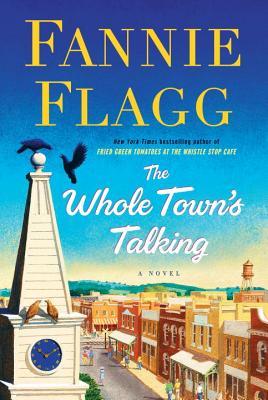
Friday Book Whimsy: The Whole Town’s Talking

Quite frankly, no one could have gotten away with this book except the author Fannie Flagg. For what other author would someone be patient enough to read a book in which most of the characters are dead and buried? Especially if it’s not a horror story?

As far as this reviewer is concerned, Fannie Flagg will never write a story as funny, poignant, and compelling as Fried Green Tomatoes at the Whistle Stop Café, but I’m glad she keeps trying. While I don’t absolutely LOVE every one of her books, I think it’s safe to say that they nearly all – or at least the ones I have read – make me smile.

That’s because the stories are all character-driven, and her characters are all lovable. Even if they’re dead.

The story begins many years ago with Lordor Nordstrom, an immigrant from Sweden homesteading in Missouri. The area in which he lives is made up entirely of Swedish immigrants. With Lordor taking the lead, the people eventually begin building the makings of a town, which they call Elmwood Springs, with Lordor serving as mayor. They build businesses, churches and even a cemetery.

The town becomes a bustling community with loving friends and neighbors, business owners, preachers, and all manner of people who make up a normal town. But things become interesting when people begin to die. Because lo, and behold, though they are buried in the cemetery, they are still able to talk and observe what’s going on in their little community.

And that’s about all that happens in the book. The story is told almost primarily through the voices of the dead. And it’s okay. Because they people of Elmwood Springs watch out for each other whether living or dead.

There are so many characters over so many years that it becomes confusing for the reader, or at least for this reader. Still, I enjoyed the book very much and it left me feeling good.

That’s about as good a compliment as I can give a novel.

Here is a link to the book.