Friday Book Whimsy: Murder at Archly Manor

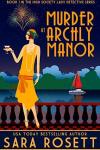
I’ll be honest with you; lately I’ve read so many of these mysteries featuring high-society lady detectives that they’re all starting to run together. Murder at Archly Manor, the first in what’s called the High Society Lady Detective series by author Sara Rosett, while not quite Agatha Christie material, was a fun romp with high society in 1920s England.

Olive Belgrade is a solid member of the aristocratic class in London, but that doesn’t mean she’s rich. In fact, she is barely making ends meet, and is finding job-hunting to be unsuccessful. While visiting relatives, she learns that her cousin Violet is newly engaged to a man that nobody trusts. There is too much about his background that is vague. This leads to that, and Olive is hired by her aunt to look into Alfred’s background.

To this end, Olive attends a weekend party given by an aristocrat who actually IS rich. Unfortunately, before Olive can find out too much, Alfred is killed. Olive sets out to find the murderer.

First novels are always hit-or-miss. The reader needs to learn a lot about the characters. Rosett does a good job of introducing us to Olive and her friends, making them likable and mostly believable.

I found Murder at Archly Manor to be a good cozy mystery, and I am looking forward to reading the next book in the series.

Here is a link to the book.

Friday Book Whimsy: What the Dead Leave Behind

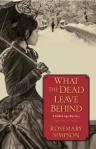
There are two era’s in which books take place that will suck me in every time, particularly if it is a murder mystery: a) I love the 1920s, just after WWI, when fun is the name of the game, and thoughts have not yet turned to the possibility of WWII; and b) the late 1800s in New York City, set among the Vanderbilts and the Roosevelts and the Astors. There is just something I find so romantic about that era, despite the fact that women were definitely considered second rate citizens.

A new series by author Rosemary Simpson features a strong-willed woman who lives in one of the famous Fifth Avenue mansions. The night of the real-life Great Blizzard of 1888, Prudence MacKenzie awaits the arrival of her fiance Charles, who must travel through the blizzard to see her. He never arrives, and is later found dead. She soon learns that though her father left her all of his money upon his recent death, the will declares that in order to receive the money, she must be married to Charles so he can manage her fortune. Otherwise, the money goes to her father’s young second wife. Prudence suspects foul play when Charles is found dead and buried under snow with an Ace of Spades in his hand.

Soon, Charles’ long-time friend Geoffrey Hunter, a former Pinkerton agent, shows up. He not only knows the meaning of the playing card, but suspects, as does Prudence, that there is something sinister about her father’s young wife and her dispicable brother.

I liked the character of Prudence, because despite living during a time when women really did have no power, she used her wits and her money to her advantage. Her evil stepmother tries to control Prudence by keeping her under the influence of laudanum, and I found that prequel to today’s drug problems interesting.

A new Prudence MacKenzie novel has just been released, and I am looking forward to reading it.

Here is a link to the book.

Friday Book Whimsy: The President is Missing

Call me crabby, but I stopped reading James Patterson a long time ago. Oh, I made an exception sometime in the recent past to read I, Alex Cross, one of the series of over 25 books about fictional detective Alex Cross. I read that particular book because the series was selected in the PBS-sponsored Favorite Book Ever Read as one of the 100 chosen by readers. Upon reading the book, I remembered why I’d stopped. I found that book, like others in that series, to be predictable, and more graphically violent than I’d remembered. I’m getting old.

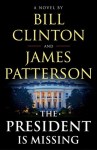
Having said that, I was intrigued last year to learn that Patterson had teamed up with President Bill Clinton to write a mystery/thriller involving the president of the United States. I don’t know how much involvement Clinton had in the writing The President is Missing, but I’m sure he contributed to the details involving the presidency.

Enjoying this novel (which I did) requires an incredible amount of suspension of disbelief. Most significantly, a reader would have to believe that a president could hide from everyone — even his own Secret Service. But I think many novels require a suspension of disbelief.

President Duncan faces a threat more serious than any threat faced by a past president. The bad guys (who are unbelievably smart and computer knowledgeable ) have created a computer virus that will shut down every segment of the United States, from security to finance to airports and highways. Through this virus, life as we know it will come to an end.

To prevent this from happening, Duncan (who happens to have been a special forces agent in his past) goes rogue. He hides where no one can find him and works with other really smart computer guys to stop the virus using intelligence rather than brawn. During this period of three or four days, the world faces disaster, but is ultimately saved. I don’t think that’s a spoiler.

The novel is long, and I approached it with some trepidation. To my surprise, I found the writing to be rather driving, and the story — though unrealistic — to be interesting. The villain behind the virus caught me by surprise.

The President is Missing ends with a speech by President Duncan to Congress that I found to be a bit political for my taste. However, I recommend the book with no hesitation.

Here is a link to the book.

Friday Book Whimsy: Top Five for 2018

Every year, my reading goal is 100 books. I don’t think I have ever reached my goal, and this year I fell even shorter than last year. Nevertheless, I read some books that I really liked. Not all of my top five books were published in 2018. Furthermore, it was pretty hard to narrow my book list down to five.

Here are the five favorite books I read this year, in no particular order…..

Book of Polly by Kathy Hepinstall
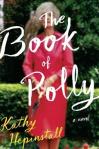
Willow is 10 years old, and her mother Polly was in her 50s when she was born. Willow lives in fear that her mother will die before she is grown. As for Polly she lives life to the fullest, but carries the burden of secrets that she refuses to share with her daughter. And then when tragedy strikes, they take a trip back to Polly’s old stomping grounds and Willow learns her secrets.

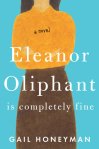
Eleanor Oliphant is Completely Fine Gail Honeyman
Eleanor struggles with appropriate social skills, and prefers to live her regular, if boring life in which she never strays outside the lines. And then she meets Raymond, and their friendship opens her up to new possibilities. I loved this book primarily for the characters.


The Word is Murder Anthony Horowitz
In The Word is Murder, author Horowitz literally writes himself into the book as one of the characters. A disgraced police detective, let go from the London police force is hired as a consultant for the case of a mysterious murder of the mother of a famous actor. In Sherlock Holmes/Dr. Watson style, the detective — known only as Hawthorne — hires Horowitz to work with him on a case, and chronicle it by writing a diary. The premise is as clever as can be, earning it a place in my top five favorites.

Be Frank With Me Julia Claiborne Johnson
Alice Whitley agrees to become the assistant to famed author Mimi Banning as she writes her first book in years to ensure that the book is completed. Part of Alice’s job description is taking care of Mimi’s 9-year-old probably-autistic son Frank, who is one of my favorite characters of all time. He is smart, funny, and loves to dress up like 40s movie stars. I enjoyed the story, and simply adored Frank.

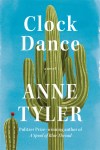
Clock Dance Anne Tyler
Anne Tyler is one of my favorite authors of all time, but I have been disappointed in her most recent efforts. I found Clock Dance to be back to the author’s standards, featuring characters with whom I could be friends. Willa Drake has had plenty of sadness in her life. Her mother was bipolar, and her first husband died in a road rage accident. She is comfortably settled into a pretty boring marriage with her second husband, when she gets a call that takes her to Baltimore and changes her life forever.

Honorable mentions: Woman in the Window by A.J. Finn; Caroline: Little House on the Prairie Revisited, by Sarah Miller; and Then She Was Gone, by Lisa Jewell.

Next year: 100 BOOKS

Friday Book Whimsy: On Writing: A Memoir of the Craft

There’s a couple of reasons why I should have hated author Stephen King’s memoir/writing textbook On Writing: A Memoir of the Craft. First, I dislike most memoirs. I believe that the majority of people are just like me with lives that are pretty ordinary. Thus, I believe one must be extraordinarily full of oneself to justify writing a memoir. Second, I am in the .00002 percent of the world’s population who has never — not EVER — read a novel by Stephen King. It isn’t that I am protesting his prolificacy. On the contrary, more power to a person who can come up with that many ideas. He has written 58 novels, six non-fiction books, and some 200 short stories. And I’ve read exactly none. I just am not a fan of horror stories that involve talking cars and snarling giant dogs. I’ve loved the movies made from his books, however. Go figure.

At any rate, despite the fact that I SHOULD have hated this book, instead, I loved it.

The first part of the book is mostly memoir — his own fairly self-deprecating story of his ordinary life growing up in the 50s and 60s. It was a nostalgic walk down Memory Lane for me as in many ways, his life duplicated mine and many other Baby Boomers. But the story of his youth painted a clear picture as to why he ended up being a writer, and specifically primarily a writer of horror fiction.

The second part of the book is a writing lesson. I will freely admit that I’m a writing geek. I love grammar and vocabulary, and I mostly always have. King’s lessons were not preachy, just practical. Basically, he says, if you want to be a writer, then you must write, write, write. Find a spot where you are comfortable and write. Pay attention to life around you and write. Find someone with whom you are comfortable and let them critique what you write.

Even if you aren’t a writer and have no desire to become one, this book is an interesting look at an ordinary man during one of the best times to be a kid, and told by someone who can write one heck of a good story.

Here is a link to the book.

Friday Book Whimsy: Was the Ending the Same?

First posted on March 28, 2014

I often say life is too short to read a bad book. And of course, by “bad book” I mean a book I’m not enjoying. There are simply too many books out there that I want to read to spend any time reading something I don’t like. That philosophy has probably caused me to miss out on a lot of books that get better after the first 100 pages. Oh well.

Having said that, it is probably inconsistent to say that I will, however, reread a book. Using the same logic, it would appear life is too short to spend time on a book when you know how it ends. For some reason, that fact doesn’t trouble me at all.

So here is a list of 5 books that not only WOULD I reread, but frequently HAVE….

manhattanbridge01b1. I was between books one evening recently. I finished what I was reading and didn’t want to get up out of bed to download the ebook that the Mesa Public Library had notified me was available. So I went on my Nook’s library and saw with great delight that I had purchased A Tree Grows in Brooklyn by Betty Smith some time ago, a fact I had totally forgotten. It was like running into an old friend, right there in my own bed!

The book is about the Nolan family who lives in the Williamsburg neighborhood of Brooklyn. At the beginning of the book, Francie Nolan is 11 and the story is told primarily through her eyes. The Nolans are poor and struggling, but survive despite obstacle after obstacle, much like the tree that somehow survives in the desolate empty lot Francie sees from her bedroom window. A metaphor. Get it? I probably first read the book when I was 12 or 13, and loved it so much. I have read it many times since, but there’s nothing like the first time you read a good book, is there?

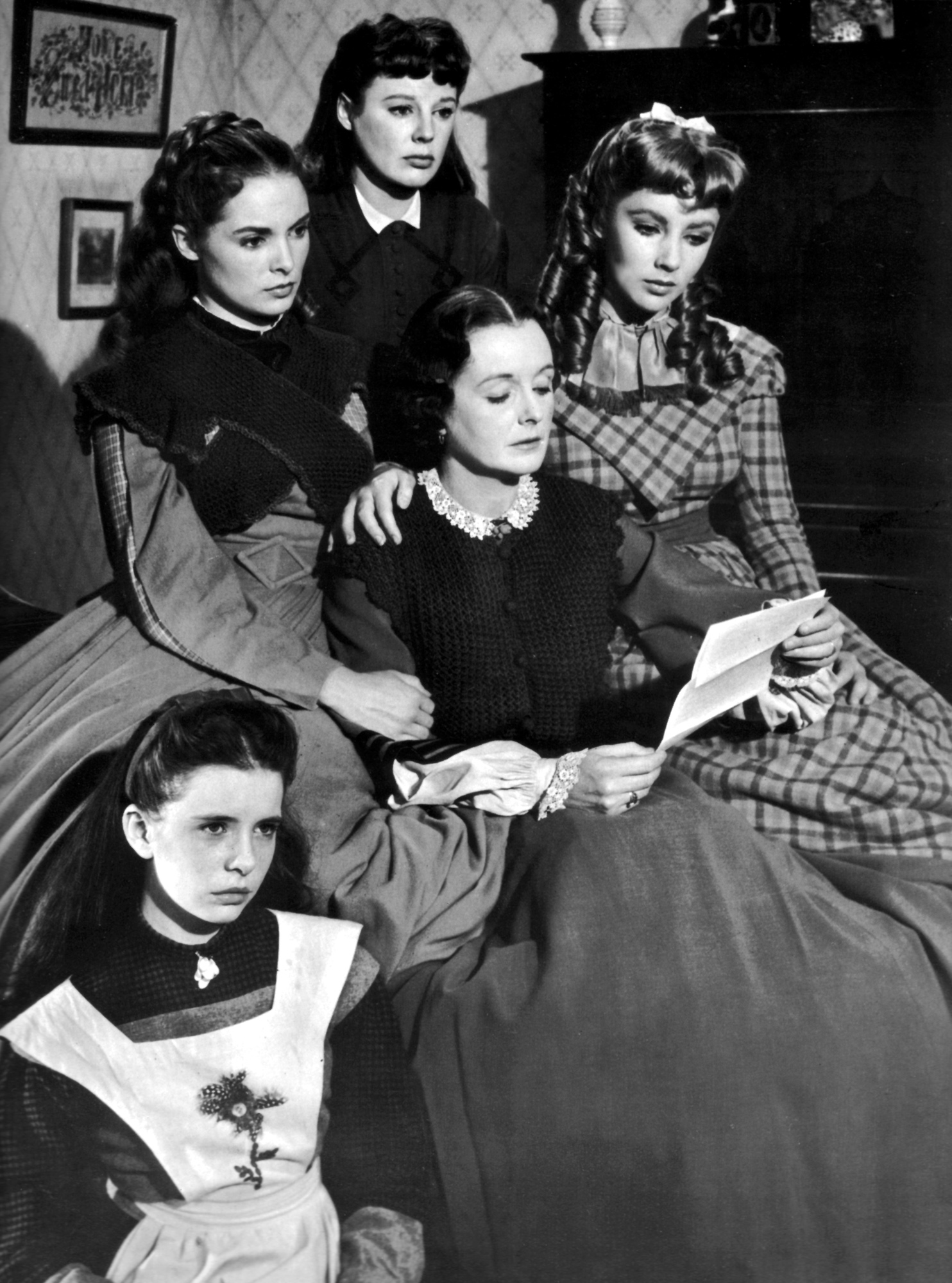
2. I was probably only 8 or 9 when I first read Little Women by Louisa May Alcott. Oh my heavens, did I love that book. I probably read it three or four times just during my adolescence. The first time I read the book, I can’t even begin to tell you how I cried and cried at one particular sad event. I was heartbroken.Annex - Leigh, Janet (Little Women)_01
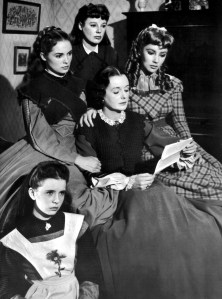
Little Women is the story of the four March girls, who live quiet lives in New England as their father serves as a chaplain during the Civil War. They are guided lovingly by Marmee – their mother. (I seriously wanted to begin calling my mom Marmee, but knew that wouldn’t fly, even as an 8-year-old.) Each of the girls is very different. I think every girl who reads the book identifies with one of them. I identified with Meg. I wasn’t quite adventurous enough to connect in the same way with Jo. By the way, the story has been made into a movie three times – 1933, 1949, and 1994. The movie made in 1949 is far-and-away the best. The 1994 movie? Susan Sarandon as Marmee? Nooooooooooo!

3. One book that I have read, oh, I don’t know, ten or twelve thousand times is Jane Eyre, by Charlotte Bronte. From the get-go, my heart absolutely broke as I read about poor Jane’s childhood, both as the abused ward of her aunt and then as a
Comb your hair for heaven's sake! What are you, blind?

Comb your hair for heaven’s sake! What are you, blind?

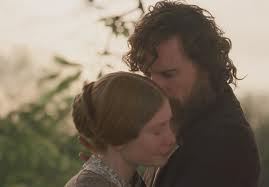
student at the Lowood School. The child couldn’t get a break. Even her beloved friend Helen dies – in Jane’s arms no less. She becomes the governess for little Adele, and – yada yada yada – she and Mr. Rochester live happily ever after (despite the fact that he’s scarred from the fire, bitter, and permanently blinded.

I remember thinking that the book was the most romantic story I had ever read. After all, it isn’t like Jane was some gorgeous woman; she was just a Plain – well – Jane. Still, Mr. Rochester loved her from the very beginning. And oh, the back story! Does it get any better than that?

great plains4. I think that My Antonia was required reading when I was in high school, and I loved it immediately. It helped that the story took place in Nebraska (where my high school was located), and in fact, not even too terribly far from my home town. Willa Cather’s writing is glorious, and I frankly love all of her books. But there was something about Antonia herself that makes it my favorite.

Antonia comes with her family from Bohemia to settle in the Nebraska prairie. The Shimerda family had not been farmers in Bohemia, and have a hard time surviving in this new and terribly hard life in Nebraska. She is befriended by Jim Burton, and their friendship is a critical element of the book. I love the descriptions of the Nebraska prairie, and the development of Antonia through the years. She might be my most beloved character of all books I’ve ever read. Might be. Not committing. For a review I did of this book, click here.

5. There is actually a book I read once a year. At Home in Mitford, by Jan Karon, is the story of an Episcopalian priest who lives in the North Carolina village of Mitford. It’s not exactly accurate to say the story is about Father Tim, though he is the main character. mitfordThe story is about the entangled lives of all of the quirky people who make up this town. They are caricatures, no doubt about it. Still, I love them all and I never get tired of them. But mostly I embrace Father Tim’s absolute love of God and trust in him. I love the way he turns to the Lord in all things. I read the book every year to help me learn to pray. By the way, I read the Karon’s Mitford Christmas book Shepherds Abiding every December as well.

There you have it. There are more, but these five were top of mind.  I didn’t include the Bible, because it goes without saying that it is a part of my life.

Nana’s Note: All these years later, I still agree with my list; however, I would add Plainsong, by Kent Haruf, which is perhaps my favorite book ever.

Friday Book Whimsy: Closed Casket

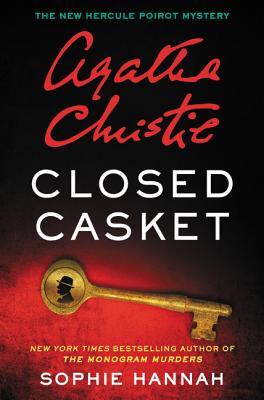
I vowed I wasn’t going to read any more of the books that continue the story of Agatha Christie’s famous Belgian detective Hercule Poirot. I was enormously disappointed in author Sophie Hannah’s first effort, The Monogram Murders, which I reviewed in 2016. Still, I am such an enormous fan of the Poirot mysteries that I finally caved and read the second in the series — Closed Casket.

Once again, the book features Hercule Poirot along with his sidekick, a Scotland Yard detective Edward Catchpool. Rather than writing it as a sequel — fans will recall that Christie famously killed off the detective in her final installment called Curtain — the series takes place prior to Christies’ books — a prequel of sorts.

In this novel, Poirot and Catchpool are invited to the home of a famous children’s book writer named Lady Athelinda Playford, and neither can figure out why they were included. Perhaps she expects a murder to take place? At least that’s what Poirot speculates.

At dinner, things become a bit clearer. The rich woman announces that she has changed her will to exclude her two grown children, a daughter and a son. This comes as a unfortunate surprise to the two children. They are further shocked to learn that she is leaving her fortune to her secretary. Joseph Scotcher has worked for Lady Playford for a number of years. What is particularly confusing about the change in beneficiary is that Mr. Scotcher has been diagnosed with Bright’s disease and has only weeks to live.

Why oh why would she leave money to a person who she will almost certainly outlive? Before the day is over, he is found dead in the parlor by Scotcher’s fiance who insists she witnesses the daughter beating him to death. However, it is impossible for her to be in two places at once, isn’t it?

Hannah’s second effort was decidedly better than her first. Nevertheless, the bar is set pretty high. The two detectives seem to stumble and bumble more than Poirot ever did under Christie’s pen. Poirot misses clues that even I got.

Still, it’s nice to have my old friend Poirot back, even if he isn’t in his finest form.

Here is a link to the book.

Friday Book Whimsy: The Summer I Met Jack

I have heard stories about the Kennedys my entire life. President John Fitzgerald Kennedy and his elegant wife Jackie were as close as Americans ever got to royalty. There was no one before or after them that created such a sensation. Americans couldn’t get enough. You either loved the Kennedys or hated them. There wasn’t a lot in between.

I was only 9 years old when President Kennedy was assassinated, so I wasn’t old enough to have strong opinions about the Kennedy family. My mother and father did, however, and they were not particular fans. They were both Republicans, but truly I believe they were more concerned with the shenanigans that were part of the family’s legacy.

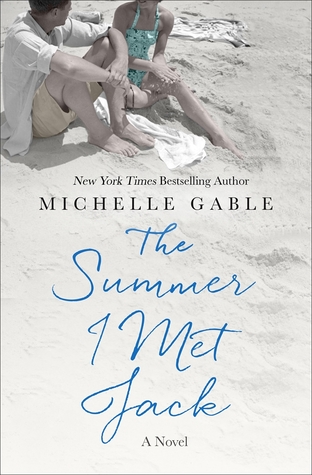
The Summer I Met Jack, by Michelle Gable, is a novel based on one of the lesser known stories about John F. Kennedy as a young man. There is no doubt the author took a fair amount of liberties with the book — it is fiction, after all — but it certainly didn’t paint a good picture of the family. It did, however, tell an unusual tale.

The book is based on the true story of Alicia Darr, a young woman who purportedly came as a Jewish refugee from Poland (though she always proclaimed she came from Vienna) as part of the Displaced Persons Act just as World War II was beginning. She ended up working as a housekeeper for the Joseph Kennedy family in Hyannis Port, at their acclaimed estate on Hyannis Port, MA.

She was quite beautiful, and caught the eye of young Jack Kennedy. I believe all of the above is true, but the author takes great liberties with the remainder of the story.

Jack and Alicia fall in love and prepare to marry. Old Man Joe puts the kibash on the wedding however, and eventually Alicia moves to Hollywood where she became a minor movie starr. She ended up marrying into the Corning fortune. But oh the ANGST that happens as part of this story!

The author’s portrayal of the Kennedy family is stark and disturbing. If even half of her stories are true, this was an — shall we say — unusual family. Jack Kennedy is portrayed as completely self-absorbed and addicted to sex. The rest of the family is little better.

I didn’t particularly love the author’s writing style, finding it simplistic and almost childish. I have no idea how much truth is in the novel, but if the characters had not been Kennedys, I would have lost interest in the story long before I did.

Still, it was an angle about the Kennedy family that I had not heard, and I am as much of a voyeur as the next guy.

I can’t give this an overwhelming thumbs up, but it was an interesting portrayal of the Kennedys.

Here is a link to the book.


Friday Book Whimsy: The Glass Ocean

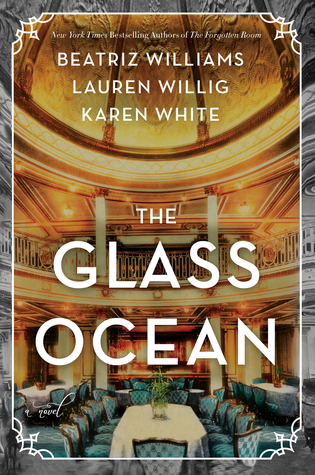
It is not their first rodeo when it comes to co-authoring a book for fiction-writers Karen White, Beatriz Williams, and Lauren Willig. A couple of years ago, the three prolific novelists co-authored The Forgotten Room, a bestselling novel that I reviewed and frankly didn’t like all that much.

So, it was with some trepidation that I decided to read their newest crack at co-writing a historical novel, The Glass Ocean. I’m happy that I took the risk, because I liked this effort much more than I liked The Forgotten Room. In fact, I looked back at my review of The Forgotten Room to see if I was somewhat unfair. Book reviews are subjective, of course, but I concluded that my review was on point as far as my opinion of that book went.

Like The Forgotten RoomThe Glass Ocean is the tale of three women from different eras But this book also features a doomed ship, the Lusitania. Socialite Caroline and her husband Gil are passengers on the ship that was fated to never reach its destination, and led to the United States declaring war on Germany in 1917. The Lusitania, of course, was destroyed by the Germans, and many of the passengers who died were Americans. Gil talks Caroline into accompanying him on the ship’s maiden voyage, and she reluctantly agrees. She loves her husband, but their marriage seems to be shaky and Gil is secretive and distant. Robert Langford, a long-time friend of Caroline’s, is happy to keep her company in his stead and books passage.

In the meantime, Tess and her sister are also passengers. They are small-time con artists, but Tess is ready to go straight. Her sister convinces her that this will be their last dishonest effort, and it will change their lives. It involves a piece of music — a lost Strauss waltz which belongs to Gil and is being carried to England on the ship.

Meanwhile, fast-forwarding to this century, Sarah — who is the great granddaughter of one of the Lusitania’s porters — wants to write a book about the ship because she discovers some interesting information that would offer the world a different angle. She turns to Robert Langford’s great grandson John, who is looking for something to do since his career in Parliament has been damaged because of an unrelated family scandal.

There are secrets galore in this lively novel, and many questions about loyalty. Who are patriots and who are German spies?

Some controversy about whether the Lusitania was, in fact, carrying weapons to England as the Germans maintained or was simply a passenger ship continues to this day. The book, in fact, is unclear about the ship’s role in the war. It isn’t unclear, however, about whether the characters help or harm the war efforts.

I found The Glass Ocean to be a very interesting and informative novel.

Here is a link to the book.

Friday Book Whimsy: And the Winner Is…..

Back in June, I wrote a blog post in which I admitted that I had just learned that PBS was sponsoring a contest of sorts in which people would vote for their favorite book. Through some process that I never bothered to research, 100 books were nominated by readers like you and me as their favorite book — as my 8-year–old granddaughter Mylee would say — in the whole entire world. Let me remind you that it was expressly defined as the favorite book and not the best book. As such, books such as Fifty Shades of Gray and The Notebook were among the 100 that were nominated. As Jerry Seinfeld would say, not that there’s anything wrong with them.

Each day, readers were invited to vote for our favorite or favorites. I will admit that most days I forgot to vote. I will also admit that every day that I remembered to vote, I voted for the same book — Rebecca, by Daphne du Maurier. Haters, don’t hate. I am a sucker for that book. It’s got everything: a dashing hero (never mind that he actually ends up being a murderer), a lovely, yet wimpering heroine (who remains nameless throughout — as Mylee would say — the whole entire book), an evil housekeeper (who may or may not have been one of Rebecca’s lovers), and a beautiful mansion on the shores of the raging sea in Cornwall, England (because Manderley, you see is most assuredly a character in the book. Rebecca has one of the best opening lines in any book: “Last night I dreamt I went to Manderley again.”)

Alas, Rebecca did not win. And it probably didn’t deserve that honor, despite this reader’s love for the cleverly-written and decidedly creepy story. Instead, the winner was To Kill a Mockingbird.

The Pulitzer-prize winning novel by Harper Lee has been newsworthy for nearly 60 years. Most recently, a school district in Canada has banned the book from its curriculum, saying it is racist and hurtful to African American students. I choose not to weigh in on that controversy at this point but (cough) bulldoodoo.

Here are how some of my favorite books that were included among the 100 nominees fared: Little Women came in 8th; Jane Eyre was in the 10th spot; A Tree Grows in Brooklyn was number 13, and Then There Were None took 19th place. As for Rebecca, it did quite well, landing in spot number 25. As for Fifty Shades of Gray, it was 86th out of the 100 on the list.   

Click here for a complete list of the results.