
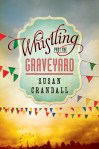
 Now tell me, who wouldn’t be drawn to a book entitled Whistling Past the Graveyard? I mean, is it a supernatural tale involving ghosts? Is it one of the thriller novels that have become so popular? Is it a gory mystery story?
The novel, written by Susan Crandall, a midwestern author who understands the mindset of a 9-year-old girl, is none of the above. Instead, it is a coming-of-age story that convincingly demonstrates what the world was like in the 1960s, when civil rights hadn’t yet reached the southern states.
The story’s narrator is young Starla Claudelle whose mother deserted her as an infant and ran away to Nashville to become a star. Starla’s father works far away in the oil fields of Louisiana, and visits Starla as often as possible. Starla lives with her mean-spirited grandmother who seems to resent her very existence.
One day, facing what Starla believes will lead her to be sent to reform school, she runs away without a word to anyone — even her very best friend. She hasn’t gone very far when she is picked up by a young African American woman named Eula who agrees to drive her to Nashville to find her mother. To Starla’s surprise, in the back seat of the car is a white infant wrapped in a blanket.
Eula takes Starla back to her house to gather supplies for the baby before they take off for Nashville. They face Eula’s abusive husband, and this leads to that. Before they know it, the three are running away from trouble towards Nashville.
I read the book very carefully, waiting to pounce upon the author for writing dialogue and thoughts inconsistent with those of a 9-year-old, but couldn’t find any. Though sometimes I wanted to take that girl over my knee for her impulsive and often dangerous behavior, she remains true to her 9-year-old self throughout the story.
As you can image, things don’t go well in Nashville. There are a lot of lessons learned, both by Starla and by the kind and sweet-natured Eula. The ending was satisfying and true to the rest of the story.
I enjoyed this book very much, and will read more by the author.

 I was 3 years old when the bell of Hollywood — Grace Kelly — married Prince Rainier III of Monaco. Had I been older, I would undoubtedly have been as enamored of that romantic story as I have been of all of the love affairs and marriages of the Windsors in Great Britain. I love me some queens and princesses.
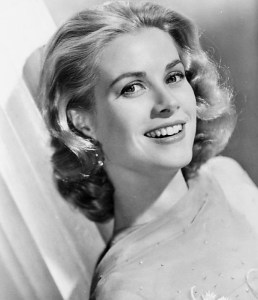 It is a novel, so except for the wedding, not much of it is factual. Still, every time the authors — Hazel Gaynor and Heather Webb — would describe how Grace Kelly was dressed, I would get busy with Google images to see for myself. The book took way longer to read because I spent a considerable amount of time looking at pictures of the oh-so-beautiful Grace.
 An epic mystery that takes place on a sugar plantation on the lush island of Barbados in the 1800s was a somewhat unexpected pleasure when it came to summer reading.
 I have always found
 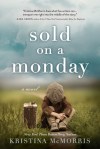 Some time back, I read (
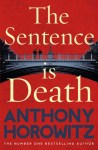 Author Anthony Horowitz is one of my favorite writers. He is the creator of and writer for two of my favorite Brit mystery programs: Foyle’s War and Midsommer Murder. He has also joined the legion of folks who have written Sherlock Holmes mysteries, but done a much better job of most. With his 2018 novel The Word is Murder, he came up with one of the most clever story ideas I’ve ever come across as a reader. He continues this clever idea in The Sentence is Murder.
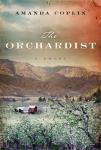 It’s rare that I’m quite as conflicted about a book as I am about The Orchardist, a debut novel by Amanda Coplin. Though I love books that take place in the American West of the 1800s, I also generally dislike sad books. Personally, there is so much sadness in the world that I would rather read a book that is uplifting.
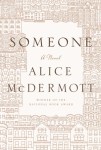 Someone, by Alice McDermott, is a novel I probably wouldn’t have read if it hadn’t been for a book club. Though the author is quite prolific, I haven’t read a single one of her novels. The cover is unremarkable, so that wouldn’t have grabbed my attention. That’s one of the good things about a book club. You read things you might otherwise not even consider. I’m very glad to have read Someone.
 Former New York Times reporter and Pulitzer Prize winner Rick Braggs grew up in the Deep South. His family members weren’t aristocratic Charlestonians. He didn’t cut his teeth in fancy restaurants in Atlanta, GA. He grew up poor, with oil under his fingernails from fixing his own broken-down cars. His father was a ne’er do well who had almost no role in Braggs’ life except to give him his last name. But he was reared by a loving mother and her poor but kind family, who knew how to love and how to cook, perhaps in that order.
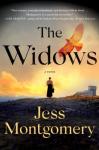 It’s 1924, and Lily Ross learns that her husband — Sheriff Daniel Ross — is killed while transporting a prisoner. She is devastated by the news. But even more
  Nana's Whimsies