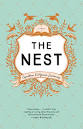
Friday Book Whimsy: The Nest

searchA debut novel can be hit or miss. Gathering from the range of emotions generated by Amazon reviewers, The Nest, the debut novel by Cynthia D’Aprix Sweeney is a bit of both.

For the record, however, I liked the book very much.

The four Plumb siblings have counted on receiving the inheritance set up by their father to become theirs when the youngest turned 40. Mr. Plumb’s idea was to just leave his kids a bit of money to give them a boost at a time when they would most need it. He hadn’t counted on the mortgage market boom (and a wise money manager who reinvested the money just before the market plummeted) to turn the small inheritance into a sizable amount. But the Plumbs had certainly counted on it, and lived their lives accordingly. They weren’t worried, because they knew “the nest” would be coming to them soon.

And then one day, the eldest Plumb – Leo – makes an irresponsible decision that results in the need to use the nest to settle a lawsuit. The other siblings are furious and waiting for Leo to tell them how he is going to fix their problems.

The Plumbs are dysfunctional and selfish and BESIDE THEMSELVES with anger toward Leo. As it becomes apparent that Leo has not learned from his mistake, the tizzy into which they’ve worked themselves begins to flatten out, and the family begins to discover what is really important and the need for family and the importance of taking care of oneself.

The publishers describe the book as humorous, and I can’t quite concur with that assessment. While their dysfunction was somewhat comical, it didn’t generate anything in the way of laughs. But despite the characters’ dysfunction, I found them to be likable once they stopped feeling entitled.

I found The Nest to be a good enough read to make me look forward to the author’s next offering.
Here is a link to the book.

unnamed

Friday Book Whimsy: Dimestore

searchThe best thing about this book was the title.

I love southern writers in general. I like reading books that take place in the south. I’m particularly drawn to the Appalachian area of southwestern Virginia and West Virginia. So I should love author Lee Smith.

It’s not fair of me to say I don’t, as I have only tried to read one of her novels. I say tried because I was unsuccessful. Fair and Tender Ladies – a novel told in the form of letters – simply didn’t grab my attention, and so I abandoned book.

But I was drawn to her memoir – told in a series of essays – one hundred percent because of its title. I grew up in a town that had not one, but two, dimestores, and I loved them both.

I didn’t love Smith’s memoir Dimestore quite as much as I loved dimestores themselves.

As I mentioned, what I am calling a memoir is actually a series of essays in which Smith tells us about her life as she grew up in the small Appalachian community of Grundy, Virginia, and beyond. Her father owned the local dimestore. For non-baby-boomers, dimestores were small versions of Walmart. You could find a little bit of a lot of things for a low price.

It’s true that I enjoyed the earlier essays more than the later essays because I loved hearing about her life growing up in southwestern Virginia in the late 40s and early 50s. I could relate, though my small town experience was in the Midwest. Let’s face it; small town America in the 50s was small town America in the 50s, no matter where you were. You could watch Dobie Gillis and the Mickey Mouse Club anywhere that had television reception. You could go out and play all day long without your parents arranging play dates.

I enjoyed the later essays a bit less because they were more about her experiences after college.  Smith actually spent the last couple of years of high school at a boarding school in Richmond, VA, and then attended college in Roanoke. But you can tell that her upbringing in the Appalachians impacted her life forever.

I also loved that she began writing at as a small girl, taking the Nancy Drew stories and rewriting them to include herself as one of the characters or producing a different ending. I was enormously impressed to read this fact, as it is something I would have LOVED to do, but wouldn’t have had the nerve.

I can’t heartily recommend the book unless you are a true lover of memoirs. I borrowed the book from the library, so I didn’t mind that I skimmed some of the later essays. I might have felt a bit cheated if I had spent cold, hard cash on the book.

With that caveat, I give it a wobbly thumbs up.

Here is a link to the book.

unnamed