
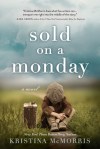
 Some time back, I read (and reviewed) a novel written by author Lisa Wingate entitled Before We Were Yours. Her novel took place in the late 1930s, and was the story of children who were kidnapped by an orphanage and then sold. The story was based on fact. It was one of the best books I read that year.
Because of my connection to that book, Sold on a Monday, by Kristina McMorris, caught my attention. It too, took place in the 30s, this time during the Great Depression. The story was based on a real photo taken during the Depression that the author came across while doing some research. The photo was of two small children sitting in front of a rundown farmhouse next to a sign that read 2 Children For Sale. Off she went with an idea for a historical novel.
Reporter Ellis Reed is lucky to have a job during the hard times of the early 30s. He is the society writer for a newspaper, a job he loathes. He yearns to be an important journalist. In the course of work, he comes across a sign advertising the sale of two children. He shoots a photo, but is unable to interview anyone.
When he returns to his office, he convinces his boss that the story is important, and the editor agrees to print it along with the photo. Unfortunately, the photo — and the negative — are destroyed. What are the chances? So he does that thing that reporters are not ever supposed to do. He sets up a fake photo and writes a fake story. Bad things ensue.
In the meantime, Lily is stuck in the dead-end job of being the newspaper’s secretary, while she really wants to be a writer. Since she is a single mother of a little girl, she knows she can’t be choosy. When Ellis’ dirty deed leads come to her attention, the two of them work together to try to make things right again.
Perhaps this book would have worked better, had the author based the story on these two children in the same manner that Wingate’s story was of the kidnapped children. Instead, the children become almost an afterthought with the attention focused on the two protagonists. Unfortunately, the author’s character development and ability to move a story along made this a book I slogged through. I finished the novel, but was left feeling that the story could have been so much more.
In her Afterword, we learn that surprisingly little is known about the real photograph. There apparently is some evidence, however, that the mother who was selling the children wasn’t doing it because she was poor, but instead, just because she wanted to be childless.

 Author Anthony Horowitz is one of my favorite writers. He is the creator of and writer for two of my favorite Brit mystery programs: Foyle’s War and Midsommer Murder. He has also joined the legion of folks who have written Sherlock Holmes mysteries, but done a much better job of most. With his 2018 novel The Word is Murder, he came up with one of the most clever story ideas I’ve ever come across as a reader. He continues this clever idea in The Sentence is Murder.
 It’s rare that I’m quite as conflicted about a book as I am about The Orchardist, a debut novel by Amanda Coplin. Though I love books that take place in the American West of the 1800s, I also generally dislike sad books. Personally, there is so much sadness in the world that I would rather read a book that is uplifting.
 Someone, by Alice McDermott, is a novel I probably wouldn’t have read if it hadn’t been for a book club. Though the author is quite prolific, I haven’t read a single one of her novels. The cover is unremarkable, so that wouldn’t have grabbed my attention. That’s one of the good things about a book club. You read things you might otherwise not even consider. I’m very glad to have read Someone.
 Former New York Times reporter and Pulitzer Prize winner Rick Braggs grew up in the Deep South. His family members weren’t aristocratic Charlestonians. He didn’t cut his teeth in fancy restaurants in Atlanta, GA. He grew up poor, with oil under his fingernails from fixing his own broken-down cars. His father was a ne’er do well who had almost no role in Braggs’ life except to give him his last name. But he was reared by a loving mother and her poor but kind family, who knew how to love and how to cook, perhaps in that order.
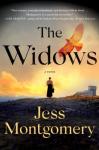 It’s 1924, and Lily Ross learns that her husband — Sheriff Daniel Ross — is killed while transporting a prisoner. She is devastated by the news. But even more
 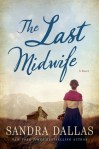 I like books that take place in 1800s, especially if the setting is the Midwest, particularly Colorado. For this reason, I am especially fond of books by Denver author Sandra Dallas, whose books often take place somewhere in Colorado.
 Author Lou Berney wrote one of my favorite reads so far in 2019 —
 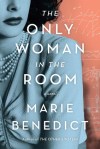 Hedwig Eva Maria Kiesler was born in Austria with the advantage of being extremely beautiful. Her beauty, along with well-to-do parents, made life more comfortable — and safer — in the pre-World War II years when it was much better to keep her Jewish background a secret. Instead, she became a well-known actress with a Catholic background……
 high-level German arms seller with strong ties to Italian dictator Benito Mussolini. She was convinced by her father that marrying such a man would keep the family safe. Though she originally loved him, it didn’t take long to see his jealous and controlling side. She began to quietly save money, and eventually escaped to Paris. The conversations she overheard as his wife, however, made her a valuable asset to the Allies.
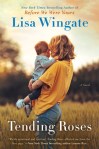 Sometimes I dream about moving to a small town where everybody knows your name and you can walk to anywhere you need to go and the stress level is virtually nonexistent. But then I remember that there wouldn’t be a Whole Foods three-quarters of a mile from my house and I would be hard pressed to find an Asian market or a symphony hall. So I am satisfy my urge by reading about such a community.
 Nana's Whimsies