
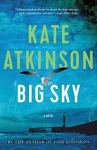
 Way back in 2007, I first met Jackson Brodie in Case Histories, by Kate Atkinson. Formerly a police officer, Jackson was a private detective living in Edinburgh, trying to make a living working with insurance companies and helping people find missing animals. Brodie is a complex man who hasn’t had an easy life. He is divorced and struggles with a troubled past life.
Over the next few years, the author offered a three more Jackson Brodie novels, all of which I enjoyed very much. And then the books stopped coming. I missed the somewhat introspective and morose detective.
Finally, over 10 years later, Atkinson offered a new Jackson Brodie novel, Big Sky. It was worth the wait. Lots has changed for Brodie, but lots has stayed the same.
The detective has retired and moved to a small village near the sea. He spends most of his time with his teenaged son and a very old lab. He is separated from Julia, whom he met and with whom he fell in love in the first novel. They are still friendly, however. She is the mother of the teenager Nathan. Brodie was hired for a boring case involving a cheating spouse. From this seemingly boring case, he becomes involved in a sex trafficking scheme. Like her other books, Brodie meets people along the way who somehow end up being involved in the case, tying everything together.
The wait for an update on Jackson Brodie was worth it. The books offer some dark comedy and some low-key drama, but mostly some interesting perspectives on people and life from Brodie’s perspective.
The ending seemed a bit rushed and confusing. The stories were all wrapped up, but somewhat haphazardly. Still, it was a great read, and a pleasant reconnection with one of my favorite detectives.
By the way, Case Histories became a PBS series, and a very good one. If you can find it, watch it.

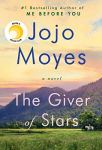 Jojo Moyes has written a good number of books. A couple have been made into movies, I believe. I, however, have read nary a one nor seen any movie made inspired by the author. Maybe I live on a desert island without any kind of media.
 1.
1.  2.
2. 3.
3. 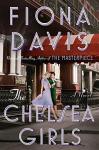 All of the author’s books to date have involved well-known places in New York City that add to her stories. The Chelsea girls takes place in the 1950s during the McCarthy period. The characters, who live in the historic Chelsea Hoel, represent several sides of the issue, and I not only found the book highly entertaining, but I learned a lot from reading it. Win-win.
 I loved this book. It might have been my favorite of 2019. Evvie is literally packing up her car to leave her abusive husband when she learns that he has had a massive heart attack which eventually kills him. Evvie feels so guilty and distraught that she can scarcely get on with her life. She meets a professional baseball pitcher who has suddenly and inexplicably tanked. The two fall in love, and save one another.
 Caren Gray grew up on Belle Vie, the Louisiana plantation where her mother worked as a cook and her great great great grandfather was a slave. The home has been in the Clancy family since the days when they owned slaves. Now she lives there with her young daughter, a single mother who manages the antebellum home which is now an historic venue.
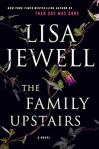 It isn’t often that I can say that I simply can’t put a book down. I read The Family Upstairs, by Lisa Jewell, in bed until I couldn’t keep my eyes open. I read the next day as a Lyft driver took me downtown. And I read on my way home as well. I had to know — HAD TO KNOW — what happens to this oh-so-complicated-and-disturbed family.
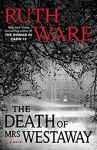 Author Ruth Ware specializes in thriller novels with twists and turns, generally with protagonists who are troubled and often with questionable pasts. I will admit to always looking forward to her next novel, and I will also admit to almost always wondering why I was so eager to read the book when it often leaves me troubled or dissatisfied by either the characters or the ending, or both.
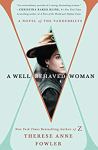 One of the things I always have to remind myself when I read historical novels is that, given that they are novels, the perspective depends on the whims of the author. I’ve read books — both novels and nonfiction — in which New York City socialite
 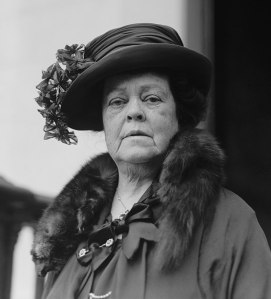 the Civil War. They were destitute. In this novel, Alva used her beauty and brains to win over C.J. Vanderbilt, who made no bones about the fact that he was marrying her because he felt she could use those same attributes to help his family be accepted by the New York City old money families.
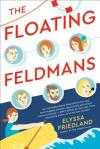 I admit to not hesitating to pick out a book because of the title or the cover. So The Floating Feldmans by Elyssa Fiedland caught my attention on both accounts. I mean, really? The Floating Feldmans? Who couldn’t want to read a book with that title?
 According to a footnote from Jim Fergus, the author of One Thousand White Women, during the presidential term of Ulysses S. Grant, consideration of a program by which white women would volunteer to wed members of Indian tribes as a way of assimilating the Indian people into white culture was actually considered. Considered and, not surprisingly, dismissed. One Thousand White Women is the story of what might have happened had the program actually taken place.
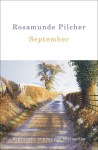 Once in a while, I’m in the mood for a tome. A real multigenerational novel that has surprises and family drama and things that work out in the end. And, it takes many luxurious reading hours to get to the end. I am especially fond of an epic novel if the writing is good.
 Nana's Whimsies