Friday Book Whimsy: Arrowood

searchI read and loved Laura McHugh’s debut novel The Weight of Blood, a creepy story that took place in the Ozark region of Missouri. So I was excited to read her newest novel Arrowood: A Novel, and I wasn’t disappointed. It was a page-turner, indeed.

The story is set in an old mansion on the banks of the Mississippi River in Iowa that was home to the Arrowood family for generations. So how do you get any better than a mystery set in a creepy old house?

Arden Arrowood was a young girl when her toddler twin sisters disappeared from the mansion on her watch, never again to be seen or heard.  Now, 20 years later, she has inherited the mansion upon the death of her estranged father. At loose ends in her life, Arden is happy to return to the mansion, which she feels was the only place where she really felt at home in her life.

But the house brings back the memories of that day, and she feels compelled to try to solve the mystery of what happened those many years ago. Where did the pretty twin girls go?

I mentioned in the first paragraph that The Weight of Blood took place in the Ozarks. The reason that is even important is because the author is masterful at making the setting part of the story. The town where the mansion is located is an actual town in the southeast tip of Iowa, barely within the state boundaries. I presume her depiction is realistic. It is easy to envision the line of old mansions lining the riverbed as the author so ably describes. That alone makes the story worthwhile.

But the plot is what the reader really sinks his or her teeth into. The story challenges the reader to think about what we really remember in our lives. It’s like the childhood game where one person whispers something into someone’s ear and by the end of the line of children, the story is completely different.

I loved this book and the characters. The ending, while somewhat surprising, had a realistic ring to it when the reader thinks back to the tips we read along the way.

Great, if somewhat spooky, book.

Here is link to the book.

unnamed

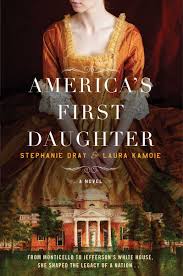
Friday Book Whimsy: America’s First Daughter

imgresWhen I was a young girl, we had a set of World Book encyclopedias. One section of the encyclopedias included information about all of the presidents up to, and including, John F. Kennedy. Subsequent presidents were included in the annual updates we also received as part of our encyclopedia subscription. That section was one of two that I read so often that the book would fall open to the spots; the other was the section on AKC dogs.

I practically memorized everything of at least a personal nature about each president, and more importantly to this review, each first lady. So I was well aware that the wife of our third – and arguably most interesting – president had died long before Thomas Jefferson was elected to office. The role of first lady, therefore, went to his eldest daughter, Martha, known by those who loved her as Patsy.

America’s First Daughter, by Stephanie Dray and Laura Kamoie, is a novel based on the life of Thomas Jefferson and, primarily, his daughter Patsy.

The story begins during the Revolutionary War when, according to the novel, the Jeffersons were forced to leave their home in Virginia and hide for months in a cabin in the deep woods  Jefferson owned. The stress caused by the war did nothing to help the health of Jefferson’s beloved wife Martha, who died shortly after childbirth. However, prior to dying, she made her eldest daughter Patsy promise to always take care of her father, and made her husband promise to never remarry.

Well, he didn’t, though the story of his long-term relationship with his slave Sally Hemings is well documented, and a major part of this book.

The story is told through the eyes of Patsy, and seems to be well-researched and true to the facts. It is well-known that Jefferson – along with many of our early forefathers – was a slave owner, and that fact – and its inconsistency with the whole all men are created equal belief as laid forth in our Bill of Rights – drives much of the story.

It is a fairly lengthy book, and much of it moved very slowly. I can’t highly recommend it except to those thoroughly interested in U.S. history in general, and the history of our third president in particular. Still, I love period literature, and it was interesting to read about the customs and the relationships during the days following the Revolutionary War.

The book, however, reminded me just what an amazing job our forefathers did in planning our government. Thank goodness.

Here is link to the book.

unnamed

Friday Book Whimsy: Temple Secrets

searchIn the way that I become aware of books to read (Amazon recommendations, daily deals offered by Book Bubs and Goodreads, regular emails from a variety of publishers), Temple Secrets by Susan Gabriel was somehow brought to my attention. My interest was captured because of my love affair with Savannah, GA, a city I have only once visited but that is the location of many books I choose to read. Think Midnight in the Garden of Good and Evil.

Only don’t think Midnight when it comes to this book. I wanted to like it a lot more than I did. The premise gave me great hope.

In this novel, the Temple family has been an influential part of Savannah’s history for generations. One of the reasons they keep their stature and influence is because going back as far as the Civil War, they have been keeping a written history of the indiscretions of the most well-known people of the city. Knowledge is power, as they say.

The book has been safely kept in a safe deposit box until suddenly, one-by-one, the secrets are being printed in the daily newspaper. No one knows who is responsible, because it certainly isn’t matriarch Iris Temple, the keeper of the book. Nor is it her half-sister Queenie, the daughter of one of Iris’ mother’s black housekeepers who has the same father as Iris. Queenie currently lives with Iris and cares for her. Nevertheless, Queenie, along with many others, becomes a suspect because it seems Miss Iris is an irascible, nasty woman with many enemies.

When Iris suddenly dies from a stroke, likely related to her concern over the release of the secrets, her estranged daughter Rose comes home from her ranch in Wyoming to bury her mother. She didn’t expect, however, to begin to see the family unravel as more and more secrets are revealed, some of which deeply affect those she loves.

Gabriel’s characters are interesting, and I rather enjoyed the descriptions of voodoo and Gullah magic. It just seemed that some of the situations were unbelievable and the characters, though interesting, didn’t seem realistic.

I would read another book by Gabriel as she writes primarily about the south which is my interest range. Still, it wasn’t the best book I’ve read about either Gullah magic or racial inequities.

Here is link to the book.

unnamed

Friday Book Whimsy: In a Dark, Dark Wood

searchYou’ve got your cabin in the woods, a gathering of friends, loss of cell service, thunder storms, and the inevitable murder, creating quite an unnerving tale of jealousy and insecurity.

What I found particularly disturbing in Ruth Ware’s creepy In a Dark, Dark Wood was the cabin itself, which for me provided the utmost in scariness. Smack dab in the middle of a deserted wooded area sits a house made entirely of glass. The trees provide the only cover, but also the spookiness. There is no privacy and no protection.

Nora is a 26-year-old writer who is invited to a friend’s bachelorette party that is being held in the glass house in the dark, dark woods. Though she has literally not spoken to her friend in over a decade, she agrees to attend. I admit I found that premise to be suspect. Why is she invited, and why on earth would she accept?

Upon arriving at the glass house, Nora learns that the man to whom her friend is engaged is none other than her old boyfriend, someone who broke her heart years before and for whom she has pined ever since.

The gathering includes a decidedly unsettling group of friends, particularly the woman who has put the weekend together. She seemed to come straight from a Stephen King novel.

Somewhere in the middle of the book (yes, it takes that long), the groom-to-be is murdered right there in the house. Why was he there and guess who all clues point to? Yes, the murderer can only be Nora herself.

Except we know it’s not her. But the reader really doesn’t know who the murderer is until the very end because the book has a multitude of red herrings.

I’m sounding cynical, but I actually liked the book a lot. It was spooky enough, but not enough to keep a reader awake at night. The setting and the author’s descriptions provide a sinister element that is suitably spooky.

My main complaint is the lack of a realistic premise. I can’t see any reason why Nora agreed to attend, nor does Nora’s fixation with the groom, with whom she had a brief high school relationship, seem convincing.

Still, I recommend the book. I am looking forward to reading Ware’s newest book The Woman in Cabin 10. It is reported to be the next The Girl on the Train. That’s a shock, isn’t it?

Here is link to the book.

unnamed

Friday Book Whimsy: No Angel

searchI love epic novels. I especially love epic novels when they are part of a series. In the case of No Angel, by Penny Vincenzi, the story is the first of a multigenerational trilogy. Seriously, I couldn’t ask for anything more. No Angel is the strongly readable beginning of the story of the Lytton family, focusing on its matriarch Lady Celia Beckenham Lytton.

Lady Celia is strong-willed and knows how to get her way. Her stubborn spirit is demonstrated early when she purposely gets pregnant so as to marry Oliver Lytton, the son of a middle-class publishing family, and not her wealthy parents’ first choice in husbands in the early years of the 20th century. Yet, though she loves her son Giles, Celia is strongly drawn to her husband’s world of publishing, where, through intelligence and strength of spirit, she helps guide the business to enormous success.

The Lyttons are happily married and things are going well until Oliver leaves to serve in World War I, and comes back a shell of himself. His distance results in enormous changes in the lives of the Lyttons and creates an interesting story line.

Vincenzi, a British author with whom I was totally unfamiliar, has the skills to create interesting characters and highly readable plot lines. As an example, despite Celia’s clearly apparent flaws, in the hands of the author, she is eminently likable and sympathetic. The same can be true of all of her characters, at least in this first book in the series.

I also think that Vincenzi does a wonderful job of painting a clear picture of London and New York City in the years just before, during, and after World War I. In particular, in the author’s able hands, readers can easily see just how difficult it was for not only the men who fought in the war, but for the women who had taken a strong role in the work force during those years and are suddenly forced to step back once again upon the return of the male workers. At the same time, their husbands, brothers, fathers, and other loved ones were returning broken men.

I loved this book so much that despite its length, I read it in a couple of days. What’s more, I immediately purchased the second in the series (Something Dangerous) because I can’t wait to see just how the generation following Celia and Oliver handle the problems that begin mounting as the world approaches another major war.

No Angel is a very good book, and I highly recommend it to lovers of epic fiction.

Here is link to the book.

unnamed

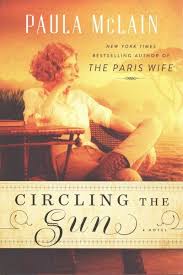
Friday Book Whimsy: Circling the Sun

imgresI loved author Paula McLain’s The Paris Wife, and so it was with great glee that I dug into Circling the Sun. While it took a while to capture my interest, once it did, I couldn’t put it down.

I had never watched the movie Out of Africa, which is the story of Karen von Blixen-Finecke (portrayed by Meryl Streep in her early years) , the time she spent living in Kenya, and her relationship with Denys Finch Hatton, hunkily played by a youthful Robert Redford. In that movie, there is a brief plot element dealing with Finch Hatton’s unfaithfulness to Blixen with a young woman, called Felicity in the movie.

The novel Circling the Sun is the story of that young woman, who in real life was Beryl Markham, a fascinating woman in and of herself.

Markham moves with her family from England to Kenya, where her father purchases a horse farm. It isn’t long before her mother and her brother bail, moving back to London and leaving Beryl with her much-loved father.

Markham grows up wild and independent, strong and willful, and spends the rest of her life living that way. In this novel, Markham’s relationship with Denys Finch Hatton is much more prominent and impactful on her life. Since it’s a novel, I’m not sure where the truth lies.

Circling the Sun, nevertheless, is an engaging novel about a woman who was way ahead of her time (just before, during, and after WWI. Her mother’s desertion had a deep impact on her life and her ability to trust people who love her.

McLain opens the novel with Markham’s historic solo flight across the Atlantic Ocean from east to west, she being the first woman to make that flight. At the end of the first chapter, Markham is spiraling down towards an apparent crash. The rest of the novel leads the reader toward that moment.

Quite frankly, if all I knew about Markham was what I read on Wikipedia, I wouldn’t like her at all. McLain’s portrayal is much more sympathetic. I wonder what I would think if I had actually known her.

I highly recommend this book.

Here is link to the book.

unnamed

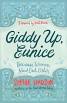
Friday Book Whimsy: Giddy Up, Eunice: Because Women Need Each Other

searchAuthor Sophie Hudson is a popular blogger who has two previous books under her belt. A Little Salty to Cut the Sweet and Home is Where My People Are both consist of a series of humorous vignettes or essays, and I found them both highly enjoyable. Hudson is immensely funny.

Giddy Up, Eunice is also a series of essays, but less family stories and more sermons. And I absolutely don’t mean that in a negative way. Hudson, who has talked about her mother, her mother-in-law, and others who provided love and guidance in her life, focuses this time on the importance of relationships between people of all ages, and the role these have in shaping our lives, particularly our spiritual lives.

Hudson does this in a way that is unfailingly funny and inarguably southern. She uses some of the more well-known women in the bible to illustrate her points. What did Mary do when she found out she was going to give birth to the long-awaited savior? She immediately went to visit her much-older cousin Elizabeth, who had her own role to play in Jesus’ life. They provided support to one another.

Likewise, the story of Naomi and Ruth illustrates the importance of the love of family. Naomi and Ruth pretty much saved one another, much as the author says we can help save our friends and family if we pay attention to their needs.

Giddy Up, Eunice is an equally wonderful book to give a friend who is firm in her faith, or a woman who is struggling with her relationship with God. I can guarantee it will make you laugh out loud, and make you think about your relationships with others.

Here is link to the book.

unnamed

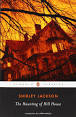
Friday Book Whimsy: The Haunting of Hill House

searchWhen I was a little girl, my mother would occasionally let me stay up on Saturday night and watch the weekly scary movie. One such Saturday, I saw the movie The House on Haunted Hill for the first time. Seriously, can anyone be scarier than Vincent Price? Wua hahahaha.

I have watched this movie a couple of times as an adult, and while the special effects are considerably less than special in comparison to movies made now, it is just a scary movie.

Because I liked The House on Haunted Hill, when the book The Haunting of Hill House came to my attention (Amazon? Goodreads? Pinterest?), I looked into it. While the story is not exactly the same, the movie clearly took its lead from Shirley Jackson’s creepy story.

Dr. Montague studies the phenomenon of ghosts. As part of his studies, he brings together a group of three – his assistant Theodora; Luke, who will eventually inherit the house; and Eleanor, who has had experiences with ghosts in the past. His idea is to bring the ghosts out into the open so that he can study them.

The book is creepy, there is no question about it. Written in 1959, it reminded me of Alfred Hitchcock’s famous Psycho, considered by many to be one of the scariest movies of all time. There is no blood and gore, no one gets slashed, there are not even any actual appearances by ghosts. There are only noises in the old mansion, and cold spots and drafts that indicate the ghosts’ presence. More than just a ghost story, this is the story of a vulnerable woman going mad.

Despite the lack of blood and gore, the book KEPT ME AWAKE AT NIGHT, ladies and gentlemen. It was creepy beyond belief.

I LOVED it.

The book was actually made into a movie, though not The House on Haunted Hill. Two movies, in fact. The original was released in 1963 and starred Julie Christie as Eleanor. It is apparently much better than the movie re-released in 1999.

Having read the book, I think I will pass on the movie, thank you very much. I can only lose so much sleep.

Here is link to the book.

unnamed

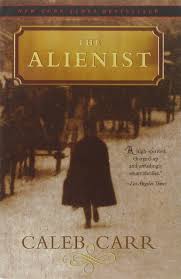
Friday Book Whimsy: The Alienist

imgresIn this day and age of television’s Dr. Phil and Dr. Bob Hartley (Bob Newhart), it’s hard to imagine that at one time psychologists were considered to be nothing but quacks. The entire science of psychology was considered suspect. In fact, I don’t believe psychology was considered a serious science until the likes of Carl Jung or Sigmund Freud hit the scene.

The belief that the so-called science of psychology could not be taken seriously is the basis for author Caleb Carr’s The Alienist. Published in 2006, it is the first in a two-part series featuring New York City psychologist Dr. Laszlo Kreizler. Psychologists were referred to at that time as alienists.

In Carr’s mystery novel, Dr. Laszlo and his colleagues try to figure out who is brutally murdering young transgender prostitutes, slicing them into small pieces. Normally a psychologist wouldn’t be asked to help solve such a case, but in 1896, when this novel takes place, Laszlo is a college buddy of then-Police-Commissioner Teddy Roosevelt. Still, Commissioner Roosevelt asks Dr. Laszlo and his friends to keep a low profile until the case is solved.

Carr’s use of Roosevelt in his novel is clever and I believe adds to the uniqueness of this mystery story. Laszlo uses psychological methods to try and figure out who could be committing these horrendous murders, and why.

In addition to the smattering of real historical characters among the fictional characters, I also liked that one of the members of this unique group of detectives is a smart and strong-willed woman. Though she is Roosevelt’s secretary, he recognizes her abilities and appoints her to the group.

Carr’s novel presents a vivid picture of New York City at the turn of the century. His writing is so realistic that I can feel the rain and smell the odors of the areas in which the murders take place. I enjoy being able to get a strong sense of place from an author’s words.

The book is long and reads slow. There were times when I felt as though many, many words could have been left out. Many, many scenes, in fact. Nevertheless, the ending was tricky and the characters were interesting and likable.

Good read for Victorian-era mystery lovers.

Here is a link to the book.

unnamed


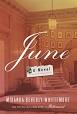
Friday Book Whimsy: June: A Novel

searchTwenty-something Cassie Danvers is mourning the death of her grandmother June Danvers – the woman who reared her after her parents died – at the crumbling mansion in a small town in Ohio that she inherited upon her death. Full of guilt because of the unsatisfactory last conversation between the two of them, she can barely get out of bed.

She does get out of bed, however, to answer the door to a man who delivers the shocking news that she has inherited the whole estate of famous actor Jack Montgomery, someone she only knows from magazines, newspapers, and old movies. She is understandably confused and shocked to hear this news.

She is further shocked when Montgomery’s also-famous daughter Tate soon shows up, along with her entourage, to claim the inheritance as her own. Cassie and her sister dig deeper and learn many secrets about Cassie’s grandmother June and Tate’s famous father.

Author Miranda Beverly-Whittemore wrote another novel that I enjoyed a great deal – Bittersweet. Her writing sets a scene clearly and her characters are realistic and interesting. In June: A Novel, the author tells the story via Cassie’s current detective work and flashbacks – told primarily from the point of view of June’s friend Lindie – about something that happened in 1955. What Cassie learns gives her a whole new picture of her grandmother June.

Via the flashbacks, we learn that Jack Montgomery starred in a movie that was filmed in the small town in which June lived. A series of events ultimately results in Cassie’s inherited windfall. But who could ever have believed such a story given June’s down-to-earth and conservative nature?

Beverly-Whittemore’s novel Bittersweet took me a long time to get into, but once I did, I couldn’t put it down. The exact thing happened with June: A Novel. A very slow start. I even considered abandoning the book. I am so glad I stuck it out. June is a wonderful tale with a highly satisfying and surprising ending.

It would be a good book club read.

Here is a link to the book.

unnamed