
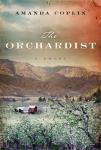
 It’s rare that I’m quite as conflicted about a book as I am about The Orchardist, a debut novel by Amanda Coplin. Though I love books that take place in the American West of the 1800s, I also generally dislike sad books. Personally, there is so much sadness in the world that I would rather read a book that is uplifting.
In its way, however, The Orchardist is uplifting. It features some of the kindest fictional people I have ever come across. They are contrasted, however, by characters that are sheer and truly evil.
William Talmadge (known only by Talmadge throughout the book) cares for apple and apricot trees in Washington in the late 1800s. One day, two young adolescents, both clearly pregnant despite their young age, wander onto his property, desperately hungry. Still, they are like wild dogs, fearful of every move he makes. He provides food by setting it outside where they can eat without his presence.
It becomes clear that they have been living in an unbelievably horrific situation, from which they have escaped. Still, taking these girls under his wings leads to circumstances that he could never have imagined.
So, my conflict comes from this being a sad book written by a new author whose prose is utterly beautiful. The book is unique and while sad, also provided evidence that the definition of family doesn’t have to come from blood.
Though disturbing, The Orchardist challenged all of my senses, and overall I found it to be a very satisfying read.

 Someone, by Alice McDermott, is a novel I probably wouldn’t have read if it hadn’t been for a book club. Though the author is quite prolific, I haven’t read a single one of her novels. The cover is unremarkable, so that wouldn’t have grabbed my attention. That’s one of the good things about a book club. You read things you might otherwise not even consider. I’m very glad to have read Someone.
 Former New York Times reporter and Pulitzer Prize winner Rick Braggs grew up in the Deep South. His family members weren’t aristocratic Charlestonians. He didn’t cut his teeth in fancy restaurants in Atlanta, GA. He grew up poor, with oil under his fingernails from fixing his own broken-down cars. His father was a ne’er do well who had almost no role in Braggs’ life except to give him his last name. But he was reared by a loving mother and her poor but kind family, who knew how to love and how to cook, perhaps in that order.
 It’s 1924, and Lily Ross learns that her husband — Sheriff Daniel Ross — is killed while transporting a prisoner. She is devastated by the news. But even more
  I like books that take place in 1800s, especially if the setting is the Midwest, particularly Colorado. For this reason, I am especially fond of books by Denver author Sandra Dallas, whose books often take place somewhere in Colorado.
 Author Lou Berney wrote one of my favorite reads so far in 2019 —
 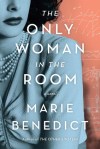 Hedwig Eva Maria Kiesler was born in Austria with the advantage of being extremely beautiful. Her beauty, along with well-to-do parents, made life more comfortable — and safer — in the pre-World War II years when it was much better to keep her Jewish background a secret. Instead, she became a well-known actress with a Catholic background……
 high-level German arms seller with strong ties to Italian dictator Benito Mussolini. She was convinced by her father that marrying such a man would keep the family safe. Though she originally loved him, it didn’t take long to see his jealous and controlling side. She began to quietly save money, and eventually escaped to Paris. The conversations she overheard as his wife, however, made her a valuable asset to the Allies.
 Sometimes I dream about moving to a small town where everybody knows your name and you can walk to anywhere you need to go and the stress level is virtually nonexistent. But then I remember that there wouldn’t be a Whole Foods three-quarters of a mile from my house and I would be hard pressed to find an Asian market or a symphony hall. So I am satisfy my urge by reading about such a community.
 Author Anissa Gray’s debut novel, The Care and Feeding of Ravenously Hungry Girls, reminds the reader that there is a story behind every person and his and/or her story unavoidably shapes each person’s life.
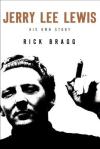 While mostly disliking autobiographies and (even more) MEMOIRS, I always have enjoyed biographies. Still, it is unusual that I would have picked up a biography about Jerry Lee Lewis, a musician who was just enough before my time to merely peak my interest. I dance to Great Balls of Fire (or used to) at weddings, and that’s about it.
 Nana's Whimsies