
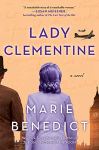
 We all know about British Prime Minister Winston Churchill. He, along with FDR and other world leaders, played a pivotal role in ending World War II. We also know he drank a lot, smoked I don’t know how many cigars every day, and was a difficult man to work for. Marriage to him would not have been easy.
With this in mind, I dove into Lady Clementine, a novel by Marie Benedict, who has written a number of other historical novels, including The Only Woman in the Room (which I reviewed here.) I admit to enjoying learning history from reliable novels.
Clementine married the politically determined Winston Churchill in 1909, and became a force behind the man. She helped write his speeches, she advised him on strategy as he made his way towards being one of the most powerful men in the world. She was loyal and strong-willed and incredibly smart. And she wasn’t afraid of telling her moody and ambitious husband when she thought he was taking the wrong path.
While we learn a lot about Mr. Churchill from Benedict’s novel, we learn even more about Lady Clementine, the woman behind the great man. It is part history lesson, part romance story, part war story (she was with him through two world wars). What it really is, however, is a look at how difficult it was to be a woman in the early part of the 20th century. If the story is to be believed, Churchill considered his beloved wife to be a trusted advisory and companion.
According to the novel, Clementine Churchill and Eleanor Roosevelt were never very close friends, but had a grudging admiration and respect for one another. I bet that’s true.
I’m not sure I was overly fond of Clementine Churchill, at least as she was presented in this novel. But I admire her strength and tenacity during a difficult time in our history.
I enjoyed the book very much.

 World War II is raging, and England is in chaos as the Germans bomb London and its surroundings almost nightly in what is called the Blitz. It’s hard to imagine living in a world where you don’t know if you’re going to make it through the night.
 I first met Sarah Agnes Prine — the main character in many of author Nancy E. Turner’s books — in These is My Words. In that particular book, Sarah tells her story about life in the Arizona territory in the late 1800s through a diary she kept of her daily life. I found Turner’s writing to be lovely, and her protagonist Sarah to be, well, fetching.
 Beatriz Williams: Oh, how you mess with your readers’ minds. Or at least my mind, because you had me so confused I didn’t know which way was up.
 From the time I was a young girl, I loved reading advice columns. I savored Dear Abby and Dear Ann Landers as though my life depended on it. I couldn’t get enough. I’m not sure why people like me think a woman I don’t even know would be of any help to someone like me, but they were great successes. Dear Mrs. Bird, by A.J. Pearce, featured a World War II advice columnist.
 I’m not particularly a fan of beer. Oh, if I’m at a Mexican restaurant and the wine list looks suspect, I might make do with a Corona. For the most part, however, I stick to wine, gin, or whiskey.
 Ahhh. Hawaii. Tropical paradise. The last thing you would expect is MURDER.
 Way back in 2007, I first met Jackson Brodie in Case Histories, by Kate Atkinson. Formerly a police officer, Jackson was a private detective living in Edinburgh, trying to make a living working with insurance companies and helping people find missing animals. Brodie is a complex man who hasn’t had an easy life. He is divorced and struggles with a troubled past life.
 How can you not love a mystery story in which the protagonist is a librarian? I mean, who else would be better at locating a missing, well, anything?
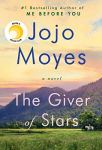 Jojo Moyes has written a good number of books. A couple have been made into movies, I believe. I, however, have read nary a one nor seen any movie made inspired by the author. Maybe I live on a desert island without any kind of media.
 Nana's Whimsies