Friday Book Whimsy: The Residence: Inside the Private World of the White House

imagesI love to read and hear about how the other half live. I think this is why I am so intrigued with the British Monarchy and why Downton Abbey so thoroughly captured my interest. So when I came across the opportunity to read about life inside the White House – not the politics but the real-life stories about the people who have lived there – well, my interest was immediately piqued.

The Residence: Inside the Private World of the White House, penned by Kate Brower Andersen, gives readers a glimpse of what life is like within the so-called people’s house. The stories come from the mouths of those who know the house the best – the staff, many of whom have worked there for an extremely long time.

Brower covered the White House for Bloomberg News, so she had a bit of a leg up when it came to access to White House personnel. But she clearly did a lot of research because the people with whom she spoke went as far back as the Kennedy years.

Historically, White House staff are very closed-mouthed about what goes on inside those four walls (well, it is actually about 55,000 square feet in size, which includes 132 rooms, 3 kitchens, and 35 bathrooms). And there are certainly no state secrets spilled in this book. The author says time and time again that the people who work at the White House are loyal and reluctant to talk about the families who reside there.

Still, the reader gets some glimpses into more of a real-life image of these people who appear to us to be bigger than life. I can’t say that I learned anything astounding, but I did get a picture of the atmosphere in the White House during each of the individual administrations.

Clearly, the winners were George H.W. and Barbara Bush, and the loser, well, I won’t give it up.

If you like Downton Abbey, you might enjoy reading about our very own Downton Abbey at 1600 Pennsylvania in Washington, D.C.

Here is a link to the book.

unnamed

Friday Book Whimsy: Redemption Road

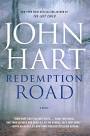
searchAuthor John Hart is a contemporary southern novelist along the lines of Pat Conroy or Tom Franklin, but I think his writing is even better. He hasn’t written a novel in five years, so I was eager to read Redemption Road. I was certainly not disappointed. The novel, though dark, was riveting.

Hart’s story features a lot of people who are seeking redemption. An ex- cop is getting out of prison after 15 years of serving time for a murder that he has always claimed he didn’t commit. A young boy feels it is his duty to get even with the ex-cop who he believes killed his mom. Seemingly unrelated, a young woman is kidnapped and raped by several men who are about as evil as any author can dream up.

The tie between all of these characters is Detective Elizabeth Black. She always believed Adrian Wall was innocent of the murder. She took the boy under her wing after his mother’s murder and his father’s subsequent tumble into alcoholism and drug abuse. She also has become the confidant and friend of the young rape victim.

When the murders resume the very day following Adrian Wall’s release from prison, it looks as though he will once again be accused of the crimes. But Elizabeth is certain that he is innocent and sets out to prove it.

Hart’s writing is absolutely compelling. The novel is about as dark as any I’ve ever read, but the writing kept me turning the pages.

While not a typical whodunit, the question about who is the murderer if it isn’t Adrian Wall remains unanswered until the very end. And a series of seemingly unrelated events all come together in a clever and believable manner.

Redemption Road was one of those novels that I had to be very careful about reading before bed, but it was also one of those novels that kept me reading, chapter after chapter.

I hope the author doesn’t wait as long for his next novel.

Here is a link to the book.

unnamed

Friday Book Whimsy: Britt-Marie Was Here

searchBritt-Marie Was Here, by Swedish author Fredrik Backman, just kept showing up. It would be one of the books that would be suggested, ala if you enjoyed this book, you will enjoy Britt-Marie Was Here on a lot of the book sites I regularly peruse. The libraries I use recommended the book. Blogs that I follow would suggest it as a book worth reading.

All right, all right, I will read it, I finally said, though the synopsis didn’t exactly grab me.

Britt-Marie is a 60-something woman who leaves her controlling husband after she learns he is having an affair. She is compulsive and entirely set in her ways. She has been since she was a little girl and her much-adored sister is killed in a car accident. It should have been you, is the message that Britt-Marie gets regularly from her mom, whether or not it is spoken out loud.

So Britt-Marie begins the process of starting a new life. The only job she is able to find is the manager of a recreation center in a very small town. She has spent most of her life taking care of others, and has no idea who Britt-Marie is and why anyone would care.

But she learns that people do care, and begins to put together a new life where people accept her for who she is. And who play soccer. You will have to read the book to find out why soccer is important to the story.

The author has written a couple of other books – the intriguingly titled My Grandmother Asked Me to Tell You She’s Sorry and A Man Called Ove. Much like Britt-Marie Was Here, they didn’t grab my attention. After reading this book, which might end up being one of my favorite novels ever, I will be reading his other books as well.

Britt-Marie Was Here was a breath of fresh air after reading some fairly dark novels lately. I seriously loved every word of this book, and want Britt-Marie to spend some time with me. The ending pleased me a great deal.

I highly recommend this book.

Here is a link to the book.

unnamed

Friday Book Whimsy: Miss Julia Inherits a Mess

imgresAuthor Ann B. Ross has written a total of 18 Miss Julia novels, as well as a short story, and I have read most of them, though not all. Her latest – Miss Julia Inherits a Mess – was as delightful as the others that I have read.

Miss Julia Springer is 70-something year old woman, once married to Lloyd Springer, a not very nice man. In the first novel – Miss Julia Speaks Her Mind – her husband has just died, leaving her a very rich woman. Miss Julia soon learns that Lloyd had a mistress and a child. Rather than the more predictable reaction of anger, Miss Julia takes Hazel Marie and her son, Little Lloyd, into her home. Thus begins a series of adventures starring the unpredictable and loveable Miss Julia and her friends and neighbors in the small North Carolina town in which she lives.

The Miss Julia series is not Pulitzer-Prize winning literature. The books are, however, a refreshing break from the serious and dark novels I often find myself reading. There is always a bit of a mystery, or at least some sort of obstacle that must be overcome. As with many of these small Southern town novels, there are a series of quirky and likable characters that come in and out of the stories.

In Miss Julia Inherits a Mess, the septuagenarian learns that an elderly acquaintance has died, and, of all things, has named her the executrix of her estate. Miss Julia’s lawyer-husband Sam is away on a fishing trip and can be of little help. Predictably, Miss Julia runs into problems, including a mysterious alleged nephew who is claiming her estate. The problem is that it appears that Mattie Freeman’s estate amounts to almost nothing. Or does it?

These books aren’t really about the plot, of course, but about the relationships and the people Miss Julia impacts daily. The books are fun and light and can almost be read in one sitting.

Spend an afternoon with Miss Julia and her friends, and you’ll end up with a smile on your face.

Here is a link to the book.

unnamed

Friday Book Whimsy: Along the Infinite Sea

imgresWhen last I saw Pepper Schuyler in Tiny Little Thing, she was pregnant with her boss’ child (modeled clearly after one of the Kennedys) and had found and completely rehabbed a vintage Mercedes Benz that she discovered hidden in her aunt’s barn. At the end of that book, Pepper had taken off in the car to places unknown.

Pepper Schuyler is the youngest of the three Schuyler sisters about whom author Beatriz Williams writes many of her books. I met Tiny and Pepper in Tiny Little Thing, and Vivian in The Secret Life of Violet Grant. The fictitious Schuyler family is old East Coast money which probably wasn’t earned legally and which provides for a grand way of life in the 1960s, when the stories are told.

Early in Along the Infinite Sea, Pepper sells her car for a whopping (especially in 1966 dollars) $300,000 to Annabelle Dummerich, a beautiful and glamourous newly-widowed 50-something woman who has a mysterious past. Annabelle takes pregnant Pepper under her wing and brings her home to her beautiful house by the ocean in Palm Beach.

From then on, the author uses her favorite style – back and forth in time and place – from Pepper’s story in 1966 East Coast United States to 1935 Europe – Germany and France – as the world begins to prepare for war and where Annabelle begins her mysterious journey.

Annabelle’s story involves a love affair with a German Jew who she later learns is a resistance fighter. She falls in love, and he with her, but she learns a secret about her lover which leads to her marrying Johann von Kleist, a Nazi officer. She is pregnant with her Jewish lover’s baby, and he knows this and agrees to raise the child as his own.

The story touches on the persecution of Jews, before and during WWII, the role women played in history, and the power that wealth can bring. Williams’ story-telling is amazing. Her back-and-forth writing style, often ending chapters at a critical moment, thereby preventing the reader from putting the book down.

Williams’ novels definitely have a romance element, but while plentiful, the romance doesn’t drive the plot. The story was realistic and compelling.

I believe we have run out of sisters, so I am eager to see how Williams’ tackles other subjects. Along the Infinite Sea  is a book that I can recommend with confidence.

Here is a link to the book.

unnamed

Friday Book Whimsy: My Name is Resolute

imgresI first became acquainted with author Nancy E. Turner from a trilogy she wrote about Sarah Prine, a fictitious Arizona settler, whose stories are based on the author’s real-life great-grandmother. These is My Words, Sarah’s Quilt, and The Star Garden are wonderful books that tell about the settling of the area around Tucson and beyond back in the 1800s through Sarah’s diary.

In the way that sometimes happens when you read as much as I, the author fell off my radar screen until recently, when I learned about the intriguingly titled My Name is Resolute. I won’t kid you; it had a really slow start for me. I drudgingly made my way through nearly 100 pages before the story caught me and didn’t let me go. If you read this book, you will likely ask yourself how on earth it couldn’t capture me from the get-go, and I don’t have a good answer.

The story is filled to the brim with interesting characters and every kind of adventure that you could possibly imagine – Indians, pirates, pioneers, Scottish highlanders, good people, bad people, and soldiers from both sides of the Revolutionary War.

In 1729, 10-year-old Resolute Talbot, her sister Patience and her brother Andrew are kidnapped by pirates from their home in Jamaica. Her parents are British nobility who relocated to that island. Their parents are killed in the attack, and the three begin their life of great hardship and sorrow – being kept as slaves — leading ultimately to adventure and excitement. They eventually land in the New World, first Montreal and eventually Lexington, Massachusetts.

My Name is Resolute is an epic novel full of swashbuckling adventures. Eventually, Resolute settles in Lexington, marries, raises a family, and plays an important role in the years before and during America’s War for Independence.

It’s perhaps somewhat tasteless to describe a novel as full of sadness as this as being fun, but it was, indeed, just that. Resolute is a character that I will long remember, as are the others. Strong-willed and self-sufficient, even as a young girl, the novel allows us to see her grow up to be a strong and independent woman. I loved seeing what the world was like during that period of time.

The author is a marvelous writer, and her words could have been written in the mid- to-late 1700s, they read so true to life.

It is a long book, so settle down for a lengthy adventure.

Here is a link to the book.

unnamed

Friday Book Whimsy: Prayers the Devil Answers

searchSharyn McCrumb has always been one of my favorite authors. Well, actually that’s not entirely accurate. She has a series featuring a forensic anthropologist named Elizabeth MacPherson that never grabbed me, though I read a couple of books in the series. But McCrumb’s ballad series books are pure poetry to my ears.

All of her books take place in the Appalachian Mountains, deep in the hollers of Tennessee. Prayers the Devil Answers is no exception. While not part of her Ballad Series, I was excited because it purportedly had the mystical element I like so much in her ballad books. The ghosts and folklore and old wives tales told from generation to generation. Banjos strumming. You know.

Prayers the Devil Answers has a good, solid, interesting storyline. It is 1934 and in an effort to survive the hard times,  Ellendor and her husband, along with their two small boys, move from the country, where they live with relatives, into town where there are still jobs to be had. Her husband not only becomes employed, but soon is elected sheriff. Unfortunately, he unexpectedly dies of pneumonia, leaving Ellie with no way to care for her sons. Ellie manages to talk the town fathers into letting her finish off her husband’s term, thereby providing her with income.

And while she – and those who hired her – assumed her job would be nothing more than paperwork, a murder takes place in her county. The man is convicted and sentenced to death by hanging. Unfortunately for Ellie, the law requires that it is the sheriff who must do the actual hanging. Is this something that Ellie will be able to handle?

Prayers the Devil Answers is a story of the strength of family, the tenacity of women who must provide, and the sorrow that can creep into your life when you least expect it.

Overall, I liked the book. McCrumb is a phenomenal writer. But there was something about this story that I found odd and frankly off putting. The prologue tells a detailed story about a group of mountain girls who, a few years prior to when this story takes place, conduct what’s called a Dumb Supper. According to Wikipedia, in the mountain culture of Appalachia, Dumb Suppers are secret suppers held at midnight in which the dead may come back and talk to their loved ones. In this story, however, the Dumb Supper is held to determine who among the young girls in attendance will marry. Something unexpected transpires at the Dumb Supper that causes much dismay.

And then the book begins, and for all intents and purposes, the Dumb Supper is forgotten, except for a very brief side note later in the book that has almost nothing really to do with the story. It was like the author just wanted to get this old piece of folklore into the book. It made no sense to me and seemed just odd.

Odd enough, in fact, that it contributes to my not being able to highly recommend this book. Read Sharyn McCrumb, but choose one of the novels with Nora Bonesteel as part of the story. The Hangman’s Beautiful Daughter would be a good place to start.

Here is a link to the book.

unnamed

Friday Book Whimsy: The Secret Life of Violet Grant

9780698153479I’m pretty sure the more high-falutin (and also better) book reviewers out there in the internet universe would not say this, but I will: What draws me to a book is not necessarily just the plot. I’m a sucker for book titles and book covers. Back when I belonged to a particular book club that was made up of busy working women ( many of whom were also mothers), we would literally look at the size of the font of a book we were considering (back when everyone read paper books) as we made our book choice for the next meeting. Little font = too long to read a book. I’ll bet the New York Times book reviewers don’t do this.

But I will admit that I chose The Secret Life of Violet Grant, by Beatriz Williams, at least in part because of the title (which implied an element of mystery) and the cover, which featured a beautiful woman who could have been my mother back in 1914 (except that my mother was not even a gleam in her father’s eye in 1914, but still…..)

But more to the point, the book tells the story of another one of the Schuyler sisters, two of whom I met in Tiny Little Thing, and with whom I fell in love. Or at least like.

But the one I didn’t meet in Tiny Little Thing was Vivian, and this is her story, along with Violet’s.

It is 1964. Vivian, who is fresh out of college and works for Metropolitan Magazine, comes home from work one day to find a notice that she has a box awaiting her at the post office, coming from Switzerland. She goes down to pick it up and meets a young man – a doctor – also there to pick up a package. Her package turns out to be an old suitcase packed with random items that she eventually learns belonged to her Great-Aunt Violet, someone she hadn’t even known existed.

The story is told in two voices and from two periods of time, which seems to be a favorite style of the author. The suitcase – and Vivian’s mother’s family’s reaction to it – intrigues Vivian and she vows to figure out Violet’s history.

Violet’s story takes place in pre-WWI France and Germany. She had moved there several years earlier to follow her dream of being a research physicist, much to the Schuyler family’s horror. In their world, women’s roles were to be mothers and wives. There she meets and marries a fellow scientist who is old enough to be her father and turns out to be not so nice a fellow. Romance, mystery, and social trauma ensue.

Back to the doctor I mentioned who Vivian met in the post office. A lot of Vivian’s story is connected to the doctor, with whom she falls in love – and he with her. But things are not always smooth sailing in the literary world, and ending up with the doctor doesn’t come easily.

The romance part of the story rather got on my nerves I’m afraid. I’m not particularly opposed to romance as part of a story, but oh, for heaven’s sake! Having said that, the author is in my opinion a tremendous story teller and I am able to endure all of the sexual antics (and the sex is in no way graphic, just frequent) so that I can find out what happens. Just as in Tiny Little Thing, the entire mystery isn’t solved until the last page of the book. Really good story telling.

It was fun to read a book about both of these periods of time in which I find myself very interested. I recommend this book highly.

Here is a link to the book.

unnamed

Friday Book Whimsy: The Reluctant Midwife

The midwife we came to love in The Midwife of Hope River, a book I read and reviewed last July, reappears as a secondary character in The Reluctant Midwife, by Patricia Harman. And The Reluctant Midwife takes an interesting twist as one of the secondary characters in The Midwife of Hope River becomes the star of the show in this second in the Hope River series.

Becky Myers, a friend of the primary character in the first book, returns to Hope River several years after she left, this time husbandless and bringing with her the doctor for whom she had worked. Unfortunately, Dr. Blum had suffered his own catastrophe and had subsequently become inexplicably catatonic. He had no one to care for him, and Becky feels responsible.

Times are tough as it is the middle of the Great Depression of the 1930s. Times are even worse in the particularly hard-hit West Virginia mountain region. But Becky has nowhere else to turn. She reaches out to Patience Murphy, who is still performing midwifery and now married with a child. Patience and her husband provide food, housing, and friendship to Becky and Dr. Blum.

As the novel progresses, Becky finds her way back to herself and creates a new life in the West Virginia mountains.

I loved the story of the tough Appalacian people and the author, herself a midwife, provides a great picture of the importance of friends and hope, especially during difficult times.

The novel is quite predictable, and told from a fairly biased point of view when it comes to the progressive agenda of the day. Nevertheless, it is quite readable and the characters are likable. I enjoy reading stories about the grittiness of the people during the difficult times of the Depression. They were so much stronger than we seem to be today.

The Reluctant Midwife is an uplifting story of friendship and love, and a decent – if not fabulous – read, particularly if you are interested in the field of midwifery.

Here is a link to the book.

unnamed

Friday Book Whimsy: The Queen’s Vow: A Novel of Isabella of Castile

searchAs long as I remember that I am reading a NOVEL (and therefore take things with a grain of salt), I think learning history from fiction works best for me. Because of this, when I became familiar with The Queen’s Vow: A Novel of Isabella of Castile, by C.W. Gortner, I was eager to use it as a basis to learn about this renowned queen of Spain. After all, all I really knew was that she was the mother of Henry VIII’s first wife Catherine and the monarch who sent Christopher Columbus on his mission that ultimately changed the world.

Oh, and then there was that whole Spanish Inquisition thingy.

For someone who loves historical fiction as much as I, it is remarkable that I had never heard of Gortner, who, in addition to Queen Isabella, has written novels of real-life characters ranging from Queen Isabella of Spain to Coco Chanel.  To the extent I can tell, this novel was well-researched and stuck fairly close to the queen’s real life.

This isn’t to say, however, that it wasn’t a sympathetic version of Isabella, but as they say, context is everything. And it IS a novel.

No one believed I was destined for greatness.

These are the opening words of the novel, which is written in first-person.  Isabella becomes Queen of Castile in somewhat circuitous fashion, and after much drama involving sex and lies. But not sex and lies from Isabella, who was a loyal soldier of Christ and a supporter of the people of Castile.

Isabella’s story is extraordinary, to say the least. She was an independent woman, committed to ruling Spain and her subjects as she believed God willed. The book is a love story about Isabella and her beloved king Fernando of Aragon. But it is also the story of sheer will, good intentions, and misguided loyalty to God in times that were tumultuous at best.

The author provides context for what ultimately resulted in the Spanish Inquisition. As it is a novel, the actions aren’t approved or disapproved, just presented in an interesting manner. But there is much more to this interesting queen and the impact she had on the entire world, which ended up being much larger than anyone imaged.

The novel is lengthy, and dragged in parts. Overall, however, I enjoyed this novel very much, and recommend it to anyone who likes to become acquainted with history via novels.

Here is a link to the book.

unnamed