Friday Book Whimsy: The Coincidence of Coconut Cake

I love coincidences, I love alliteration. I love coconut cake. I had high hopes for a book with a title that encompassed all three loves.

The Coincidence of Coconut Cake, by Amy E. Reichert, didn’t quite satiate my reading appetite. More like a Hostess Twinkie than a made-from-scratch coconut cake, it was too predictable. Promised by the publisher to be a cross between How to Eat a Cupcake and You’ve Got Mail, it unfortunately didn’t have the wit or romance of either.

Reichert is described as being an author who likes happy endings about characters that you would invite to dinner. The Coincidence of Coconut Cake had the requisite happy ending – and I do like me a happy ending — but I’m not sure I’d particularly like to dine with any of the main characters.

Luella – called Lou – is the owner and chef of a French restaurant that is just barely making it in Milwaukee. A mean-spirited restaurant critic puts the nail in the coffin when he writes a scathing review of the restaurant after dining there on a particularly bad night for Lou, who just caught her fiancé in bed with another woman.

Lou drowns her trouble at a neighborhood bar, where she meets British-born Al, and they strike up a friendship. Al mentions to Lou that he hasn’t found anything good about Milwaukee so far, and she agrees to show him all of the wonderful food traditions in the area. They agree to not talk about their jobs. Eventually a romance blossoms.

It won’t come as a surprise to you to learn that it turns out that Al is the restaurant critic who is responsible for Lou’s restaurants ultimate failure. All the expected angst transpires, and is eventually settled happily.

The premise is cute, but the plot is fairly predictable and the characters are a little too one-dimensional for me. The Coincidence of Coconut Cake isn’t horrible, and the parts where they talk about cooking and food are fun for someone who likes to cook and eat as do I. But don’t dive in expecting a great novel with a lot of interesting twists. It won’t happen. Just enjoy it for what it is, a simple romance novel with a spattering of recipes and cooking.

Here is a link to the book.

Friday Book Whimsy: The Light Between Oceans

The Light Between Oceans, a novel by M.L. Stedman, is the story of love, loss, despair, hope, and redemption. While I wouldn’t call it the saddest book I’ve ever read, it would rank among the most poignant. And it definitely is a story I won’t soon forget.

Tom Sherbourne returns to his home in Australia after surviving the horrors of World War I, filled with guilt. Why did he survive? He takes a job on a tiny and isolated island off the southern coast of Australia where he takes care of the lighthouse. Doing something good for others helps him forget his past. It is a quiet and lonely existence. On one of his trips back to the mainland, he meets – and eventually marries – Isabel, a young woman looking for a change in her life and eager to have a family. Unfortunately, things don’t go as planned. Isabel suffers miscarriage after miscarriage, and finally has a stillbirth after which she is unable to have children. Her sadness is almost beyond bearing.

So it seems like a miracle when a boat drifts up to the isolated island carrying a dead man and a living baby, cold and hungry. They bury the man and nurse the baby back to health. Isabel thinks it’s a miracle and believes they are meant to be parents to that child. She is convinced, and subsequently convinces a reluctant Tom, that the mother is dead and that the child would be placed in an orphanage if the truth was known by the authorities. They stay mum, and raise the child as their own.

When the child – whom they name Lucy – is 2 years old, they return for a visit to the mainland, and what they learn there changes their lives forever. Not only their lives, but the lives of several others. They face a moral dilemma.

The Light Between Oceans was a difficult book to read, because there was no right or wrong answer. It was a classic Solomon’s baby scenario. No bad guys; all good guys. No win.

The author’s writing was beautiful. Her descriptions made me understand exactly what it felt like to be so lonely and isolated, and to have a great need to love and be loved.

As far as I am concerned, the book ended about the only way it could. It was a tear-jerker, and that’s no lie. I can recommend this book with that caveat.

It has been made into a movie starring Michael Fassbender, Alicia Vikander and Rachel Weisz, and it was largely filmed in Australia. I can’t decide whether or not to watch the movie….

Here is a link to the book.

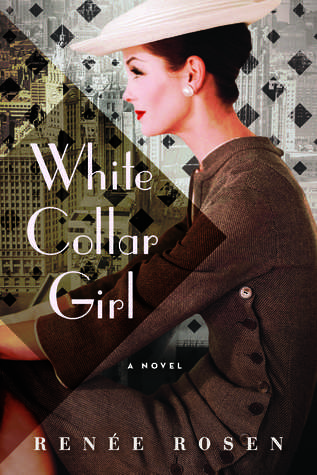
Friday Book Whimsy: White Collar Girl

I graduated from Journalism School in 1977 and immediately got a job as a reporter on a small-town newspaper. Even in 1977, journalism was largely a man’s world. Though my editor was a woman, she was likely editor because her father owned the newspaper. She and I were the only two women in the entire organization.

Given all of this, I was interested in reading White Collar Girl, a novel by Renee Rosen. Rosen is the author of three other books, all of which take place in Chicago, as did White Collar Girl. This novel takes on the world of journalism in the 1950s, when being a woman reporter was nearly unheard of except for the society pages.

The novel’s protagonist, Jordan Walsh, is the child of two reporters-cum-authors, both of whom were quite successful in their own right back in the day. Jordan’s brother had also been a reporter for the Chicago Sun-Times, but died mysteriously in a hit-and-run accident that didn’t seem to be very well-investigated by the Chicago Police Department. The Walsh family has never quite come to grips with his death.

So Jordan is proud and pleased to be offered a job with the Chicago Tribune, thinking this, finally, would bring her family out of their depression. She is ambitious, and while she is hired to work on the so-called women’s pages, she is optimistic that she will be able to become an ace general news reporter through hard work and great writing.

Things aren’t going along very well until Jordan finds a confidential source who is feeding her such good information that she finally captures the attention of the editors. Through grit and tenacity, she begins to build her own success. However, the source quickly helps her realize that her brother’s death was certainly no accident, and she might be next.

I wanted to like this book. I mean, look at the cover. It’s beautiful. I loved the period feel to the novel. I think the author totally captured the way life was in the 1950s, particularly for women. I loved her descriptions of the clothes and the city and the cars and the attitudes and the frustrations Jordan met along the way.

I just didn’t love the book. I can’t say it was awful, mostly for the reasons stated above. But the writing was so slow. It seemed as though I would read and read and read and only get through a few pages. The mystery of her brother’s death was fairly predictable, and the ending was abrupt and weird, almost like the author got just as tired of writing the book as I did reading it and just wrapped it up quickly.

Much as I would like, I simply can’t overwhelmingly recommend this novel.

Here is a link to the book.

Friday Book Whimsy: Cancel the Wedding

Cancel the Wedding, a debut novel by Carolyn T. Dingman, isn’t a book I would have picked up to read without a bit of urging by someone I trusted. A fellow reader who knows I like mysteries recommended it a bit hesitantly, as she knows I am not a huge fan of a strictly romance novels, but assured me that though it had a bit of debut-novelness about it, the writing was good, the story was more than just romance, and the mystery was fun.

So, despite the novel’s title, I dug in. My assessment? I enjoyed the story but I was equally glad I had gotten the book from the library rather than paying hard-earned money for it.

That said, I recommend the book for fairly light reading.

The book’s protagonist Olivia has a powerful job that she hates, a handsome and smart fiancé with whom she is bored, and an interesting life in which she is largely disinterested. The only interesting part of her life is that her recently-deceased mother had left instructions in her will to her two daughters to return her ashes to the small town in Georgia where she grew up but never talked about to her daughters.  Their mother specifically instructed that half of her ashes would be sprinkled in the lake and the other half onto a certain gravesite.

Both daughters put off the task until Olivia realizes how dissatisfied with her life and thinks perhaps a change of scenery would do her good. She and her niece Logan head off to Georgia and a change of pace.

Upon arrival, Olivia comes face to face with the knowledge that there was more to her mother’s life than anyone in her family knew. She takes it upon herself to try and solve the mystery.

The romantic element comes when she meets Elliott, who not only helps her discover the truth about her mother’s past, but actually personally finds the final link.

This is not a terribly meaningful novel that will change a reader’s life. But Dingman’s writing is solid and the story kept my interest, despite being fairly predictable. I do love books that take place in the south, and this fit the bill to a T.

I recommend it for someone looking for a light-hearted novel to distract them from their real-life difficulties.

Here is a link to the book.

Friday Book Whimsy: The Tumbling Turner Sisters

searchHow can you not want to read a book with a title like The Tumbling Turner Sisters? I fully admit that I was drawn to Juliette Fay’s historical novel simply by its title, alliteration included. The book didn’t disappoint. It was a sweet story from beginning to end.

I know little about vaudeville, and frankly, never really considered it at all. After reading this book, however, I know a bit more and found that I learned about history and how people lived during vaudeville’s heyday via the novel.

The story, which commences in 1919, begins when Mr. Turner gets in a bar fight and loses the use of his hand, and therefore, his job. The family was going to be destitute until Mrs. Turner decides that vaudeville would be the perfect way to bring in income and make her life more interesting to boot. At her urging, her four daughters – three teenagers and her eldest whose husband dies of Spanish flu on his way home from serving in World War I — begin teaching themselves to become acrobats – tumblers, really. Once they have trained themselves sufficiently, they find a manager and begin to tour in the vaudeville circuit, primarily in the New York area.

The story is told in two voices – Gert’s and Winnie’s, two of the teenagers. Gert is independent and restless, happy to be an entertainer. Winnie tumbles because it’s what she must do for the family, but would rather have stayed in high school and then attended college. What I really liked about the author is that even if the reader didn’t know who was narrating by the chapter title, we would be able to tell. The voices are that unique.

The story is sweet and entertaining. Fictional characters mix with real-life characters (such as Archie Leach, who was an acrobat in vaudeville before becoming Cary Grant). Each chapter begins with an actual quote from someone who had begun his or her career in vaudeville. Some of the quotes made me laugh out loud.

The characters are likable and the plot is interesting. Lessons are taught without being preachy. The book was fun and entertaining. I will definitely read more by the author, of whom I had never heard prior to stumbling onto the novel.

It would be a great book club read.

Here is a link to the book.

unnamed

Friday Book Whimsy: Kitchens of the Great Midwest

searchI really had no idea what to expect when I started author J. Ryan Stradal’s debut novel, Kitchens of the Great Midwest. Would it be a story about cooking? Would there be recipes? Would it be restaurant reviews for Midwest eateries? What I didn’t actually expect, however, was that it would be such a charming and wonderful story that yes, involves cooking, but mostly involved family dynamics. I absolutely LOVED this book.

It is the story of Eva Thorvald, abandoned as an infant by a mother who preferred devoting her life to being a sommelier rather than a wife and parent. Eva’s doting father, who was himself a chef, began developing Eva’s palate shortly after her birth. Unfortunately, he died soon after Eva’s mother left, leaving her to be reared by kind and loving relatives.

Eva has a gifted palate, beginning at a young age when she began growing and then selling chocolate habanero peppers. Eventually, Eva grows to become a gifted chef with a very unusual way of offering her food.

The storyline seems mundane; however, the way the author chose to tell the story was, in my opinion, ever so creative and clever.

The book consists of 8 chapters, each which could nearly stand as a short story in itself. The main character of each chapter is not Eva, but someone who has a tie to Eva in some way. Via those vignettes, the reader learns about Eva and how she becomes who she is, a good and kind person and an amazing and creative chef.

The entire story takes place in – you guessed it – the Midwest. The story begins in Minnesota, but parts of it take place in South Dakota and Iowa. As such, the reader becomes familiar with a lot of the peculiarities of Midwest cooking. And Midwest people. I’m not from Minnesota, but I would imagine that Minnesotans would be greatly amused by this description of Eva’s grandparents: Theirs was a mixed-race marriage – between a Norwegian and a Dane – and thus all things culturally important to one but not the other were given a free pass and critiqued only in unmixed company. Like lutefisk, which, according to the novel, is whitefish that is bounded, dried, soaked in lye, resoaked in cold water, and ends up looking like jellied smog and smelling like boiled aquarium water.

The book does contain some recipes, but not regularly, such as at the end of each chapter. When it comes to food, the book shines in its descriptions of the art of simple cooking using fresh ingredients. But I will tell you right now that thoughI am someone who likes to cook, and therefore enjoyed the recipes and descriptions of food, mostly I loved the clever story-telling, and the main character, Eva.

The book, my friends, is currently selling for a mere $3.99 on Kindle, and I encourage you to buy it!

Here is a link to the book.

unnamed

Friday Book Whimsy: Vinegar Girl

41l0bsfq7yl-_sy344_bo1204203200_Bestselling author Anne Tyler is known for her quirky characters and her clever story lines, but in her most recent novel, Vinegar Girl, Tyler has some help from someone fairly reknown himself – William Shakespeare.

Vinegar Girl is part of the Hogart Shakespeare project sponsored by Hogart Press. The Shakespeare project provides readers with a variety of Shakespeare works retold as contemporary stories by a variety of well-known authors. Vinegar Girl is a retelling of The Taming of the Shrew.

I would love to tell you all the ways in which Vinegar Girl is better or worse than the original Shakespeare play; however, I’m somewhat embarrassed to tell you that I have never read it or seen it performed. Okay. I got that off of my chest.

Following her mother’s death, Kate Battista took over the care for her discombobulated scientist father and her pretty and conceited younger sister Bunny. She gave up her dreams of college and instead, cooks and cleans their home, tries to steer Bunny towards good decisions, and works as a preschool teacher.

Dr. Battista learns that his Russian research assistant is about to be deported, meaning they will have to give up on the research project they have been working on for many years unless they can find a way to keep him in the United States. Dr. Battista comes up with the idea of his daughter Kate – who seems unmarriageable anyway – marrying Pyotr to keep him in the US.

The storyline plays out in a way that is humorous and frustrating, delightful and infuriating, poignant and playful. The plot allows Tyler to write in her usual clever style, and while the Shakespeare play apparently ends with the main character explaining to her sister that she made her decision because men are sovereign, Tyler’s ending is absolutely perfect. Flawless. Charming.

I admit that though Tyler has always been one of my favorite authors, I haven’t liked her more recent novels quite as much as her earlier works. But Vinegar Girl left me feeling the way I always have felt – satisfied and wishing that I could spend time with the characters in real life.

Here is a link to the book.

unnamed

Friday Book Whimsy: The Tea Rose

51gej6fmykl-_sy344_bo1204203200_I like tea. I like roses. I like London. I like epic novels. I like the Victorian Age. The Tea Rose, first in a trilogy by Jennifer Donnelly, was right up my alley.

And, it was, indeed, a meaty look at the life of the Finnegan family, a hardworking Irish immigrant family living in the very poor Whitechapel area of east London during the days when factory owners held all of the power and a serial killer named Jack the Ripper was terrorizing the people of the area.

Young Fiona Finnegan works in a tea factory, and knows so much about tea that she can identify the type of tea simply by smelling and feeling the leaf. Since she was a small girl, she has known that she would marry the man she loves, Joe Bristow, whose family sells produce from carts in the East End. Fiona’s father works in the tea factory for extremely long hours and is paid a pittance while the owner brings home the big bucks. Her mother stays at home and keeps a house for Fiona, her two brothers and a baby sister. Mr. Finnegan, in an effort to earn a living wage for the tea workers, becomes involved in the creation of a union. He is killed one night by the owner for his efforts. That same night, Fiona’s family crumbles in a variety of ways, and eventually she and her young brother Seamus barely escape with their lives on a ship to New York City. There, she hopes to find her Uncle Michael who is the proprietor of a grocery store in the Big Apple.

In the way of most huge, epic novels, Fiona’s story is complicated and complex and interesting and scary and romantic. The novel is in the neighborhood of 600 pages long, so it’s impossible to tell you everything that happens, nor would it be fair to take the fun out of it. I will admit that if the author had allowed me to edit her novel, it would have been considerably shorter. I found the author to be such a great storyteller that I often couldn’t put the book down in my desire to see what happens next. Still, she went into a lot of detail when it came to the stories of what happens to Fiona and her friends and family. Many, many words. A lot of story lines. And many more coincidences than are even vaguely realistic. Just how often can Fiona and Joe pass within a block of one another or just miss one another by seconds?

Still, I really enjoyed the book, and loved the characters I was supposed to love and hated the characters I was supposed to hate. The romantic element was just as unrealistic as most romance novels, and yet I couldn’t help rooting for Fiona and Joe to find their way back to one another. I liked the descriptions of both London and New York City, and enjoyed seeing Fiona make her way from a poor tea seller to one of the richest women in the world. And heck, they even solve the mystery of who was Jack the Ripper!

The second in the trilogy is The Winter Rose, and I will be interested in seeing what happens next.

Here is a link to the book.

unnamed

Friday Book Whimsy: Eligible

searchJane Austen’s Pride and Prejudice is a THING with a lot of people. You can find a whole section on Etsy for items relating to what is probably Jane Austen’s most well-known novel out of the six that were published. There are big-screen movies and made-for-television series and literary spin-offs and Facebook pages and annual gatherings of P & P fans. There is even a zombie movie version of Pride and Prejudice.

All of this for a book written by a young woman about whom shockingly little is known and who, despite the romantic themes of her books, not only didn’t marry, but likely died a virgin. And not a zombie virgin.

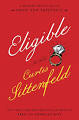
I downloaded the book Eligible by Curtis Sittenfeld sometime late last year because it was on sale from Amazon. I wasn’t even entirely sure what the book was about, and I had certainly not heard of the author. But $2.99? How bad could it be?

And then I didn’t read it for the longest time, partly because I discovered that it was a contemporary take on Pride and Prejudice. And while I have nothing particularly against that novel (which I haven’t read since high school), I also sort of took a stand against it in that way that I sometimes do because I hate being like everyone else and I get stubborn. It’s why I didn’t read Harry Potter books for a long time – everyone else was, and I wasn’t everyone else. But frankly, part of the reason why I didn’t read the book was because of the name of the author. How could a MALE AUTHOR think they could tackle such an endeavor as a contemporary version of Pride and Prejudice?

Dumb, for several reasons, not the least of which is that Curtis Sittenfeld happens to be a woman.

The plot is familiar. Liz and Jane Bennet have returned home from their lives in NYC to take care of their father who has had a heart attack. Their sisters Kitty and Lydia are too flighty to trust, and their sister Mary rarely emerges from her bedroom where she endlessly pursues master’s degrees via computer.

The Bennets have been high society in Cincinnati, but unbeknownst to Mrs. Bennet – who is much more concerned with finding husbands for her five unmarried daughters – they are flat broke.

Mrs. Bennet has ensured that Jane meets Chip Bingley, a doctor best known for his appearance on a television show Eligible, modeled after real-life The Bachelor.

Liz, in the meantime, has met and started knocking heads with Chip’s friend Fitzwilliam Darcy, a renowned doctor and peculiar fellow. Love and then complications ensue, just as in Pride and Prejudice. And if you are a fan of the original novel, you can imagine how it ends.

Still, after finally giving in and reading the book, I must admit that I really enjoyed it. It was a fun take on the original book, and interesting to see how the author handled the familiar situations. Like the original novel, Mr. Bennet was a dear, and it was impossible to not want to strangle Mrs. Bennet and the younger sisters.

I think this is a must-read for fans of P & P, but honestly, I think it is a cleverly-written novel that will be enjoyed by anyone who likes a great romantic romp. Don’t be crabby like me.

Here is a link to the book.

unnamed

Friday Book Whimsy: Fiercombe Manor

searchI’ve mentioned  before that I love manor mysteries; you know, mysteries that take place in mysterious old houses with creepy caretakers or daunting housekeepers. So when a come across a book with the word manor right in its title, I am definitely going to give it a read.

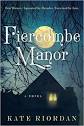
Fiercombe Manor, a debut mystery novel by Kate Riordan, despite a few minor flaws, met, yes, even exceeded, my expectations. It was suitably creepy in the manner of Rebecca, the similarities a reader can’t fail to notice.

It’s 1933, and young and naïve Alice finds herself in a precarious position – pregnant by a married man who has no intention of leaving his wife after all. She confesses her situation to her horrified mother, herself a cold and unloving parent. The mother contacts her old friend Mrs. Jelphs, who is a housekeeper at Fiercombe Manor in Gloustershire, far away from London. The plan is for Alice to have her baby (which Mrs. Jelphs is told is the result of a brief marriage that ended when her husband was killed), then return to London and immediately give the baby up for adoption.

But when Alice arrives at Fiercombe Manor, (which is not occupied by the Stanton family who live abroad, but instead is lived in and managed by Mrs. Jelphs and a groundskeeper) she immediately begins to get creeped out by some of the noises she hears at night and stories she is told. Bit by bit, she learns of the homes’ former occupants. From that point forward, the story is told in the familiar back-and-forth style – Alice’s story and the story of Elizabeth Stanton. Sometimes I wish authors could be a bit more clever; nevertheless, both storylines are creative and compelling.

The book’s readers and reviewers draw a comparison between Mrs. Jelphs and Mrs. Danvers (the housekeeper in Rebecca). I don’t believe the comparison is justified. While Mrs. Jelphs clearly knows more than she is saying, she is ultimately kind and cares for Alice. Still, the whole notion of a young woman alone in a creepy mansion with only a suspicious-seeming housekeeper and a groundskeeper who keeps showing up in unexpected place clearly begs the reader to compare it to Rebecca.

There is a romantic element, as one of the Stanton heirs is a young man who has issues of his own. The romance doesn’t get in the way of the story, however.

I enjoyed the book very much, and found Riordan’s writing to be beautiful. I am looking forward to the author’s next book, which apparently will be a ghost story.

Here is a link to the book.

unnamed