Friday Book Whimsy: Wildflower Hill

searchMy name is Kris, and I am……….

……secretly extremely fond of a good romance novel.

Don’t get me wrong. I don’t mean the kind that invariably has the bare-chested man holding the woman with the torn bodice in his arms and nearly ready to ravish her on the cover. And seriously, that statement isn’t just a woman who doth protest too much. Those books just make me uncomfortable. For many reasons. Not the least of which is how that woman will repair that perfectly good dress.

No Friends, I’m talking about the kind of story that is often multigenerational, frequently take place in Great Britain, and many times has stories that flash back and forth between the contemporary main character (always with an interesting career) and her great grandmother (always with some kind of a secret).

Wildflower Hill by Kimberley Freeman is one of the better that I have recently read.

I read almost entirely on an e-reader these days. It’s easier to read the book at the gym. But one of the things I miss most about reading electronically is the feel of the book in my hands, especially if it’s a lovely, beefy book like Wildflower Hill. There is just something wonderful about holding a good book in your hands and reading it on the patio with a glass of ice tea. Isn’t quite the same with an e-reader.

Wildflower Hill is the story of Emma, a professional ballet dancer who has pretty much devoted her life to her dancing. She has placed her dancing ahead of her boyfriend, her family, and her friends. So when her career is ended by a debilitating injury, she is grief-stricken.

About the same time she learns that she has inherited her grandmother’s long-abandoned sheep ranch in Tasmania (an island off the south coast of Australia). Her grandmother left it to her with the caveat that she could only be told about it once she was done with dancing forever.

Emma makes her way to Tasmania thinking she would just clean up the ranch, pack up her grandmother’s things, and return to live in London. That, of course, isn’t what happens.

The novel moves back and forth between the story of her grandmother, who had many secrets, and Emma, who slowly discovers the secrets at the same time as coming to grips with her whole new life. Sometimes novels with this back-and-forth for format are annoying and difficult to follow. I didn’t find that to be the case for a couple of reasons. First, each of the segments is lengthy, allowing time to really get to know and understand the characters. Second, each of the characters is interesting and I enjoyed watching them develop.

The story is somewhat predictable, but I enjoyed the writing very much. I found Beattie (the grandmother) to be much more interesting than one would expect, and very likeable. I enjoyed seeing how she became a successful businesswoman at a time when it wasn’t common for women to do so. I loved her scandalous life and juicy secret.

I also really liked Emma. Though I haven’t taken a dance lesson in my life, the author made me understand how dancing could have been so important to her and how it could have impacted her life so significantly.

The location of the story enhanced the reading experience for me. I know very little about Australia, virtually nothing about Tasmania, and am equally clueless about raising sheep. I loved learning about these things through the secrets that Emma discovered as she went through her grandma’s things.

The ending was somewhat disconcerting. Some readers have commented it is ripe for a sequel. I rather hope not. I want to imagine just what happens after the door is opened.

Kimberly Freeman is a pen name for author Kim Wilkins, who has written a number of fantasy and horror books. This is her first foray into women’s fiction, and I think she hit a home run.

Two Miles High

thumbv23638Between my freshman and sophomore years of college, my parents moved to Leadville, Colorado. My dad had sold the bakery in Nebraska and bought another one in Leadville. Living in the mountains of Colorado had been a lifelong dream of both Dad and Mom.

It hadn’t, however, been a lifelong dream for me. I was perking along happily at the University of Nebraska when they announced they were going to leave. So long, farewell, auf wiedersehen, goodbye.

Whaaaaat?

So I scrambled to find an aunt and uncle that would allow me to use their address as my home address so I could continue to pay in-state tuition at NU (not kosher then; not kosher now; sorry state of Nebraska).  I drove out with my family to Leadville when they moved all their things from what had been home for almost all of their lives. Dad was the only one who had seen the bakery and the town. The rest of the family was moving sight unseen.

It was the first week in June, and as we came down the pass from Dillon to Leadville, it was snowing. I will never forget that. Snowing in June. I had a bad feeling.

We drove past the molybdenum mine outside of town (which employed probably 95 percent of the working population). The mine had taken over the mountain and pretty much destroyed the landscape (as mines do). It was not very pretty. My bad feeling grew.

We pulled into the town of Leadville, and it seriously might as well havethumbv3694 been 1890 instead of 1974. Though fairly close to Aspen as the crow flies (though a difficult drive over a serious mountain pass to get there), unlike that ritzy mountain town, Leadville’s founding fathers had done very little to spruce the town up. They were likely too busy working in the mine. Leadville was not a tourist community. It was a mining town.
I eventually saw the prettiness in the Mosquito Range surrounding the town and even in the town itself. But it was a big leap from what I was used to in Columbus, Nebraska.

It was a mining town.

I know I keep saying that, but mining truly defined the town. And the people.

I lasted one more year in Nebraska before following my family to Leadville. I lived in Leadville for a year or so before moving to Boulder and completing my education at the University of Colorado. That year in Leadville is one I seriously will never forget. I have been talking about Arizona being the Wild, Wild West. Let me just tell you that the residents of Leadville still had gunfights.

The folks that worked in the mine made pretty good money. It was Union work. Hard work which you couldn’t pay me enough to do, but really good cash. They got paid every two weeks.

Here’s how it went down, at least for many of the Leadville residents.

They would get their paychecks Friday afternoon and make their way to the Safeway (where I spent a year working). They would cash their checks at the service desk, and then buy their groceries for two weeks. They would proceed to the electric company, the bank that held their mortgage, the gas company, etc., and pay their bills with cash. They would then spend the rest of the night — well weekend really — getting drunk and into bar fights.

My mom and dad’s bakery was right on the main street across from the court house. Every other Friday on payday they would lay awake in bed and listen to the fighting going on across the street. Generally knife fights but there was the occasional gun fight.

And then Sunday morning the miners would go to church and Monday morning it was back to work and a normal life.

The mountains outside of town (and they really were walking distance) were dotted with old abandoned mines. At one time, Leadville had been second only to Denver in population because of the gold and (mostly) silver mining. Prior to moving to Leadville, I had never heard of Horace Tabor or his pitiful wife Baby Doe. The Unsinkable Molly Brown’s husband made his money from a mine outside of Leadville.

thumbv3700I loved taking a lunch out into these mountains and sunbathing next to an old mine shaft. Sunbathing season was limited because remember that snow in June?

I have mentioned before that my first taste of real Mexican food was in Leadville. It was at a restaurant called The Grill. I used to order two cheese and onion enchiladas with a fried egg on top. In 1974, the restaurant was kind of sketchy, bordering the unsafe neighborhood (as if our “safe neighborhood” across from the court house, where you had to literally dodge bullets, was so much better). Still, it was not a lovely restaurant but it had very good Mexican food. Thus began my love for Mexican food, the spicier the better.

I returned to Leadville recently and noticed the town leaders are making a concerted effort to clean up the town and attract tourists. The need for tourist dollars became critical when the Climax mine’s business plummeted in the 1990s. I was happy to see the improvement, but somewhat sad to see that The Grill had cleaned itself up and become just another Mexican restaurant. What’s the fun if you don’t have to worry about a potential stabbing?

Living in Leadville changed me in many ways, but not the least is in my food taste. I simply couldn’t live now without Mexican food. It’s one of the things I missed most when we were in Europe for three-and-a-half months. I probably eat Mexican food in some form or another three or four times a week both in Arizona and Colorado.

I recently had my brother over for dinner where I made pollo asado. What an absolutely delicious dish and so pretty to look at. Because the invitation was last minute, I didn’t have time to make the homemade refried beans I had been eager to try after watching a recent Pioneer Woman episode. So I Googled “refried beans canned pinto beans” and came up with what turned out to be a great recipe.

Pollo Asado, courtesy Ree Drummond and Food Networkpollo asado marinade

Ingredients

½ c. olive oil

½ c. orange juice (freshly squeezed if possible; save juiced orange halves)

¼ c. lemon juice (save the juiced fruit)

¼ c. lime juice (save the juiced fruit)

1 t. salt

1 t. black pepper

4 whole garlic cloves, peeled and smashed

16 whole chicken legs

2 whole onions, peeled and quartered

32 soft taco-size flour tortillas

Process

In a bowl, combine the olive oil, orange juice, lemon juice, lime juice, salt, pepper, and garlic cloves. Whisk together.
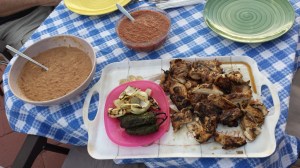
pollo asado mealPlace the chicken legs, juiced pieces of fruit and quartered onions in large plastic bags or a bowl. Pour the marinade over the top tossing to combine. Cover with plastic wrap (if using bowl) or seal the bag up and marinate for at least 2 hours. Several hours is better. Toss a few times during the marinating process.

Preheat a grill. Grill the chicken legs until cooked all the way through, turning occasionally so the chicken is cooked on all sides, 10 to 12 minutes.

Separate the tortillas into piles of 16, and then wrap each pile in foil and warm over the grill for 10 to 15 min.

Serve the chicken legs with the warm tortillas.

Quick and Easy Refried Beans, courtesy Allrecipes.com

Ingredients

2 T. canola oil

2 garlic cloves, peeled

2 15-oz cans pinto beans

1 t. cumin

1 t. chili powder

Salt to taste

½ lime, juiced

Process

Heat canola oil in a heavy skillet over medium heat. Cook garlic cloves in hot oil, turning once, until brown on both sides, 4-5 minutes. Smash garlic cloves in skillet with a fork.

Stir in pinto beans, cumin, chili powder, and salt into mashed garlic and cook until beans are thoroughly heated, about 5 minutes. Stir occasionally. Smash bean mixture with a potato masher to desired texture. Squeeze lime juice over smashed beans and stir until combined.

Nana’s Notes: I didn’t use chicken legs for the pollo asado; instead, I used boneless, skinless chicken thighs because I like to cut or tear up the meat and eat it inside the tortilla. Also, keep in mind that Ree Drummond cooks for a large number of people, so adjust your recipe accordingly. I made the same amount of marinade, but cut down on everything else. I marinaded the chicken for 2 hours, and it was absolutely delicious. As for the beans, they are so simple to make and I thought they were really tasty – better than store-bought refried beans. Finally, here in Arizona they have something new and awesome — uncooked tortillas that you simply cook in a fry pan or on a griddle for 30 – 60 seconds until they begin to bubble and brown. They are so simple and so delicious. I found them where they sell the canned biscuits and bread. I’m not sure if they sell them elsewhere. Hope so.


Auntie Disaster

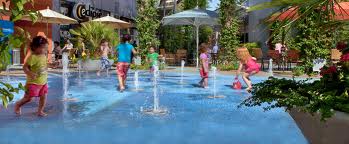
imagesSometimes it feels as though my life is too predictable and quiet, especially here in Arizona where I don’t have the possible diversion of the grandkids. So I enthusiastically accepted my niece Maggie’s invitation to join her and her kids on an excursion to Tempe Marketplace.

There is nothing particularly remarkable about Tempe Marketplace. It is an outdoor mall about the same as the cajillions of outdoor malls that have sprung up in the past five years or so. The difference is that the weather was gorgeous and Austin and Lilly were going to be there to keep me amused.

As an aside, Austin is the friendliest child I know. My grandchildren tend to be somewhat subdued when it comes to greeting people. Well, some are more outgoing than others. But without exception, when I get into the car or answer the doorbell at his ringing, Austin cheerfully calls out, “Hi Aunt Kris!” Emphasis on the cheerfulness. Really, really cheerful.

Anyhoo, the plan was that Maggie would go to an eyeglasses place to conduct some business, but it was very near one of those areas that have multiple fountains squirting out of the ground at which children romp and play. So following her business, Austin would get into his swim suit and romp and play.

However, apparently prior to their leaving the house, Austin had firmly declared, “I don’t want to play in the water.” In fact, he wept at the prospect.

Nevertheless, when I got into the car, all tears were in the past. “Hi Aunt Kris!” he chirped cheerfully.

“Hi Austin!” I said. “We are going to have us some kind of fun.” He looked doubtful. I believe he rolled his eyes.

He seemed happy, however, to see the fountains as we approached the eyeglass place.

“How about if Austin and I check out the water while you and Lilly go in and do your business,” I suggested to Maggie.

She agreed. What could possibly go wrong?austin testing water 3

So I carefully approach the fountains, feeling the temperature of the water (which, to me, felt quite chilly). Austin followed suit. He was fully clothed in shorts, shirt, tennis shoes and socks.

I began taking some pictures. They seemed kind of dark because of all the sunshine, and I began trying to lighten them up.

It was only a few seconds. I swear.

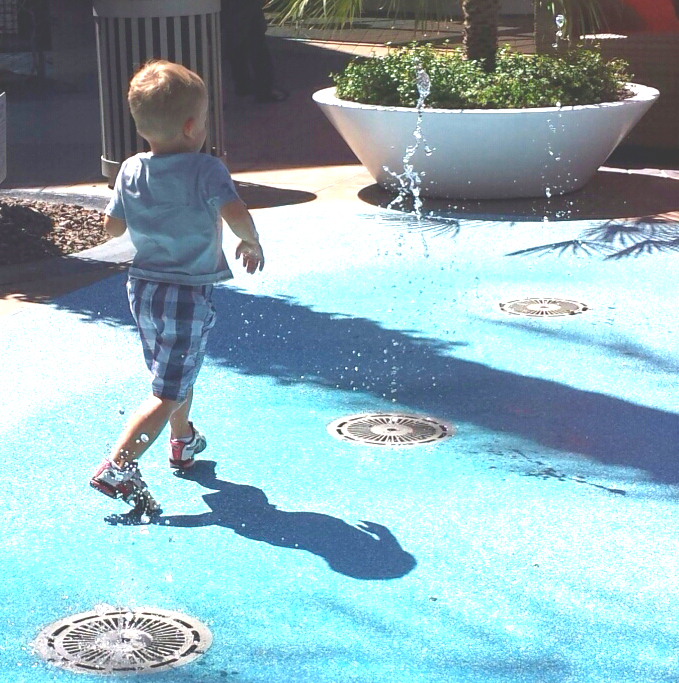
austin soaking wet 3I glanced up to find the child full-out running through the water, by then totally drenched.

In the words of Scooby Doo, “Roh roh.” Now I must go tell Mommy that her aunt had fallen short on her supervisory duties.

“Come on, Little Man,” I told the dripping boy. “Let’s go see Mommy.”

I explained to her that I had only taken my eyes off of him for a second and it seems that he got, well, sort of, ah, wet. She looked at me with a smile that didn’t quite reach her eyes.

“Ah, no problem,” she said through clenched teeth, “except that I didn’t bring any other clothes.”

So I proceeded to remove his clothing – yes, right there at the eyeglass shop (which undoubtedly made the proprietors very happy) – and changed him into his swim suit.

We went out, and for the next 45 minutes the child ran back and forth and back and forth and back and forth through the water fountains. There were no other children, but that didn’t matter. Occasionally he would lay down on one of the fountains, giggling as the water tickled his stomach. Once or twice he would look down into a fountain that wasn’t currently spewing water only to have it then shoot forth into his face. No matter. He wiped his eyes and continued running back and forth and back and forth and back and forth.

I guess he changed his mind about not wanting to play in the fountains.

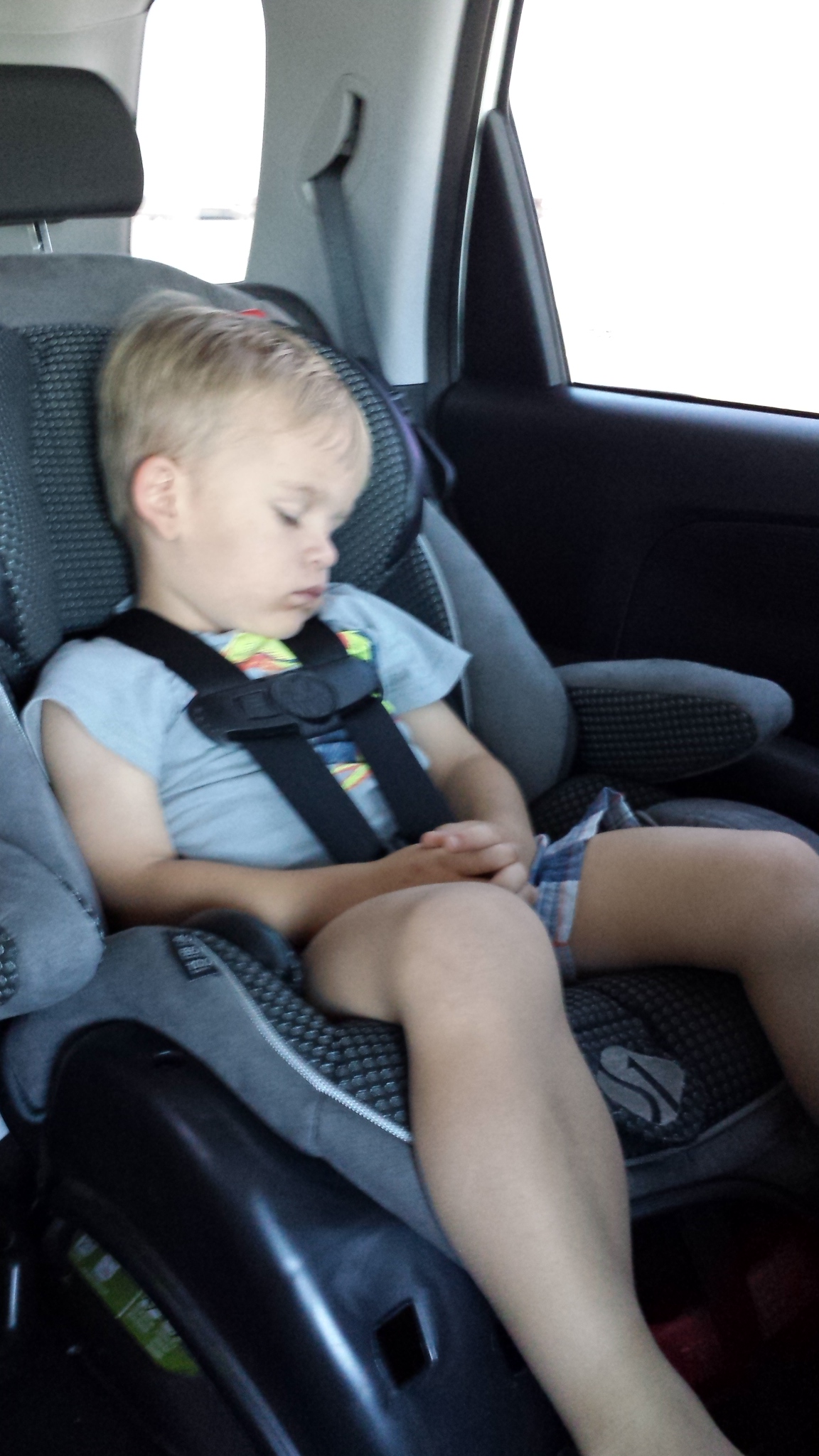
After lunch, he told his mommy he thought he might want to take a nap when he got home. We weren’t even out of the parking lot…..

Austin sleeping

It’s good to watch kids to be reminded about how simple life really is if you don’t get caught up too much in the complicated stuff.

And, by the way, the clothes dried out by time we left the shopping center.

Well, except for the shoes which might never dry out. Great Aunt Kris might owe the child a new pair of shoes.

…a Thousand Words

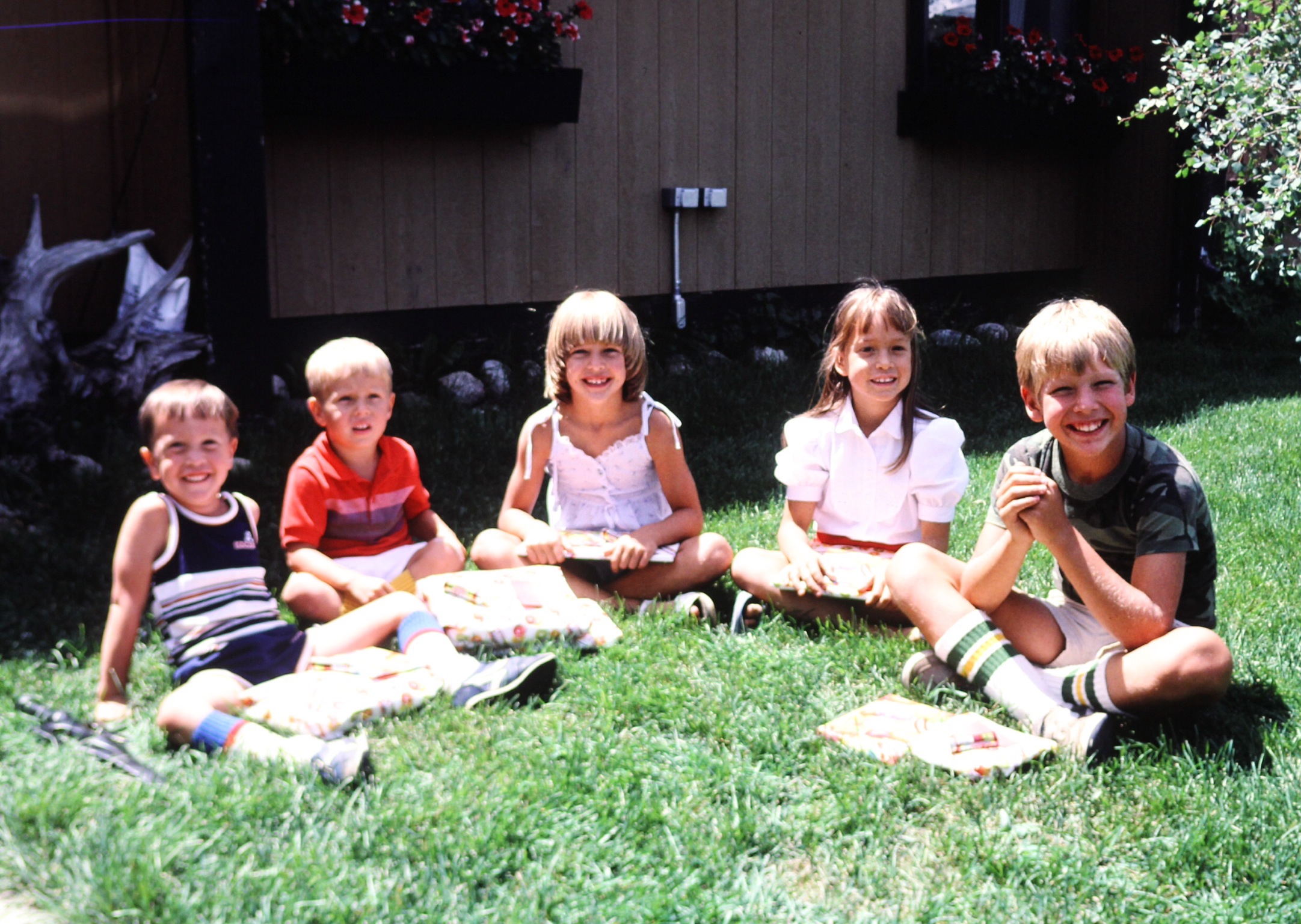
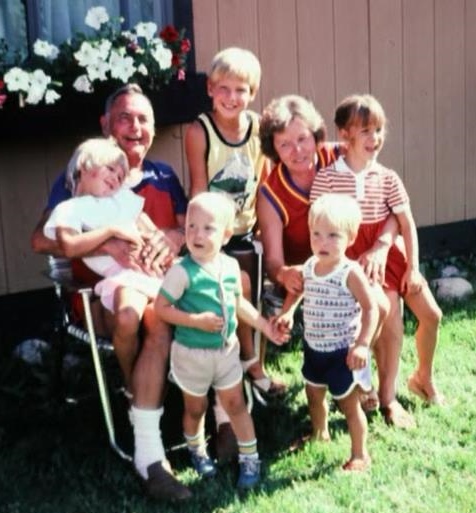
grandkids on lawnYesterday’s blog provided the opportunity to pull a few photos out of the dusty home in which they lived. Actually I’m exaggerating as the photos had been digitized this summer when Bec had packed up her Virginia home but you get my point. At one point, they had been a picture on a piece of photographic paper.

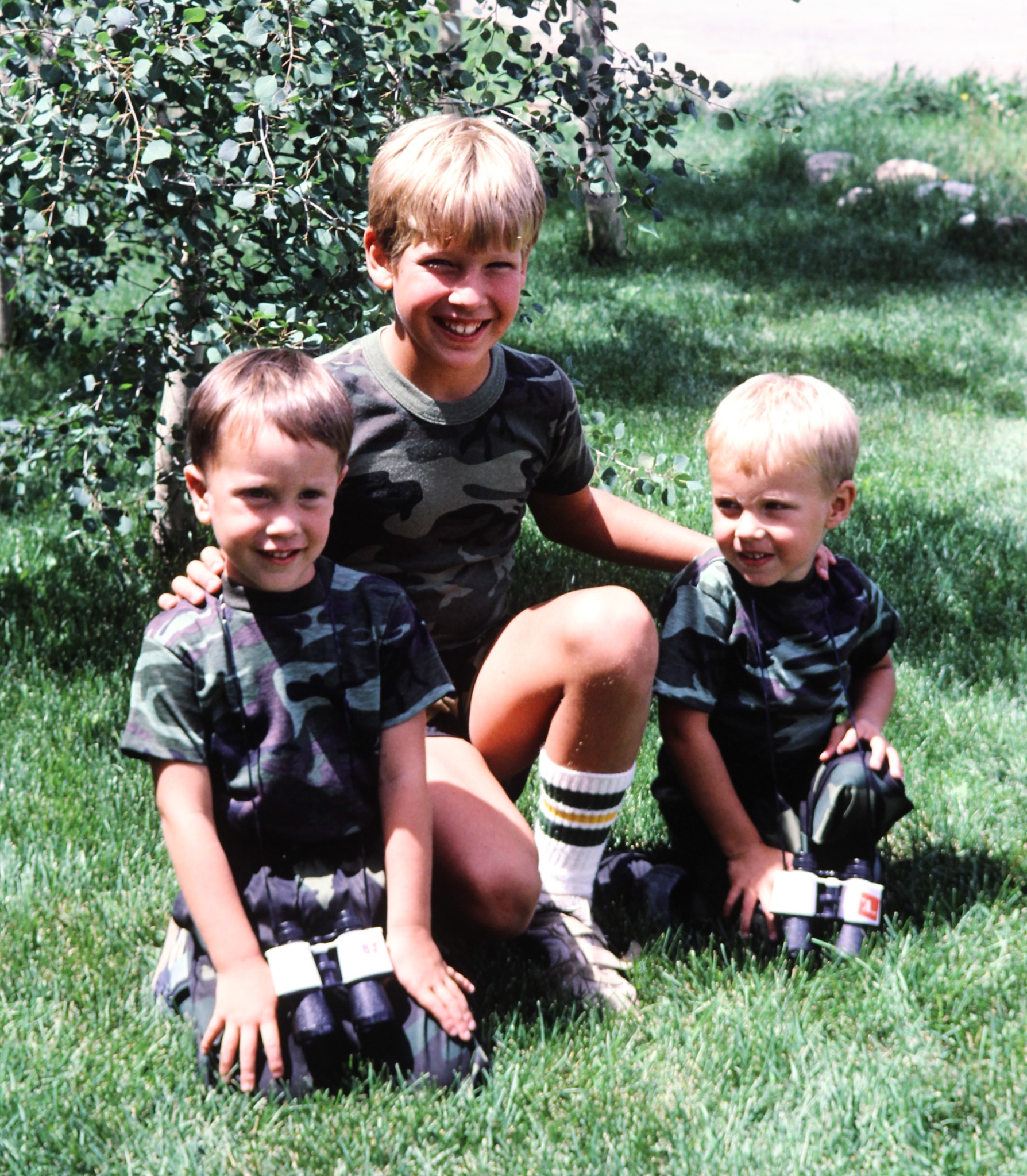
On Sunday, Bec enjoyed going through her paper memories, and began sending them to me via email. I was thrilled and delighted to be able to look at our kids with my mom and dad back in some of our happier days when Mom still felt good. The kids had so much fun playing together at Mom and Dad’s mountain home where you could hear the creek babble past their back yard. Please note that these photos were taken prior to the addition of a whole other section of grandkids — the children of my brother who is the baby of our family. Wish I had photos with all of the kids. There’s some out there somewhere….

There is nothing like old photos.  Bec’s husband Terry took something in the neighborhood of 175 million photos in his life. He used to drive us all mad with his hobby. But now we are so happy to have visual documentation of such happy days.

It got me thinking about what the younger generations are missing. (I know. Oh Lordy. Any sentence with the words “younger generations” in it is a cause for inward groaning.) erik bj court

Is this BJ or Court? Do you remember when Mom bought that dress? What was she thinking? Which cousin’s wedding was this? Do you remember how mad Mom would get at that dog? I can’t believe I wore that dress to prom. Was it possible for Dave to have a picture taken without making a funny face? How could men possibly have worn their shorts so, well, short?

I’m not a grouchy old woman who negates the significance of any kind of new technology. I have spoken ad nauseum about how happy I am to have the benefits of Facebook, Facetime, and instant photos. It just makes me a little sad to think about some of the things our grandchildren will never experience. Like paper photographs and letters.

You know – letters. Those things that you used to sit down at a table or desk with a pen and write. Using words. And then you would address an envelope and lick a stamp (whaaaaaaat?) and put it on the envelope and mail it. In two or three days, your letter would arrive at its destination and make the receiver very happy. Assuming your stamp didn’t come off the envelope.

bw grammie kris dad courtWhen I was in grade school each of the students got some kind of a magazine to take home. Highlight Magazine? Doesn’t matter. Anyhoo, in the back were the names of kids who wanted to be pen pals. So I picked one, and she and I wrote letters back and forth for a bit of time.

I unfortunately can’t go on to tell you that my pen pal and I became fast friends and still correspond. Sigh. I don’t even remember her name. Or where she lived. Or anything about her. But what I do remember is how excited I was if I saw a letter lying on the kitchen table when I got home from school. It was like a gift that you could unwrap. Never mind that the letter was probably only two or three paragraphs. Someone had taken the time to write me a letter.

Bec and I were talking about this recently – about the excitement of getting a letter. She said she still gets momentarily excited when she sees a piece of mail that looks to have a stamp and a handwritten address. Alas, it’s never anything but a vendor who has figured out how to increase the possibility of us actually opening their appeal for a donation.

But here’s an advantage of our new technology. Many years ago, Mom went through all of their old photos and put together a photo album for each of her children featuring our own baby pictures. It was a treasure. In one of my moves, I lost that photo album along with a photo album containing baby pictures of my son Court. I have spent 25 years thinking those photo albums are going to appear. They won’t, of course because I likely left them in the storage locker where my worldly goods had to be kept for several months. It breaks my heart to this day.

If you have your photos on your telephone, I hope you occasionally dump them onto your computer, which you then occasionally back up to some sort of hard drive or cloud (another technological concept about which I only marginally understand). Because if you lose your phone, well……

Just a quick comment about St. Patrick’s Day. Bec made a delicious meal of corned beef and cabbage and invited us over. At dinner we talked about the fact that we have not one single, solitary drop of Irish blood in us seeings as Dad was 100% Swiss and Mom was 100% Polish, and how, even on St. Patrick’s Day, we have no particular yearning to be Irish. Don’t need green beer. Don’t care if the road rises up to meet you. Did manage to dig up my one and only green shirt to avoid getting pinched by my great niece and nephew Kenzie and Carter (who did, after all, pinch me because they determined my green wasn’t the right shade of green!). But man, I do love me some corned beef and cabbage.

Enjoy my photographs.

This post linked to the GRAND Social

At Dillon Lake

Recently my sister Bec and I got to talking about family vacations. As children, we had many of them. I have mentioned before that since she and her family lived away from family for much of their lives, their family vacations often consisted of visits to see Nana and Poppo in Colorado. Some of her family’s best memories are visiting them during their years in Dillon, Colorado. She shared this journal entry with me, and agreed to let me share it with you.

Journal entry, Wednesday, July 11, 2001

They say “Home is where the heart is.”  I grew up in Columbus, Nebraska, 15+ years in the same imageshouse.  I only spent a few weeks each summer from 1980-1990 in Silverthorne, Colorado—Summit County—but that is where my heart is.  Summit County:  Dillon and Silverthorne are nestled in a valley.  Dillon Lake, which has to be one of the most beautiful sites in the world, reflects the Rockies in its usually calm waters.  When the sun shines on that lake, it is spectacular.  The sun is hot, the air is cool, and the smell of pine drifts on the breeze.  Lunches by the lake are never to be forgotten.

Every summer I would pack up the kids and head to Colorado for a couple of weeks.  Sometimes we flew, but for three years in a row, we drove.  That’s right, 1500 miles at 55 mph, one driver, two kids.  Some of the best memories of my life.  We would drive 12 hours a day for three days, with few stops.  One year, we listened to Michal Jackson’s Thriller tape the whole way.  When we finally reached the Colorado border, we would shout “HooRay!”  Our first strained glimpse of the mountains got the same cheer.

But, coming down the hill from the Eisenhower Tunnel and seeing Silverthorne spread out below, circled by the peaks, was worth every fast food meal and nasty rest stop.  We would cruise down Highway 6, take a left into Willowbrook, and turn into my parents’ small but wonderful home at 222 Woodchuck Court.  My mom—Nana—would be waiting for us, always with something aromatic on the stove for supper.  If we arrived earlier in the day, we would surprise her at work at Colorado Drug and then walk to King Sooper to shock Popo, behind the bakery counter.  What would follow were weeks of bliss.

Mornings in the mountains are cool, even in July.  Nana always got up early and I would wake to find her at the stove, maybe making soup for lunch or browning something for supper.  I would climb onto a stool at her counter and we would chatter until she had to leave for work.

By mid-morning the three of us were ready for a visit to the shopping center.  Mom would be busy in the drugstore, unpacking shipments or waiting on customers, usually tourists—turkeys, as she called them.  (Occasionally I would hear the distinctive accent of a visitor from the Lone Star State and I would have to smile.  “Texas turkeys” were mom’s least favorite people.)  Sometimes if she was working stock in the back room, she would regale us with her latest chipmunk stories.  “Chippies” were the bane of her existence, as she fought a never-ending battle to keep them out of her Reese’s and Peanut Cluster candy bars.  She would erect little barricades to keep them out, but they always foiled her.  Kate would beg to stay and “help Nana” but usually the three of us would walk across the parking lot to wish Popo good morning.  Bakers go to work early, so he was always long gone by the time we got out of bed.

The kids would fly to the back of the store, where Popo and his crew would be working on filling the cases with bread, rolls, and cakes before the noon rush.  Chocolate chip cookies were part of the ritual, and Erik would beg to cut or roll or mix something for Popo.  Eventually everyone had to get back to work, so we headed back to the house and Trent Park.

If there’s a better place to play tennis anywhere in the world, I’d like to see it.  Trent Park, consisting of a small baseball diamond and tennis courts, sits at the entrance to Willowbrook.  A small creek stocked with fish (for 15-and-under only, please) bordered the playing field and courts.  Erik and I would bat the balls around, not really playing games, but enjoying the activity.  Often, our balls would be errant, flying out over the high fence and into the pond or the Blue River.  We would fish them out, undaunted.  We just couldn’t get over looking at the mountains all around.  No Wimbledon winner took more joy in tennis than we did.

LakeDillonSoon it would be time for lunch.  We would pick up Nana, drive to Dillon, and get meatball subs from Mad Munchies.  Down a few blocks were picnic tables that sat on the shore of Lake Dillon.  Often, it would be starting to cloud over but still sunny, and we would drip marinara sauce and gaze at the lake.  Erik and Katie would inevitably climb down the steep bank to skip rocks or wade in the icy, snow-melt water.  We always thought Mad Munchies made the best meatball subs in the world, but maybe it was just the ambience.

As I sit here today, flooded with memories, I can’t help but feel that I’m home.  I’ve been all over popo and nanathis country and many parts of the world, but no place has brought me greater joy and contentment than this spot. My mom loved the lake, and having lunch with her daughter and grandchildren gave her so much happiness.  This is home, because my heart is here, in the mountains, by the lake, with Mom and Erik and Katie.

Saturday Smile: Ride ‘em Cowgirl

searchMy sister Bec and her family used to be city slickers. I say used to, because now two-thirds of them live here in Arizona, which is the Wild Wild West. Her daughter lives in L.A. and is a professional dancer, so she gets a Wild Wild West pass.

Anyway, one time when they were in Colorado on vacation, back when they lived in northern Virginia just outside of Washington, D.C., they were driving on I-25 from Denver to Fort Collins to visit Jen. Suddenly cars ahead of them came to a stop, so they did the same. When they looked to see what was holding up traffic (could it be a presidential motorcade like they sometimes ran into in D.C.?), they were quite surprised to see that it was a herd of cattle making its way across the interstate.

We’re not in the urban east anymore, they thought.

While my Wild Wild West story withers in the face of hers, still I was reminded earlier this week that when it comes down to it, we are just cowboys and cowgirls here in Arizona. Well, probably not in Scottsdale or Fountain Hills, but definitely here in Mesa.

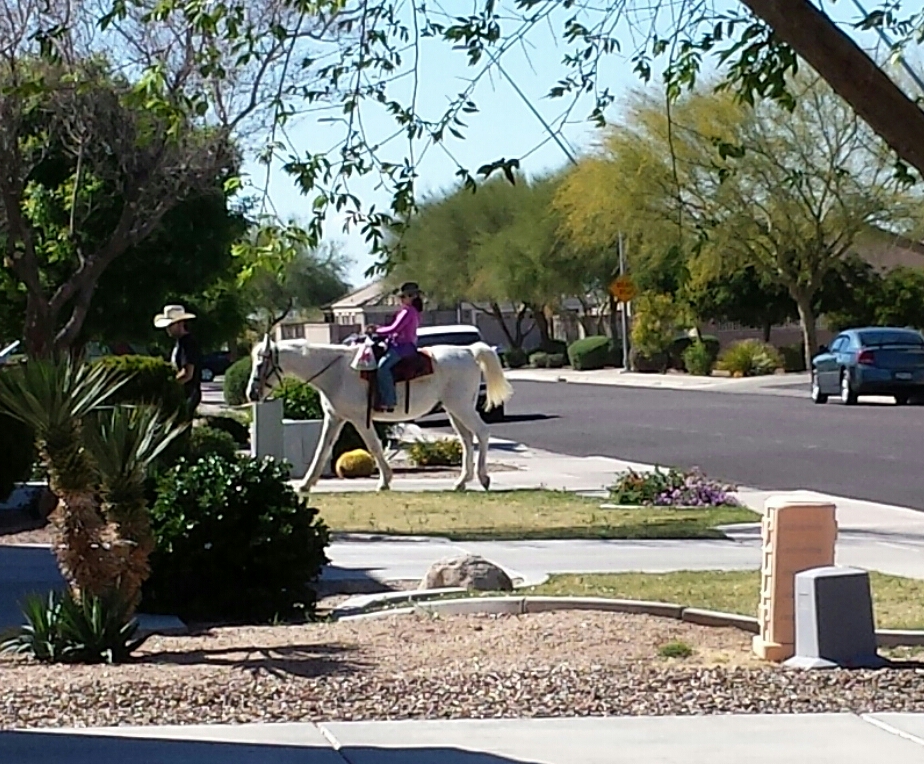
We pulled up to the driveway of our house, and had to yield to our neighbor, who was riding down our street ON HER HORSE. And, as you can see, not in some fancy dancy English riding wear. I’m talking cowgirl hat and cowgirl boots.

horseback rider

Fountain Hills and Scottsdale might have fancy golf carts in their grocery store parking lots; we have horses.

Yippy-i-o-ky-a.

Have a good weekend.

Friday Book Whimsy: Slow Getting Up

Before I start my book review, I want to say that I am pushing back discussion for the Ethereal Reader book Monument Men for two weeks. Discussion will begin Friday, April 18 instead of Friday, April 4.

searchI am somewhat hesitant to post a book review of Slow Getting Up: A Story of NFL Survival from the Bottom of the Pile, by Nate Jackson. I am going to tell you how much I enjoyed the book overall, but then I’m going to add a GREAT BIG GIANT CAVEAT when it comes to recommending it.

I’m not even sure how this book came to my attention. It might have been available as a $2.99 Nook book from Barnes and Noble. It wasn’t anything I had ever heard of, but being a football fan in general and a Denver Broncos fan specifically, I became intrigued when I read the synopsis.

Jackson was a Denver Bronco for most of his career, though he started out with the 49ers. He was a Bronco from 2002 until 2008 following an injury and the arrival of Coach Josh McDaniels. He started out as a wide receiver but soon became a tight end at the request of Coach Mike Shanahan. I have to admit to you right off the back that I have no memory of his career with the Broncos. After reading the book, I’m not sure I should be concerned about that fact as he was, for the most part, a back-up player and seemingly injured more than he wasn’t.

I will tell you why I liked the book, and then will give you my caveat.

I love football, and know maybe a bit more about it than many women. Still, I don’t know a lot of the intricacies. I know the rules (for the most part), I understand most penalties (though I don’t always see them), and I know the difference between offense, defense, and special teams. I enjoy watching games — and not just Broncos games but any NFL games.

A number of years ago, following the movie, I read The Blind Side, by Michael Lewis. I LOVED that book (and that book I would recommend with no caveats attached). What I especially liked about that book – in addition to the lovely story about the people who make Michael Oher a part of their family – was learning about the strategies around football. That comes across in the book much more significantly than in the movie. I really enjoyed that book.

Slow Getting Up is about football from a player’s perspective. And I think it’s significant that it isn’t a particularly great player, but someone who makes it into the NFL but has to fight to stay there year after year. The game from Jackson’s viewpoint is much different than it is from mine, or, say Peyton Manning’s.

For one thing, Jackson spends much of his career playing hurt. He makes it perfectly clear that many, if not most, players play hurt much of the time because football is a business, after all. And a violent business. Jackson doesn’t whine about this or present it as unfair. It’s just a reality of the game.

He talks a great deal about how moving from team to team impacts players. No need to make close friends because they may be gone tomorrow – either cut, traded, or injured. Again, Jackson doesn’t wah wah about this, just explains it to his readers.

He doesn’t pull any punches, that’s for sure. It is clear who he liked and respected, both as players and as coaches. No tip-toeing around it – he has great respect for Coach Shanahan but not much for Coach McDaniels, for instance. Jake Plummer was a solid, straight-forward, talented quarterback; Jay Cutler was a whining baby who was too full of himself. These are not my opinions, but Jackson’s.

As a long-time Denver fan, it was fun for me to read his thoughts on Denver fans and their plusses and minuses. I think he nailed it.

The life of a NFL player is beyond belief. Players are held by the public in such high regard, and it’s often undeserved. Women throw themselves at football players. Free drinks, free food, free drugs.

So here is my caveat. Jackson is writing from a player’s perspective. I’m pretty sure he assumes the majority of his readers will be men. His writing is, frankly, raunchy at times to put it mildly. I have no doubt that the stories he tells are accurate; still, they are also startlingly disturbing. As a woman, it made me squirm to read about the way many women are regarded by the men in this book.

So: I learned a lot about football (not the game but the business and the players’ mindsets). I liked Jackson’s writing style – very blog-like and readable. You don’t have to be a Bronco’s fan to enjoy the book. He just happens to have played for the Broncos, but his thoughts would hold true for any team. And I liked that, in the end, what made him keep at it despite injury after injury is that he liked playing football.

But: His writing can be uncomfortably raunchy. (Do men really enjoy porn that much? Don’t answer that.)

Overall, I would recommend the book to my son, but would suggest my mother-in-law not read it.

Everywhere Else We’ve Ever Been Ever

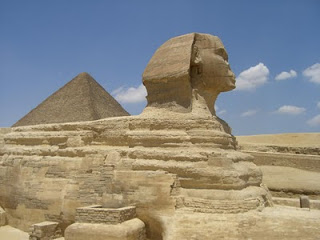
1SphinixI’m just trying to scare you with the title to this blog post. I promise I’m not going to regale you with tales of every adventure we have had during our travels, though there have been quite a few. And many of have been very funny and interesting. But I understand you can only tolerate so many stories about us, no matter how amusing our antics were.

I mentioned in yesterday’s post that we approached the 2008 Big Adventure as though it could possibly have been our last time to travel abroad. It wasn’t. We took another trip in 2010 that was very different from our past trips, but very fun just the same. We cruised the Mediterranean.

Both in 2008 and 2010, we took a two-week Royal Caribbean transatlantic cruise over to Europe in the spring. In March and April, the cruise lines move their big ships from the Caribbean over to the Mediterranean to take advantage of the weather. When they do this, they offer smokin’ deals to sail over one way with them.

In 2010, we elected to take advantage of the smokin’ deal sailing across the Atlantic, but remain on the ship for two more weeks as it began its summer Mediterranean season. As a result, we were in one room on one ship with one room steward for one month. The first two weeks we traveled primarily with Americans; the second two weeks we traveled primarily with Europeans and Asians. Very different kind of atmosphere. Both fun. We never got tired of being on the ship. In many ways it was nice to know where you were going to call home that night. We were getting older and we didn’t mind someone sort of taking care of us.

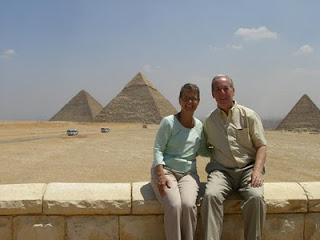
On the 2010 trip, we visited Naples; Sicily; Rhodes and Athens, Greece; Ephesus,1Pyrimed Turkey; and Cairo, Egypt. It was a wonderful trip. Seeing the pyramids and sailing down the Nile were on my bucket list and I didn’t even know it!

I don’t know if we will get back to Europe again. I hope so. If we don’t, I have no regrets. Man, I have seen a lot of things for a girl from a small farm town in Nebraska.

As I offer my final recipe for a typical Italian item, I want to tell a couple more stories, and then I’ll quit. I promise.

The first time Bill and I were in Rome, we were taken aback by the unexpected enthusiasm Italians have for their food and wine. They know their food is good, and they want to SHARE their love and enthusiasm with you. They won’t be disgusted if you order the wrong wine with certain food. They will laugh and make sure you get the RIGHT wine no matter what you ordered, even if they have to give it to you for free.

We were at dinner that first night in Rome (the night after the overnight train episode and after the audience with the pope episode – it was a long day) at a restaurant we simply stumbled upon. (We didn’t know it yet, but it really is hard to stumble upon a restaurant in Rome that isn’t delicious, especially if you are off the beaten path.) We were seated, looked at the menu, figured out what it said, and placed our order. Bill got a pasta dish with some sort of seafood. When the waiter brought it to the table, he asked the waiter for Parmigiano Reggiano cheese. The waiter didn’t laugh. He didn’t turn up his nose. He smiled at Bill and said, “No.”

“No?” Bill asked.

“No,” the waiter happily replied.

Bill pointed to the table next to us at which the waiter was generously grating cheese onto the diner’s pasta.

“No cheese on fish,” the waiter said, with such finality that Bill succumbed.

We learned later that the Italians never use Parmigiano Reggiano cheese on seafood, believing the flavor is too sharp and strong to accompany the delicate flavor of fish and seafood. It would overpower.

But here’s the thing. The waiter wasn’t disdainful or rude. He simply wanted Bill to experience the food that the waiter loved so much in the best way. We found that throughout Italy.

It’s why they often give you free stuff. It’s stuff they think you would have ordered had you not been clueless Americans. The waiters will bring you a sample of the area’s specialty because they’re afraid you might not order it yourself. Plus, they just want to be generous. It’s their nature.

During that same trip we were at dinner one night in Rome at a restaurant on the Piazza Navona. It was a warm evening and we were dining outside, as we almost always did. The passagiata had started. We were waiting for our check, but instead of the check, the waiter brought us each a small icy glass of a yellow liqueur. It was limoncello, and believe it or not, we had never seen or tasted it before. I will never forget how good that first sip tasted – icy cold, sweet and tart. Just the thing on a warm summer evening. I was hooked and remain hooked to this day.

Since then we learned that it is fairly common for restaurants in Italy to offer their diners complimentary after-dinner drinks, maybe grappa or sambucca, but often limoncello and often made right there at the restaurant.

Hope I didn’t bore you too much with my reminiscing about our trips. They are precious memories, that’s for sure. I got some funny comments this week, and would love to hear more stories about your travel experiences.

I leave you with this delicious recipe….

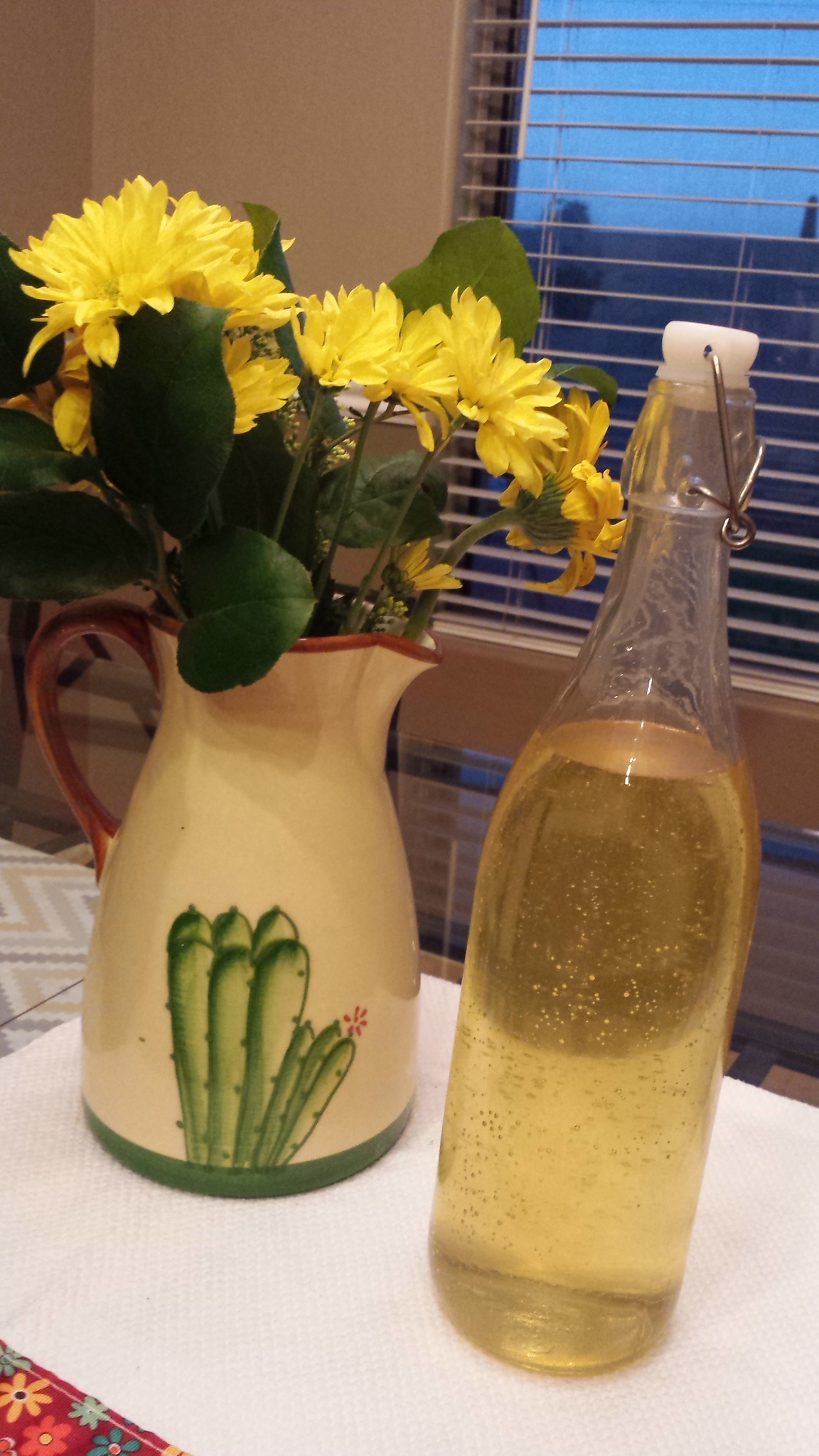
Limoncello, by Giada De Laurentislimoncello

Ingredients

10 lemons

1 (750-ml) bottle vodka

3-1/2 c. water

2-1/2 c. sugar

Process

Using a vegetable peeler, remove the peel from the lemons in long strips (reserve the lemons for another use). Using a small sharp knife, trim away any remaining white pith from the peels; discard the pith. Place the lemon peels in a 2-qt. pitcher. Pour the vodka over the peels and cover with plastic wrap. Steep the lemon peels in the vodka for 4 days at room temperature.

Stir the water and sugar in a large saucepan over medium heat until the sugar dissolves, about 5 minutes. Cool completely. Pour the sugar syrup over the vodka mixture. Cover and let stand at room temperature overnight. Strain the limoncello through a mesh strainer. Discard the peels. Transfer the limoncello to bottles. Seal the bottles and refrigerate until cold, at least four hours and up to 1 month.

Nana’s Notes: This limoncello recipe is the easiest thing to make. I was unsure how difficult it would be to peel the lemons, but it was very simple using a potato peeler. Sip it from little liqueur glasses, thoroughly chilled, preferably on the Piazza Navona Heavenly. I keep it a lot longer than 1 month in the refrigerator.

At Home in the Heart of Italy

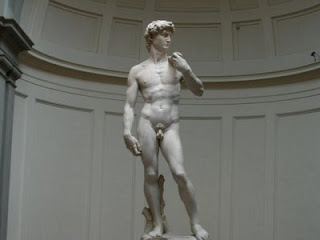
DavidBill and I began talking about a long and adventurous trip to Italy in 2005. We had friends who had talked about living in France for six months when they retired. Doesn’t that sound lovely, I remember saying to Bill. Me, who gets homesick when I have a particularly long stay in the bathroom. But romance can overwhelm one, can’t it?

Anyhoo, for us, it wouldn’t – couldn’t – be France. The French are too scary and I simply can’t get a grasp of their language (too many silent letters). It would have to be Italy. And it would have to be somewhere in Tuscany.

We literally began planning that very day. Looking at our financial timeline, we figured I could retire at the end of 2007. We would leave for Italy shortly after. Of course, as we began putting plans on paper, we became a bit more practical. There was no way I could be away from home for six months. Too homesick. The exchange rate in 2007-2008 was horrendous, so we wouldn’t have been able to afford six months anyway.

We started thinking about whether or not we wanted to simply be in one place the whole time or travel around. We concluded that we couldn’t be in Europe for perhaps our last time without seeing some sights. Our compromise was that we would not have much of an agenda and we would spend a leisurely amount of time at each place we visited. Oh, and we would spend two full weeks in Rome and a month in one town in Tuscany.

Honing down the town we would stay was tricky. Originally we thought perhaps Lucca. We love that walled city near Pisa. But Bill began researching on Home Away and finally proposed the town of Certaldo.

Certaldo? Never heard of it.

It’s a 10 minute drive from San Gimignano (perhaps the prettiest town in Tuscany, but I say that about all of the towns). They have a historic center. There is a train station for day trips. It’s not too far from the reasonably sizeable community of Poggibonsi. Hmmm. This could work.

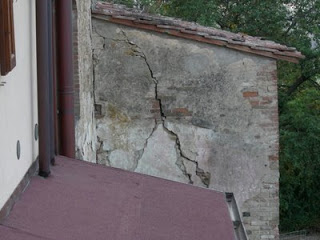
Well, I won’t go into details (if you want to know about our Tuscan escapades, click here and look at July 2008), but it did, indeed, work. It worked well. We stayed just outside the town, at the no-longer-used church of San Benedetto, specifically in Crackwhat had been the priest’s house. The church had a giant crack in it, and our landlord-for-the-month – Giovanni –suggested if we sit out on our patio next to the church, we do so on the far side. He was dead serious.

The house had apparently not been leased out to others for quite some time, and when Giovanni opened the doors, I kid you not. It had to have been over 100 degrees in the house. Every window was closed. The bricks had absorbed the sun for weeks. It was hot. And there was no air conditioning.

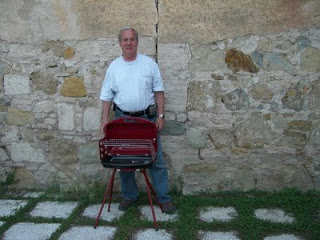
So much for my thoughts about cooking wonderful meals in my Tuscan kitchen, at least for awhile. Too darn hot. So I asked Giovanni if there was a grill we could use. He looked very puzzled, as he spoke very little English. I said, “You know, a grill – fire to cook on.” He pointed to the fireplace in the corner. Yes, that’s the answer. I will stoke up a fire in this house that is the home of the devil.

No matter. During our first run to Poggibonsi to get food, we found, after much searching, a tiny grill. Very tiny….

Grill

It is how we cooked most of our meals while in Tuscany.

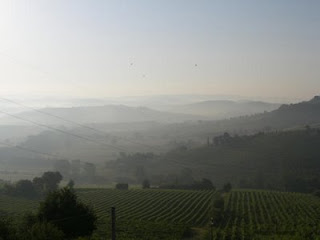
Tuscany is a farming area, and though the crops are different, it reminded me a great deal of growing up in Nebraska. The crops of course are olives and grapes with a few fields of sunflowers thrown in just to move the scenery off the “gorgeous” mark to “full out spectacular.” Here is the scene we saw from our kitchen window every morning as we prepared our coffee….

Morning

It more than made up for the heat we experienced during the day. By the way, I sort of learned how to manage the heat a bit by opening up the windows in the morning and evening and closing up the windows and blinds during the day. It became bearable. And we were in Tuscany.

I began contemplating what I could post in the way of typical Tuscan food. The first thing that came to mind was wild boar – very typical of the Tuscan area of Italy, especially in pasta sauces. I had no interest, however, in chasing down a javalina (which is the desert version of wild boar), and even if I did, I was pretty sure that our homeowners’ association would prohibit the slaughter of animals in our backyard. At least I hope so. I will tell you, however, that wild boar is delicious.

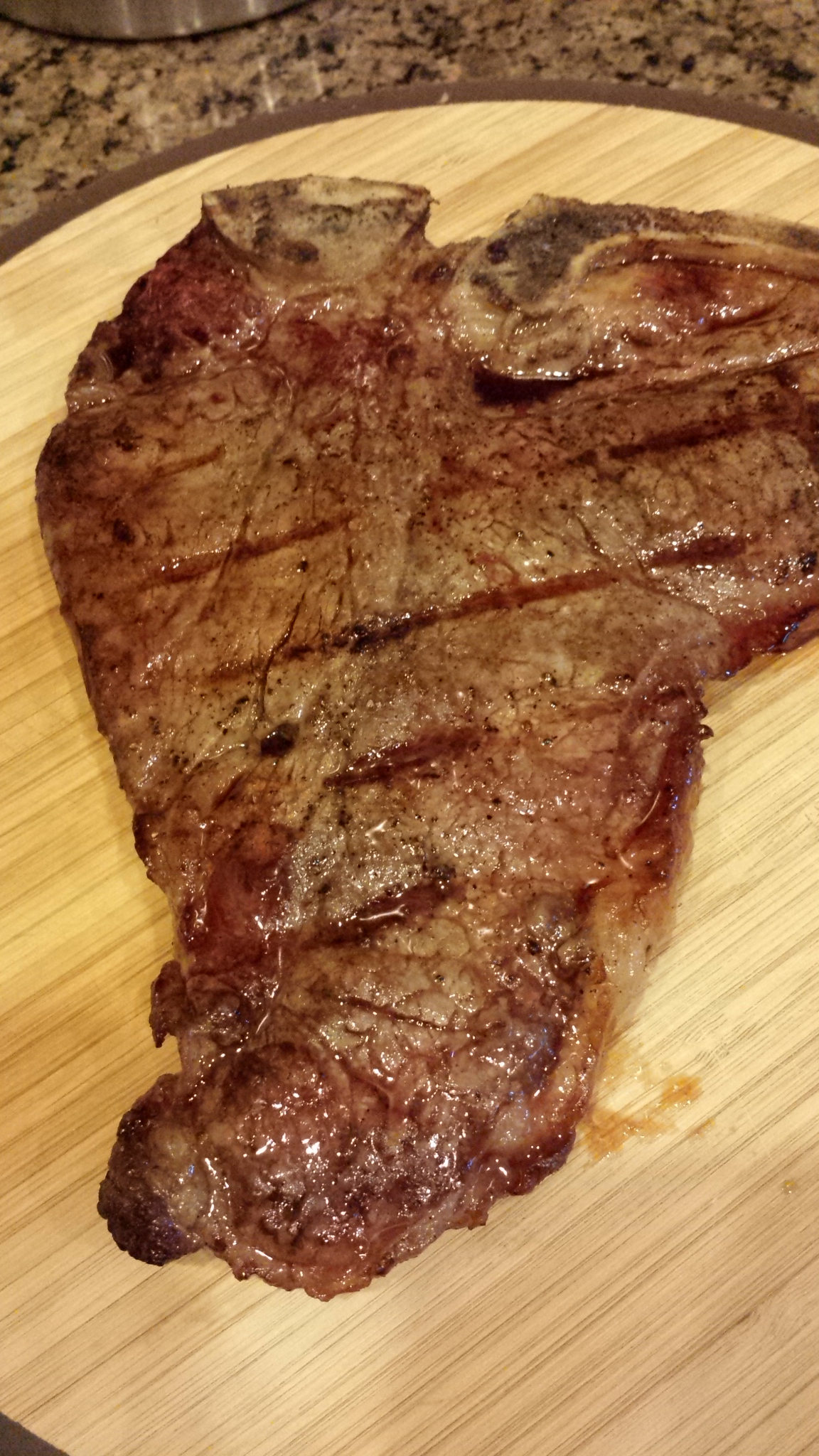
But then I thought of another very typical Tuscan meal – bistecca fiorentina. These Tuscan steaks come from the area’s Chianina breed of cattle which are prized for their tenderness and flavor. They are basically a porterhouse steak on steroids, grilled so rare they practically jump when you put your fork into them, and finished with olive oil. They are, in a word, huge. And delicious. That’s two words.

The first time we ever ordered them, we had no clue how big they were. It was in Florence during that first trip we took to Italy, you know, the one where we shouldn’t have been let loose on our own. Up until that meal, we had made it a point to each order a pasta course and then split a meat course. We looked at the menu outside, all of course in Italian, and spotted the bistecca fiorentina. Boom.

As usual, we each ordered a pasta dish. This time, however, we decided to each order bistecca fiorentina. One for each of us. The waiter didn’t say a thing. Or maybe he did in Italian and we just didn’t understand him. Whatever.

Being particularly hungry, and our pasta being particularly delicious, we ate every bite. Soon after, the waiter approached us carrying two plates, each with a porterhouse steak so big it literally was hanging off the plate. Oh oh, I thought.

I think I ate a few bites, but Bill ate the whole thing. Turns out Italians would have shared one. Who knew?

During our time in Tuscany, we cooked bistecca fiorentina a couple of times. When you go to the market, you won’t find the meat sitting on Styrofoam plates wrapped in sterile plastic. You will find the different kinds of meat sitting loose in the showcase, and you point. The chickens will have their heads still intact. The bunnies, well, the same. The steaks are cut upon order. The butcher brings out a gigantic piece of beef from which he will cut the steaks. How many do you want, he will ask, wielding his giant meat cleaver. One…….WHAP.  Two……WHAP WHAP. That quickly. I wonder how many fingers are lost each year by butchers.

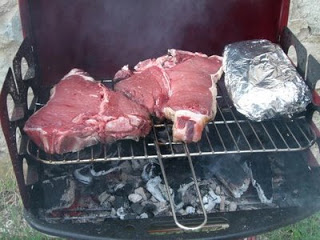
We cooked bistecca fiorentina on our little grill when Bec and Terry visited us at the priest’s home……

steaks 2

Bistecca all Fiorentina, by Michael Chiarello

Ingredients

2 2-lb. porterhouse steaks, about 2 inches thick

Grey sea salt

Coarse grind black pepper

Pure olive oil

Balsamic vinegar

Process

Let the steak rest outside the refrigerator for 30 minutes before cooking. Liberally season the steak with salt and pepper, coat with olive oil and press the seasoning into the meat. Grill the steaks for about 5 – 6 min. on each side for medium rare.Move the steaks every 2 min. or so for even cooking and a crispy exterior.

Allow the steaks to rest on a carving board for at least 5 minutes.

Cut the steaks away from the bone and carve into ½ inch slices. Drizzle a little bit of balsamic vinegar over the slices.

Nana’s Notes: I used one porterhouse steak for Bill and me. It didn’t even begin to compare to porterhouse cookedthe steaks we would get in Italy, at least size-wise. Perhaps if I had gone to a butcher. Also, no balsamic vinegar finish for us. Just a little more olive oil. The key is lots of salt. Absolutely heavenly.

By the way, as you can imagine, I could go on and on and on about our experiences in Tuscany. It KILLS me to stop.

Roamin’ through Rome

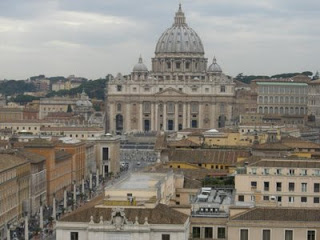
StPetersWe’ve been to Rome more than any other European city. Whenever I visit, it’s impossible for me not to think about the glorious movie Roman Holiday starring Audrey Hepburn and Gregory Peck. In that movie, Hepburn, playing a visiting princess, escapes her handlers, disguises herself as a civilian, meets up with Peck (with whom she of course falls in love), and sees the real Rome. Afterwards, Princess Ann (Hepburn) is asked which of the European cities that she visited was her favorite. She begins to answer in a politically correct way, and then, catching the eyes of Gregory Peck (who is as dreamy as they come), she says, “Rome….my favorite city was Rome.” Mine too, Audrey.

Rome is as different from Paris as Sonny was from Cher. Where Paris is quiet and romantic and people walk slow and hold hands and leisurely drink coffee at streetside cafes, the energy in Rome is practically tangible. The people walk with quick determination. The underground and buses are ridiculously crowded. Romans order espresso at stand-up bars and drink them down in one gulp, quickly, so they can get to their next destination. Scooters fly by noisily. People talk loudly and their hands are in constant motion. The atmosphere is vibrant. I loved Rome from the very first time I visited it.

Perhaps it’s the history. Maybe the amazing art intrigues me. The food, of course, is delicious. Maybe the multitude of churches appeals to my very Catholic self. I don’t know. I just know that I will never get tired of visiting Rome.

The first time we were there was during the trip about which I spoke yesterday. Remember I told you we were taking a train from Milan to Rome? The whole sleeping car fiasco? Well, here’s the continuation of the story, starring Bill McLain.

Neither of us slept too well once we got into our bunks on the sleeping car. It was somewhere around 750 degrees F. and we couldn’t get the air conditioner to work. We managed to get the tiny window open, well, a tiny bit. We slept fitfully until the train steward brought us coffee and brioche. I remember that because I had never had brioche before.

We got off the train around 9 o’clock in the morning in Rome, on a Wednesday. We were to attend an audience with the pope later that day, and Bill informed me we had to quickly pick up our tickets at a rectory somewhere near the American Catholic Church in Rome, St. Susanna. We had our luggage, which he planned on dropping off at our hotel prior to picking up our tickets. He, of course, had no clue where our hotel or the rectory or St. Susanna was located. But Bill McLain DOESN’T DO TAXIS. If God had meant us to take cabs, he wouldn’t have given us two perfectly good legs with which to walk. He had his handy dandy map, and off we went, on foot. Pulling suitcases over cobblestones. After a restless night on a train. In a strange city.

I will say this for Bill. He’s a very smart man with a very good sense of direction. And he’s lucky as hell. I won’t go into details, but we were able to find our hotel fairly easily, and then made our way with little trouble to the rectory, then on to the Vatican. All on foot. With the temperature easily in the 90s.

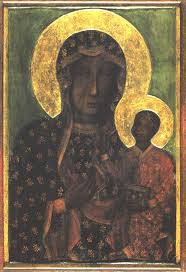
One more memory about that day. Before we left Milan, Heather had given me a picture of the Black Madonna of Poland she had gotten for her Bushia (her black MadonnaCatholic Polish grandmother) and asked me to have it blessed by Pope John Paul II when we attended the audience with him on Wednesday. I promised I would. Little did I know that the pope didn’t do his blessing until the end of the audience, nor that the day was going to be blistering and that we had no shade, nor that the audience went on literally for hours. After three hours of sitting in the burning hot sun, Bill pled with me to leave. “I promised Heather,” I said. I fulfilled my promise. Pope JPII said, “amen,” and Bill and I flew out of there like two jackrabbits.

When we visited Rome during our Big Adventure in 2008, we spent two full weeks. Heavenly. Using the wonderful website Home Away, Bill found an apartment on the edge of Rome but very near a metro line. The best part is that it was located in a neighborhood. As a result, while we weren’t walking distance to the Spanish Steps, we were able to get a feel for the real Rome. We could hear children playing in the courtyard in the evening and listen to the sound of television from open windows. We got to know our neighbors. While we couldn’t speak to them, they would smile and nod to us when we passed them on the way to their mailbox. I loved it.

Right across the street there was a restaurant where we ate nearly every breakfast and many of our dinners. The patrons lived where we lived. The same person, probably the owner, was there in the morning and at night, every single day.

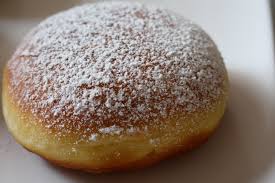
Italians don’t go in big for breakfast. They will have their espresso or cappuccino and a donut or something else sweet. Save the appetite for a big afternoon meal. We had learned from our guidebook that donuts were called bomboloni. So the first morning Bill confidently ordered, “Uno macchiato, uno cappuccino, e due bomboloni.” We pointed to the sugar donuts sitting on the tray on top of a thick layer of sugar. Well, our friendly neighborhood proprietor laughed so hard you would have thought Bill was Don Rickles.  Once he stopped laughing, he said, “No bomboloni – CIAMBELLI.”

Bomboloni

Bomboloni

Ciambella

Ciambella

Well no matter what you call them, they were delicious. The donuts – er, I mean ciambelli – were coated with a layer of sugar so thick that you needed to lick it off your fingers. (Well, I did; Bill went to the bathroom and washed his hands. Meh.) But here’s what I finally figured out. Ciambelli are donuts, you know, with a hole. Bomboloni are filled donuts, you know, like bismarcks. So it would be like going into Dunkin Donuts, pointing to the glazed donut and saying you want one of those bismarcks. Not that funny, huh? But it certainly was for our friendly neighborhood proprietor. He eventually became our friend.

Bill’s nephew Father David, who at the time was studying in Rome, was our tour guide. Since he speaks English, Italian, and Latin, and was incredibly knowledgeable about all of the churches and all of the art in the churches, we couldn’t have been luckier. If you would like to read about our experiences in Rome, here’s a link. Go to June 2008. We were in Rome the last two weeks.

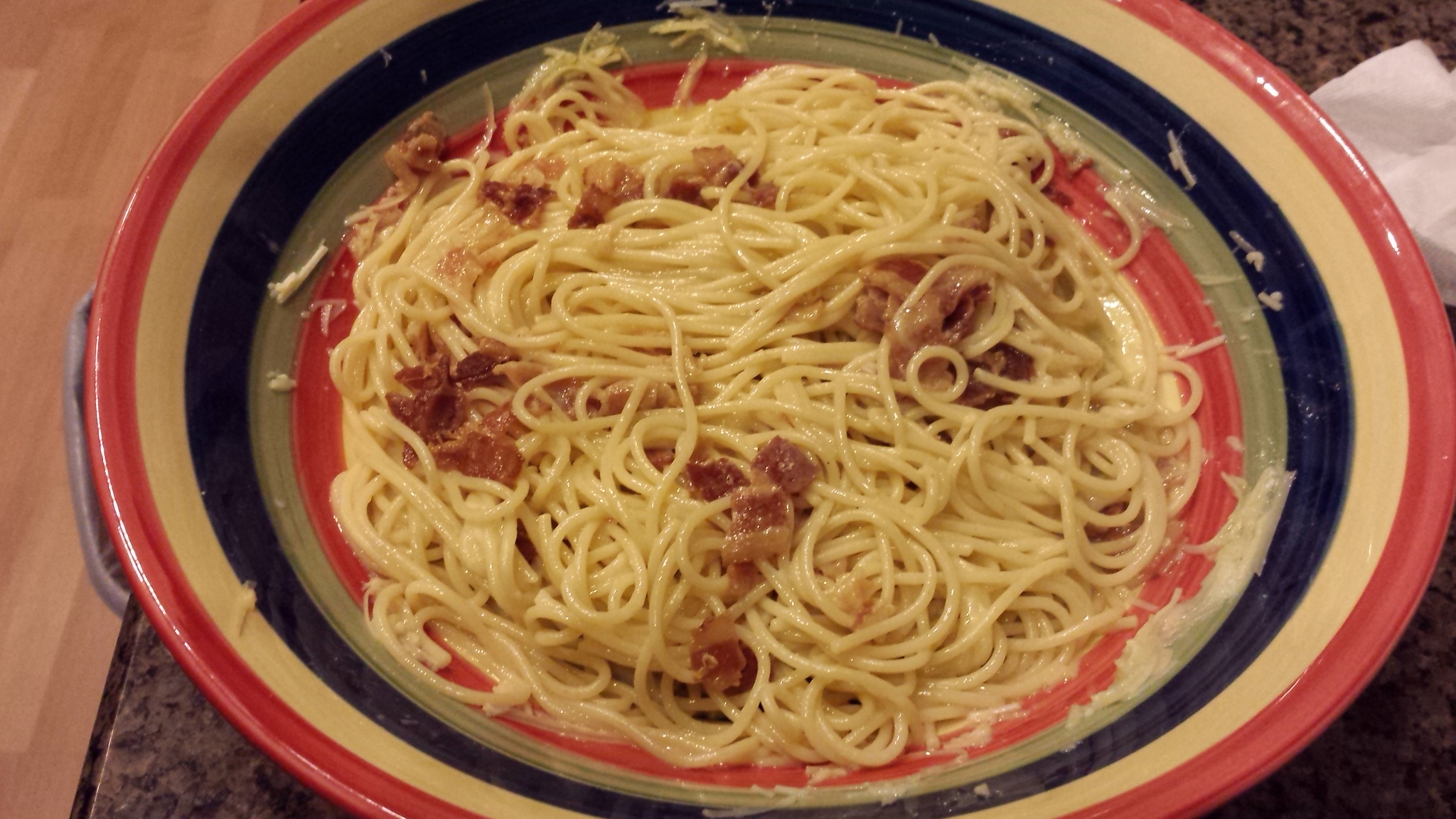
Spaghetti Carbonara is a typical Roman pasta dish. It’s believed to have been developed during World War II, perhaps as an answer to American troops’ nostalgia for bacon and eggs. There are many theories about its origin, but no questions at all about how delicious it is. My favorite recipe comes from Chef Marcella Hazen.

Spaghetti alla Carbonara, from Essentials of Classic Italian Cooking, by Marcella Hazan
carbonara

Ingredients

1/4 lb. pancetta
2 garlic cloves
1-1.2 T. extra-virgin olive oil
2 T. dry white wine
1 large egg
2 T. freshly grated Romano cheese
1/4 c. freshly grated Parmigiano-Reggiano cheese
fresh ground black pepper
1 T. chopped flat-leaf parsley
1 lb. spaghetti

Process

Start by boiling a pot of water and then cooking your pasta according to the package. Time it so that everything else is prepared by the time the pasta is cooked.

Cut the pancetta into strips not quite 1/4 inch wide. Lightly crush the garlic with a knife handle, enough to split it and loosen the skin, which you will discard. Put the garlic and olive oil into a small sauté pan and turn on the heat to medium high. Sauté until the garlic becomes colored a deep gold and remove. Fry the pancetta until it starts to crisp at the edges. Add the wine and let it bubble for a minute or two and then turn off the heat.

Break the egg into big enough bowl to toss the pasta in. Beat it lightly with a fork, then add the two grated cheeses, a liberal grinding of pepper, and the chopped parsley. Mix thoroughly. Add cooked drained spaghetti to the bowl, and toss rapidly, coating the strands well. Add the entire contents of the bacon pan into the bowl, toss thoroughly again, and enjoy at once.

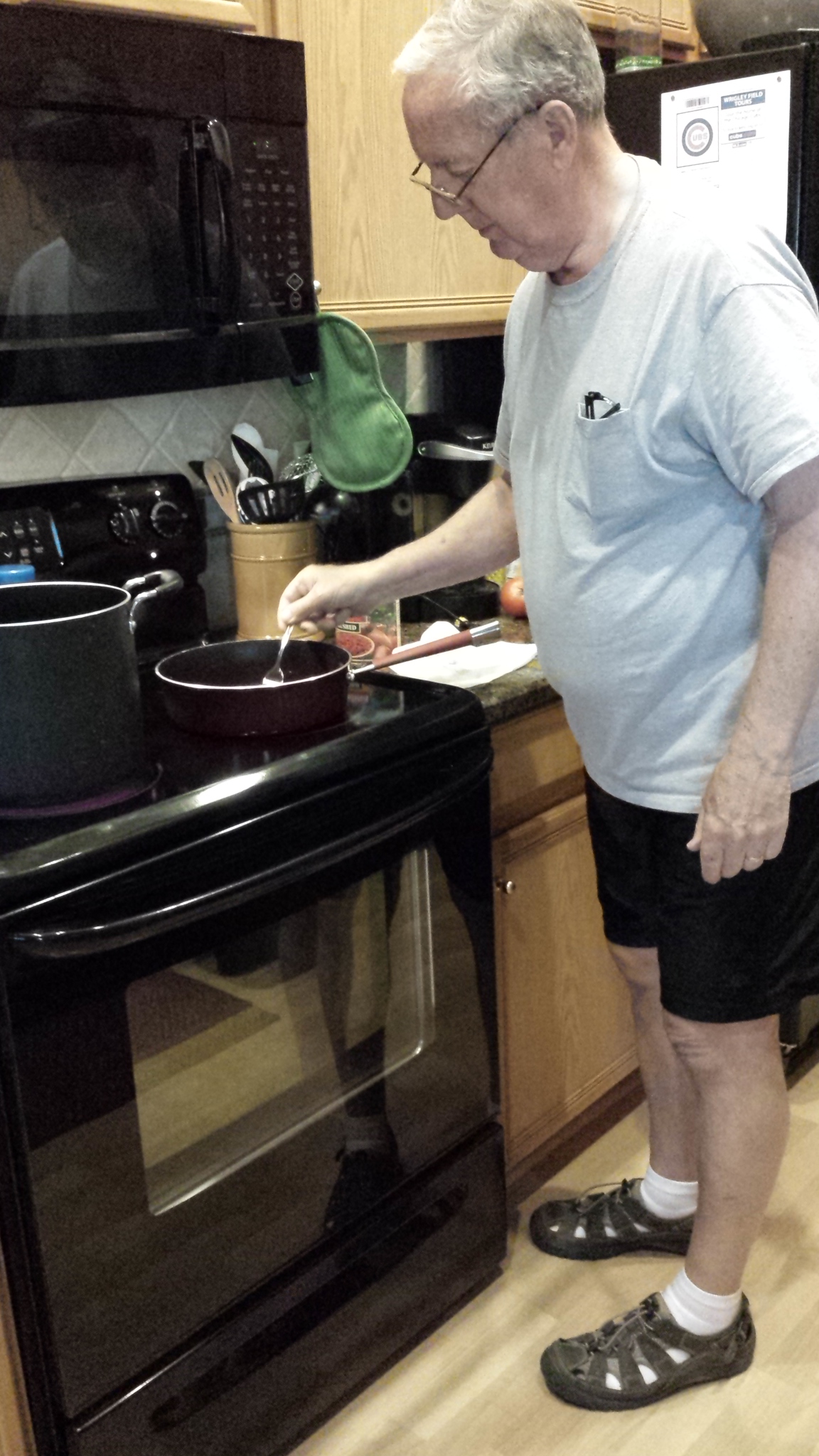
Nana’s Notes: I recently posted a blog about Bill’s inability to cook, or at least his lack of interest in cooking. In the blog I pointed out that he had surprised me by Bill cooksmaking onion rings. My niece Maggie reminded me via a comment that Bill does, indeed, make one meal. He makes a helluva Spaghetti alla Carbonara. I don’t know why he became the one who makes this meal, but it is so. And it is delicious. Last night we cut the recipe in half and it worked fine. Also, I didn’t have quite enough pancetta (I used what I had left over from the Bucatini Amatriciana), so we threw in a little bit of American bacon. The difference is that American bacon is smoked and pancetta is not. It tasted delicious. Spaghetti Carbonara is the only pasta dish, however, that I won’t eat left over. When it is reheated, the egg scrambles and the dish becomes nasty. My opinion, at least. No problem. We always eat it all.