Something’s Fishy

Desert-IslandWhen asked that inevitable small gathering question — What food would you take on a desert island if you could only take one? – well, for me, it would have to be pasta. Specifically, spaghetti. Practically speaking, you could gather and catch all sorts of things that you could put on pasta and have an entirely enjoyable meal. Think of the lemons and limes you could squeeze onto the pasta, along with all of the fresh seafood.

Because, friends, while I love a red sauce with meatballs and Italian sausage, and I think a good Bolognese sauce is out of this world, there is nothing I like better than pasta with clams or shrimp or calamari or scallops or – oh my word – lobster.

I love most kinds of seafood – both fish and shellfish. Off the top of my head, I actually can’t think of a kind of fish that I don’t like. And here’s the thing – spending my formative years in the heart of cattle and corn country, fish and shellfish were not big on the list of things we ate while growing up.

Being a cradle Catholic, I well remember the days when you couldn’t eat meat on Friday. Mom would throw together a salmon loaf or a tuna casserole or maybe heat up some fish sticks on Friday. Dad would be crabby. But then she and Dad would stay up until midnight so that she could fry him a skinny steak and some eggs.  But I don’t remember her ever preparing any kind of fresh and delicious fish. At least not when I was a child.

There’s probably a reason for the lack of fresh fish in her cooking repertoire – no fresh fish available. I have no recollection of any fish being sold in the grocery stores. Perhaps you could have found some frozen fish, though I’m not even sure about that. I don’t remember finding fish on the menu of any restaurants except perhaps for trout almondine. Anglers might have pulled fish out of some of the nearby lakes, and there were probably some kind of fish swimming in the Missouri River that borders eastern Nebraska, but none made it to the Gloor table.

So why do I like fish so much?

Bill is a different story. He tolerates some fish. Up until about a year ago, I would have told you Bill dislikes all fish. After more than 20 years of marriage, I finally figured out that he really only dislikes salmon – which is the fish I always tried to feed him. He would never complain, but his face always looked so sad when I placed the salmon down in front of him. Now I know I can serve him a mild white fish like tilapia, and he only looks a little sad.

“Did your mother ever make fish when you were little?” I asked him the other day.

He said yes, but pretty much like my mom did. Tuna casserole, perhaps trout almondine. Since Bill’s father grew up in North Carolina, I imagine fish wasn’t what he was yearning for after a hard day’s work at the steel mill either. But Bill said there was one kind of fish the entire family enjoyed. There was a restaurant called Phil Schmidt’s in Hammond, Indiana. Every once in a while, Rex and Wilma McLain would pile the four kids into the Buick and drive to Hammond for lake perch. I hope I can try fresh lake perch before I die.

You either like fish or you don’t. The majority of our grandkids like most fish. Dagny says no thank you to fish of any kind, as does Kaiya. But the other day Bill and Alastair went on an outing that included lunch, and when Alastair was asked what he wanted, instead of the hamburger Bill expected him to order, he chose fish and chips. Alastair will ALWAYS choose fish of any kind. You should see him when I make mussels.

I’ve been going on and on about fish because the last recipe I’m going to post this week includes scallops. This recipe is a bit different from the others I have searchposted this week in that it is a recipe I have made many times. However, it comes from a cookbook from which I make exactly two recipes – this one and Spaghetti Carbonara. I could actually just copy these two recipes down and give away the cookbook. However, I happen to really love this particular cookbook despite its limited use by me. So it maintained its place on my bookshelf following the Great Cookbook Giveaway.
By the way, in the same way that I WISH I liked to garden and I WISH I liked baseball, I WISH I liked to fish. I look longingly at the folks standing in the river on the way up to Estes Park wearing rubber boots to their knees and casting their flys. I know!  I can spend the day fishing, come home and grill up the fresh trout, serve it with the green beans I harvested from my garden, and listen to the Colorado Rockies on the radio. In my next life.

Scallop Sauce with Olive Oil, Garlic, and Hot Pepper, courtesy Essentials of Italian Cooking by Marcella Hazan

Ingredients

1 lb. fresh bay or deep sea scallops

½ c. extra virgin olive oil

1 T. garlic, chopped very fine

2 T. chopped parsley

Chopped hot red chili pepper, to taste

Salt

1 to 1-1/2 lb. pasta

½ c. dry, unflavored bread crumbs, lightly toasted in the oven or in a skillet

Process

Recommended pasta: As in so many other seafood sauces, spaghettini, thin spaghetti, is the most congenial shape but spaghetti is an equally valid choice.

Wash the scallops in cold water, pat thoroughly dry with a cloth towel, and cut up into pieces about 1/8 in thick.

Put the olive oil and garlic in a saucepan, turn on the heat to medium, and cook, stirring, until the garlic becomes colored a light gold. Add the parsley and hot pepper. Stir one or twice, then add the scallops and one or two large pinches of salt. Turn the heat up to high, and cook for about 1-1/2 min, stirring frequently, until the scallops lose their shine and turn a flat white. Do not overcook the scallops or they will become tough. Taste and correct for salt and hot pepper. If the scallops should shed a lot of liquid, remove them from the pan with a slotted spoon and boil down the watery juices. Return the scallops to the pan, turn them over quickly, then turn off the heat.

Toss thoroughly with cooked drained pasta, add the bread crumbs, toss again, and serve at once.
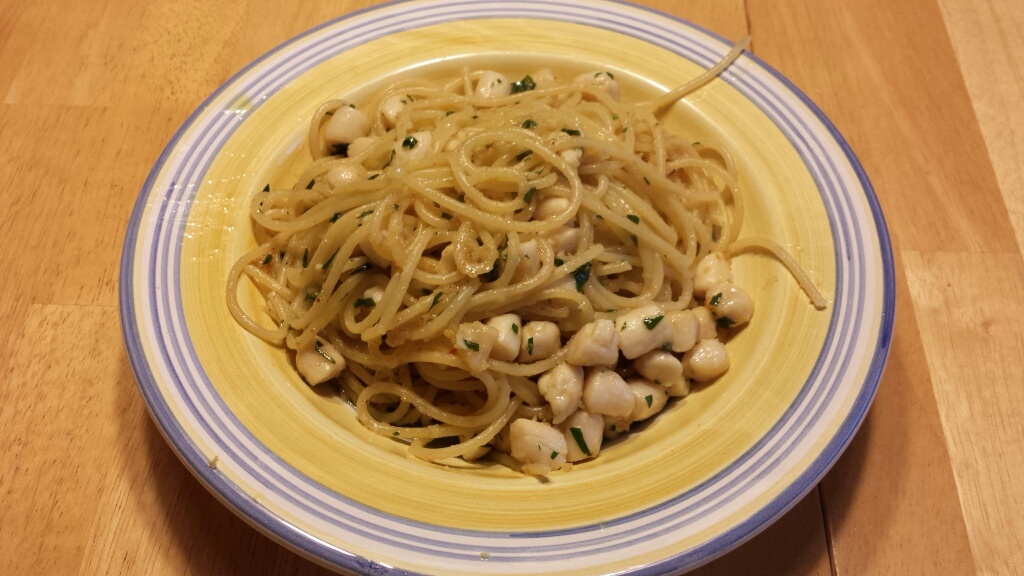
scallops

Nana’s Notes: I always use the little bay scallops as I think they are sweeter and more bite-sized for this dish. Since the use of Parmgiano Reggiano cheese is eschewed with seafood in Italy, the bread crumbs provide a little extra flavor and crunch. I absolutely LOVE this sauce, and always serve it with spaghetti. Serve with bread to dip in the olive oil. It would work perfectly on a desert island.

By Essentials of Italian Cooking from Amazon here.

By Essentials of Italian Cooking from Barnes and Noble here.

When I Grow Up

imgresA couple of years ago, I entered a contest offered by Real Simple Magazine in which contestants wrote – in 500 words or fewer – about a memorable cooking experience they shared with a  friend. I have no idea how many people entered the contest. It could have been thousands; it could have been five. All I know is that I was selected to be one of the five finalists.

I didn’t win. The winner was selected by readers’ online votes. I launched an ambitious Facebook campaign, but seeings as I only have 62 Facebook “friends,” the campaign didn’t really pass muster. But hey, being one of the finalists was impressive, no? Well, unless only five people entered….. .

I love to write, and I think that it is something that I don’t particularly suck at. (Except that I just ended that sentence with a preposition.) Here’s the thing. From the time I was a little girl, that’s what I wanted to do for a living – write. I vividly remember my BFF and I writing stories in elementary school – not for a homework assignment, but just because we wanted to write stories. We turned them into our third grade teacher, who likely had a good laugh over them, but accepted them graciously. I would LOVE to see those stories now. I wonder if Miss Gaspers saved them? She could be a millionaire when I become a famous writer. See? I still want to be a writer when I grow up.

The funny thing is that when I was 18 and entering college, what I decided to major in was Human Development – specifically, teaching preschool. No writing. By that time, either I had forgotten that I liked to write or I simply didn’t have the slightest idea what sort of careers involved writing.

Between the time I quit the University of Nebraska (intending never to return to college) and began attending the University of Colorado (after realizing I didn’t want to be a Safeway checker my whole life), Watergate happened. Suddenly it was cool to be a journalist. I earned my degree in journalism and my advanced degree in communications. Boom. My third grade dream was finally being fulfilled. I actually did spend my entire professional life writing at least some of the time.

I bet there aren’t many people who actually have a career as an adult doing what they dreamed to do as a child. After all, there just aren’t that many openings for NBA players or princesses. I only know two: our son David always wanted to be a lawyer, and is; and my niece Maggie always wanted to be an elementary school teacher, and was a great one until she quit to be a great mom. In fact, I can picture Dave in his kindergarten class wearing a little tiny suit with a little tiny bow tie explaining torts to the rest of the class as they played with finger paints.

I began wondering what my grandchildren want to be when they grow up. So I asked. Here is the rundown:

Addie (11): Math Teacher or Business Owner

Alastair (9): Architect

Dagny (8): Entomologist

Maggie Faith (6): Teacher or “a normal mom” (as opposed to an abnormal mom?)

Kaiya (5): Teacher

Mylee (3) Doctor

Joseph (5) Fireman and superhero (not mutually exclusive I’m happy to say)

The two little boys can’t talk yet, so their dreams remain a mystery for the time being.

Impressive. They are our future, my friends.

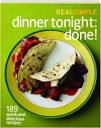
Back to the Real Simple contest. As I said, I did not win (which would have gotten me an assignment as a guest writer for their magazine). My consolation prize? A cookbook entitled dinner tonight: done! (really with the annoying lack of capital letters and the exclamation point). I felt a little like Charlie Brown when he opened his mailbox and found only a rock. Oh well.

dinner tonight: done! was one of my cookbooks that I had never used. So annoyed wassearch I, in fact, that I had never even cracked it open until this week. Lo, and behold, it actually has some good recipes. Guess I will retrieve my ball and bat and go back to the playground. Even if it has that exclamation point in its name and the author thinks (s)he is e.e. cummings.

Out of all of the recipes, I chose ham. Random, I know. But the ham I had for Easter brunch tasted so good to me and I thought the recipe sounded good. It was. In deference to my husband who isn’t a fan of asparagus, I used green beans.

By the way, the recipe titles also don’t have capital letters. Sigh.

ham dinnerapricot-glazed ham with potatoes and asparagus, courtesy Real Simple’s dinner tonight: done!

Ingredients

1 3-lb. boneless ham

¼ c. apricot preserves

1 pound fingerling or some other small potatoes (about 12)

Kosher salt and pepper

1 pound asparagus, cut into 1-inch pieces

3 T. olive oil

1 T. white wine vinegar

1 T. prepared horseradish

¼ c. fresh dill sprigs

Process

Heat oven to 350 degrees. Place the ham on a foil-lined rimmed baking sheet and cook until heated through, 50-60 minutes, spreading the ham with the preserves after 20 minutes of cooking.

Meanwhile, place the potatoes in a large saucepan and add enough cold water to cover. Bring to a boil and add 1 t. salt. Reduce heat and simmer until tender, 15-18 minutes. With a slotted spoon, transfer the potatoes to a colander. Run under cold water to cool, then cut into quarters.

Return the water in the saucepan to a boil. Add the asparagus and cook until tender, 2-3 minutes. Drain and run under cold water to cool.

In a large bowl, whisk together the oil, vinegar, horseradish, ½ t. salt, and ¼ t. pepper. Add the potatoes and asparagus and toss to combine; fold in the dill. Thinly slice the ham and serve with the vegetables.

Buy dinner tonight: done! from Amazon here.

Buy dinner tonight: done! from Barnes and Noble here.

What did you want to be when you grew up?

Mambo Italiano

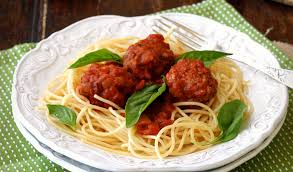
spaghetti and meatballsA number of years ago, Bill and I were chatting at a cocktail party with another couple who had recently returned from a trip to Italy. It was their first visit to our favorite travel destination.

“How was your trip?” we eagerly asked. “Did you have so much fun?”

“Well, yes, it was beautiful,” they said gravely, “but we would never go back. The food in Italy is awful.”

Stunned silence from Bill and me.

“Why, we couldn’t even find spaghetti and meatballs at a single restaurant,” said Mrs. I-Probably-Shouldn’t-Ever-Leave-the-United-States-of-America. “And one day we ordered their fresh fish of the day and it was some little scrawny fish that we didn’t even recognize.”

Yes, and probably pulled out of the Mediterranean Sea that very day. Sigh.

I don’t think it’s particularly uncommon for Americans to be surprised at the cuisine in Italy, or, in fact, the entire dining experience. What we call Italian food here in the United States is entirely different from what you see while traveling in Italy. I assume when Italians immigrated to the United States, they couldn’t find the same ingredients and life was just busier and cultures were intermingling and food just changed. So, no, you won’t find spaghetti and meatballs in Italy. You will find spaghetti cooked with tomatoes and garlic and basil, and you can order polpetti – little meatballs – on the side, but you won’t find any pasta drenched in red sauce and topped with meatballs the size of a baseball.

Don’t get me wrong. I love spaghetti and meatballs and order them often. It’s just that you can’t go to another country and expect to get the same food as you get here in the United States. That’s one of the reasons you travel – to learn how others eat. Right?

In Italy – and really all of Europe – you dine late in the evening. That took a bit of getting used to for us. We are used to dinner around 6 or 6:30. In Italy, dinner is around 8, or even later. We had some embarrassing experiences before we finally learned that lesson. But I’ve been told about a friend of a friend who went to Rome and dined EVERY SINGLE NIGHT OF HER VACATION at the Hard Rock Café because most restaurants didn’t even open until 7 or 7:30 and she wanted to eat at her regular time.

I began thinking about some other things that are on the menu of most Italian restaurants here in the U.S. that you wouldn’t find in Italy. Garlic bread is a goodgarlic bread example. You get bread in Italy, but not toasted and no garlic. In Tuscany, the traditional bread is baked without salt, so the bland flavor takes some getting used to. And it will not be served with butter but instead, you will be given a plate for olive oil and balsamic vinegar. You can get butter if you request it, though the waiter will grimace.

italian-food-recipes-not-from-italy-italian-dressingAnd no Italian salad dressing. For the most part, if you order a salad in Italy, it will be served at the end of the meal. It will consist of mixed fresh salad greens, and you will be given olive oil and red wine vinegar.

Fuggetaboutit if you are looking for a pepperoni pizza in Italy. In fact, if you order a pepperoni pizza, you are most likely going to be given a pizza with pepperoncini  — those spicy little yellow peppers. Italian pizza is absolutely delicious, but I’ll bet lots of people are surprised when they get their pizzas. Very little cheese, if any; very little sauce, if any; fresh ingredients and herbs and greens such as basil and arugula. You pepperoni pizzacan get salami, but I never saw pepperoni. The pizza is baked in a wood-fired oven and it takes about 7 minutes.  My mouth is watering.

I began thinking about this because my recipe for today is from one of my Lidia Bastianich cookbooks – Lidia’s Italy in America. In this cookbook, Lidia traveled around the United States to cities with large Italian American population, and writes about just the sort of food about which I’m blogging today – the food that immigrants began cooking after coming to America. One example is Caesar Salad, and Lidia’s recipe is such a good one. Try it once and you will never again buy the bag!

Caesar Salad, courtesy Lidia’s Italy in America, by Lidia Bastianich

Ingredients

2 c. ½ inch cubes of country bread

½ c. red wine vinegar

Yolks from 2 large hard-boiled eggs

3 garlic cloves

4 anchovy fillets

1 T. Dijon mustard

1/3 c. extra-virgin olive oil

½ t. kosher salt

Freshly ground black pepper

3 heads (1 package) romaine hearts, cut into 1-inch pieces crosswise

½ c. grated Grana Padano or Parmigiano-Reggiano

Process

Preheat oven to 350 degrees F. Scatter the bread cubes on a baking sheet, and toast until crisp throughout, about 8 to 10 minutes. Set aside to cool.

Blend the vinegar, egg yolks, garlic, anchovies, and mustard in a min-food processor. Process until the dressing is smooth, scraping down the sides of the bowl as needed. With the processor running, slowly pour in the oil to make a smooth dressing. Season with the salt and pepper.

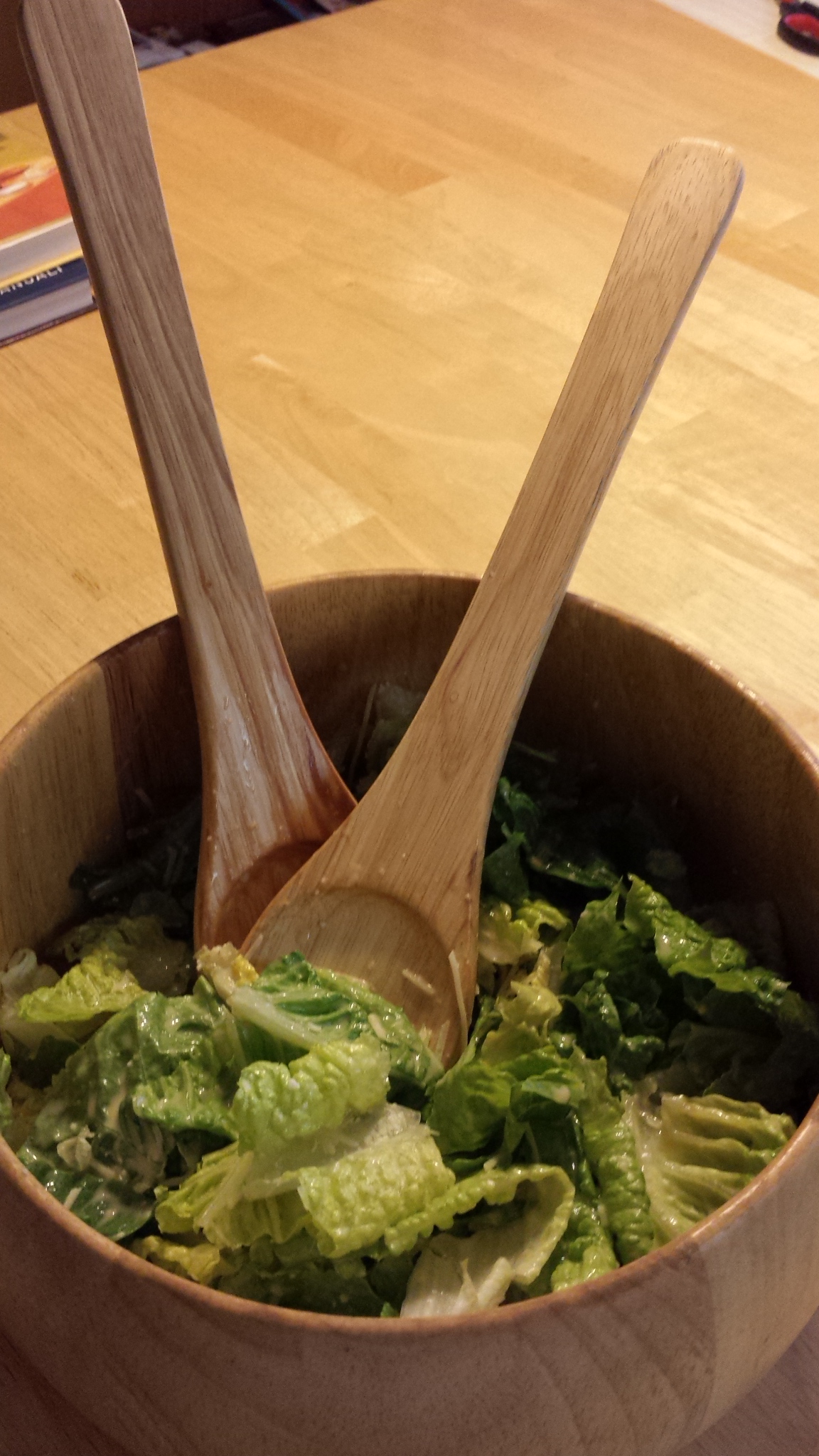
Put the romaine and croutons in a large serving bowl. Drizzle with the dressing, toss well, sprinkle with the grated cheese, and toss again. Serve immediately.

Caesar Salad

Nana’s Notes: Bill and I aren’t crazy about croutons, so we didn’t bother making them. A sacrilege, I know. Also, I didn’t hard-boil my egg (I halved the recipe so it only involved one egg). Instead, I coddled it, which means I brought water to boil, then dropped in the egg and cooked it for about a minute-and-a-half. Traditional Caesar salad calls for a raw egg, so I thought this was a nice compromise.

One funny story about Caesar salad. Bill and I had friends for dinner one night, and I made a homemade Caesar Salad. It wasn’t this recipe and not quite as good. Anyhoo, my friend, upon learning I was making Caesar Salad, begged off, saying she couldn’t ABIDE the flavor of anchovies. I assured her there was not a single anchovy in my salad, as this particular recipe didn’t call for anchovies. She was doubtful, but agreed to try. She tasted it, pushed it aside, and insisted there were anchovies in the salad. I couldn’t convince her otherwise. Later, after they left, I looked at the ingredients for the Worcestershire Sauce that WAS part of the salad dressing, and, sure enough, one of the ingredients is anchovies. Finely tuned taste buds, that one!

Buy Lidia’s Italy in America from Amazon here.

Buy Lidia’s Italy in America from Barnes and Noble here.

Lost Art of Cookbooking

bookshelf (1)At last count (which was about 10 minutes ago), I had 51 cookbooks. Out of those 51 cookbooks, I likely haven’t prepared a single recipe from, hmmm, probably three-fourths of them. Out of the ones from which I have cooked, I have probably only made one recipe out of all but three or four.

That leaves about 35 cookbooks that do nothing in the way of helping me prepare dinner. And only three or four that have been more than simply thumbed through.

And that’s nothing. At one point I had two bookshelves – each with two shelves – completely full of cookbooks.  Book stacked on top of one another. Books overflowing with handwritten recipes stuffed inside. One day I simply couldn’t look at the mess any longer. I was  brutal in determining whether the cookbook stayed or went to Goodwill where perhaps it would get a new home in which the cook-of-the-house would pay it some attention. Adopt-a-book.

Needless to say, I love cookbooks. I thoroughly enjoy reading recipes – even recipes for food I would never make. I particularly like cookbooks that have stories that go along with the recipes. I kept some good examples of those types of cookbooks.

I regularly comtemplate the notion of my compulsive cookbook purchasing. Recently, while still in Arizona, I began wondering if others share my love of cookbooks. I started asking my nieces and nephews the names of their favorite cookbook.

“Excuse me?” they all asked. “Favorite what?”

That’s when it became clear to me that no one uses cookbooks any longer. And if I’m being honest, including me. If I need to know how to make something, I go to the internet, just like everyone else.

A couple of my nieces told me they cut recipes out of magazines or print out recipes that they find online and keep them in a notebook. All of them use Pinterest. But no cookbooks.

I asked Bec if she had a favorite cookbook. She admitted that since she had moved so frequently – most recently from northern Virginia to Phoenix – she didn’t hang on to a lot of cookbooks. But she recalled that when she was first married, she used a Cooking for Two cookbook a great deal. I’m guessing it was  published by Betty Crocker and she probably received it as a wedding gift. All of we Baby Boomers had cookbooks published by Betty Crocker. The big Betty Crocker Cookbook is still my go-to cookbook for everyday cooking. I pull it out every single time I make homemade pancakes or biscuits-from-scratch.

Jen told me her most-used cookbook is one of Lidia Bastianich’s Italian cookbooks. I will be reviewing Lidia’s newest cookbook on Friday. I have every single one of Lidia’s cookbooks. I use some more than others. My Lidia Bastianich Italian American Cookbook is one that I still frequently use. There are red sauce or olive oil stains on many of the pages. That is the sign of a good cookbook.

This week my plan is to blow off the dust from four different cookbooks and prepare a meal from each. Some I will not have tried before; others are part of my existing repertoire.

The first cookbook I pulled off the shelf is called Screen Doors and Sweet Tea, searchby Martha Hall Foose. It is one of my favorite cookbooks, though I haven’t prepared a single recipe from it until last night, when I made Country Fried Steak and Gravy. Along with each deliciously southern recipe, Foose gives a story about the recipe’s origin or a family memory relating to the recipe. Though I grew up in the Midwest as opposed to the South, the small-town experiences she describes are nearly identical.

In fact, the name itself is the reason I bought the cookbook. To this day I am a big fan of screen doors. I vividly remember our back door being open all summer long during my youth. In the evening, we would hear the June bugs hitting the screen as they flew towards the light in the kitchen. Ewwwww. The sound of a wooden screen door slamming – thump….thump,thump – is etched in my mind and reminds me of summer.

Do you have a favorite cookbook?

Country-Fried Steak,courtesy Screen Doors and Sweet Tea, by Martha Hall Foose

Ingredients

1-1/2 lb. beef round steak, tenderized and cut into 4-inch pieces about ¼ inch thick

1 c. unbleached all-purpose flour

Salt and freshly ground black pepper

Pinch of cayenne pepper

1 t. baking powder

1 large egg

Vegetable oil for frying

1 small onion, thinly sliced

¼ c. cake flour

2 c. whole milk

Hot pepper sauce

Process

Pat the steak dry. In a bag, combine the all-purpose flour with 1 t. salt, 1 t. pepper, the cayenne, and baking powder. Add the steak pieces one at a time and shake in the flour to coat. Set the coated steak aside.

In a small dish, beat the egg with 2 T. water. Dip each flour-coated steak piece in the egg wash and then shake in the bag with the flour again to coat well. Set the steak on a rack for about 15 minutes to dry slightly and to help the coating adhere.

Set a wire rack over a baking sheet lined with newspaper or paper towels. In a 10-inch skillet, heat ¼ in o oil over medium-high heat until it shimmers. Place Country Fried Steakthe steak pieces in the skillet and cook until the sides begin to turn golden brown, 3 to 4 minutes per side. Carefully6 turn and rearrange the meat, cooking until no juices are running out and the crust is a deep brown, about 4 minutes. Set the steaks to drain on the wire rack.

Pour all but ¼ c. of drippings out of the skillet. If there is not enough oil left in the skillet, add enough to make ¼ cup. Add the onion. Heat the skillet over medium heat and scrape the brown bits from the bottom of the skillet. Sprinkle the cake flour evenly over the hot oil, stirring constantly. Cook for 1 to 2 minutes, until slightly brown. Slowly stir in the milk until smooth. Reduce the heat to low and simmer for 10 minutes, stirring occasionally, until thickened. Season with salt, pepper and hot sauce.

Return the fried steak pieces to the skillet with the gravy and simmer for 5 minutes. Serve immediately.

Nana’s Notes: I used top round that I pounded with a tenderizing hammer. Next time I would buy cube steaks. They are already tenderized and are thinner. The round steak is plain and simply kind of tough, and it really needs to be no thicker than a quarter of an inch. With that change, this recipe was a winner.

Buy Screen Doors and Sweet Tea from Amazon here

Buy Screen Doors and Sweet Tea from Barnes and Noble here


Saturday Smile: Far Away Save in our Hearts

JosephFive years ago today, Joseph Dean Hibbert McLain was born in New York City. It was a joyous day for us all, though we were far away. Now he and his moms and his brother live happily in Vermont, where Joseph is an inquisitive and infinitely sweet boy — tall, happy, supremely smart, and as curly-haired as can be.

The other day, they Facetimed with us. Joseph immediately asked to speak with Papa. Barely even a “hello Nana.” This boy had business to conduct.

Face to face with Papa, Joseph came right to the point, “Papa, how do you fly an airplane?”

His papa was happy to provide him with the answer.

Happy birthday beautiful boy!

Riding high on a tractor with Papa.

Riding high on a tractor with Papa.


stock cars

Watching the stock car races.

Have a good weekend.

Ethereal Reader: A Week in Winter

searchHow can you go wrong when you’re writing a book that takes place in a bed and breakfast high on the cliffs of a small Irish village overlooking the sea where you can hear the crashing of the waves from your bedroom window?

Unfortunately, I think Maeve Binchy went wrong with A Week in Winter.

I think her idea was clever. A Week in Winter is a story about seven people or couples who, under varying circumstances, visit a bed and breakfast operated by Stoneybridge native Chicky Ryan the same week one winter. In fact, it is the first week that the B&B is open for business. Each chapter is really more of a vignette – a separate story of these individuals and couples, a snapshot of their lives, background on how they ended up and the B&B and a bit about how each one impacts the others. I think the concept had potential.

Unfortunately, I found the characters to be entirely interchangeable and their stories excruciatingly boring. While their backgrounds were decidedly different, their dialogue was similar and the way their stories were presented to the readers was exactly the same for each character.

I have never read anything else by Maeve Binchy, so I can’t compare A Week in Winter to her other books. That is perhaps unfortunate, because I really didn’t enjoy this book very much. I would like to know if it was just this particular book or if I just don’t like Binchy’s writing.

I tried to look at Binchy’s writing as Irish storytelling. Everyone knows that no one can tell a story like the Irish. Her writing reminded me of someone sitting down and telling me a story. There was very little dialogue, for example. I’m just sorry to say that I didn’t find any of her stories interesting.

For example:

I found Winnie’s willingness to put up with her boyfriend’s wishy-washiness deplorable. And of course she could have gotten out of that vacation with his predictably obnoxious mother. Pleeeeease.

Have there ever been characters who were more self-absorbed and whiny than the Walls? I must admit, however, I did find the story line about their preoccupation and subsequent success with contests to be one of the more interesting of the book. I just didn’t like them.

John/Corry was a caricature as was Miss Nell Howe.

I even was annoyed at the story line surrounding Chicky Ryan. I simply didn’t find it realistic that she could carry out her charade of being a widow for her entire life.

The only character I found at all compelling was Anders. His conflicting feelings about duty and what actually made him happy seemed more realistic than any of the other characters.

And let’s face it, Ladies and Gentlemen, there is no bed and breakfast that could be so deliciously cozy and friendly and, well, perfect the first week that they are opened.

Or the second or third.

But perhaps I am overthinking the book. I really am not opposed to lighthearted literature. I have already professed my love for epic novels, and an occasional novel with romance at its core can be pleasurable.

I just found A Week in Winter to be way too predictable and uninteresting.

I am eager to see what others think.

A Week in Winter was published posthumously. Binchy was 72 when she died following a brief illness shortly before the book was released.

Since this is our book club read, here are some things to think about…..

Have you read any other Maeve Binchy books, and, if so, is the writing style the same? Do you enjoy her books?

Which character did you like the best? Which character did you like the least?

Do you think you could be happy living in Stonybridge, or a similar type town?

You don’t need to answer these questions; I just want to get you all started thinking about this book.

Anyone is welcome to contribute. We will discuss until Sunday night, June 8.


Buy the book from Amazon here.

Buy the book from Barnes and Noble here.



Are You the Lady of the House?

door-to-door-salesman-trying-to-sell-cleaning-equipment-to-a-1096038I got a telephone call from our step-grandson who is 19 and trying to earn money for school. We don’t  hear from him often as he is as busy as most 19-year-olds, so when his name showed up on my telephone, I prepared myself for the inevitable news that something horrible had happened. This propensity for assuming the worst runs in my family. We got it from Mom. It’s why we all start every telephone conversation we initiate with, “Nothing is wrong.” Most people say, “Hello.”

Just as an aside, Bill would never go immediately to the worst. Instead, he would assume that the call was going to bring the wonderful news that a mysterious billionaire had died and left our grandson enough money to not only go to college, but to BUY the college.

Anyhoo, the real reason he called was not to tell us about a horrible accident or an unexpected windfall, but to tell us that he was now selling Cutco knives, and could he meet with me to discuss. Oh no. Danger. Danger. Only marginally better than a horrible accident.

I of course said yes, and we set up an appointment. I immediately began doing research on Cutco knives. From what I can tell, the general consensus is twofold:  First, the company’s marketing stragety is to use college-age kids to sell their wares because said kids can appeal to their moms and dads and grandmothers and grandfathers and aunts and uncles and neighbors and, well, you get the picture. And who can say no?

But, second, the knives are pretty darn good. And pretty darned expensive.

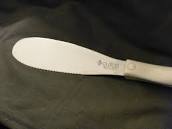
So we met, and I managed to limit myself to a trimmer and a spreader. It could have been worse.

trimmerspreader

But the whole scenario got me to thinking about that question we all ask each other on occasion when we are gathered as a group: What is the worst job you ever had?

For me, the answer is simple – the job I had during college working at a Circle K store in one of the northern suburbs of Denver. Now, there wasn’t really anything intrinsically terrible about the job itself. I waited on people, I stocked a few shelves, I accepted money for gasoline purchases. What was terrible about the job is that the store itself was located out in the middle of freaking nowhere. My assumption is that a subdivision was planned in the area someday. But at that time, it was blocks away from the nearest homes, and except for the parking lot, it was dark as a cemetery. And just as scary.

And that’s not the worst of it. My shift was 6 p.m. to midnight. And this was in the days before 24 hour shopping, and the store closed at midnight. So the final job of my shift was to take the day’s earnings and place them into a bank bag, walk all by myself to my car, and drive all by myself – at midnight – to the bank and make the deposit. Someone thought that was a good idea. I didn’t.

And neither did one other person. After I had worked there a short time, a nice police officer took to stopping in the store around 11:50 p.m. and waiting while I gathered the cash and walking me to my car. No one asked him to do this. He was just a nice cop. Who didn’t want a murder and robbery on his shift or his conscience.

Bill will tell you his worst job was as third helper on a steel-making open hearth furnace at US Steel in Chicago. The furnaces were hot enough to turn molten iron into steel which then poured into giant ladles as liquid steel. Part of his job was to shovel manganese into the liquid steel as it poured into the ladle. Of course, if you didn’t shovel the manganese directly into the stream of steel pouring out of the furnace, it would splash small bits of the molten steel out of the ladle and to heaven knows where. Bill says once a molten piece of steel set his shirt collar on fire. He didn’t even notice until the person next to him pointed it out that his shirt was burning. He put the fire out, but because it was so hot and he was sweating so profusely, he didn’t get burned or even get a red mark on his neck. As an aside, our suspicion is that this handling of manganese may have contributed to his Parkinson’s. Just sayin’…..

Anyway, I wonder if one day our grandson will say that selling Cutco knives was his worst job ever. Maybe not. He gets to eat a lot of pineapple and cucumbers after the demonstrations.

Oh, and sorry to all of you people he contacts following yesterday’s demonstration. He held my feet to the fire for referrals……. They seem like good knives.

I’m really curious. What was the worst job you ever had?


Feeling Hairyed

imagesFor a time when I was growing up, my mom went to the hair salon every Saturday morning to get her hair styled. A set and comb out she would say. Regular color and perm. I would imagine it was as much a social event as anything else.

Then, during the following week she would spray her hair nightly and wrap toilet tissue around her head while she slept to keep the hair in perfect shape. I can’t imagine that it – any of it – was very comfortable.

She certainly didn’t do this her whole life. I think that weekly set and comb-out stage took place mainly during the 60s.  During that period of time, I think most women got their hair styled weekly at the salon. For much of Mom’s life she kept her hair shortish, but took care of it herself with a simple hair dryer, hot rollers and maybe a curling iron.

Her hair never became very gray. It’s hard to know what would have happened in her later life because she died at the young age of 68, but up until she died, she kept her hair perfectly coiffed in a soft, simple style. What gray she had looked like highlights – very pretty.

I thought about Mom the other day, as I often do, while I was getting my hair cut. I wear my hair very short and get it cut every five weeks. It’s one of the high points of my month. I’m not sure why. I love the feel of the cut itself and get a sort of strange satisfaction as I watch the gray hair fall to the ground, as if all of the gray is being cut off and when I look in the mirror, I’m going to look just like Amy Adams or Jennifer Garner. Or someone else without gray hair. Instead, my hair is still gray, only shorter than it was 15 minutes earlier.

For a time I had myself convinced that my hair was like my mom’s – you know, the gray looked like highlights. My grandkids called me on that, as they have kept me honest about a lot of things in my life. I recently applied one of those temporary colors to my hair, sort of getting my feet wet before I take any big steps. I still had gray hair, but maybe a little less. I don’t know. I can’t decide if I should worry about it at all. Am I just self-absorbed?

My hair stylist is somewhere in her early 20s with a hairstyle that includes a partially shaved head and a nose ring but kind of an old soul. I like her because she always tells me she thinks my hair color is pretty. I’m quite certain she would tell me that no matter what my hair looked like because she wants me to leave a tip and come back again. She uses only a razor to cut my hair, but, unlike the hair stylist who yanked at my hair with a dull razor when I was a small child – usually leaving me in tears — I think she actually uses sharp razors. No yanking. No tears.

I might continue to experiment with the temporary color, but I am going to have to work to convince myself to do anything permanent. The last time I permanently colored my hair was in high school when I used a product called “Summer Blonde.” It was supposed to gently lighten your hair just as if you had spent a day in the sun. That’s what Seventeen Magazine said. Instead, it turned ScreenHunter_786_Jan_05_15_03my hair a brassy yellow, and every time my hair would grow, I would reapply in an effort to color the roots. Do you remember the episode of The Dick Van Dyke Show when Laura Petrie bleached her hair because she thought Rob was growing bored with her? That’s how I looked. “Oh Rob.” (If you don’t understand what that means, you’re not a baby boomer.)

I’m not the only one thinking about haircuts these days. On Sunday, three of my granddaughters – Addie, Dagny, and Magnolia – all showed up with haircuts. Maggie got a couple of inches trimmed and Addie added some bangs.

Dagny, my friends, went all in. Cute as hell.

20140601_174133

20140601_174127

Cooking For One or Two: Cooking from Down South

My sister Jennifer Sanchez is going to become a regular contributor to Nana’s Whimsies, offering us her unique perspective on cooking for one or two.
cooking for one
          Many years ago, thirteen to be exact, I was met with the challenge of cooking for one. For nearly all of my adult life I had cooked for a family and suddenly this changed. It took a long time to adjust to cooking for one but over many years I believe I have this down pat.
          When I was first single I knew a couple of things. One, I was never going to be the person who ate a bowl of cereal or a bowl of popcorn for dinner. The second thing I figured out quickly was dining on a Lean Cuisine after a long day at work wasn’t going to work for me. I thought surely if I ate it with a glass of wine, that would pull it up a notch. Blah, yuck, gross.
          On occasion I’ll post on Nana’s Whimsies and give you ideas for cooking for one or two. Yummy dinners that are as satisfying as cooking for a family.
          I love to watch Food Network. And I love to read new recipes. One thing I most alwaysjennifer do is cut the recipe in half and sometimes in thirds. I always find that it works perfectly that way.
          Be forewarned, I make a few changes to every new recipe I try. For example, this recipe called for melted butter in the sauce. I’ve never added butter, so I can’t tell you if it’s better that way. Paula Deen would say it is better that way!
Caroline Style Barbecue Chicken,  courtesy of Food Network Magazine
Ingredients
¼ cup yellow mustard
1/8 cup apple cider vinegar
1/8 cup packed light brown sugar
¾ tsp of mustard powder
1 tsp hot sauce
¼ tsp of Worcestershire sauce.
Process
Whisk all ingredients in a bowl and prepare a bone in chicken breast to grill. Sprinkle some olive oil over the breast and season with garlic salt and course pepper. Let the chicken breast sit in the sauce for approx 10 minutes.
Grill the chicken, basting with the mustard sauce during grilling.
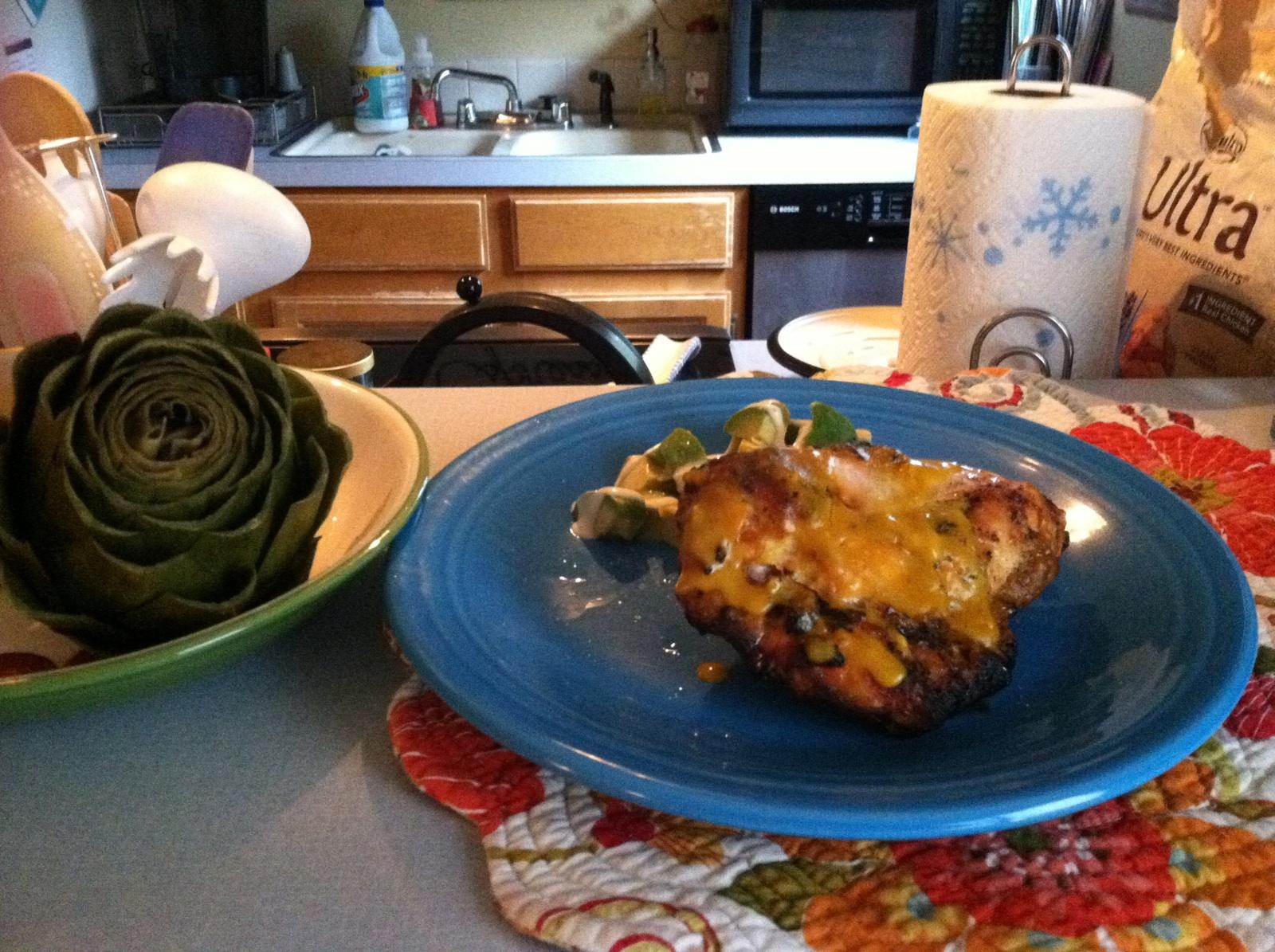
Jen's dinner
          I think chicken can be tricky to get done on the grill so if the meat has nice grill marks but the outside seems to be close to burning, turn off one side of the grill and let the meat finish cooking from the heat of the grill. In the winter I’ve made this in the oven as well and it is equally as good.
I served it this night with steamed broccoli (steamed in the microwave or baked in a hot oven in the winter) with a little of the mustard sauce sprinkled on top of that. I made an artichoke as well.


Unpoopular

imgresIn this day and age of medical specialists – dermatologists, cardiologists, rheumatologists, gastroenterologists, obstetricians, pediatricians, on and on and on – I am an anomaly.  I have a doctor. A family doctor. No –gist or –cian at the end of her name. Just a family doctor.

Believe me, I am not passing judgment on medical specialists. I have a brother-in-law and a sister-in-law who are specialists, and far be it from me to suggest they are not important people in the lives of their patients. And darn good doctors.

I am simply saying I have just been happy with my family doctor.

She has been my doctor for 35 years. She delivered my son. She was his pediatrician. She has always been my OB-Gyn doctor. She was my first husband’s family doctor (I got the doctor in the divorce.) She is Bill’s family doctor and has been since we married 22 years ago. She didn’t do my shoulder surgery. She didn’t do my colonoscopy. She didn’t do my bowel resection. But there is little else she doesn’t do for me medically. She has poked and prodded and snipped and medicated me for half of my life. There is almost nothing she doesn’t know about me.

Except for one thing.

Every year for oh, I don’t know how long, I have gotten an annual physical. She does a very thorough job, examining nearly every part of my body. And every year for, oh, I don’t know how long, at the end of the physical she has handed me a packet to take home that contains the materials necessary for me to take the steps that will allow a lab to determine if I have colon cancer. I don’t want to go into a lot of detail, but it involves getting up close and personal with a bodily function about which I’d just as soon not talk about.

Every year for oh, I don’t know how long, I have taken that packet of information upstairs and set it on the counter that is literally steps from where I perform the bodily function about which I don’t want to speak. Every year I fully plan on THIS being the year I actually do what I’m supposed to do. And yet, every year it sits there for the entire year until the next year when I finally throw it away in order to make room for this year’s new packet. And every year, I smile at the doctor when she gives me the packet and promise her that , yes, of course I will perform the test. I think she actually believes me.

But guess what? This year, I ACTUALLY DID WHAT I WAS SUPPOSED TO DO. I gathered the necessary, well, material, put it in the little plastic tube, placed the tube into the addressed and stamped envelope provided, took a 15-minute shower, and tried to figure out what to do with the envelope.

“What should I do with the envelope?” I asked Bill (who, I feel compelled to add, has historically done EXACTLY the same thing as me with his little packet).

“Put it in the mailbox and put up the little flag,” he replied.

Which I did.

But I can’t help but wonder just how absolutely THRILLED our friendly neighborhood mail carrier is when she opens up the mailbox, takes out the envelope inside, and sees this……

mail specimen

“Oh Lord spare me,” she undoubtedly says. “The Civil Servant exam didn’t have a single question dealing with this particular type of mail. I am definitely not paid enough.”

Having conquered this particular fear, I am ready to begin monthly breast exams. Any day now.

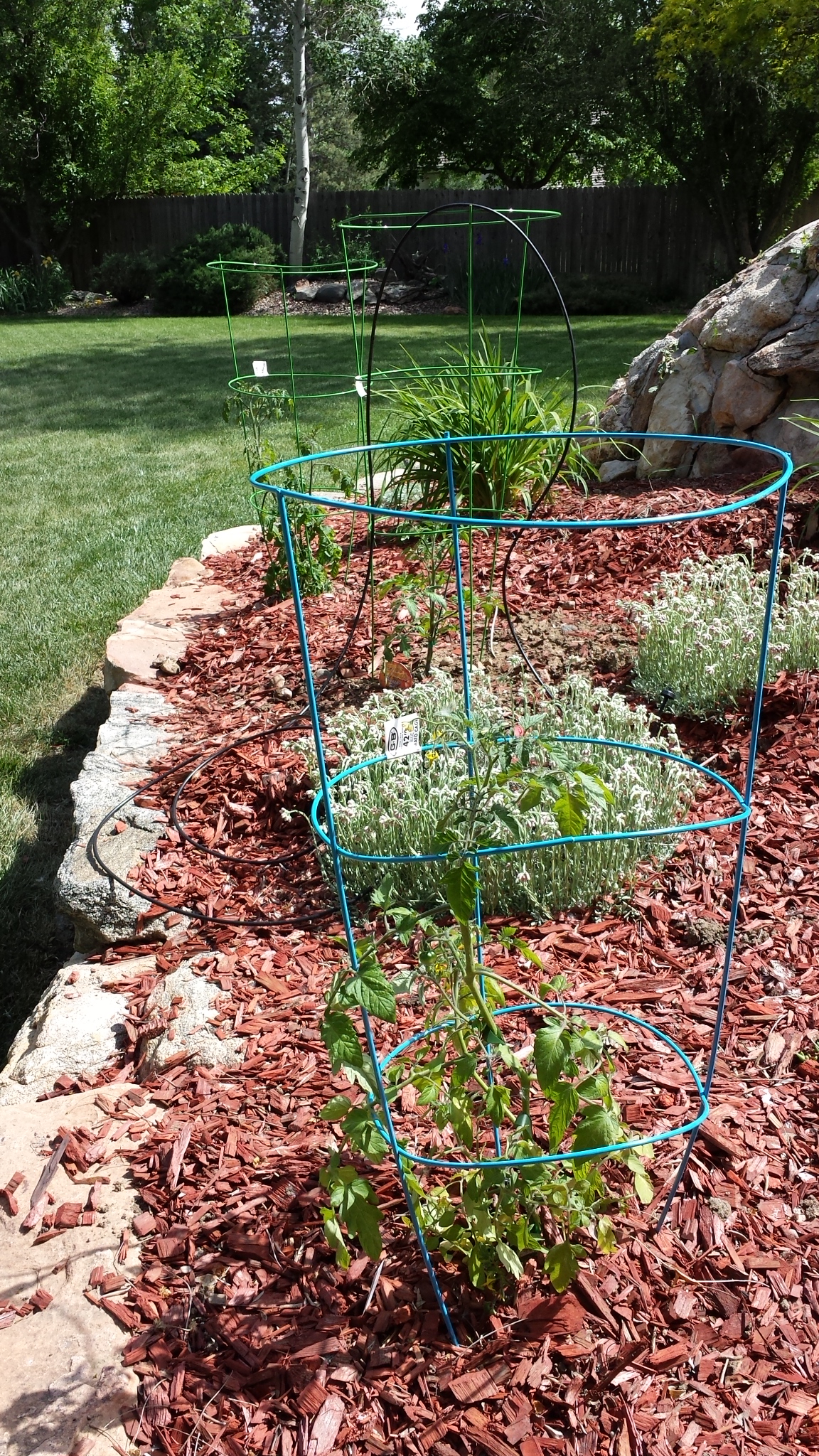
And on a happier note, aren’t my tomato plants pretty? One cherry tomato, one Early Girl, and one heirloom tomato. Keep your fingers crossed. Last year my tomatoes were sad. I’m optimistic about this year.

tomato plants