
Monthly Archives: January 2014

Baby Talk
 Lillyana Marie Eve Jensen is five days old. And I believe that, using Kaiya’s emphatic question as inspiration (see yesterday’s post), Lilly is saying, “What the……?
Imagine that she spent nine peaceful months in her mommy’s tummy, floating in warm liquid, floating….floating….floating. Suddenly, much to her surprise and consternation, and through no choice of her own, she is flung into the light, into a chilly operating room, hearing loud voices and other noises. She is being handled by these odd creatures wearing blue gowns (though of course she didn’t know they’re blue because she still sees in black and white and anyway she can’t see more than six inches in front of her face, but you get my point).
Now, suddenly, she feels hungry and cold and gassy, and plus she has this bow on her head. Why do I have a bow on my head? Mommy has waited a long time for a girl…..
Yeah, I’m sure of it. She is saying, “What the……?”
The Jensens are all getting used to each other. Three-year-old Austin seems to be quite taken with her, though he likely expects that she will go away soon and he will be happy to walk her to the door. He likes to spend a lot of time bumming around with his grandmother, away from the baby’s cries. Maggie and Mark just have that glazed-over look that is part terror and part sheer unadulterated exhaustion.
They will be just fine. She is the second newborn in our family in the past few months. Faith Naomi Gloor was born at the end of November. She, too, undoubtedly was shocked to be born, but she and her parents have fared nicely.
I have been remembering when I gave birth to my son 33 years ago. I recall when the doctor handed him to me I looked at him like he was a stranger instead of someone who had been a part of me for nine months. Suddenly I realized that his mouth looked exactly like his dad’s mouth, and I understood he really was part of us. It’s an amazing feeling.
But I also remember when we got home after the few days in the hospital. His dad left to go to the store, and I had this strong sense of terror. Don’t go! I don’t know what to do with this baby. I don’t know how to be a mom! There were no classes on motherhood. There might be now, but at that time they handed us the baby and the Dr. Spock book, and threw us in the deep end.
He survived and so did I.
Being a parent is a glorious job – the hardest and most important job any of us will ever have, and the most rewarding. The good thing is that our children are resilient, and for the most part, forgiving. And generally they just simply love their parents, no matter what.
The Jensens know all of this because they have a child already. But right now they just want four hours of straight sleep. That will come. Give it a few years.
Show Me the Cache
 Four or five years ago, I got a telephone call from my sister Jen.
“I have a perfect hobby for us,” she stated, as though I had been looking to pursue a new interest. “It’s called geocaching.”
As my 5-year-old granddaughter Kaiya would say, “What the…..?” (I’m only hoping Kaiya never finishes the question. To date, she has not.)
It turns out geocaching, according to their own website geocaching.com, is a “real-world, outdoor treasure hunting game using GPS-enabled devices. Participants navigate to a specific set of GPS coordinates and then attempt to find the container hidden at that location.”
I didn’t really understand any of that, except for the TREASURE HUNT!!!!!!
Tell me more, I said to my sister. She proceeded to explain to me that she had learned about geocaching from a husband and wife who were clients of hers. “I can’t really explain it myself, but it sounds like fun and I think we should look into it,” she said.
So we did. And it is. Fun, I mean.
Apparently up until 2000, GPS systems were restricted to only really important people, like those who needed to know the location of nuclear devices. In 2000, President Clinton decided all of us should have access to GPS technology (probably because he correctly determined we wouldn’t be able to figure out how to find nuclear devices anyway, but we sure could find tiny little containers holding random gadgets and a log to sign with a SECRET CODE NAME. Thus, the beginning of the game called geocaching.
Seriously, geocaches are simply a variety of little containers that generally hold nothing more than a log that the finders sign using a geocaching code name. They are hidden by other geocachers who then register the cache with a website. There are geocaches all over the world. Thousands of hidden treasures. Once a geocacher finds the container using GPS coordinates, he or she signs the log. Did I mention you sign using a SECRET CODE NAME?
I have even got some of my grandchildren interested in the activity. Addie, Alastair, Dagny, Maggie, and I find a park that I know has a geocache (from checking the website), and we proceed to hunt for it. We are generally successful, but usually no thanks to me. I have very smart grandchildren, who are good at following a compass even if they are only 10, 8, 7, and 5!
Yesterday Jen and I spent a couple of hours geocaching in a couple of areas of Phoenix. For the most part, we are hit-and-miss geocachers. Yesterday we were AWESOME! Five finds out of five searches. Three in one park and two in another.
One geocache was big enough to fit a pair of shoes.

One geocache was so tiny it barely fit a signing log. It was magnetic, and we found it under a metal bench. It’s the little metal case next to the cell phone.
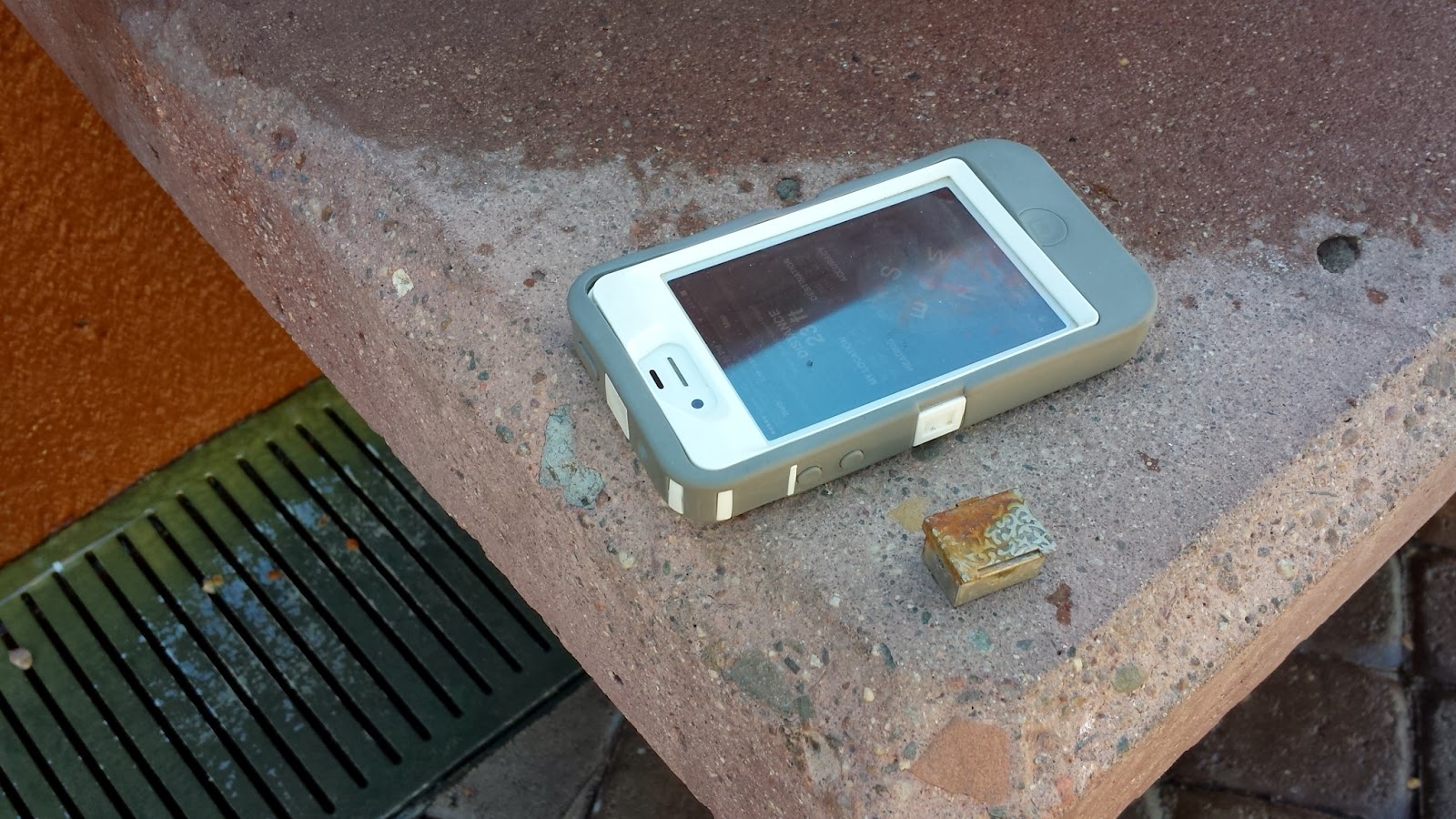
One hung from a tree, hidden in plain sight.

One was in a pill bottle tucked into a fence post. Jen was the one who figured out the top of the fence post came off.

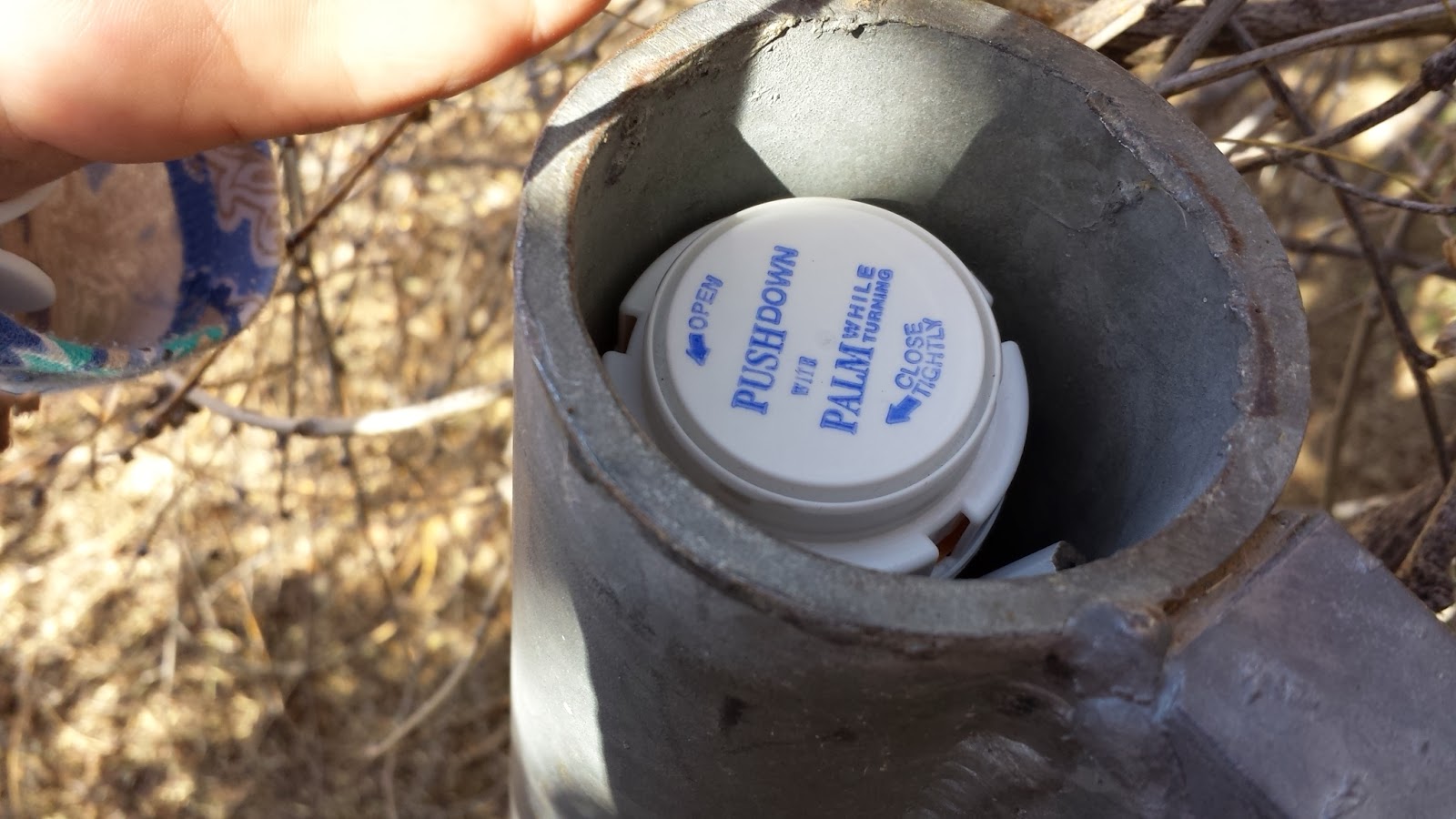 The one that took us the longest was also hidden inside a fence post. Jen had tried to remove the top when we first approached the area, but it appeared to not be removable. We looked and looked and were about to give up when Jen once again gave the fence post a twist. Voila, there was the geocache.
One of the things we like best about geocaching is that it gives us a chance to see parts of a community that we might not see otherwise. Beautiful parks; beautiful views, like the one at the beginning of this post. We have occasionally been asked what in the world we were doing, but for the most part, surprisingly, people leave us alone. You would think two grandmothers crawling around looking under bushes might cause some confusion, but apparently not enough confusion to ask what we’re up to. Only on one occasion was I stopped by a police officer and asked what I was doing looking around the base of a light post in a Walmart parking lot. I think having a one-year-old baby with me (my nephew Austin) made me look less sinister.
Of course, he didn’t even know I had a SECRET CODE NAME.
65 is the new 35
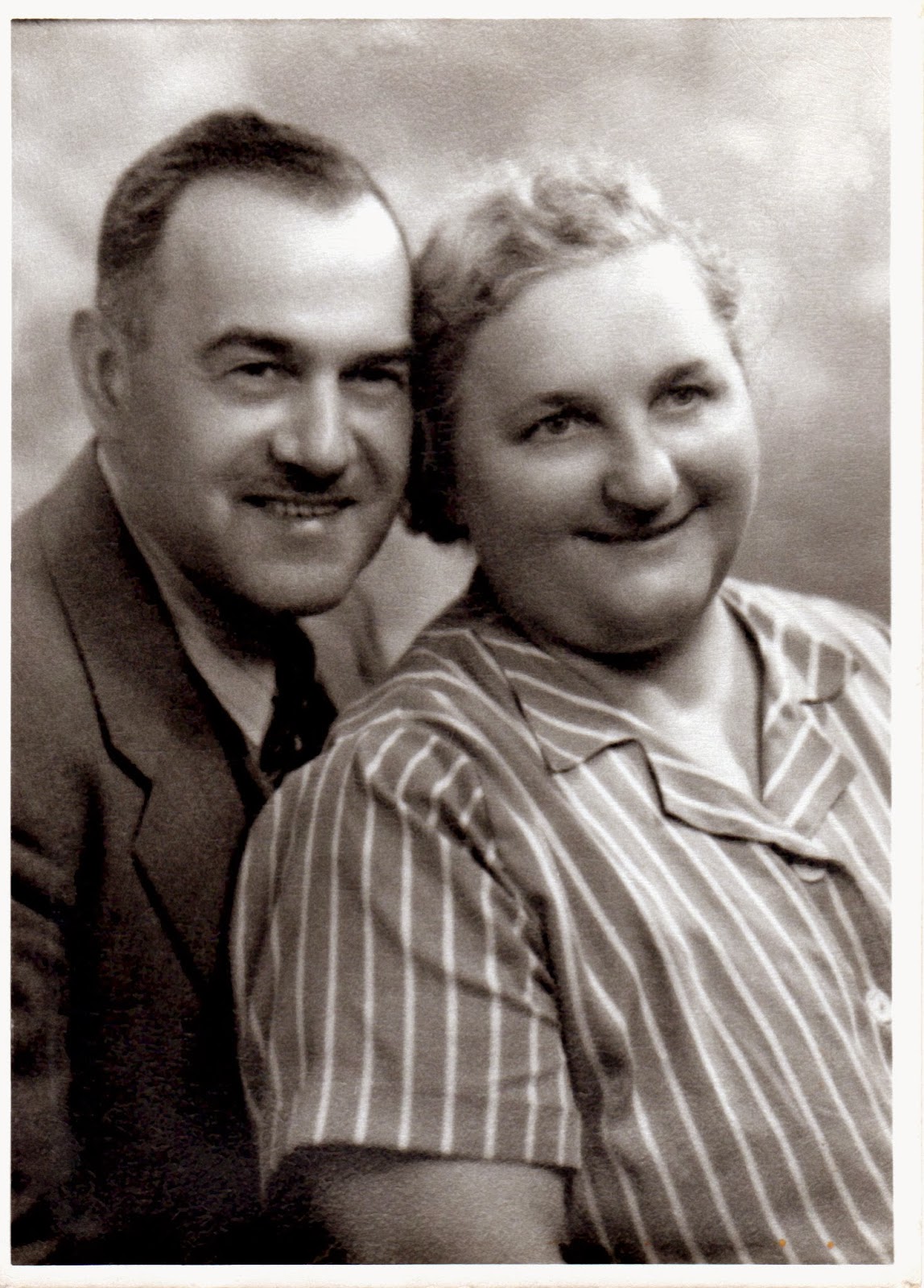 I have spoken ad nauseum about my grandparents, but you might as well give a big sigh and pull up a chair. I’m talking about them again.
I never met my maternal grandparents, so my Grammie and Grandpa were my only grandparents. My dad’s mother and father. They came from Switzerland in the mid-20s, from a small town near Zurich, in the German part of Switzerland. Germans are known to play their cards close to their chest when it comes to emotions. They work hard, they are honest, but there isn’t a lot of sentimentality. You buck up. No hugs. That description fit my grandfather to a T. My grandmother, on the other hand, didn’t get the memo.
My grandfather was a wonderful man, as gentle as they come. I never heard his voice raised in anger. In fact, I barely heard his voice at all. He was quiet. He worked hard and he was kind to us. But when we said goodbye, it was with a handshake.
My grandmother was a different story. She was full of life and laughter. She teased us. She hugged us. She shared her stories with us. She gave us quarters to go to the bar next door to get strawberry pop to have with lunch. Don’t tell your mother, she would warn us, knowing full well that my mom knew what she was up to.
She was short, probably not 5 feet tall, and, well, shall we say plump? Oh, what the heck. She was overweight in the days when people didn’t worry so much about it. “You wouldn’t want to have a skinny grandmother, would you?” she used to say to us. And we didn’t. No way, Jose. We loved her just the way she was.
And we thought she was probably 150 years old, if a day.
I started thinking about this the other day as I watched my sister Jen play with her 3-year-old grandson Austin in our backyard. They were playing soccer. He would kick the ball and she would run and try to get it before he did. It was hard to do, because he would barely tap it so that it was always Advantage Austin. It suddenly occurred to me that my grandmother was probably only about our age when we were in our formative years. She was born in 1897, so in 1960, when I was 7, she was only 63. Only three years older than I am now. Honestly, she seemed so old. Her hair was white.
The thing is, I can’t imagine my grandmother running around kicking a soccer ball with her grandkids. She wore a housedress with an apron every single day of her life. She wore sensible shoes with heavy nylon stockings. Times were so different.
I wonder if our grandkids see us as old. Well, I don’t really wonder at all. I KNOW that they do. While I have myself fooled that my increasing amount of gray hair looks like highlights, I was given a reality check by my grandson. He was pointing out everyone’s hair color, and mine was gray. There you have it. He wasn’t judging, just stating a fact.
I’m not really going anywhere with this random blog, but I’m just reminding myself again how weird it is to see the years pass by and not really pay attention. And I’m also hoping that no matter how old I seem to my grandkids, they love Bill and me as much as I loved my grandparents.
This post linked to the GRAND Social
Chicago, Chicago, That Toddlin’ Town
 Before I start, I just have to put this question out there….what on earth is a toddlin’ town?
All that aside, however, I felt as though I was in Chicago on Saturday. Bill and I spent the day at Arizona’s own Wrigleyville in Mesa.
The Cubs have been holding their spring training in Mesa for 50 years. For those 50 years, it has worked well, because half of the retired population of Illinois comes to Mesa during the winter. In fact, I think a full third of all of the people I complain about blocking the aisles in the grocery stores and holding up the lines in the restaurants are boasting Illinois license plates and Go Illini bumper stickers. And let’s just be really honest. Most of the people who live in Illinois are Cubs fans. A few die-hards that live on the south side of Chicago root for the White Sox, but during baseball season, everyone is a Cubs fan. They proudly wear their t-shirts that say 1908 World Champions.
However, a few years ago, in this day and age of big sports money, the Cubs organization gave the City of Mesa a real scare. Give us some big time tax dollars or we will move our spring training to Florida, who really, really wants us, they told the city fathers and mothers. Yikes.
So, with great foresight and even greater spending money, the city underwent a massive marketing campaign, asking the citizens of Mesa to approve a tax increase to fund a brand new facility that they refer to as Little Wrigleyville. The powers-that-be promised the city would benefit from more people coming to spend their hard-earned dollars in Mesa, and a great deal of urban beautification.
The citizens of Mesa, despite the trend towards turning down every single attempt at tax increases, passed this measure handily, and the new Wrigleyville is the result. Saturday was their grand opening – a free event to show the people of Mesa what their hard-earned tax dollars have built.
And it is beautiful.
 Bill and I started off our day at Portillo’s – a well-known Chicago eatery that features hot dogs and Italian beef sandwiches and crispy onion rings and hot French fries and, as an afterthought, a few salads. The first Arizona Portillo’s opened a couple of years ago in Scottsdale, just north of the Salt River Stadium where the D-Backs and the Rockies have their spring training. A few months ago, they opened a second location near the Cubs facility. Brilllllllliant!
 I think anyone who had ever even cut across the corner of Illinois was present on Saturday to see the new facility, Bill and me included of course. Our tummies full of hot dogs and Italian beef sandwiches, we walked around and saw the ball field, sat in the seats, tried out the restrooms, scoped out our seats for the games for which we have already gotten tickets – one in February, one in March. A full half of the people were dressed in Cubs shirts and/or hats. There were actual tailgaters, apparently getting into practice for the real spring training
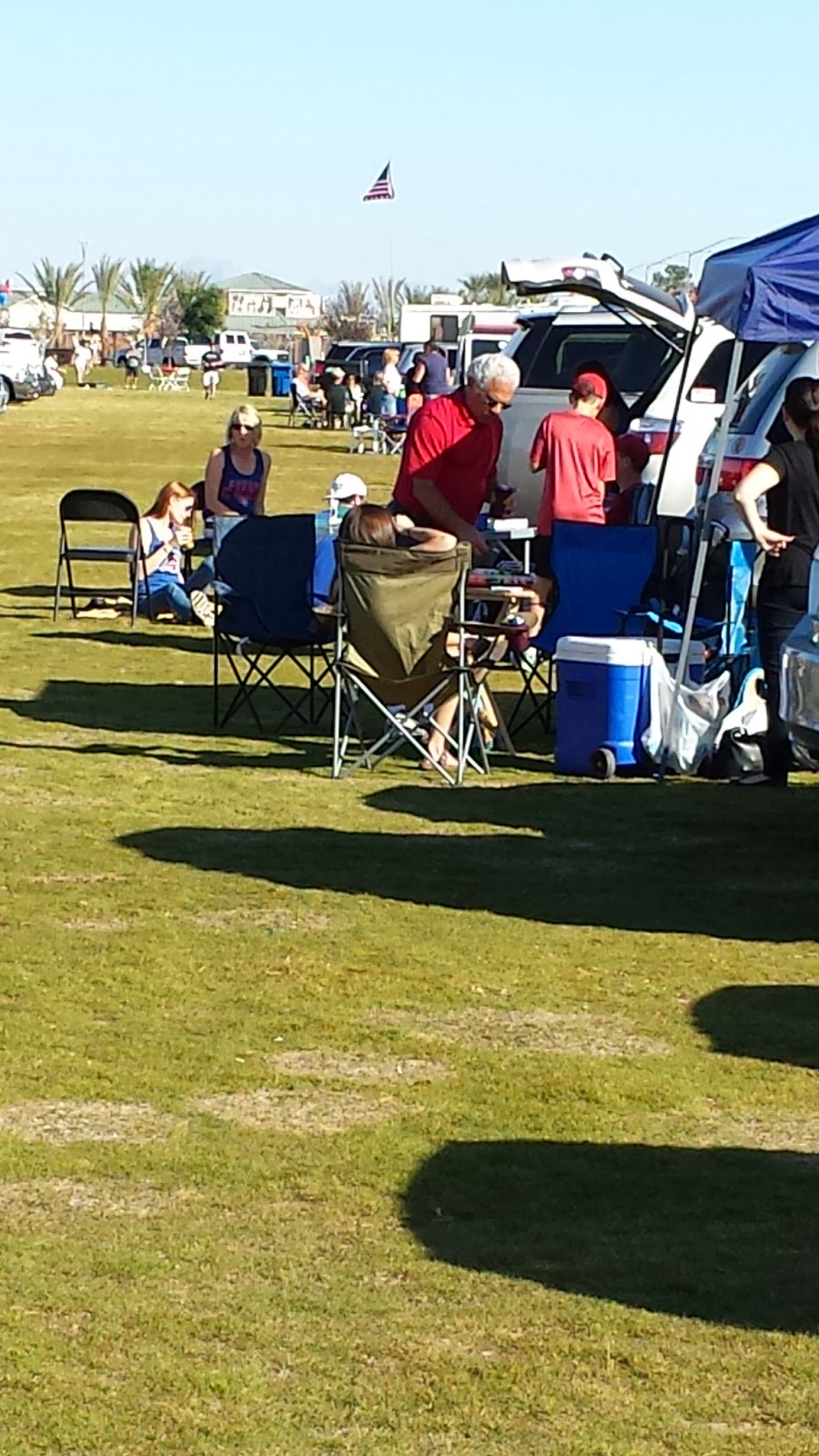 season that will be here before you know it. Brats and Old Style beer abounded.
The weather was perfect and the crowd was in a great mood. We had a great deal of fun and it got us in the mood for the spring training season.
Go Rockies! (But don’t tell the Cubs I said so.)
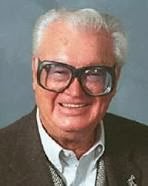
In honor of long-time Chicago Cubs announcer Harry Caray, here is his recipe for a good ol’ Chicago favorite.
Harry Caray’s Chicken Vesuvio
Ingredients
1 cup frozen peas
2 whole cleaned (4 pound) roasting chickens
 1 cup olive oil
4 large Idaho potatoes
10 cloves whole garlic
1 teaspoon salt
1 teaspoon pepper
1 tablespoon dry oregano
1 tablespoon granulated garlic
1/3 cup chopped parsley
1 1/2 cups dry white wine
1 1/2 cups chicken broth
Process
Preheat the oven to 375 degrees.
Blanch the peas by putting them in boiling water 1 minute. Joint each chicken into 8 pieces. Peel the potatoes and cut them into quarters lengthwise. In a large roasting pan, heat the olive oil over medium heat. Add the potatoes and garlic cloves and sauté the potatoes until golden brown, stirring so they cook evenly. Remove the garlic cloves from the roasting pan and discard them. Remove the potatoes and set aside.
Add the chicken to the pan and sauté lightly on both sides of each piece until it is golden brown. Deglaze the pan with the wine and reduce by half.
Return the potatoes to the pan. Season the potatoes and chicken with the salt, pepper, oregano, granulated garlic, and parsley. Add the chicken broth and transfer the pan to the oven for 45 minutes or until the chicken reaches an internal temperature of 155 degrees.
Place the chicken on a serving plate and arrange the potatoes around the chicken. Pour the sauce from the pan over the chicken and sprinkle the peas on top.
Nana’s Notes: I use chicken thighs, and cut the recipe by at least half. I leave out the peas Bill is not a big fan of the pea, and they really are mainly for color. Giada De Laurentis suggests artichoke hearts or lima beans, but I think either of those would just be showing off, so I leave out a vegetable. I prepare the dish in an oven-safe skillet to roast, or prepare the dish in the skillet and then move it to a roasting pan to finish.
If the Phone Doesn’t Ring, That’s Me
Since January 2, when Jen went back home to Fort Collins, I have been on call to be the designated babysitter for Maggie’s 3-year-old Austin when she went into labor and she and Mark had to go to the hospital. She wanted to free up all of the grandparents, aunts, and uncles to be able to be at the hospital for the birth. I am far enough down the food chain to not go to the hospital, yet high enough up the food chain to be trusted with their child.
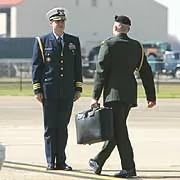 I have been very responsible. I have taken my cell phone everywhere with me, except church. Cell phones ringing during Mass make the priests understandably cranky. Everywhere I went, my phone was tucked into my purse. About every six minutes or so I would pull it out and look at it to make sure I hadn’t missed a phone call. I placed it four inches from my head at night when I slept. The first thing I would do each morning was look to make sure I hadn’t missed a ringing telephone that was inches from my ear. I felt like the president of the United States with his black suitcase, aka “the football.” I had my own “football.” Maybe more like those little rubber ones you get in the 50 cent machines with the claws that the kids beg you to let them try but they never get anything good. Still….
As the days ticked by and we got closer and closer to her January 13 due date, my sense of responsibility grew stronger. Each night, I KNEW this was the one. I would get the call that very night. But I would wake up each morning, check my telephone only to see that there were no messages, no missed calls, and, yes, the phone was fully charged.
January 13 came and went. So did January 14, 15, 16, 17, 18, 19, 20, 21, 22,23, and 24. No baby. Well, there was definitely a baby, but that baby simply didn’t want to be born. Finally
 Maggie’s doctor conceded that perhaps Maggie had a point that being unable to get out of bed or even out of a chair was perhaps a sign that tougher measures were necessary, and scheduled her for a C-Section, happening right now as I post this blog. God is good.
And now I can’t find my phone…..
Have a great weekend. When next I write, Maggie will be able to see her feet.
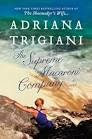
Friday Book Whimsy: The Supreme Macaroni Company
Easin’ into Hiking Season
 Last year Bec and I did a bit of hiking during the Arizona spring, meaning basically March. Since the spring is short, we didn’t hike as much as we would have liked. We vowed this year we would start earlier – in January and February – and thus be able to do more hiking. We would wear a jacket if it was chilly, we determined. March is perfect hiking weather, but in April, though it’s still not blistering hot, the critters are awakening. Remember the rattlesnake episode?
As it turns out, our winter here this year has been very mild. No jackets necessary unless you’re going to hike sometime around 6 o’clock in the morning. Then it is still in the low 40s. But after 9 or 10, it is in the upper 60s or lower 70s. Perfect for hiking. And since the nights are still chilly, I don’t think the rattlers are awake yet. Hope not.
Anyhoo, we did our first hike yesterday morning. The area we hiked was very near the area of our rattlesnake encounter. Yesterday, instead of flip flops, we wore hiking shoes. Weird, huh? No rattlesnakes.
 It was a beautiful, somewhat overcast morning. The clouds eventually burned off, leaving us with much sunshine. There weren’t many people on the trail, though we did run into a couple who, from the sound of them, are Canadian, eh? Bec and I tend to be direction-challenged. We blame it on our mother who wouldn’t allow us to be Girl Scouts as she didn’t have time to take us to meetings. Or at least that was her excuse. Perhaps she actually held a grudge against them because they sell cookies, thereby competing against Gloor’s Bakery. The Canadian couple confirmed that we were on the right path, and we went on our way.
The weather was perfect, we saw some beautiful scenery, and we had deep and thorough discussions about many things as we walked. We always do. The area where we walked is filled with saguaro, and saguaros on the hillside are about my favorite scenic attraction of all things nature.
We came across this funny sight.

 It’s my assumption that the cap is an add-on. When the saguaros get their blooms in May, they sometimes look like they are wearing a hat, but that appears to be a real hat!
Saguaros don’t even begin getting their “arms” until they are 25 years old or older, so a cactus like this must be really old.

It was a perfect day, and a good start to our hiking adventures. Perhaps by next week I can manage something a bit less flat as my vertigo will be verti-gone! Didn’t feel it would be terribly wise to teeter at the edge of a Sonoran mountain yet.
Busy Being Dizzy
 Getting old is not for wimps. That’s what they say, and they speak the truth. Our bodies, which have served us so well for all of our formative years, start thinking of ways to betray us as we age.
Easy on the complaining, however, because for the most part I’m as healthy as a horse. But even a horse gets aches and pains sometimes.
So a week ago, in the middle of the night, I rolled over in bed, and suddenly the world started spinning. It continued throughout the night, but only for a few seconds and only when I rolled over. When I awoke and got out of bed, I was fine, so I assumed I had been dreaming. However, as I leaned over to wet my hair in the sink, the spinning resumed, but again, just for a few seconds.
I immediately diagnosed myself with a horrible and incurable disease, though I had no clue what disease it would be. The always calm and sensible Bill suggested that I Google “vertigo when I lean over.” His practicality can be such a relief to me sometimes. And yet so annoying.
Because you can find anything on the Internet, I immediately learned that there is a condition that is fairly common to people as they age (!!!!!!!) called Benign Something Something Vertigo (BPPV for short because the condition actually doesn’t have “something” in its name). It has something to do with crystals in one’s inner ear breaking loose and rolling about, causing vertigo when you turn a certain way. Really?
I spent the past week waiting for the vertigo to cease. That didn’t seem to happen, so Monday morning I called a family physician whose office I had recently spotted, and saw him yesterday morning. He walked into the room looking at my chart, and said, “I understand you are having some vertigo.” I said yes, and explained my symptoms. I cheerfully told him, “But I got on the Internet and have diagnosed my condition.” You can watch their eyes roll.
“Well, what do you suppose you have?” he asked. (That’s a quote.)
“I have BPPV,” I said.
He begrudgingly acknowledged that he agreed with my diagnosis. He did a couple of tests to rule out anything worse and just to show me he actually is smarter than me, gave me a sheet with some exercises that I need to do for the next week, and sent me on my way. Really, what does he care? I’m insured.
But whoever heard of anything like this? Each and every day, our bodies find ways to pay us back for all of the abuse we gave it over the years.
It is my sincere hope that next time I see any of you, I won’t be walking sideways.
In celebration of my learning that I didn’t have a deadly illness, I invited my niece Maggie and her family over for fried chicken. Maggie is a week-and-a-half overdue having her baby, and isn’t particularly happy about it. I presumed, correctly I think, that cooking wasn’t something about which she was terribly enthusiastic. She’d rather concentrate on getting into and out of a chair. And she loves my fried chicken.
When I fry a chicken, it is a given that I serve it with slow-cooked green beans and Swiss macaroni and cheese. I think I have talked about this macaroni and cheese before. My Swiss grandmother made them. My mom made them. Now I make them. They never had a name. We always just called them macaroni, as in “we’re having macaroni for dinner tonight.” We all knew what that meant as it was the only way we had macaroni. Since I occasionally make traditional mac and cheese, I have taken to calling it Swiss mac and cheese to differentiate.
A few years ago, to my surprise, Food Network Chef Melissa D’Arabian made something she called Macaronade as part of a French meal she was preparing. It was my grandmother’s recipe, or at least a variation thereof. In all my years, I had never imagined that it was something with a name. Anyway, here’s Melissa D’Arabian’s recipe, with my changes below.
Macaronade
Ingredients
2 tablespoons butter, cut into small cubes, plus more for greasing
8 ounces macaroni
Kosher salt
1/2 cup shredded Swiss or gruyere cheese
1/2 cup beef broth
1/4 cup seasoned breadcrumbs
Freshly ground black pepper
Process
Preheat the oven to 350 degrees F. Grease a gratin dish.
Cook the pasta in salted water according to the package’s instructions for al dente. Drain and toss with the cheese and beef broth. Place the pasta in the gratin dish, and top with the breadcrumbs, sprinkle with salt and pepper and dot with the butter. Bake 15 minutes.
Nana’s Notes: Here’s how I do it: Cook the macaroni according to directions. Drain it, and begin layering it in a large bowl with the shredded Swiss cheese (a lot of cheese). I don’t use any beef broth. Put a plate over it so the hot pasta can begin to melt the cheese. In the meantime, brown breadcrumbs in 3-4 T butter. Place the breadcrumbs on top of the macaroni/cheese mix. Put it in the microwave for a minute to help the cheese along. Serve. I never think about putting it in the oven, though I’m sure that’s delicious. And of course, my grandmother didn’t have a microwave. She may have placed them in an oven for a few minutes. They are really delicious if you like Swiss cheese.
Fiddle-dee-dee, Rhett Butler – Tamale is Another Day
I have already mentioned that I am obsessed with tamales. I’m going to have to stop writing about them, however, because I’m running out of clever titles. Let’s face it, “tamale” really doesn’t sound that much like “tomorrow” so I’m going to have to KNOCK IT OFF.
However, last week, I actually was able to get my hands into the masa and make them myself – with a little help from my friends. Well, quite a lot of help, actually, but then it wouldn’t have been a quote from a Beatles’ song.
Four women, none of whom has a lick of Hispanic blood in her, spent most of a day working on a large batch of tamales – some with meat, some with cheese and roasted corn. I think we did a fine job if I must say so myself. Bill, a beneficiary of the resulting tamales, agrees.
My friend Andrea has made tamales before, and she led the effort. In fact, when I arrived, she had a lot of the work done. She had already prepared the masa and the meat for half the tamales. Well, to be perfectly clear, she wisely left initial masa preparation to those who have a little more time and experience – a local market with a tortilleria. Just the right amount of lard must be added to the masa – and knowing just how much comes with experience. “You can feel when it’s ready.” But she added a bit of the chili flavoring from the meat into the masa that was to be used for the meat tamales to add color and some flavoring. To the masa that would be used for the roasted corn, chili and cheese tamales she added a bit of creamed corn. Yum.
Andrea used beef because that’s what the store recommended. Actually, when she asked the butcher what kind of meat he recommended, he told her, “tamale meat.” Hmmm. Not particularly helpful. After talking to someone who spoke and understood a bit more English, she was led to what actually was labeled tamale meat (so there!), and what turned out to be beef. It worked.
Andrea prepared the meat much as it dictates in the recipe below. She used avocado oil as a wink to the Mexican culture and some ground cloves since she knew they were used in mole and it sounded good to her. It worked. Andrea used pasilla chiles and guajillo chiles.
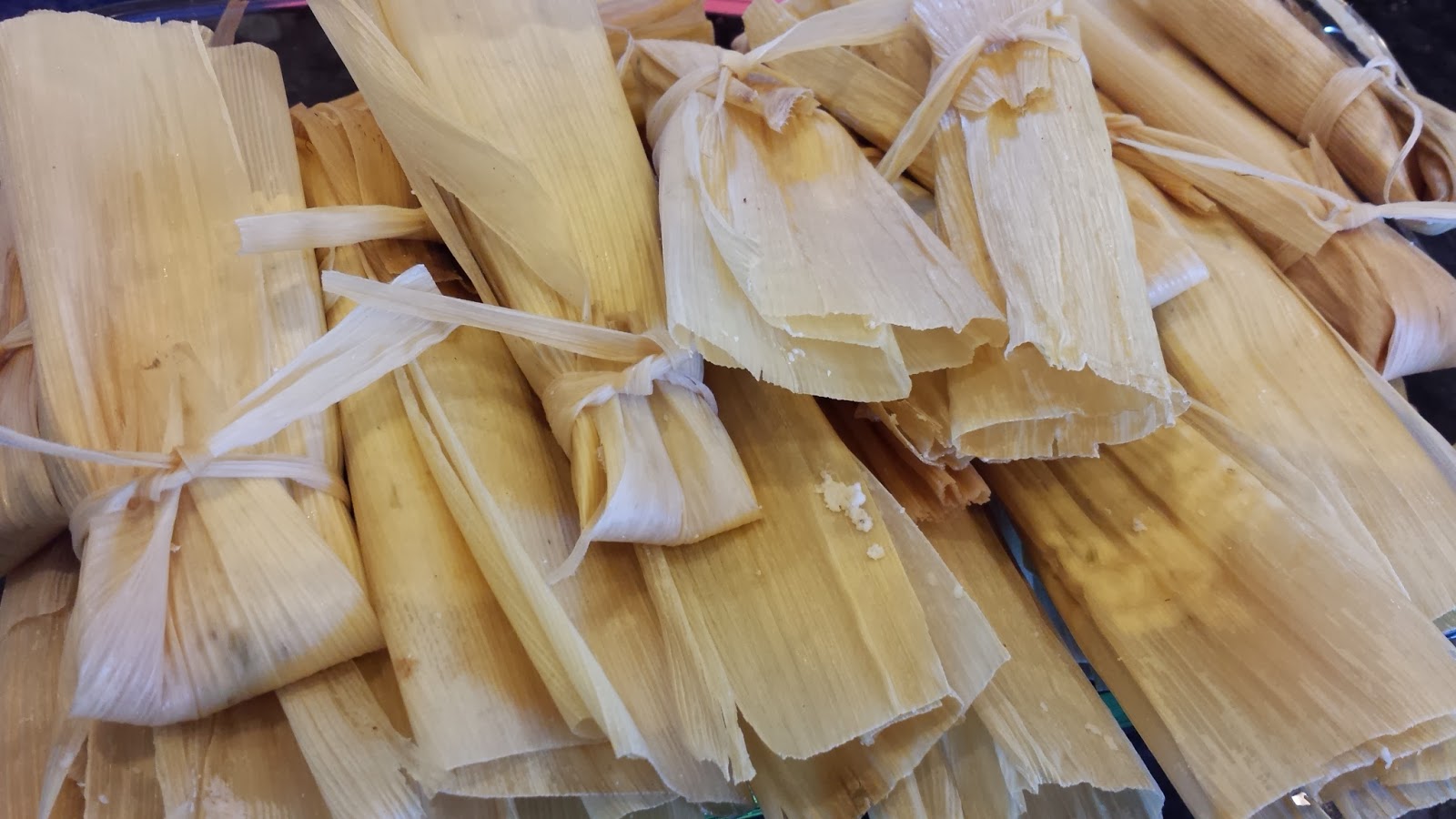
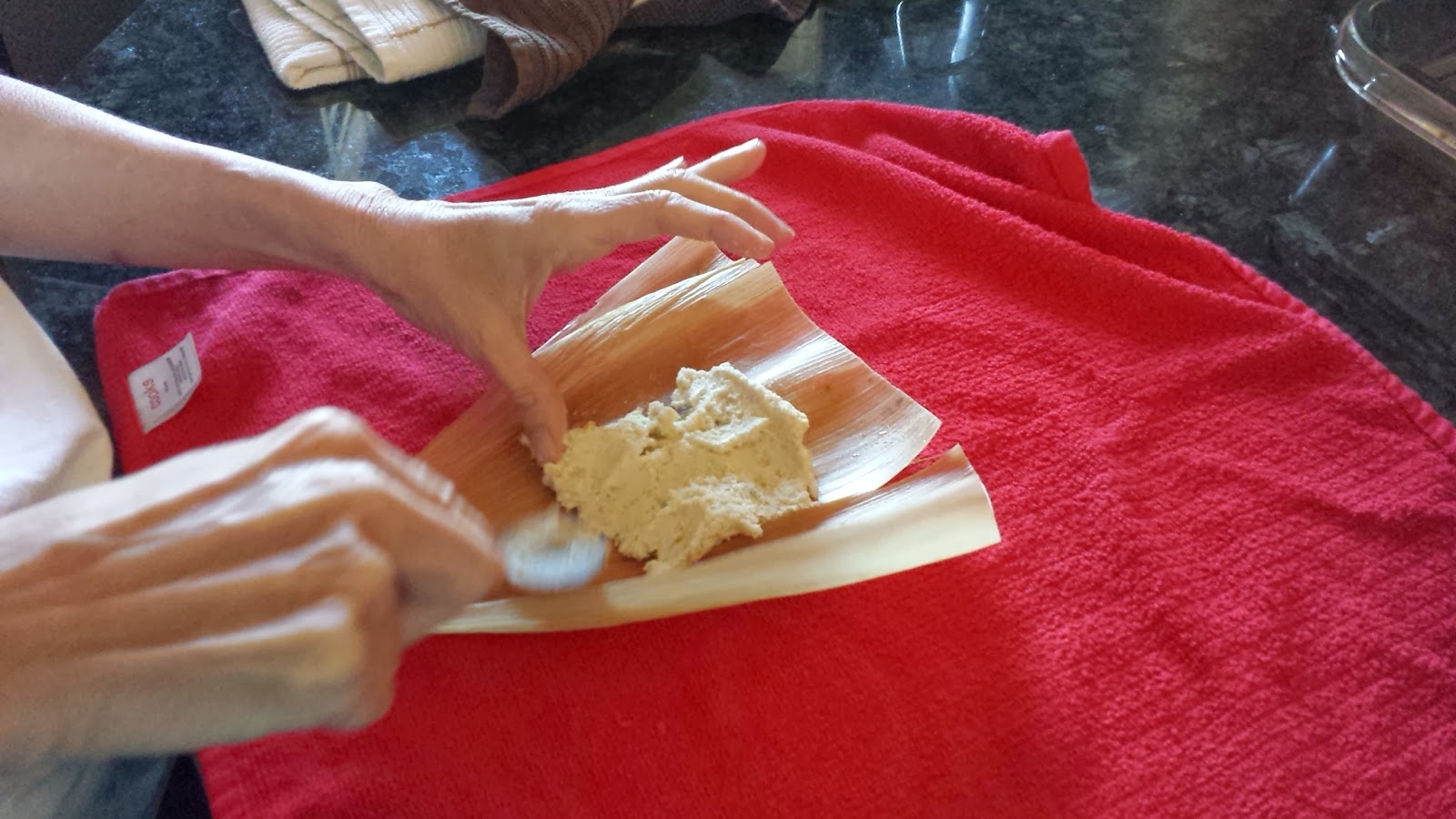 Andrea, Bec, Sandra, and I took turns spreading the masa on the softened corn husks, filling them with meat, wrapping them much the same way that a mama wraps a baby’s bottom, and tying them up with a piece of corn husk. One tie for the corn, chili, and cheese; two ties for the meat. It helped us keep them straight.
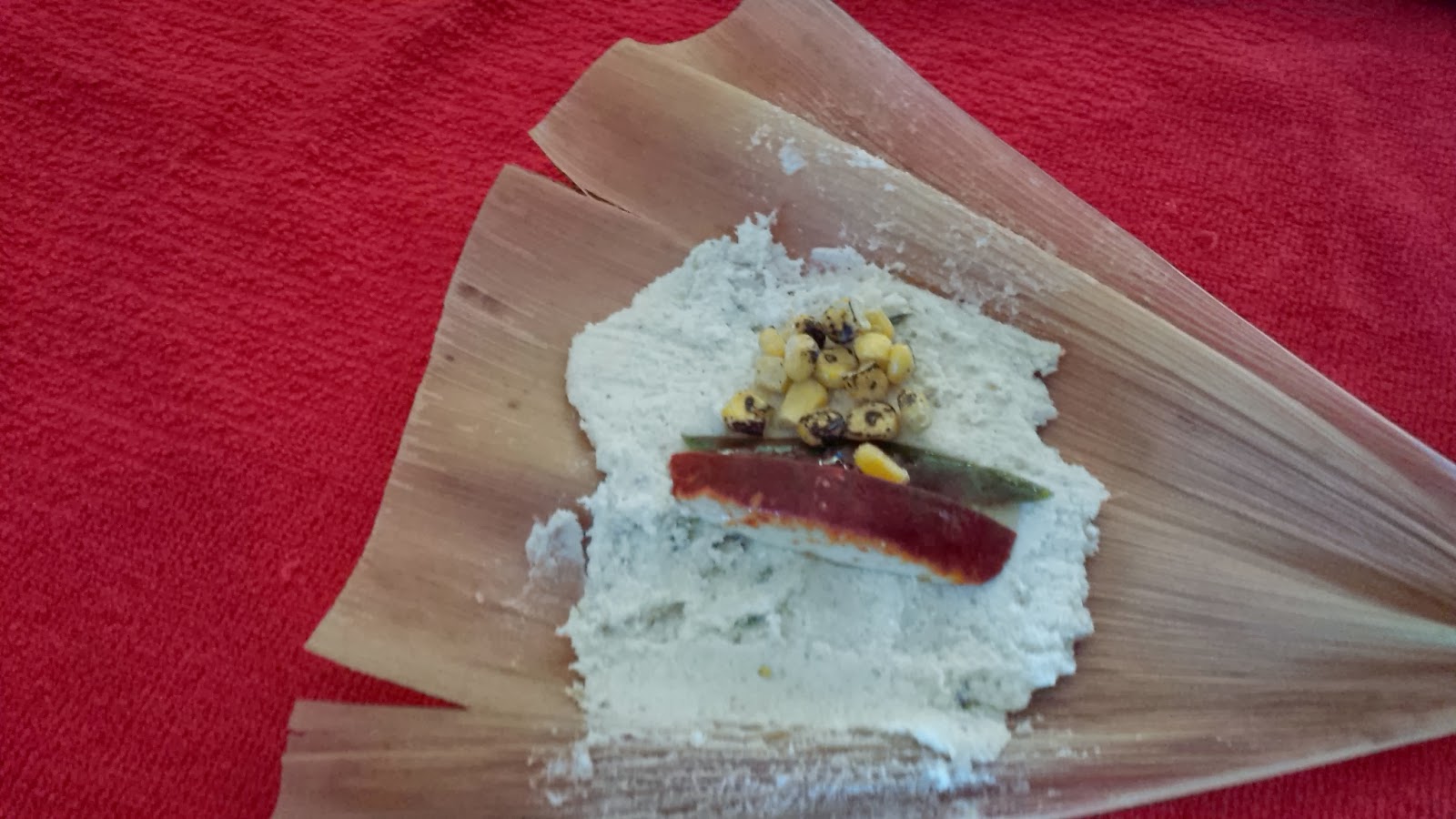 Frankly, some of the tamales’ appearance would have made a Mexican mother weep, but overall they were magnificent. Sandra was the very best at spreading the masa like a pro. Mine were a bit lumpy. Bec was a tamale filler extraordinaire and Andrea had the tedious job of tying the knots.
 Andrea had borrowed a tamale pot – an enormous pot that puts my canning pot to shame, like a bully on the playground. It has a rim near the bottom on which a rack sits. The bottom of the pot is filled with water, and the tamales are placed open side up on the rack above the water and steamed for about two hours until the masa is set.
While we waited for the tamales to steam, we ate lunch. Andrea had made a delicious Mexican soup filled with veggies, and a scrumptious avocado salad loaded with lots of fresh lime. Quesadillas completed our lunch. We talked kids, grandkids, books, cooking, and travel. The others besides myself were all teachers, so we talked a lot about educating our kids. Well, they talked; I listened and missed my grandkids, as usual.
The experience was one I won’t forget. Bill asked me if I would try it on my own. I will definitely try it, but not on my own. As Sandra put it, “I don’t think I know anyone who makes tamales alone. It is definitely a social thing.”
Isn’t it true that so much of cooking and childrearing and homemaking is done with a group of women friends? Really, women should run the world. Individually, we’re powerful; as a group, we are unbeatable.
As were these tamales.
The following recipe is verbatim from The Arizona Republic newspaper. The comments are not Nana’s.
Red Chile-Beef Tamales
Cook’s tip: Making tamales is a slow, tedious process. Spread the making of the tamales, the center of Southwestern holiday celebrations since Aztec times, over two days. Make the red-chile beef one day and assemble tamales the next. If you prefer pork, substitute a shoulder roast for beef chuck.
For red-chile beef or pork:
2 pounds beef chuck or pork shoulder roast
Salt and pepper to taste
1 tablespoon vegetable oil
Water
2 onions, peeled and sliced
1 head garlic, cloves separated and peeled
4 ounces dried New Mexico chiles
2 ounces pasilla chiles
2 tablespoons cumin seed
1 tablespoon salt
Season meat with salt and pepper. Heat a large, heavy pot over medium heat. Add oil, then brown meat on all sides. Once browned, add water to cover the roast. Add one slice of onion and 6 cloves of garlic. Cook until meat is tender and falls apart easily, about 2 hours. Remove meat and shred by hand. Reserve the broth.
To prepare the sauce, place New Mexico and pasilla chiles in a large stockpot and cover with water. Add cumin seed and remaining onion slices and garlic cloves. Boil 20 minutes, until the chiles are very soft. Drain mixture (reserving cooking water) and allow to cool. Mash the chile mixture and place in a large mixing bowl. Slowly pour in about 1/4 cup of chile cooking water. Use a blender or food processor to puree the chiles until smooth. Pour pureed chiles through cheesecloth to strain out the seeds and skins. Pour the sauce into a large bowl and add salt. Add the shredded meat and mix thoroughly.
For tamales:
3 dozen corn husks
4 cups masa
1 tablespoon baking powder
2 teaspoons salt
2/3 cup lard
To make three dozen tamales, soften the corn husks by soaking 3 dozen in water. Next, combine masa, available at most grocery stores, with the baking powder, salt and lard. Mix, adding more lard if necessary to form a paste the consistency of peanut butter. Then add half a cup of juices from the cooked meat.
Drain the corn husks and select the largest ones. Place the husks, smooth side up, on a flat surface or in your hand. Use a tablespoon to spread the masa almost all the way to the sides of a husk, and near the top where it will be tied or folded. Leave a portion at the bottom half of the husk uncovered.
Spoon a tablespoon or two of meat in a narrow band across the masa. Leave at least a 1-1/2-inch border on the pointed end of the husk, and a 3/4-inch border along the other sides.
To fold, begin by tucking one edge of the husk, then roll. Then fold the empty bottom half of the husk up against the rest of the roll. Tie tamales with a string of corn husk, or use the masa to “glue” the tamale to prevent it from coming undone.
Place the tamale, flap side down, in a steamer basket or tamale cooker. Fill the bottom of the pan with water. The water level should be below the rack. Stack tamales on top of one another. Steam the tamales for 2 hours or until the masa seems fairly firm inside the husk. Replenish boiling water if necessary.
Tamales are done when the husk peels away easily. Serve immediately, or freeze and then reheat in a steamer pan or microwave.
Makes 36 servings.
Nana’s Notes: Andrea didn’t soak her corn husks; she boiled them until they were soft and pliable. We kept the husks in the hot water as we worked so they wouldn’t dry out and become unworkable. She also said she tried the whole squeezing the pureed chiles through cheesecloth and it was really, really messy. She elected to leave out that step, and the result was just fine.
 Nana's Whimsies